


Key Points and Summary – Born from General Dynamics’ SCAMP effort, the F-16XL transformed the Falcon with a cranked-arrow delta wing, added fuel, and up to 27 weapon stations—aimed at deep-strike parity with the F-111.
-Entered in the USAF’s Enhanced Tactical Fighter competition, it faced the F-15E. Despite strong range and payload potential, the XL’s extensive redesign meant new production, training, and maintenance—a higher-risk, costlier path than the evolutionary F-15E.
-Twin-engine redundancy, heavier ordnance capacity, advanced avionics, and a two-crew cockpit further tipped the scales to Strike Eagle.
-Shelved after the 1984 decision, the two XL prototypes later flew with NASA, advancing research in laminar flow and wing design.
The F-16XL Mistake?
The F-16 Fighting Falcon has been a staple of the U.S. Air Force since the 1970s and has received multiple upgrades since its inception.
One proposed upgrade sought to improve the F-16 air-to-ground capabilities and put it on par with aircraft like the F-111 Aardvark.
This variant, the F-16XL, made extensive changes to the aircraft’s fuselage and wing layout while maintaining the core components of the original F-16.
Two prototypes were built, which competed in the Air Force’s Enhanced Tactical Fighter program. The aircraft ultimately lost and was later transferred to NASA for additional testing.
Design and Development of the F-16XL
Work on the F-16XL began in the 1970s, when General Dynamics initiated an internal research effort known as the Supersonic Cruise and Maneuver Prototype (SCAMP).
The goal of SCAMP was to explore advanced aerodynamic configurations that could enhance supersonic performance and maneuverability. The F-16, already a highly successful and agile fighter, served as the foundation for this experiment.
Engineers at General Dynamics undertook a dramatic redesign of the aircraft, resulting in a prototype that bore only a superficial resemblance to the original F-16.
The most noticeable change to the F-16XL was to its wing configuration. Instead of the conventional cropped delta wing of the standard F-16, the XL featured a cranked-arrow delta wing, a large, sharply swept wing with a distinctive kink in its leading edge.
This design offered several aerodynamic advantages. It provided significantly more surface area, which translated into greater lift and allowed for a much larger internal fuel capacity. The wing also enabled the aircraft to carry a substantially increased payload, with up to 27 weapons stations compared to the F-16’s nine.
These enhancements made the F-16XL a formidable platform for long-range strike missions, with the potential to deliver a wide array of ordnance deep into enemy territory.
The ETF Competition
Beyond the wings, the F-16XL incorporated numerous structural changes. The fuselage was lengthened by nearly five feet to accommodate the new wing and additional fuel.
The landing gear was redesigned to retract into the fuselage rather than the wings, and the airframe was reinforced to handle the increased loads associated with its expanded capabilities.
Despite these changes, the aircraft retained the F-16’s advanced fly-by-wire control system and agility, making it not only a potent strike aircraft but also a capable dogfighter.
In 1981, the U.S. Air Force announced the Enhanced Tactical Fighter (ETF) competition. This competition aimed to find a replacement for the aging F-111 Aardvark, which had served as the Air Force’s primary deep strike aircraft.

F-16XL Fighter from NASA. Image Credit: Creative Commons.
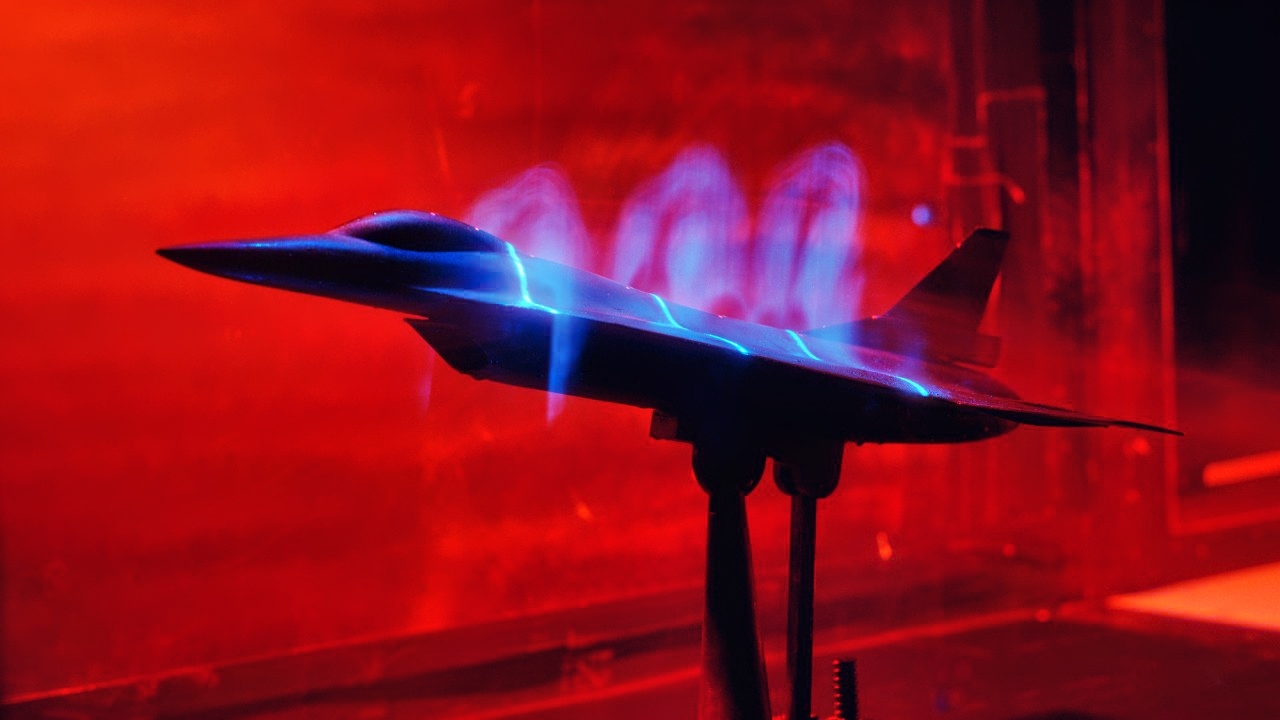
F-16XL Fighter Concept. Image Credit: Creative Commons.

F-16XL. Image Credit: Creative Commons.
The ETF program sought a fighter that could perform both air-to-air and air-to-ground missions with equal effectiveness.
General Dynamics saw this as an opportunity to market its new fighter and entered it into the competition. The two leading contenders were the F-16XL and the McDonnell Douglas F-15E Strike Eagle, a modified version of the F-15 air superiority fighter.
Why the F-16XL Lost to the F-15E
At first glance, the F-16XL appeared to be a strong candidate. It was based on a proven airframe, offered excellent range and payload, and was expected to be more cost-effective than the F-15E. However, the competition was not solely about performance metrics.
So why did the Air Force end up saying no to what was arguably the better fighter?
One of the primary factors that worked against the F-16XL was its cost and technical risk.
Although it was derived from the F-16, the XL variant was so extensively modified that it was effectively a new aircraft. This meant that it would require a separate production line, new maintenance procedures, and additional training for pilots and ground crews.
In contrast, the F-15E was a more straightforward evolution of the existing F-15 platform, which was already in widespread service. This made the F-15E a lower-risk and more cost-effective option from a logistical and operational standpoint.
Not Enough Bang for its Buck
Another significant consideration was the engine configuration. The F-16XL was a single-engine aircraft, while the F-15E featured twin engines. For deep strike missions over hostile territory, the Air Force preferred the redundancy and survivability offered by a twin-engine design.
A single engine failure in the F-16XL could result in the loss of the aircraft, whereas the F-15E could return to base on one engine.
Payload capacity also favored the F-15E. While the F-16XL had more hardpoints, the F-15E could carry heavier ordnance and had more advanced avionics systems at the time.
Additionally, the F-15E was designed with a two-person crew, which allowed the fighter to operate independently from other aircraft and EW systems.
Ultimately, in 1984, the U.S. Air Force selected the F-15E Strike Eagle as the winner of the Dual-Role Fighter competition.
The F-16XL, despite its impressive capabilities, was shelved. The two prototypes were mothballed for a time before being transferred to NASA in the 1990s for use in aerodynamic research. NASA utilized the F-16XLs to study supersonic laminar flow, advanced wing designs, and flight control systems.
These research efforts contributed to the development of future aircraft and technologies, including concepts for supersonic transports and next-generation fighters.
About the Author: Isaac Seitz
Isaac Seitz, a Defense Columnist, graduated from Patrick Henry College’s Strategic Intelligence and National Security program. He has also studied Russian at Middlebury Language Schools and has worked as an intelligence Analyst in the private sector.
More Military
NATO-Russia War of 2025: It Won’t Be Pretty
K3: The ‘Stealth’ Tank That Looks Like a B-21 Raider and Runs on Hydrogen
The U.S. Navy’s Ohio-Class SSGN Submarines Summed Up in 1 Word


