
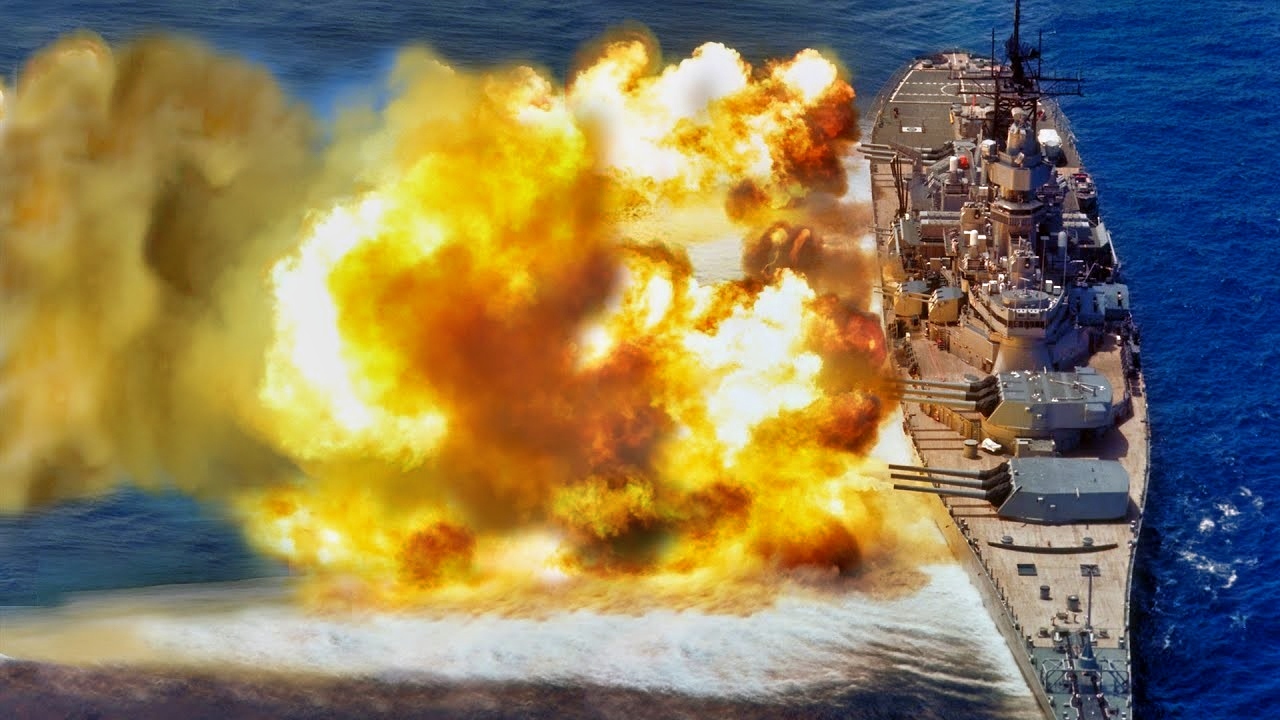
The U.S. Navy formally entered the Trump-class nuclear-powered battleship in the Navy’s FY2027 30-year shipbuilding plan — replacing the long-running DDG(X) destroyer program with a larger nuclear-powered surface combatant designated BBG(X). The U.S. Navy plans to procure 15 Trump-class ships through FY2055. The lead Trump-class vessel is projected to cost approximately $17 billion. The total lifetime program cost could be as much as $700 billion.
The Trump-Class Battleship Won’t Come Cheap

Trump-Class Battleship. Image Credit: White House.

Trump-Class Battleship. Image Credit: White House.
The U.S. Navy’s newly launched Trump-class battleship program could ultimately become one of the most expensive military shipbuilding efforts in modern history, with long-term estimates suggesting the 15-ship nuclear-powered fleet may cost as much as $700 billion by the end of the century as the service increasingly restructures itself around the realities of future missile warfare against China in the Indo-Pacific.
The program formally entered the Navy’s FY2027 30-year shipbuilding plan on May 11, replacing the long-running DDG(X) destroyer effort with a far larger nuclear-powered surface combatant designated BBG(X).
The ships are intended to operate as heavily armed fleet command vessels capable of carrying hypersonic missiles, directed-energy weapons, advanced radar systems, and massive missile inventories while surviving inside contested environments where communications, satellites, and logistics may already be degraded.
The Navy plans to procure 15 Trump-class ships through FY2055, with the lead vessel alone projected to cost roughly $17 billion before long-term sustainment and modernization costs are included.
However, the $500 billion to $700 billion estimate cited by analysts today is not an official Navy budget figure; rather, it is an extrapolation based on historical lifecycle cost growth across major naval programs, such as the Ford-class aircraft carrier, Zumwalt destroyers, and Columbia-class ballistic missile submarines.
Navy Replaces DDG(X) With a Massive Nuclear Vessel
The Trump-class program is the product of one of the largest doctrinal shifts in U.S. surface warfare planning since the Cold War.
Instead of continuing the development of the DDG(X) next-generation destroyer, the Navy concluded that existing destroyer-sixed hulls lacked the electrical generation capacity necessary to support future weapons systems. Additionally, it lacked cooling capacity and internal volume, and offered no missile growth potential for the weapons expected to be used in naval combat in the 2040s and 2050s.

DDG(X) U.S. Navy. Image Credit: Creative Commons.
According to the FY2027 shipbuilding plan, procurement begins with $1 billion in advance procurement funding in FY2027, followed by $16.97 billion for the lead ship in FY2028. The second and third vessels are currently projected to cost $13.028 billion and $11.528 billion, respectively.
The first ship is expected to receive a contract award in April 2028, begin construction in August 2028, and enter service in August 2036.
Increasingly, the Navy describes future maritime warfare in terms of “combat mass,” the ability to sustain large-scale missile exchanges over prolonged periods rather than limited precision-strike operations. That concern has already been demonstrated in real-world operations in the Red Sea against Houthi drones and cruise missiles, where U.S. destroyers expended expensive interceptors against significantly cheaper threats.
At the same time, a series of Indo-Pacific war games and simulations over the past several years has reinforced concerns about fleet survivability, command continuity, and missile inventory depth in a prolonged war with China.
Multiple Center for Strategic and International Studies Taiwan invasion simulations conducted in 2022 and 2023 found that U.S. forces could quickly exhaust long-range precision munitions while suffering heavy losses to Chinese anti-ship ballistic missiles and long-range strikes.
Separate Pentagon and Navy exercises examining operations inside China’s anti-access and area-denial network also reportedly concluded that existing destroyers lacked sufficient missile capacity, endurance, and electrical growth margin for prolonged high-intensity combat across the Pacific.
Pushing American Shipbuilding to Its Limits
The scale of the Trump-class program is already generating concerns not only about cost but also about whether the U.S. industrial base can realistically support the simultaneous production of so many nuclear-powered vessels.
The service is simultaneously constructing new Gerald R. Ford-class aircraft carriers, Columbia-class ballistic-missile submarines, and Virginia-class attack submarines, while also supporting increases in submarine production under the AUKUS agreement with Australia.
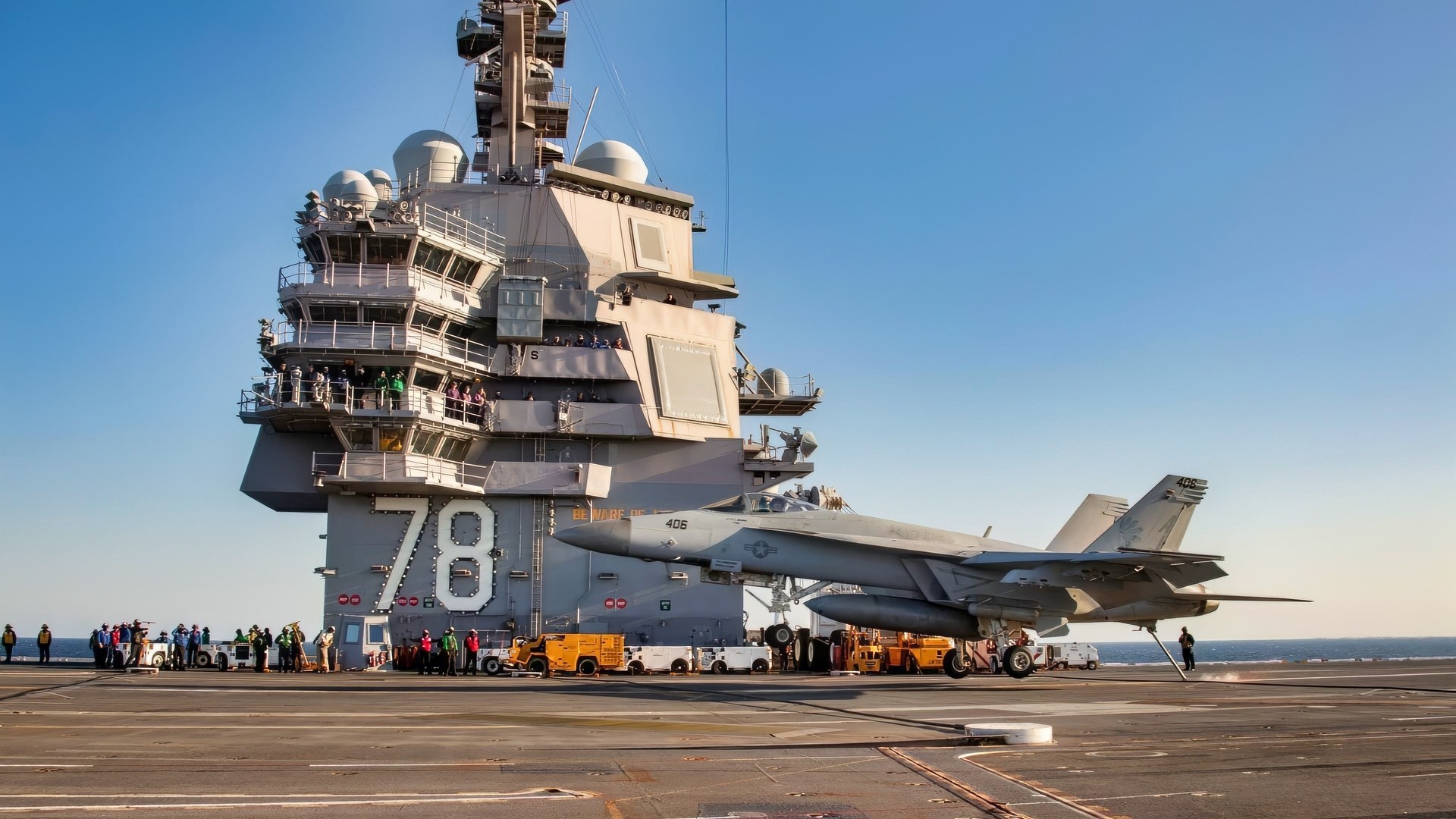
USS Gerald R. Ford Training. Image Credit: U.S. Navy.
In January 2025, the Congressional Budget Office warned that the Navy’s entire 30-year shipbuilding plan would likely cost around 17 percent more than the Navy itself projected, with annual shipbuilding costs averaging roughly $40 billion in 2024 dollars through 2054.
The CBO specifically noted that the plan would require U.S. shipyards to produce “substantially more naval tonnage” than they have over the past decade, while the production rate for nuclear-powered submarines would need to increase significantly.
The report also warned that the Navy’s projected fleet expansion would require sustained shipbuilding budgets far above recent historical funding levels.
Those concerns are already visible across existing naval programs.
Delivery schedules for both the Columbia-class submarines and the Ford-class carriers have been repeatedly affected by industrial base pressures, workforce shortages, supplier delays, and rising material costs over the last several years.
The Navy has also struggled to increase Virginia-class submarine production to the levels required to meet both U.S. fleet needs and future AUKUS transfers. At the same time, the Trump-class program is arriving alongside the Navy’s continued push toward the deployment of hypersonic missiles and high-energy weapons.
In 2025 and 2026, the service continued testing and integration work for the Conventional Prompt Strike Hypersonic missile program, which is already being installed aboard the Zumwalt-class destroyers and is expected to become one of the Navy’s primary long-range strike weapons in the coming decade.
About the Author: Jack Buckby
Jack Buckby is a British researcher and analyst specializing in defense and national security, based in New York. His work focuses on military capability, procurement, and strategic competition, producing and editing analysis for policy and defense audiences. He brings extensive editorial experience, with a career output spanning over 1,000 articles at 19FortyFive and National Security Journal, and has previously authored books and papers on extremism and deradicalization.


