
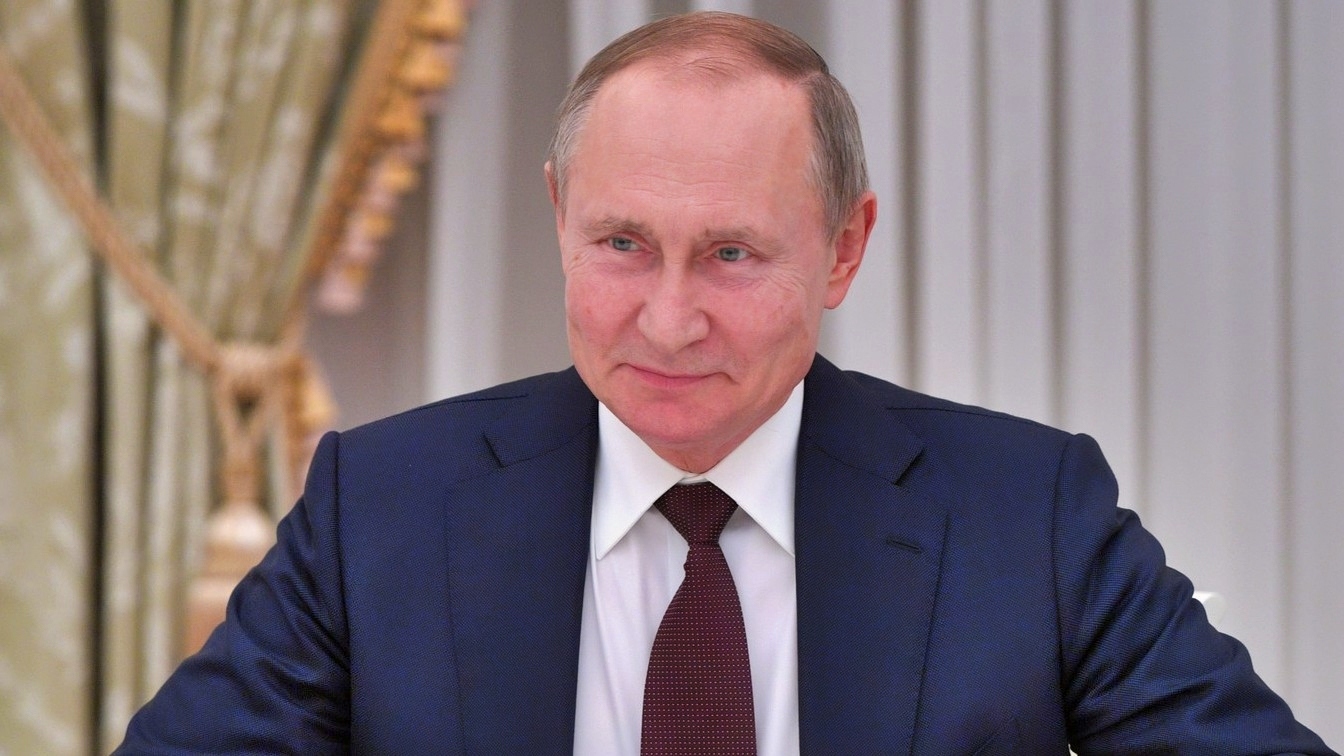
Putin May Be Realizing He Cannot Win the War: Speaking to France 24, Nick Holdsworth, the network’s former Moscow correspondent, argued that the Russian president is under “increasing pressure” on the front and may finally be coming to terms with the possibility that he may not win the war.
And he’s not the only one who thinks Putin may be starting to face reality: U.S. President Donald Trump made similar comments on Monday, implying that Putin may finally be willing to talk.
What Holdsworth Said

Tu-160 Bomber Russian Air Force Photo
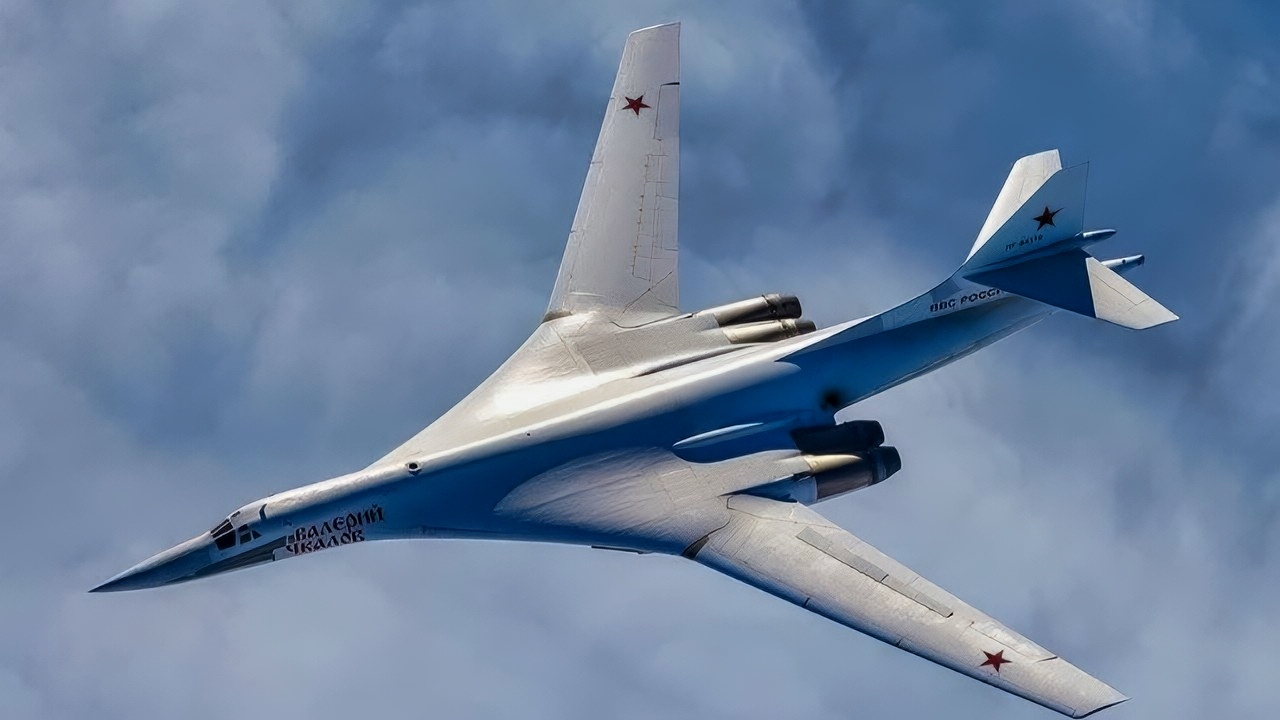
Tu-160 Bomber from Russia. Image Credit: Creative Commons.
In a July 6 interview, Holdsworth described the situation on the battlefield, noting that Russia is losing soldiers at an alarming pace.
“30,000 Russian soldiers killed every month. 90% of them by Ukrainian drones. That’s the replacement rate,” Holdsworth said. “30,000 are the numbers that they’re able to recruit each month. And there are estimates that some Russian soldiers after a few weeks of training, they have a survival rate of around 30 minutes between 10 and 30 minutes on the battlefield,” Holdsworth said.
“And then of course there are these increasingly successful long-range Ukrainian drone attacks on Russian infrastructure, on oil terminals, on electricity stations, on any military object. We just recently at the St. Petersburg economic summit on the opening day, massive explosions in an oil refinery not far from that meeting of Putin and various incoming foreign dignitaries. And we also saw just last week in Moscow a massive explosion at another oil refinery with that famous photo or video footage of the roof of a vast tank, oil tank being blown into the air,” he continued.
Holdsworth said that he sees Putin as being “under pressure,” and said that the “increasingly ferocious attacks” by Russian forces are deliberately targeting civilian infrastructure in Kyiv while claiming to be striking military targets.
“That’s designed to put Ukrainians under increasing pressure,” he said.

Tu-160 Bomber Russian Air Force. Image Credit: Russian State Media.
Holdsworth then described Russia’s military response as “desperation,” and argued that while Putin desperately wants to win the war, “he’s beginning to understand that he may not.”
Russia Is Losing Troops At A Record Pace
Unless Putin is being handed drastically different intelligence than what Western analysts see, he should be aware of the pressure that Holdsworth described. Russia may still be generating enough recruits to keep its offensive going for the time being, but only by replacing catastrophic losses almost as quickly as they occur. Ukrainian and Western estimates consistently suggest that Russian casualties are in the tens of thousands every month, with many more wounded.
It means the war in Ukraine has become one of the bloodiest conflicts between major countries since the Second World War – and this specific part of the Ukraine war is the bloodiest of this conflict.
With every soldier Moscow recruits, it is only replenishing a force that is being steadily consumed – not building a force that can expand its grip over eastern Ukraine and build a so-called “security zone” that Dmitry Medvedev, Deputy Chairman of the Russian Security Council, last week said they would. At this rate, and with logistics in Crimea devastated, Moscow can barely keep hold of the territory it has now, let alone take control of more territory, without making drastic changes.
Keeping Enough Men on the Front Line
Keeping enough soldiers moving to the front line has become one of the Kremlin’s biggest challenges. An investigation published in June by the independent Russian outlet Verstka, working with Important Stories, found that contract recruitment in Moscow had fallen by around one-third this spring compared with the same period in 2025 – despite record signing bonuses worth up to one million rubles.
Military personnel interviewed by the outlet described how recruiters had “combed” through every single village looking for volunteers and traveled to other regions because “there are almost no volunteers left in the city.”
Other investigations have documented similarly desperate recruitment tactics, with independent Russian journalists describing how military recruiters would wait outside bars and liquor stores to approach intoxicated men or individuals struggling with financial hardship, promising immediate cash payments in exchange for signing military contracts. Universities have also become recruitment targets, with students being offered generous enlistment bonuses and financial incentives to volunteer before graduation.
And alongside those efforts, Moscow has continued recruiting prison inmates and is easing enlistment rules for older volunteers. Moscow is finding new and creative ways to recruit more men, but with every man lost, the Russian economy takes another hit, with its labor shortage worsening by the week.
Trump Says Putin Wants A Deal
Speaking on July 6, President Donald Trump said that he believes President Vladimir Putin is aware of the damage being done by Ukraine’s long-range strike campaign, and that leaders of both Russia and Ukraine want to sit down and make a deal. Speaking to reporters, Trump said he believes that Putin “does feel pressure.”
“Well, I think he (Putin) does feel pressure. He wants to end it, and Ukraine wants to end it, and we’re in talks, and we’ll see if we can get it ended,” Trump said.
The president also expressed confidence in bringing the war to an end through diplomacy, saying he believes that a resolution to the war could be closer than many believe.
“I think we’re getting much closer than people realize,” Trump said. “President Putin wants it to end. I will tell you that very strongly. And President Zelenskyy actually wants it to end now.”
About the Author: Jack Buckby
Jack Buckby is a British researcher and analyst specializing in defense and national security, based in New York. His work focuses on military capability, procurement, and strategic competition, producing and editing analysis for policy and defense audiences. He brings extensive editorial experience, with a career output spanning over 1,000 articles at 19FortyFive and National Security Journal, and has previously authored books and papers on extremism and deradicalization.


Dav_Daddy
July 6, 2026 at 5:27 pm
Am I the only one who thinks that Ukraine’s strikes on Crimea are looking less like less like an attempt to disrupt logistics (which they 100% are) and more like a shaping operation to pave the way for an amphibious assault? I’m not sure how they keep their people supplied supposing they establish a beachhead?