

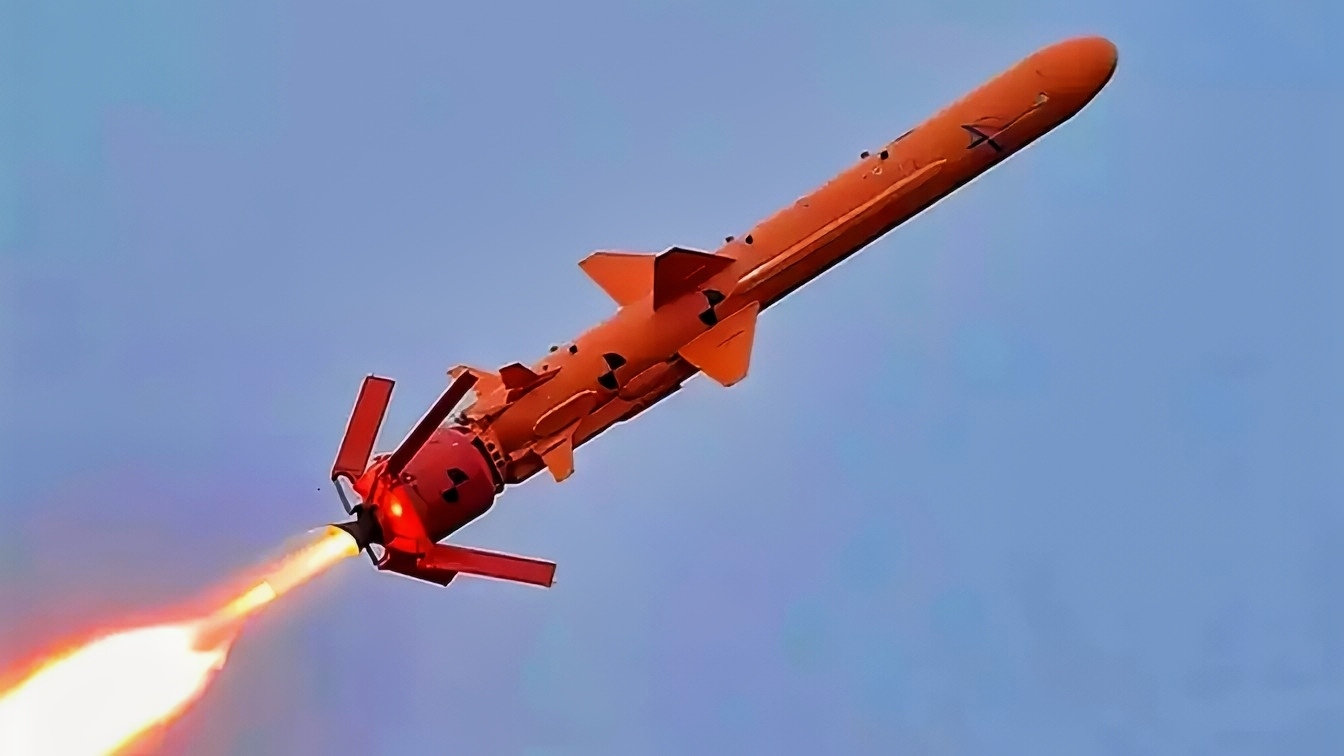
Russian Drones Are Crossing into NATO Territories – NATO’s southeastern border is being violated by Russian projectiles with growing frequency, and Romania is increasingly shooting back.
Izmail, one of Ukraine’s key Danube River ports, sits directly across the river from Romania, with parts of the waterway forming the international border. Last week, a civilian Togo-flagged vessel sustained damage near the port, and four people were injured in the attack. Russian drones have violated Romanian airspace at least 23 times so far in 2026, according to Romanian Defense Ministry data reported by ABC News. Just 18 incursions were reported between Russia’s February 2022 invasion of Ukraine and the end of 2025.
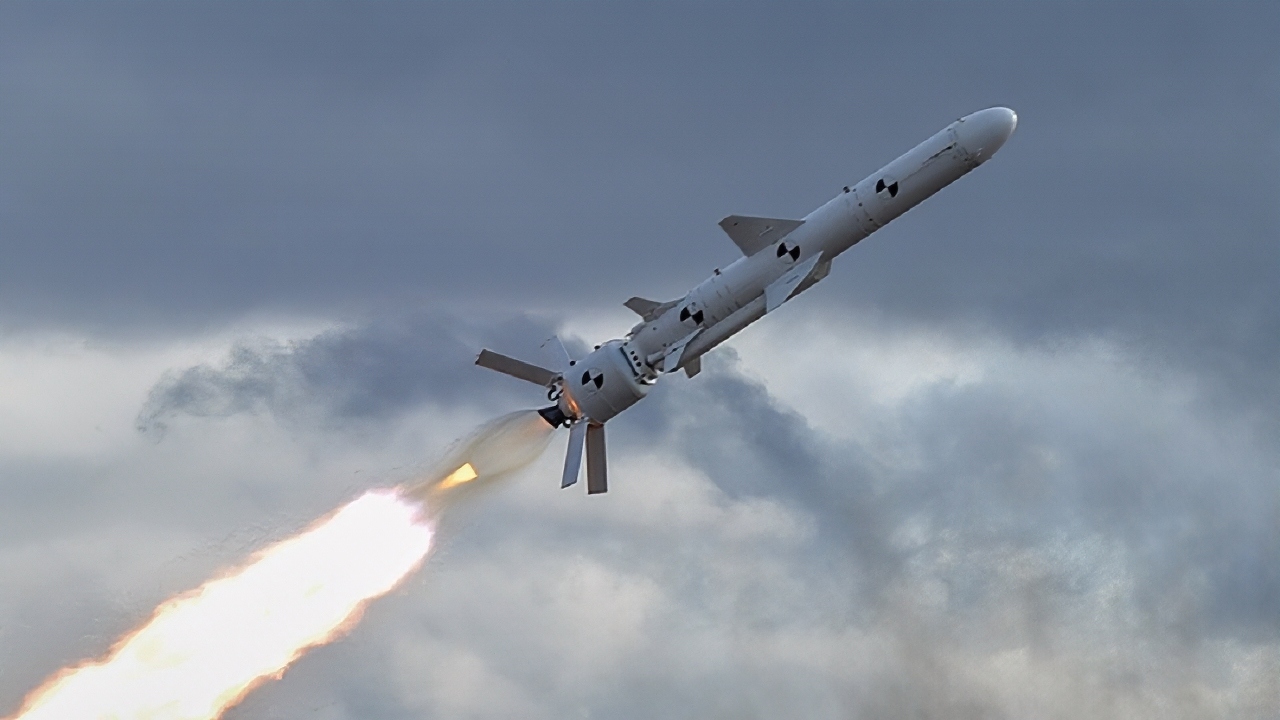
Neptune Missile. Image Credit: Creative Commons.
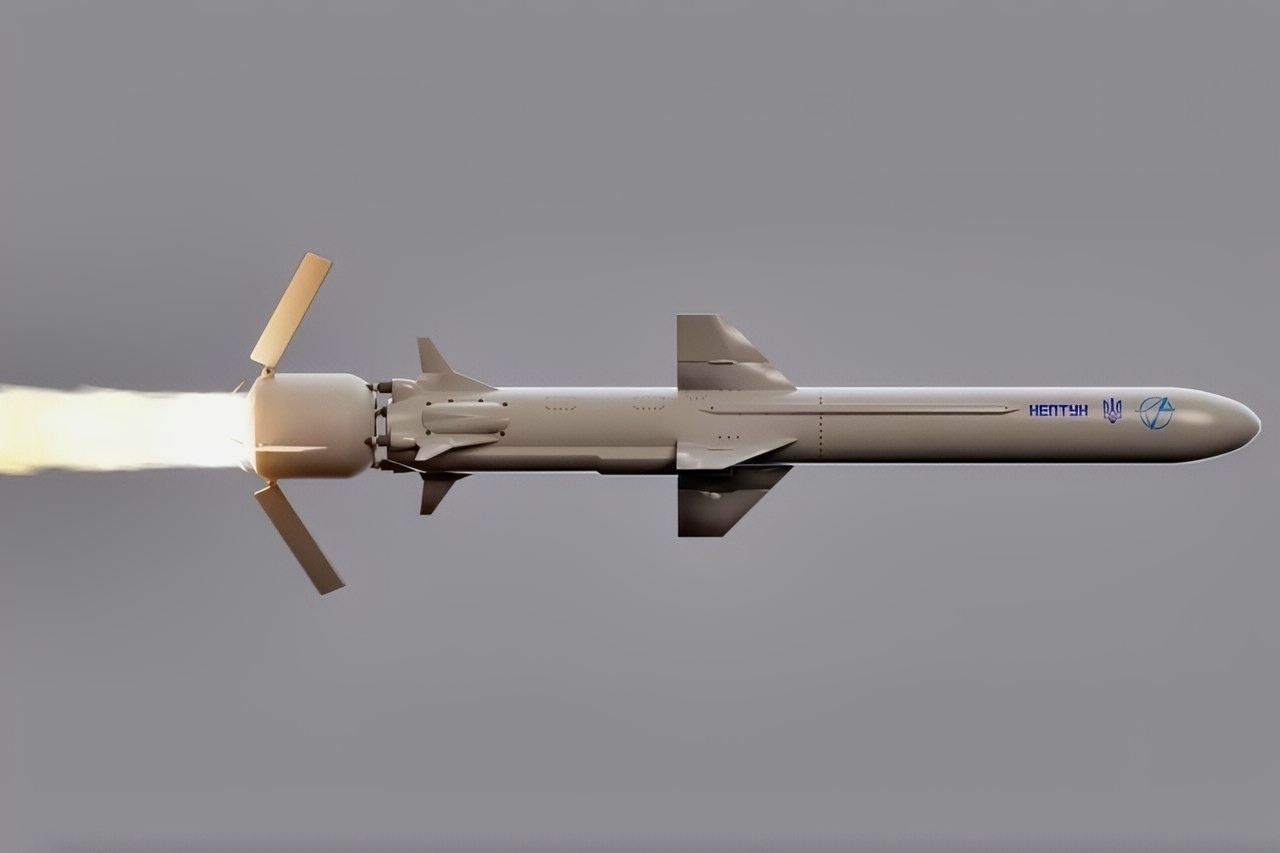
Neptune Missile. Image Credit: Government of Ukraine.
Russian Drones Crash on Romanian Soil
Romania’s Defense Ministry said its radar systems detected aerial targets close to the Ukrainian border at 2:23 a.m. on Thursday. Two Spanish F-18s deployed on NATO air-policing duties were scrambled, while a Romanian IAR-330 SOCAT helicopter was sent to investigate.
At 3:21 a.m., a drone crossed into Romanian airspace around eight miles east of Galați. Three minutes later, the helicopter crew reported that it had crashed roughly 2.5 miles northeast of Grindu, in an uninhabited area. The impact started a fire, but there were no casualties or property damage. Romanian authorities have not yet identified the drone’s origin.
Romania Scrambles Jets Over Black Sea
Hours later, Romanian F-16s were sent to deal with a second threat, this time in the Black Sea.
A commercial ship reported a small maritime drone drifting near the Neptun Alpha platform, around 80 nautical miles east of Constanța. One F-16 fired its onboard cannon at the drone. Romanian explosive ordnance disposal personnel subsequently neutralized it and confirmed that it was carrying explosives.
“A maritime drone was destroyed by the Romanian Army using the onboard cannon of a Romanian F-16 aircraft a few moments ago, in the area of the Neptun Deep platform,” Romanian Defense Minister Radu Miruță said on Thursday afternoon.
The device had been only a few hundred yards from work, connected to the Neptun Deep gas development, and could have endangered hundreds of workers. Ukrainian authorities told Romania that the drone was not launched by them, according to Euronews.
Romanian President Nicușor Dan blamed Russia for the incident.
Neptun Deep is Romania’s largest natural gas project. Operator OMV Petrom says production remains scheduled to begin in 2027, with the project eventually expected to produce around 8 billion cubic meters of gas annually.
Incursions Increase
Such incidents are hardly the only threats that have arrived along Romania’s borders in recent weeks.
As of Aug. 17, Romanian authorities had found drones or drone fragments on their territory 27 times this year.
Ukrainian sites near the Romanian border have been targeted by Russia some 54 times in 2026. This is almost double the approximately 28 such attacks recorded in 2025. At least 42 air-policing missions have been undertaken by NATO jets in Romania this year — more than in any year since Russia’s full-scale invasion.
Romanian Apartment Block Hit in May
In May, a Geran-2 attack drone struck an apartment block in Galați. The 30-kilogram Russian-made warhead exploded on impact, causing a major blaze and leaving two people injured.
Romania has since been forced to shoot down multiple Russian-launched drones. On July 24, a Romanian F-16 downed a drone over the country’s territory. Two further interceptions took place the same week. On Aug. 16, a Spanish F-18 shot down a drone entering Romania via Moldovan airspace.
The ‘Gray Zone’
Stray drones and missiles are not the only threats Moscow poses to NATO.
Indeed, Russia is already involved in extensive “gray zone” warfare against NATO members.
“Hostile states have recognized that cyberattacks, influence operations and economic disruption can achieve strategic objectives without crossing the threshold into open conflict,” Craig Watt, senior threat intelligence specialist at Quorum Cyber, recently told the British radio station LBC.
In July, Poland said Russia’s Federal Security Service (FSB) had attempted to launch a major cyberattack on the country’s energy grid. If the attack had been successful, it could have prompted blackouts across Poland during the cold winter period.
About the Author: Georgia Gilholy
Georgia Gilholy is a journalist based in the United Kingdom who has been published in Newsweek, The Times of Israel, and the Spectator. Gilholy writes about international politics, culture, and education.


