


London and Berlin are joining forces to build a long-range cruise missile that, once manufactured, would be capable of hitting targets over 2,000 kilometers, or about 1,200 miles distant — and, in effect, putting a significant portion of Russia within its crosshairs. Dubbed the Deep Precision Strike missile, or DPS, it is intended to provide the NATO alliance with greater options to counter an increasingly revanchist Russia.
Once realized, DPS would add a powerful new arrow in the NATO quiver. But the cooperation on the new missile also marks the opening of a new chapter in Europe’s intricate defense and security relationships and suggests a significant reordering of the continent’s poles of leadership — away from the historically significant Paris-Berlin cooperation and toward the British Isles.
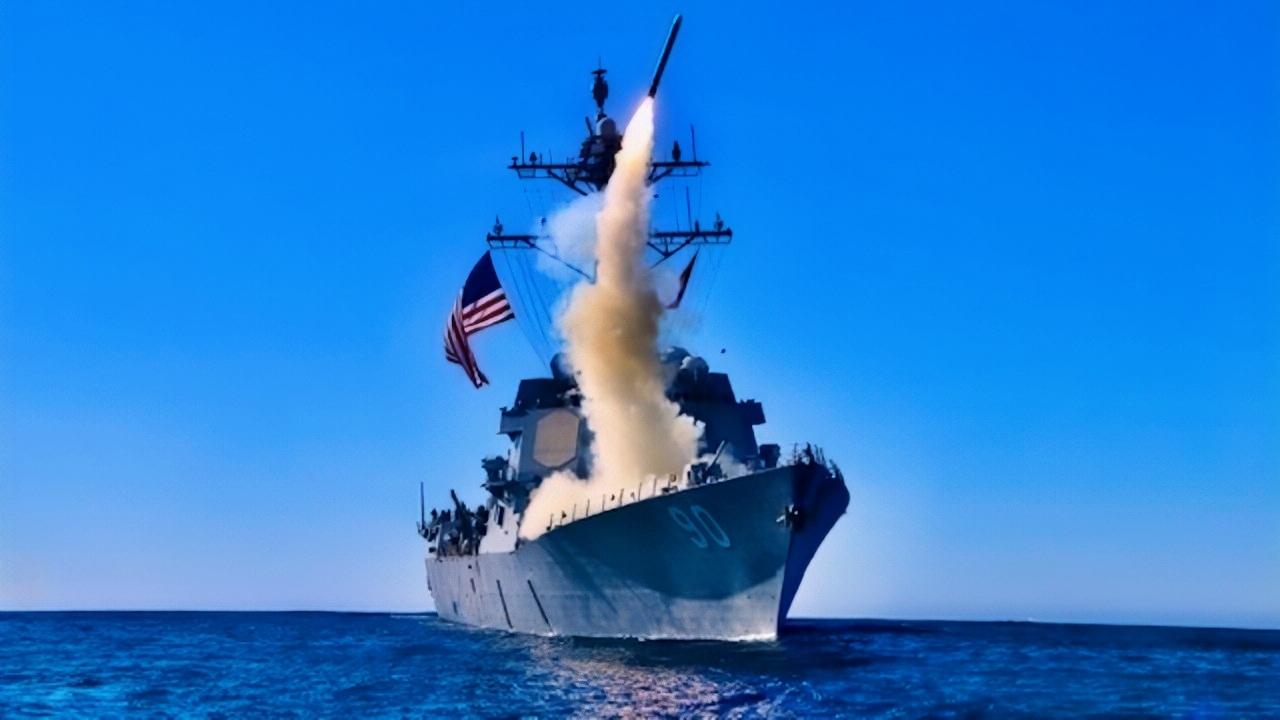
(Dec. 01, 2020) – The guided-missile destroyer USS Chafee (DDG 90) launches a Block V Tomahawk, the weapon’s newest variant, during a missile exercise. This event marked the first time a Block V Tomahawk missile was operationally tested, marking the Navy’s transition to a more advanced capability for the fleet. Block V includes an upgrade that will enhance navigation performance and provide robust and reliable communications. Chafee is currently assigned to Carrier Strike Group ONE and is homeported in Pearl Harbor. (U.S. Navy photo by Ens. Sean Ianno/Released)
Paris & Berlin: A Disagreeable Relationship
While Germany and France have, in previous years, been the continent’s leaders, that relationship has soured as of late. Paris and Berlin are by no means on bad terms; their defense cooperation relationship is at a nadir — a low point that has seemingly provided a window of opportunity for London.
The collapse of the Future Combat Air System, a sixth-generation fighter jet project led by France and Germany, illustrated how deeply infighting between the two countries had been and how divergent their goals for the project had been. While France’s Dassault would have liked to take on the lion’s share of the FCAS design work, an agreement to cobble together the countries’ disparate requirements could not be reached. While France operates its own air-dropped nuclear weapons as well as a naval aviation element, Germany has no such organic capabilities and therefore no need for either requirement.
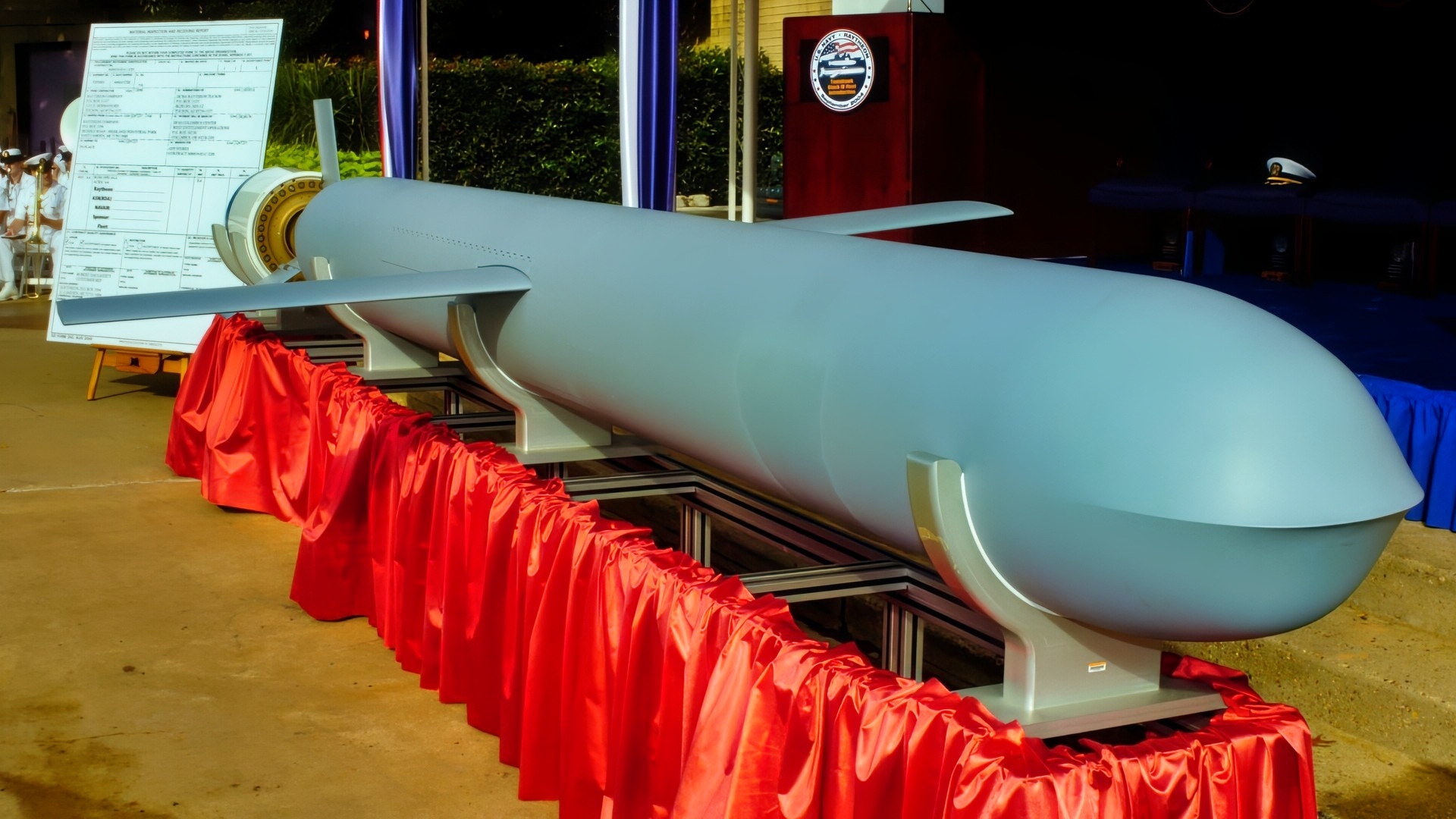
Tomahawk Block IV Missile. Image Credit: Creative Commons.
Zeitenwende Spending
Berlin’s spending blitz on big-ticket defense projects was kicked off by former Chancellor Olaf Scholz and his historic Zeitenwende speech before the Bundestag, or Germany’s parliament, shortly after Russia’s full-scale invasion of Ukraine in February of 2022. In that speech, the chancellor explained that Germany and Europe were no longer in a time of peace and, pushed by Russian aggression in the east, would rearm at a scale not seen since the Cold War, when the West German Bundeswehr anchored NATO’s central European presence.
Sustained and expanded by Scholz’s successor in the Chancellery, Friedrich Merz, Berlin has more money available for defense projects than at any time since the end of the Cold War — and clearly an interest in putting those Euros to work. At the moment, the United States underpins Europe’s security, both in terms of overall funding and capabilities, and provides crucial intelligence, air-to-air refueling, satellite reconnaissance, and strike capabilities that Europe would struggle to replicate in a timely manner.
Elbridge Colby, the United States Under Secretary of Defense for Policy, was seemingly in agreement. “The simple fact of the matter is that no alternative country or countries can compete with the U.S. defense industrial base, either in quantity or quality,” wrote on X, formerly Twitter.
“The United States, as the President says, makes the best equipment, and we make it at a scale that no plausible competitor can match,” Colby added.
The NATO Alliance and Future Capabilities
Speaking to The Telegraph, a British daily newspaper, Dr. Sidharth Kaushal, a technology expert at the Royal United Service Institute, explained that the NATO alliance has only a limited number of options to strike deep into Russian territory, should it have cause to do so.
“Fundamentally, DPS is the ability to strike a target that is strategically significant, such as the enemy’s headquarters, or paralyzing its ability to sustain the front line by striking logistics nodes,” he explained to The Telegraph.
“There is almost nothing beyond a relatively small number of Tomahawks that could hit those targets,” Dr. Kaushal said, a reference to the American-made cruise missile with a nearly 1,500-mile range.
The Telegraph reports that British officials are keen to bring the project forward, establishing a formal program in 2027, with production of the DPS to commence in 2034. They write that two distinct versions of the Deep Precision Strike missile are being considered: “a low-flying cruise missile which flies under Russian air defenses, and a hypersonic missile which travels at five times the speed of sound.”
About the Author: Caleb Larson
Caleb Larson is an American multiformat journalist based in Berlin, Germany. His work covers the intersection of conflict and society, focusing on American foreign policy and European security. He has reported from Germany, Russia, and the United States. Most recently, he covered the war in Ukraine, reporting extensively on the war’s shifting battle lines from Donbas and writing on the war’s civilian and humanitarian toll. Previously, he worked as a Defense Reporter for POLITICO Europe. You can follow his latest work on X.


