

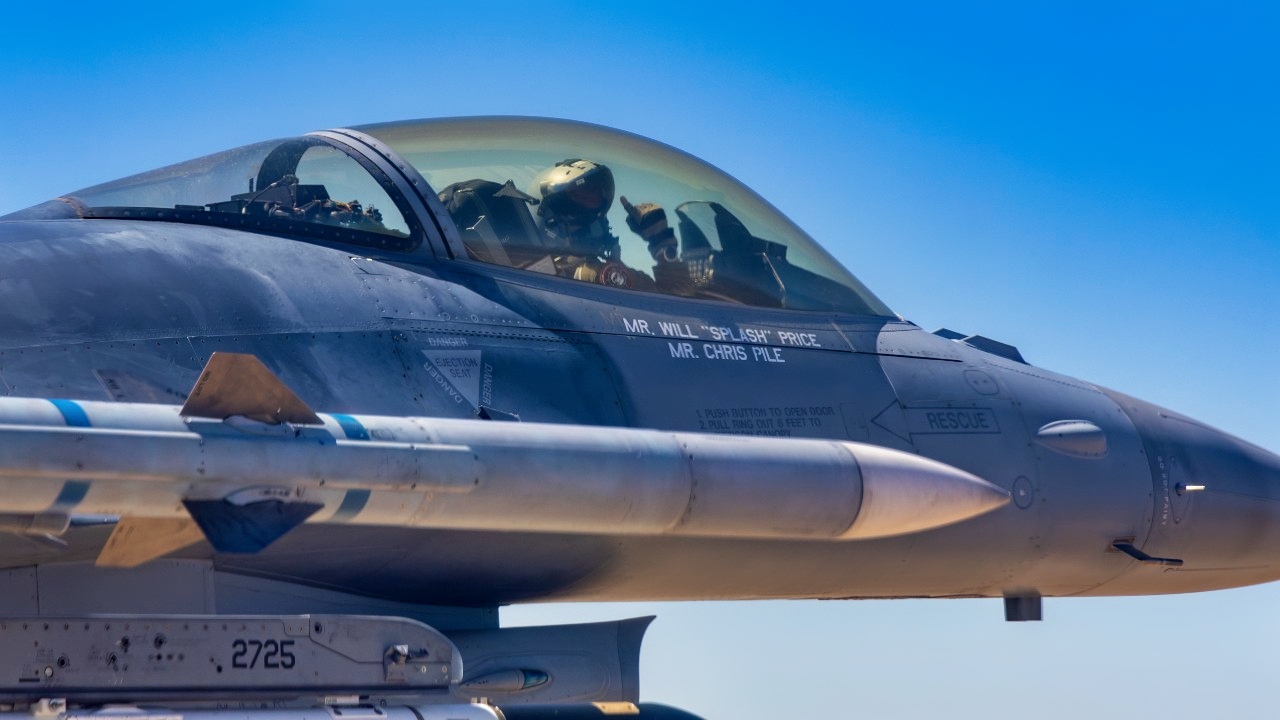
Ukraine’s F-16 Scored Its First Air-to-Air Kill. The Russian Jet Was Likely an Su-35: Ukraine has recorded the first publicly acknowledged air-to-air victory by one of its Western-supplied F-16 fighters. Gen. Dan Caine, chairman of the U.S. Joint Chiefs of Staff, told senators that a Ukrainian F-16 recently shot down a Russian fighter, according to reporting on his July 21 testimony.
Caine did not identify the Russian aircraft, weapon, location, or engagement range. His statement appears to match a July 8 incident in which Ukraine’s Air Force said it had destroyed a Russian Su-35 in the eastern sector. The Ukrainian announcement initially referred only to a Russian military aircraft before identifying it as an Su-35.

Sukhoi Su-35 Fighter. Image Credit: Creative Commons.

Su-35 Fighter from Russia. Image Credit: Creative Commons.
Public wreckage imagery and reporting from Russian military channels supported the loss and indicated that the pilot survived. A specialist review of the available evidence connected the Su-35 to Caine’s testimony. No government has released a complete after-action account, so the connection remains highly plausible rather than formally confirmed.
The engagement expands the F-16’s Ukrainian combat record beyond missile and drone interception. Before the aircraft arrived, analysts expected it to strengthen air defense, hunt cruise missiles, and gradually replace aging Soviet-designed fighters. A Reuters examination of its expected role also warned that Russia retained stronger radars, longer-range weapons, and dense ground defenses.
Ukraine’s F-16 Force Is Taking on More Missions
Ukraine introduced the F-16 in 2024 and has used it for patrols, interceptions, and strike missions. The aircraft has become a multirole part of Ukraine’s air-defense system, rather than a separate prestige program.
The fighter kill shows operational progress without making the F-16 decisive by itself. Ukraine still has limited numbers of aircraft, pilots, maintainers, spare parts, and missiles. Those constraints explain why Western fighters cannot independently overturn the air balance.
Ukraine’s F-16s also went weeks without enough U.S.-made air-to-air missiles in late 2025, according to Reuters reporting on the shortage. Fighter patrols lose value when crews must conserve the weapons that make them credible.
The Su-35 Is One of Russia’s Most Valuable Fighters
The Su-35 is a modernized Flanker used for air defense, escort, and strike support while carrying long-range air-to-air weapons. Each confirmed loss therefore removes more capability than the destruction of an older fighter with a narrower mission set.
Russia has lost several Su-35s during the war, although official claims and open-source totals differ. The fleet has suffered confirmed and reported losses while production continues. The same factory also supports export orders, creating competition for new aircraft.
One shootdown will not cripple Russian tactical aviation. It does require Su-35 crews to account for Ukrainian fighters while also avoiding surface-to-air missiles. The aircraft remains a dangerous opponent, as its combat role and design demonstrate.
Russian fighters have often operated from standoff positions, using superior radar and missile reach to pressure Ukrainian aircraft and support strike packages near the front. A credible F-16 counter-air threat could force those patrols farther back or require more escorts and electronic support, even when Ukraine cannot maintain constant coverage.
The Kill Reflects Ukraine’s Layered Air Defense
Caine presented the engagement as evidence of Ukraine’s broader air-defense development. Fighters, ground radars, surface-to-air missiles, electronic warfare, and distributed warning systems create overlapping risks for Russian aircraft.
Public evidence does not establish a close dogfight, Patriot ambush, missile type, or engagement distance. It also does not show whether the F-16 received targeting data from another platform. The requirement for additional aircraft, weapons, training, and support remains unchanged.
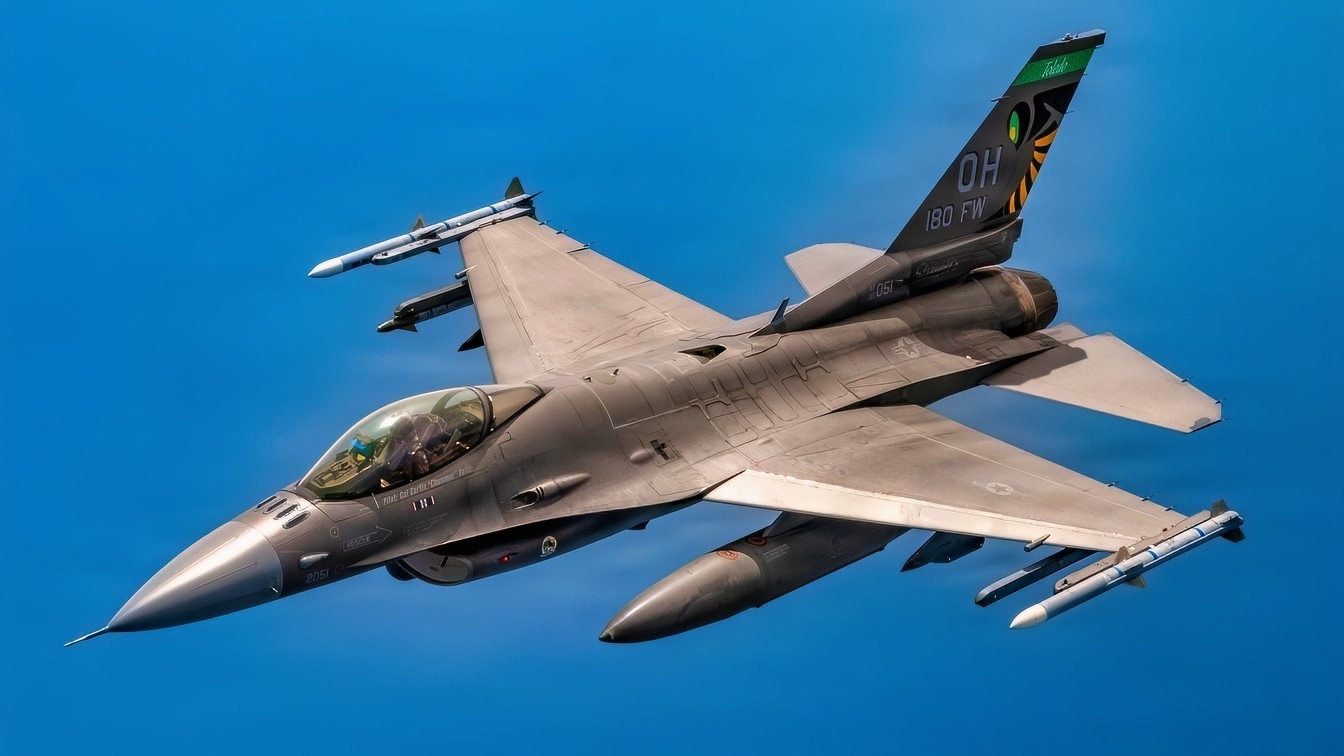
An F-16 Fighting Falcon, assigned to the 180th Fighter Wing, flies alongside a KC-135 Stratotanker with the 121st Air Refueling Wing over the skies of Canada, May 20, 2026. The F-16 Fighting Falcon can fly more than 500 miles, but the KC-135 can extend its radius beyond that and deliver airpower anywhere, anytime, globally. (U.S. Air National Guard photo by Airman 1st Class Taylor Warehime)
The multinational Air Force Capability Coalition was created to build a sustainable force through aircraft, training, maintenance, and infrastructure. Its original plan treated the F-16 as a long-term capability rather than a single battlefield solution.
Ukraine Still Does Not Control the Sky
Russia retains more combat aircraft, extensive air defenses, and the ability to launch long-range missiles and glide bombs from protected positions. Ukrainian F-16s must operate carefully to survive those threats. The first air-to-air victory changes Russian planning more than the overall balance.
As of July 24, the public record establishes that a Ukrainian F-16 shot down a Russian fighter and that Ukraine reported destroying an Su-35 on July 8. The operational details linking those facts remain classified or undisclosed.
About the Author: Harry J. Kazianis
Harry J. Kazianis (@Grecianformula) was the former Senior Director of National Security Affairs at the Center for the National Interest (CFTNI), a foreign policy think tank founded by Richard Nixon based in Washington, DC. Harry has over a decade of experience in think tanks and national security publishing. His ideas have been published in the NY Times, The Washington Post, The Wall Street Journal, CNN, and many other outlets worldwide. He has held positions at CSIS, the Heritage Foundation, the University of Nottingham, and several other institutions related to national security research and studies. He is the former Executive Editor of the National Interest and the Diplomat. He holds a Master’s degree focusing on international affairs from Harvard University.


