
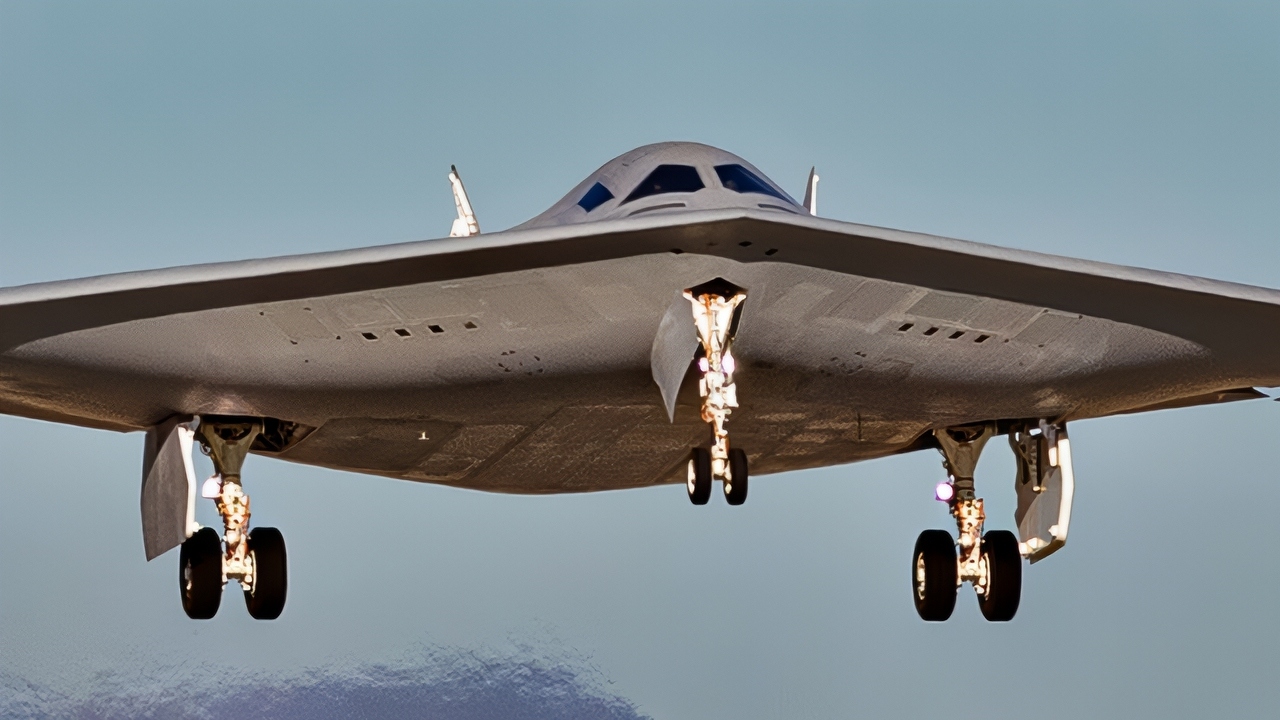
Key Points and Summary – Chinese researchers claim new tactics and missiles could shoot down the B-21, based on a November 2023 simulation that used Mach-6, AI-linked weapons with solid-fuel pulse engines and continuous near-space communications.
-In the model, a B-21 Raider dodged the first shot, then was targeted by a retasking missile; both bomber and a companion drone were eventually downed.
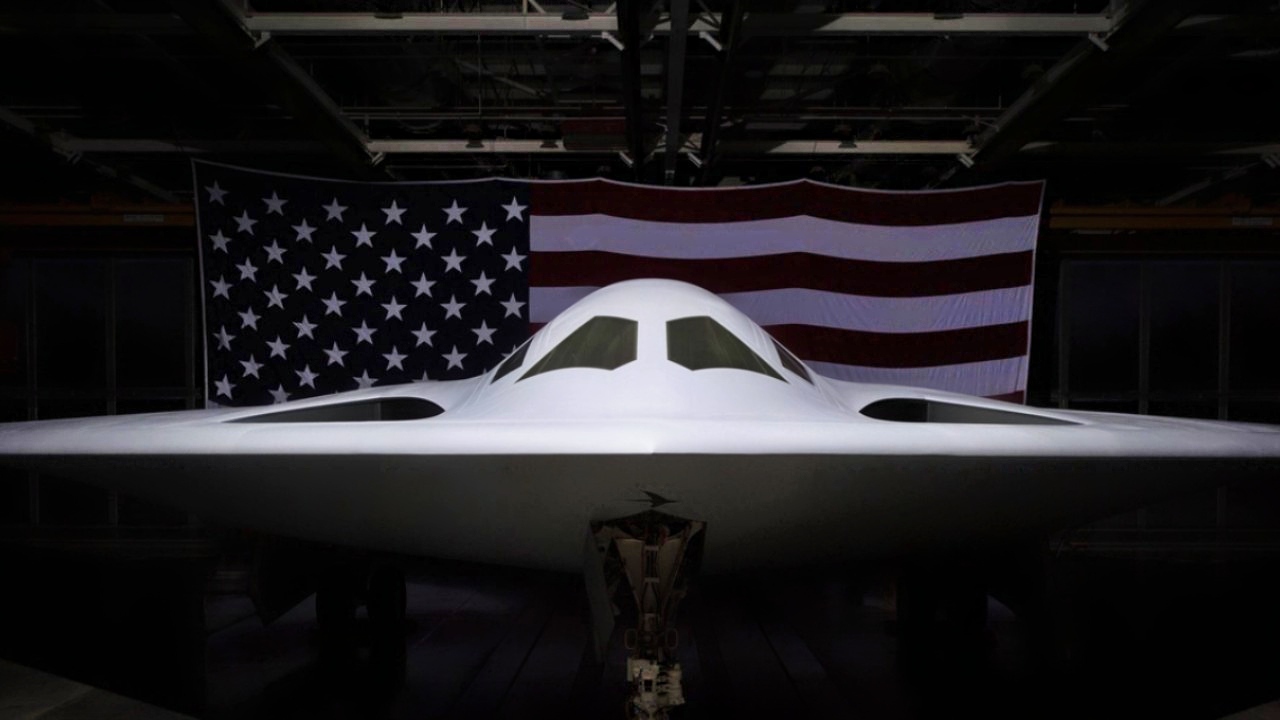
B-21 Raider Bomber. Image Credit: Creative Commons.
-The analysis, from a PLA-linked university, relied on limited, public B-21 data—so results are speculative—and even it admits a counterstrike would spiral quickly.
-U.S. advantages in software, EW, teaming with loyal wingmen, and fielding more Raiders could preserve penetration capability despite China’s advances overall.
China Claims It Can Shoot Down the B-21: Here’s How
A second B-21 Raider has flown for the first time and the platform looks set to enter mass production soon – but Chinese researchers believe they’re already capable of shooting down America’s next-generation stealth bomber.
The Raider, which is expected to replace the aging and maintenance-heavy B-2 Spirit and B-1B Lancer, is equipped with the most advanced stealth technology ever conceived on an American jet.
As the U.S. Air Force’s next-generation stealth bomber prepares to enter operational service in the 2030s, Chinese researchers continue exploring new technology capable of detecting stealthy aircraft and shooting them down before they can deliver their payload.
What Researchers Say
In November 2023, Chinese researchers staged a virtual battle between the B-21 Raider and Chinese hardware.
The researchers set out to determine what it would take for the Chinese military to detect and intercept a Raider.
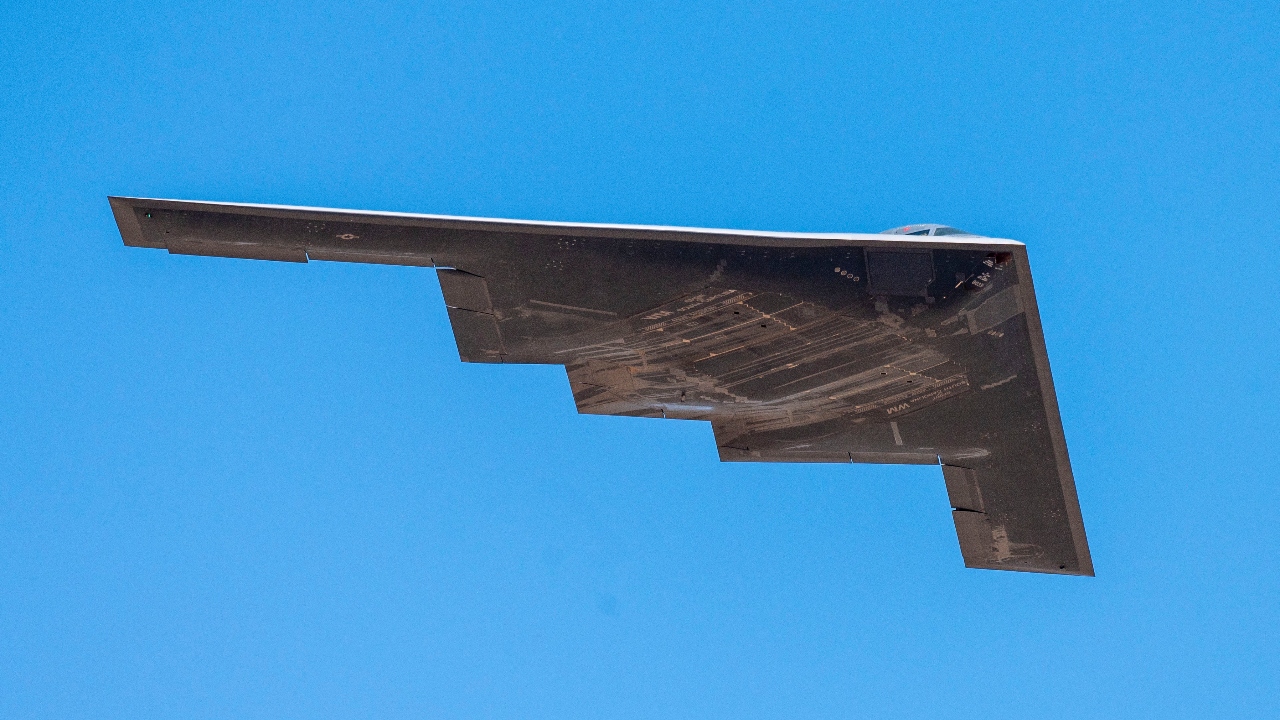
A B-2 Spirit makes a low pass flyover as part of the Warriors over the Wasatch airshow at Hill Air Force Base June 29, 2024. The 2024 Warriors over the Wasatch airshow was centered around the “Breaking Barriers Together” theme, celebrating one community. The B-2 Spirit, the predecessor to the new B-21 Raider, has been the U.S. Air Force’s premiere stealth bomber for more than 20 years. (U.S. Air Force photo by Senior Airman Jack Rodgers)
The results were outlined in a paper published in Acta Aeronautica et Astronautica Sinica, a peer-reviewed journal.
After a series of war games, researchers determined that through the combined use of new tactics and advanced military hardware, Chinese forces could detect the Raider, despite its improved stealth coatings and shape.
What We Know
In one of the wargames, an aircraft with similar attributes to the B-21, along with its companion drone, was shot down by Chinese air-to-air missiles, which are capable of traveling at speeds up to Mach 6.
However, the same researchers also found that intercepting the aircraft wouldn’t be quite as simple in the event of an American counterstrike. The team suggested that “it could take hours before the dust settles,” arguing that a battle between China and America’s most advanced aircraft and air defense systems would quickly become intense and complicated.
During the wargame, the stealth aircraft reportedly detected the first missile launched by Chinese forces and was able to make a sharp turn and avoid the attack.
The missile, however, was equipped with advanced technology and communicated with another missile, which was equipped with artificial intelligence.
That communication meant that the AI-capable missile was able to move from near space toward the stealth aircraft quickly.
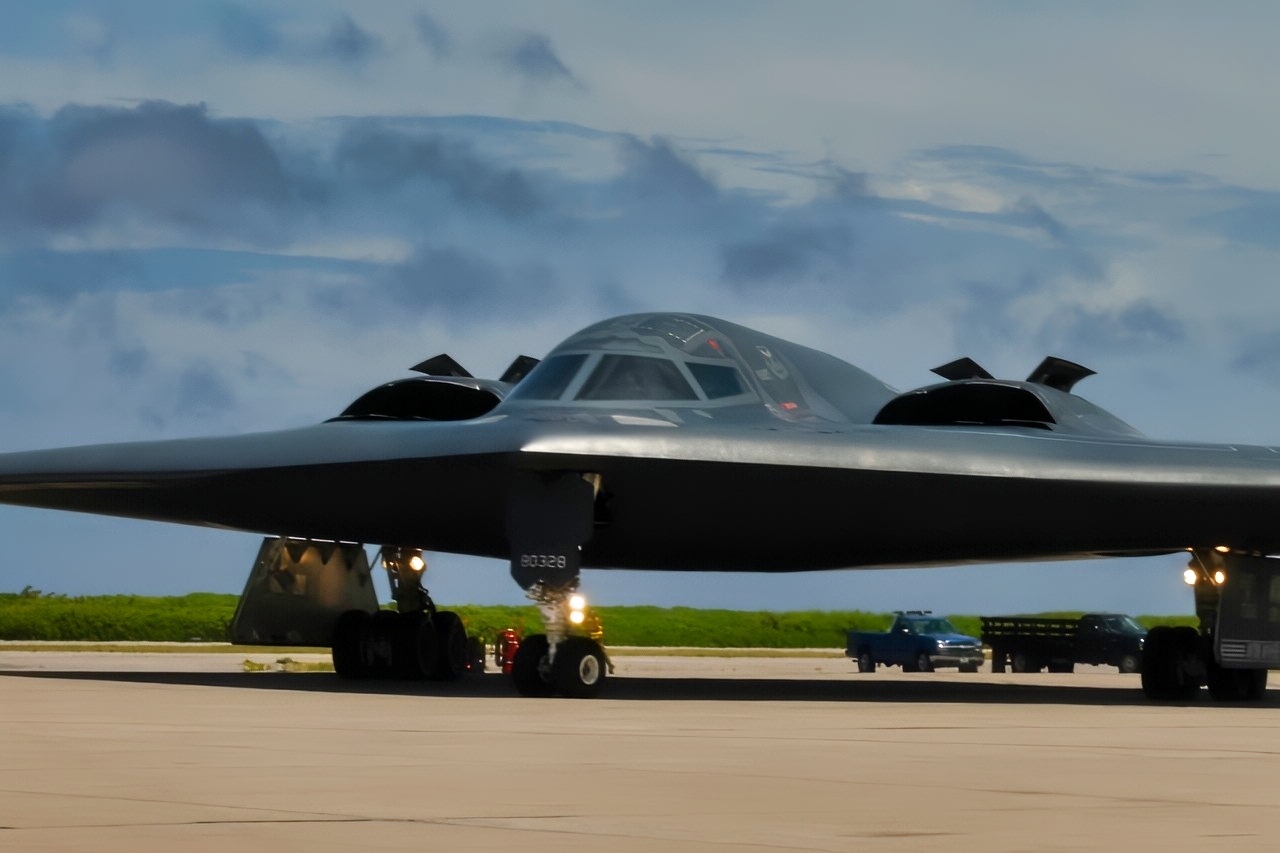
A B-2 Spirit Stealth Bomber, deployed from Whiteman Air Force Base, Missouri, taxis for take off at Naval Support Facility Diego Garcia, in support a Bomber Task Force mission, Aug. 26, 2020. BTF missions allow U.S. Strategic Command to provide persistent, long-term bomber presence to aid in U.S. Indo-Pacific Command’s commitment to a free and open Indo-Pacific. (U.S Air Force photo by Tech. Sgt. Heather Salazar)
The simulation reportedly showed that the aircraft did not expect the Chinese missiles to be capable of switching their targets mid-air, revealing a vulnerability that could well have been addressed since, or which could be addressed in future upgrades.
Why Do This?
The authors of the report represent the Northwestern Polytechnical University in Xian, a Chinese institution currently sanctioned by the United States for its connections to the People’s Liberation Army. While it’s not uncommon for any institution in China to have a direct or indirect connection to the Chinese government in some capacity, the university’s documented connections to the People’s Liberation Army suggest that the research was specifically designed to inform military researchers, engineers, and officials.
Old Data?
Notably, the research was conducted based on what was known about the B-21 at the time. The Raider’s first flight took place on November 10, the same month the report was published. It was at this point that the first flying Raider prototype moved from Plant 42 in Palmdale, California, to Edwards Air Force Base, where it has since undergone additional flight testing.
By November 2023, Chinese researchers war-gaming the B-21 Raider would have had access only to broad, publicly available specifications: that it was a subsonic, long-range, dual-capable stealth bomber designed for penetrating advanced air defenses, slightly smaller than the B-2, with an open-architecture system to facilitate future upgrades.
Known features included its refined stealth shaping, blended inlets, and coatings intended to reduce radar, infrared, and visual signatures. What they could not know were exact radar cross-section values, payload capacity, sensor suites, or electronic warfare capabilities. These gaps would force analysts to make best-guess estimates – likely assuming RCS levels lower than the B-2, and payloads sufficient for both direct-attack and standoff weapons.
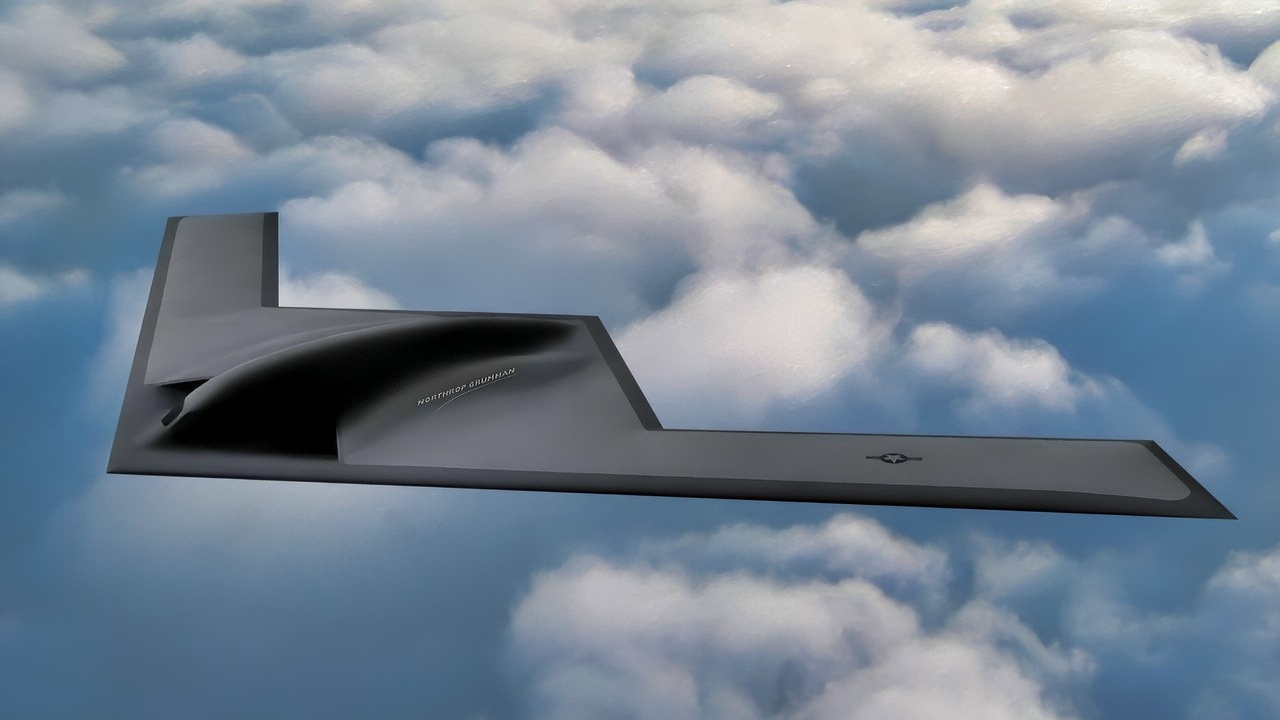
B-21 Raider Bomber Photo. Image Credit: Northrop Grumman.
While their assumptions could technically alter the modeled effectiveness of Chinese intercepts, they would likely not change the overall conclusion of the research: shooting down the Raider is theoretically possible, but a counter-strike scenario would escalate very quickly and unpredictably.
“Smart” Missiles
The “smart” hypersonic missiles used in the wargame used a new solid fuel “pulse engine” – a technology that allows the engine to adjust its power output at any point during flight. The engine enables the missile to reach near space and then quickly move towards enemy aircraft at a very high speed.
So while the research suggests that the U.S. could respond by making software changes to ensure the aircraft understands new missile behavior, it also reveals that China may have solved a major hurdle related to missile communication at near-space altitudes. Specifically, missiles have long suffered communications blackouts when traveling at hypersonic speeds near the Earth’s atmosphere. Researchers leaned on a method confirmed in January 2022, however, that allows operators to maintain consistent communication with a hypersonic missile.
According to a South China Morning Post (SCMP) report from August 2022, scientists in Beijing discovered a “highly reliable” ground communications technique for use in hypersonic weapon test flights that allows ground control to remain in constant contact with a missile – even when it traveled at 20 times the speed of sound.
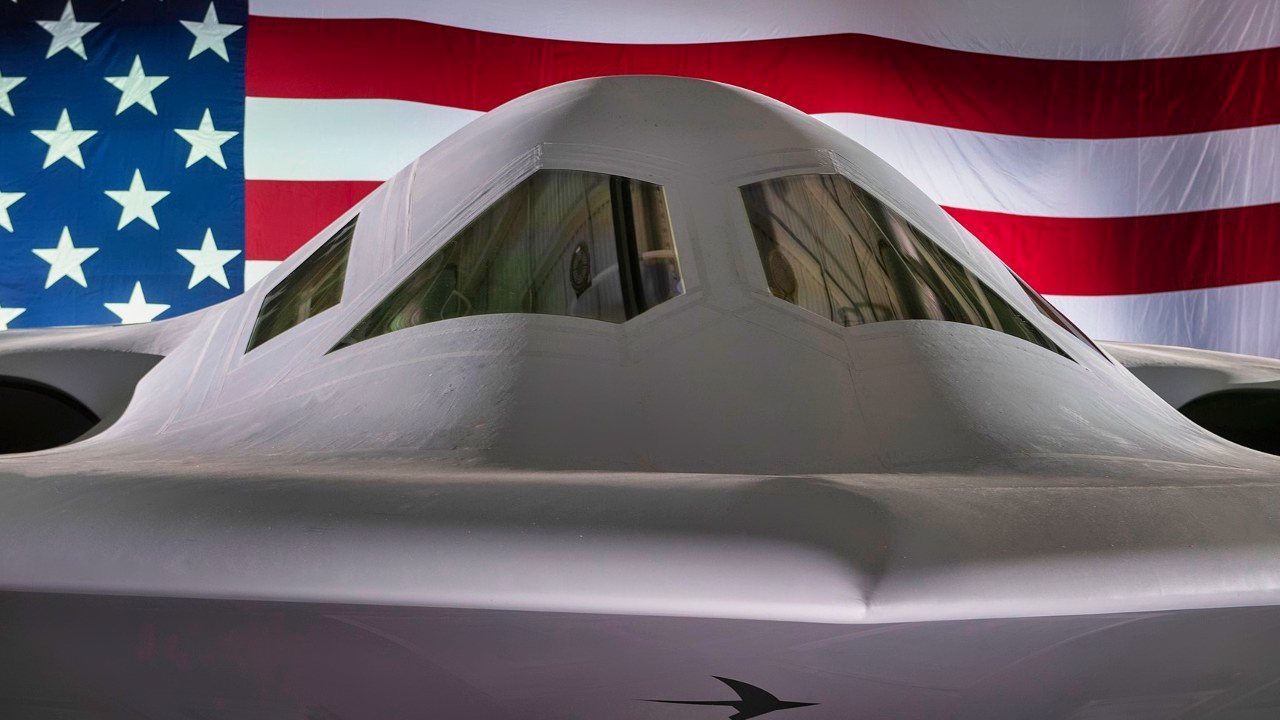
The B-21 Raider was unveiled to the public at a ceremony December 2, 2022 in..Palmdale, Calif. Designed to operate in tomorrow’s high-end threat environment, the B-21 will play a critical role in ensuring America’s enduring airpower capability. (U.S. Air Force photo)
According to the team behind the project, a high-frequency communication network that consists of ground stations, ships at sea, and satellites were used to support the real-time streaming of data from a moving hypersonic missile.
“The global coverage of the network means it could be used by the military, for example, to carry out intelligence gathering or precision strikes on targets anywhere on the planet, according to the researchers. It would also allow commanders to hit the ‘kill button’ to abort a mission at any time,” SCMP reported at the time.
B-21 Raider In Trouble?
So, is the Raider dead on arrival?
Hardly.
Early software refinements, integration with loyal wingmen drones, and a large production run will give the U.S. Air Force both the resilience and flexibility they need to conduct long-range bombing missions, deep into enemy territory.
Combined with America’s own advances in electronic warfare and counter-stealth, the chaos of a high-speed air battle may tilt an eventual air battle in America’s favor.
About the Author:
Jack Buckby is a British author, counter-extremism researcher, and journalist based in New York who writes frequently for National Security Journal. Reporting on the U.K., Europe, and the U.S., he works to analyze and understand left-wing and right-wing radicalization, and reports on Western governments’ approaches to the pressing issues of today. His books and research papers explore these themes and propose pragmatic solutions to our increasingly polarized society. His latest book is The Truth Teller: RFK Jr. and the Case for a Post-Partisan Presidency.
More Military
3 Planes Canada Could Choose to Replace the F-35
F-35I Adir: Israel Has a Custom Stealth Fighter
Russia Might Never Have Another Aircraft Carrier


