

Key Points and Summary – The B-21 Raider, Northrop Grumman’s successor to the B-2, is defying Pentagon stereotypes by staying on schedule and within budget.
-After a public unveiling in 2022, the first jet flew in November 2023; a second aircraft took to the air on Sept. 11, 2025.
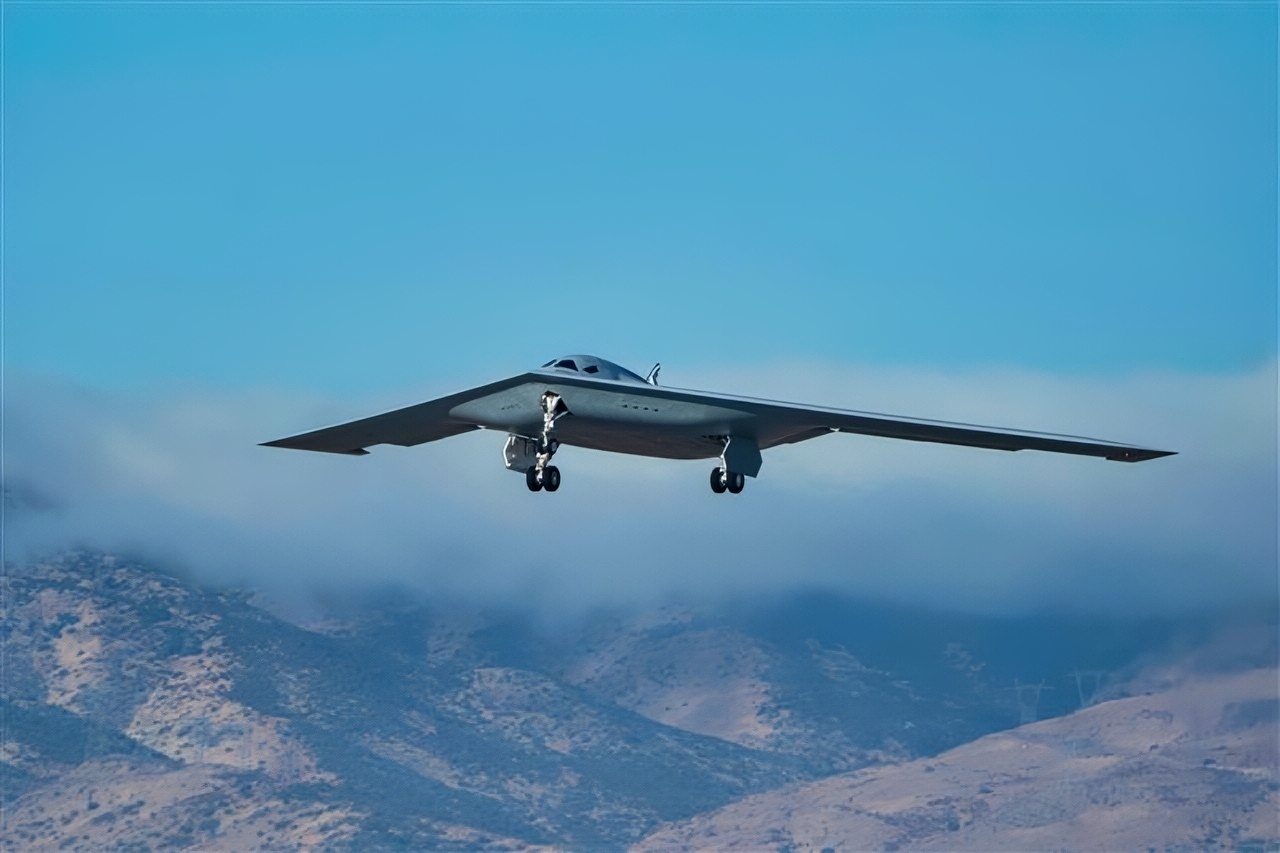
A second B-21 Raider, the nation’s sixth-generation stealth bomber, joins flight testing at Edwards Air Force Base, Calif., Sept. 11. The program is a cornerstone of the Department of the Air Force’s nuclear modernization strategy, designed to deliver both conventional and nuclear payloads. (Courtesy photo)
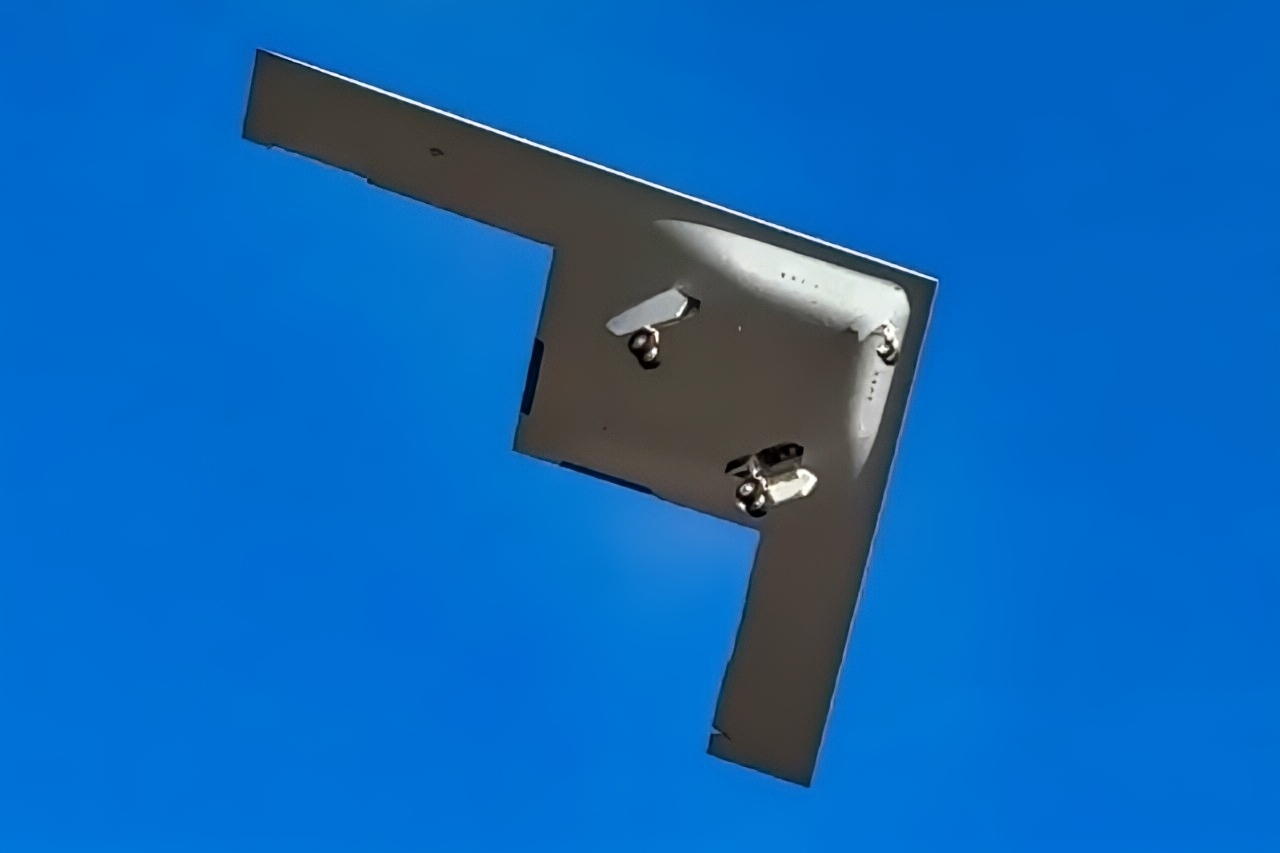
B-21 Raider New Flight of Second Bomber. Image X Screenshot from Video Posted.
-The program emphasizes open-systems architecture, lower sustainment costs, and nuclear/conventional loadouts, with initial service targeted for 2027.
-The Air Force plans at least 100 aircraft and is funding a production ramp (practical capacity ~12 per year).
-Congress backed rising budgets, while Northrop absorbed charges to protect price.
-Some leaders now argue for 145–200 bombers through the 2030s–40s.
The B-21 Raider Bomber Looks Like a Big Success
The B-21 Raider – the hotly anticipated successor to the iconic B-2 Spirit stealth bomber – hasn’t entered operational service yet, but it’s already a huge success. The aircraft, designed for improved stealth and dramatically lower maintenance costs than its predecessor, is already ahead of schedule and on budget. And that’s not something that can be said about every – or most – projects like it.
Designed by Northrop Grumman under the Long range Strike Bomber (LRS-B) program, the Raider features open systems architecture designed to facilitate rapid upgrades in the future, as well as the ability to carry both nuclear and conventional weapons.
The aircraft sports more recessed engine inlets, dual-wheel main landing gear, trapezoidal windscreens, and a series of additional refinements designed to ensure it is a worthy successor to arguably the most iconic stealth aircraft ever made.
But even with all those technological advancements, the project is on track to be delivered on time – with the platform expected to enter operational service by 2027.
On Time
Impressively, the B-21 Raider has hit every public milestone since the LRS-B awarded Northrop Grumman the contract to pursue the development of the aircraft on October 27, 2015 – and the program remains on its published schedule.
The Air Force formally unveiled the bomber on December 2, 2022, and then moved immediately into flight tests at Edwards Air Force Base under the B-21 Combined Test Force. The aircraft’s first flight occurred on November 10, 2023, which met the service’s mid-2020s deadline for initial testing. In 2024, acquisition chief Andrew Hunter told senators the flight-test program was “proceeding well.”

A B-21 Raider conducts flight tests, which includes ground testing, taxiing, and flying operations, at Edwards Air Force Base, California, where it continues to make progress toward becoming the backbone of the U.S. Air Force bomber fleet. The B-21 will possess the range, access, and payload to penetrate the most highly-contested threat environments and hold any target around the globe at risk. The B-21 program is on track to deliver aircraft in the mid-2020s to Ellsworth Air Force Base, South Dakota, which will be the first B-21 main operating base and location for the B-21 formal training unit. (Courtesy photo)
“It is doing what flight test programmes are designed to do, which is helping us learn about the unique characteristics of this platform, but in a very, very effective way,” Hunter also said at the time.
On September 11, 2025, a second B-21 Raider unexpectedly took flight in California. The sighting came only days after officials confirmed that a second aircraft would fly “soon,” noting that the project is moving along more quickly than originally anticipated.
Air Force Global Strike Command and test officials have consistently described the program as “basically on time.”
Assuming that testing continues to go as planned, the Raider is expected to enter into operational service by 2027 – though production schedules remain in question. Current estimates suggest a practical capacity of roughly 12 aircraft per year – though achieving that would still require additional investments in tooling and workforces.
“The Air Force is committed to the successful fielding of the B-21 and is investing in the infrastructure necessary to support an increased yearly production capacity,” the Air Force told Air and Space Forces Magazine.
“This proactive measure ensures the long-term health and efficiency of the production line, enabling us to deliver this critical capability to the warfighter,” the statement continued, adding that details regarding specific rates of production “remain classified.”
The United States Air Force has so far committed to purchasing at least 100 B-21 Raiders, but this figure is expected to grow, with some officials pushing for 145 or more.
Should the initial purchase grow from 100 to 200, as some analysts suggest it could, the full fleet of Raiders may only be complete by some time in the 2030s or 2040s – depending on how fast production capacity grows.
B-21 Raider On Budget
From the outset, the Air Force set an Average Procurement Unit Cost (APUC) target of $550 million in 2010 for a penetrating stealth bomber. Adjusting for inflation, that equates to roughly $700 million in today’s money – and a total program outlay of roughly $200 billion for development, acquisition, and operations for a fleet of at least 100 aircraft.
While the government has withheld detailed contract information, Congress and the U.S. Air Force have facilitated a steady, predictable budget growth as the program moves from development into production.
In 2024, Assistant Secretary of the Air Force for Financial Management Kristyn Jones said that the 2024 budget request set aside $2.7 billion for the continued development of the B-21 Raider, as well as $300 million for research, development, test, evaluation, and procurement.

B-2 Bomber from U.S. Air Force Display. Image Credit: Harry J. Kazianis/National Security Journal.

B-2 Stealth Bomber at USAF Museum July 19 2025. Image Credit: Harry J. Kazianis/National Security Journal.
Given the Raider project’s successes so far, Congress has already approved additional funding to ensure that production can be ramped up. In summer 2025, the U.S. Air Force acknowledged that the $10.3 billion set aside for B-21 spending in FY2026 would not only fund the continued development of the program but increased production capacity, too.
Northrop Grumman appears to be just as invested as the U.S. Air Force in seeing the project through as quickly as possible, too, having absorbed charges tied to process changes intended to speed up future production rates.
The manufacturer took a hit to its margins rather than risk a government budget overrun – first with a $1.6 billion pre-tax charge for quarter four, 2023, and then a further $477 million charge in quarter one, 2025.
If the pace holds and funding remains steady, the Raider could become that rare Pentagon program that arrives exactly when promised, at the advertised price, and potentially in numbers greater than originally anticipated.
About the Author: Jack Buckby
Jack Buckby is a British author, counter-extremism researcher, and journalist based in New York who writes frequently for National Security Journal. Reporting on the U.K., Europe, and the U.S., he works to analyze and understand left-wing and right-wing radicalization, and reports on Western governments’ approaches to the pressing issues of today. His books and research papers explore these themes and propose pragmatic solutions to our increasingly polarized society. His latest book is The Truth Teller: RFK Jr. and the Case for a Post-Partisan Presidency.
More Military
F-22 Raptor vs. Israel’s F-35I Adir: Who Wins?
Dassault Rafale Fighters Just Sent to Russia’s ‘Backyard’
F-15EX Eagle II vs. Su-57 Felon: Who Wins?
The Boeing X-32B Stealth Fighter Deserves a Better Fate Than This


TruthB Told
September 16, 2025 at 11:18 am
Under budget and on time. Not being made by Boeing.