

The White House said on Tuesday that a major breakthrough with Iran could be imminent, with officials saying that a deal to reopen the Strait of Hormuz could be reached today or tomorrow.
It is perhaps the most optimistic assessment yet from Washington, but given prior public statements from the White House, analysts have already met it with skepticism.
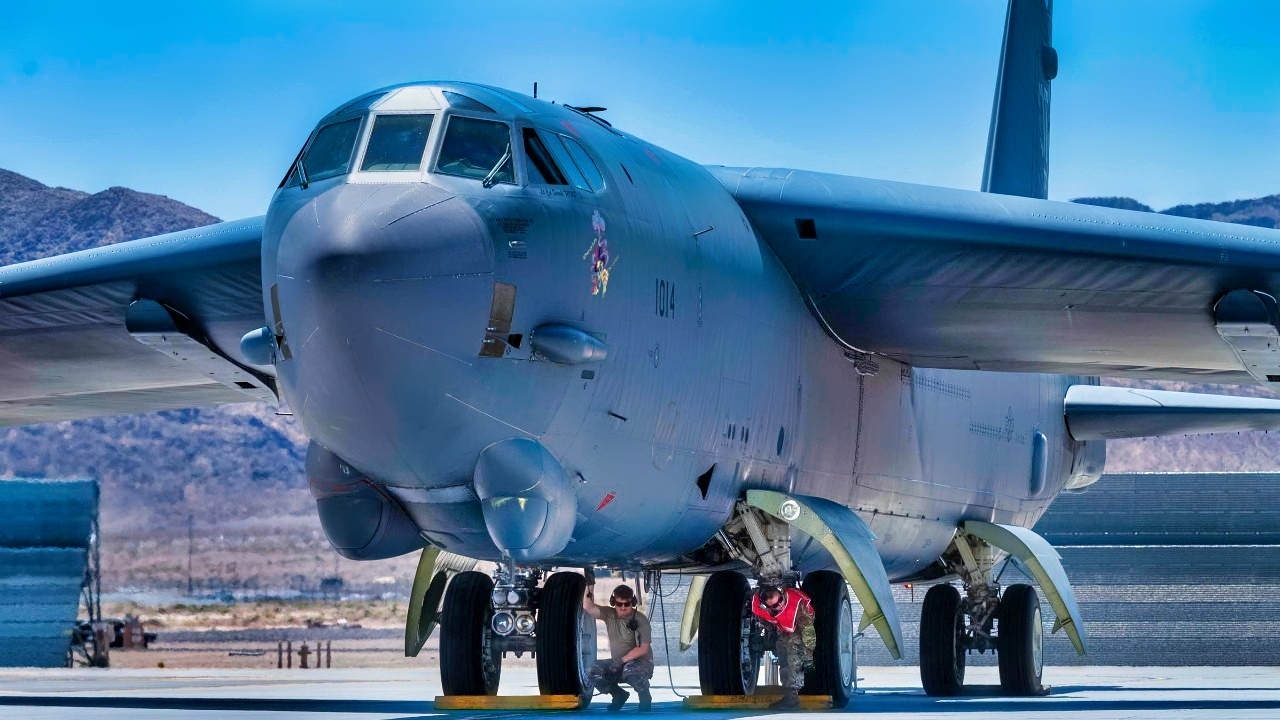
U.S. Air Force Tech. Sgt. Jacob Durham, left, and Staff Sgt. Kenneth Garris, crew chiefs assigned to the 307th Aircraft Maintenance Squadron, Barksdale Air Force Base, Louisiana, prepare to launch a B-52H Stratofortress in support of U.S. Air Force Weapons School Integration (WSINT) at Nellis Air Force Base, Nevada, June 3, 2025. WSINT serves as the culminating exercise for U.S. Air Force Weapons School students, bringing together air, space, and cyber forces in realistic, mission-critical training scenarios that mirror the complexities of modern warfare. (U.S. Air Force photo by William R. Lewis)

A U.S. Air Force B-52 Stratofortress, assigned to the 2nd Bomb Wing, flies over Southwest Asia during a aerial refueling mission with KC-135 Stratotanker aircraft assigned to the 340th Expeditionary Air Refueling Squadron Dec. 10, 2020. Bomber Task Force missions or deployments showcase the Air Force’s capability to rapidly and effectively support missions around the globe and seamlessly integrate into operations. (U.S Air Force photo by Master Sgt. Joey Swafford)
Speaking to CNBC, Bessent said that there is a “chance” of a deal today or tomorrow.
His comments came only hours after Iran again denied holding any negotiations with Washington, despite the president’s insistence over the weekend that talks were due to begin on Monday.
What Bessent Said
Talking to CNBC’s “Squawk Box” on Tuesday morning, Bessent confirmed that Washington is “in talks with the Iranians.”
“There is a chance we may have a deal today or tomorrow to open the Strait and move towards a more normalized position in this conflict.”
Bessent also said that the deal would cover freedom of movement in the Strait of Hormuz, and appeared to reject the possibility of Iran charging a toll.
While it’s not the first time Washington has claimed a deal is on the table, the comments seemed to help calm oil markets, with prices falling slightly.
After Qatar confirmed Bessent’s claims on Tuesday morning, prices fell, having initially spiked by around 3%.
Qatar Confirms Deal Underway
Qatar’s Foreign Ministry spokesman Majed al-Ansari echoed Bessent’s comments to reporters on Tuesday morning and confirmed that drafts of a possible agreement are currently “being circulated” among regional powers, including Iran.
When asked about conflicting statements issued by Washington and Tehran, al-Ansari clarified that talks are indeed underway and could be completed soon.
“We can confirm that the efforts are still ongoing with all the parties,” he said. “We are looking towards a diplomatic resolution as we are speaking right now.”
Al-Ansari also described the talks as being in “very progressive stages.”
He also noted that the language of a potential deal “has been drafted.”
The Purpose of the Deal
Importantly, the deal does not appear to be the lasting agreement President Trump is seeking, but rather another short-term solution intended to open the strait while negotiators work on a longer-term plan.
Al-Ansari confirmed that mediators are working on a “short-term resolution” to bring the two parties back to the negotiating table, making the potential deal sound a lot like a rehashing of June’s “memorandum of understanding,” which ultimately failed and saw both sides engage in yet more military strikes.
“We are hopeful that if we can get a resumption of the talks anytime soon, we’d be able to push forward towards a major deal that would help us walk back into a situation of peace in our region,” the Qatari official said.
Monday’s Talks Never Materialized
The White House’s suggestion that a deal is forthcoming comes after the president promised negotiations would begin on Monday, only for officials in Tehran to deny any such talks were taking place.
Amid confusion about potential talks on Monday afternoon, the president told reporters in the Oval Office that the negotiations were “going on right now” at the request of Iran, Qatar, the United Arab Emirates, and Saudi Arabia.
He also warned Tehran again that this was the “last chance” for the regime to sign a deal.
However, the indication now is that any signed deal will include only temporary measures to open the Strait of Hormuz and allow commercial traffic to pass through the waterway freely.
How long it may take for a lasting deal to be signed is an entirely different matter.
Iran Is Making A Completely Different Deal
While Washington and Gulf partners work on a short-term deal with Iran, reports suggest that Tehran is pursuing a very different vision for reopening the Strait of Hormuz.
According to The New York Times, Iran and Oman are nearing a separate agreement that would formalize Iranian control over the Strait of Hormuz, rather than restoring pre-war conditions.
Under the framework reported by The Times, vessels entering the Persian Gulf would be required to transit a shipping lane hugging the Iranian coastline, while outbound traffic would use a corridor closer to Oman.
Rather than charging formal tolls, the emerging deal would see ships made to pay “service fees” that cover security, navigation, and environmental protection costs, with the revenue shared between Tehran and Muscat.
The proposal, if it appears, could conflict with Bessent’s suggestion that the next deal will guarantee “freedom of movement” through the strait.
A U.S. official familiar with the negotiations told The Times, however, that the Iranian description of the upcoming deal is “not accurate” and that any temporary shipping arrangements would not involve tolls or require any fees paid to Tehran.
About the Author: Jack Buckby
Jack Buckby is a British researcher and analyst specializing in defense and national security, based in New York. His work focuses on military capability, procurement, and strategic competition, producing and editing analysis for policy and defense audiences. He brings extensive editorial experience, with a career output spanning over 1,000 articles at 19FortyFive and National Security Journal, and has previously authored books and papers on extremism and deradicalization.


