

Back on August 19, Axios reported that the U.S. had been running a clandestine effort to get oil shipments through the “closed” Strait of Hormuz.
Published during the weeks-long lull in military action between the U.S. and Iran, the Axios report stated that the U.S., with help from regional partners, had “ quietly established a shipping corridor” over the course of several weeks, which allowed 15-20 tankers to get through the contested waterway through a Southern channel closer to Oman.
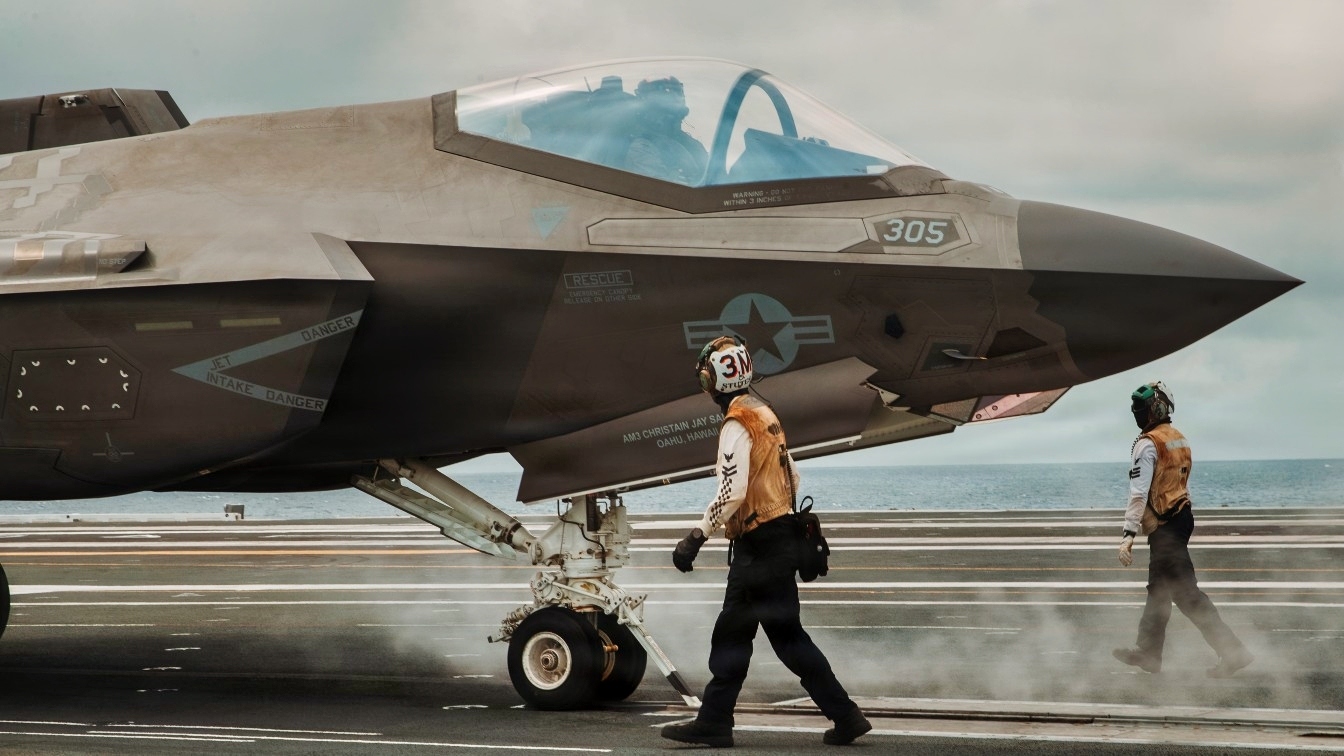
An F-35C Lighting II, attached to Strike Fighter Squadron (VFA) 147, prepares to take off from flight deck of Nimitz-class aircraft carrier USS George Washington (CVN 73) while underway in the Philippine Sea, May 25, 2026. The George Washington Carrier Strike Group (GWACSG) is operating in the U.S. 7th Fleet area of operations. George Washington is the U.S. Navy’s premiere forward-deployed aircraft carrier, a long-standing symbol of the United States’ commitment to maintaining a free and open Indo-Pacific, while operating alongside allies and partners across the U.S. Navy’s largest numbered fleet. (U.S. Navy photo by Mass Communication Specialist Seaman Estrella Velarde)
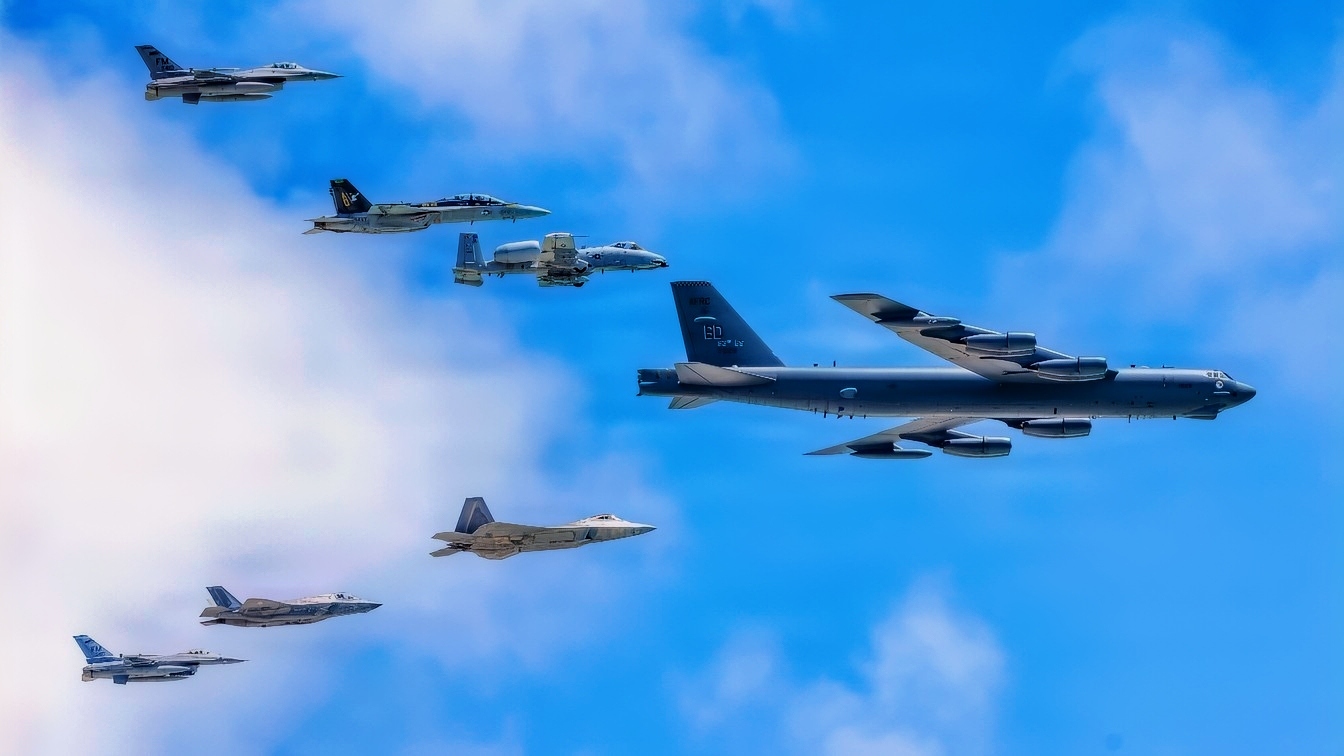
A B-52 Stratofortress leads a formation of a B-1 Lancer, A-10 Warthog, F-16 Fighting Falcon, F-18 Hornet, F-22 Raptor and F-35 Lightning, assigned to Air Combat Command and Global Strike Command, during the Hyundai Air and Sea show at Miami, Florida, May 23, 2026. Each aircraft played a unique role in demonstrating the comprehensive reach of the U.S. Air Force, from legacy bombers to cutting-edge fifth-generation fighters. Known as the Arsenal of Freedom Formation, the event underscored the Air Force’s capability to project force anywhere, anytime, as a key component of national defense. (U.S. Air Force photo by Staff Sgt. Lauren Diaz)
This led, officials said, to 10 million barrels of oil a day, around half of pre-war volume, getting through the Strait.
“We have been controlling the southern lane of the Strait of Hormuz for two months now,” one U.S. official told Axios. “The Islamic Revolutionary Guard Corps can be a nuisance, but they don’t control the strait. We do.”
MarketWatch, on August 31, had reported that flows through the Strait had risen once again, as oil producers in the region “find more ways to push their product to markets and sidestep Iran’s attacks and threats.” These included a “relay race” of ship-to-ship transfers.
Also on Monday, the New York Post reported that Kpler, a maritime analysis firm that tracks oil flows, said 8.6 million barrels of oil a day have been flowing through the Strait of Hormuz. That’s more than Kpler had been reporting, and more closely in line with what the Trump Administration has been claiming.
However, with the U.S. and Iran trading salvos once again in recent days, the flows made possible by those new tactics may have been jeopardized.
Is the War Back On?
In recent days, after over a month of calm, hostilities have resumed in the region, with the U.S. hitting some rocket launchers on Larak Island in the Strait, and Iran hitting military bases in the Middle East, in Jordan and the United Arab Emirates.
And then, on Tuesday, CENTCOM announced on social media that it had launched new attacks on Iran.
“U.S. forces began striking Islamic Revolutionary Guard Corps (IRGC) targets in Iran,” the account said. “The strikes follow recent attempted attacks by the IRGC against commercial shipping in the Strait of Hormuz and against American service members deployed to the region.”
The president had said in the Oval Office on Monday that further attacks would be “very limited,” as the U.S. had, the previous week, announced a pivot towards putting economic pressure on Iran and its allies. However, Trump had, the night before, posted an AI-enhanced video to Truth Social of the fictitious bombing of Iran’s Kharg Island oil export hub, which the Pentagon later had to confirm had not really happened.
Will this affect oil prices and the recovery of flows through the Strait of Hormuz? It’s looking that way.
Oil Approaches $100 Again
Bloomberg News reported Tuesday that the oil flows that had recovered in recent weeks could be “imperiled” by the recent tanker attacks.
Per Bloomberg, “fresh hostilities between the US and Iran raised concerns about prolonged disruptions to energy flows through the Strait of Hormuz, where crude carriers were hit by projectiles.”
Brent crude oil rose two percent on Monday to $92 a barrel, and on Tuesday afternoon, after the U.S. announced new strikes, its price hovered just below $94.
Analysts saw continued uncertainty.
“Traders reduced net crude oil positioning over the week as uncertainty persisted around the next phase of the Iran conflict,” Bart Melek, global head of commodity strategy at TD Securities, told Bloomberg News on Monday.
“We continue to expect crude prices to move higher, as there are no signs that normal transit through the Strait of Hormuz will resume in the near term.”
Bloomberg Intelligence analysts Salih Yilmaz and Will Hares wrote in a note that the tactics used in recent weeks to keep prices lower might not continue to work.
“Adaptation to prolonged disruption through the Strait of Hormuz — with dark flows, bypass routes and recovering Gulf exports — has helped keep Brent below $100 a barrel,” the analysts wrote in their note.
“Yet renewed US-Iran hostilities underscore the risk that further disruption could quickly push an already constrained market into a much tighter balance.”
About the Author: Stephen Silver
Stephen Silver is an award-winning journalist, essayist, and film critic, and contributor to the Philadelphia Inquirer, the Jewish Telegraphic Agency, Broad Street Review, and Splice Today. The co-founder of the Philadelphia Film Critics Circle, Stephen lives in suburban Philadelphia with his wife and two sons. For over a decade, Stephen has authored thousands of articles that focus on politics, national security, technology, and the economy. Follow him on X (formerly Twitter) at @StephenSilver, and subscribe to his Substack newsletter.


