


Key Points and Summary – In 1946, the U.S. military conducted the Operation Crossroads atomic bomb tests at Bikini Atoll, detonating nuclear weapons against a target fleet of 95 warships to study their effects. Many of the warships were World War II-era battleships.
-The tests, including a powerful underwater blast, sank over a dozen ships and showered the fleet in radioactive fallout. While providing valuable scientific data, the operation had a dark legacy.
-The local inhabitants were displaced for decades due to contamination, and many of the thousands of participating U.S. sailors, later known as “atomic veterans,” were exposed to dangerous radiation and suffered long-term health consequences.
Operation Crossroads: The Legacy of the Bikini Atoll Tests
Operation Crossroads, better known as the Bikini Atoll atomic bomb tests, was something to behold. This testing occurred in 1946, and little was known about the detonation of nuclear weapons.
One aspect of potential warfare that required experimentation was the impact on a group of 95 naval ships, including the battleship Nagato and numerous other battleships.
The idea was to use captured Japanese vessels and surplus American ships from World War II as guinea pigs and create much-needed analysis on how an atomic bomb could damage a fleet.
Why Not Try to Test an Atomic Bomb’s Effects on Naval Ships?
An army-navy task force led by Vice Admiral William H.P. Blandy sought to determine the impact on ships and assess how nuclear blasts would affect future design, tactics for large fleets, anchoring and preparation of vessels at port, and aspects of the strategy behind naval formations.
There were three tests planned: Able, Baker, and Charlie.
The Task Force Needed a Location for the Tests
But where was this going to happen? The navy planners thought that the Pacific Ocean should be the correct location, although this wasn’t specified.
They consulted the charts and maps, narrowing it down to the Marshall Islands.
There was a naval base at Kwajalein, and the group of personnel thought that Bikini Atoll was the right choice.
They had to get 165 inhabitants of the atoll to leave for the island of Rongerik, 125 miles east of the blast area.
Let’s Test The Bomb Blasts on Animals
What about studying the effects of nuclear weapons on living beings?
Humans were, of course, out of the question, but another idea was floated. Why not place a large number of animals on the ships and see how they fared? This was worth a shot to collect more scientific data on the outcomes of the wildlife tests.
There was also a group of 150 American ships 10 nautical miles from Bikini Atoll.
Today, we would be highly concerned about their safety, but in that era, the risk was worth it to see what would happen.
Now It Was Time to Explode the Bombs
A B-29 bomber executed the first test, and five of the old ships went to the bottom.
Others sustained substantial damage. Then the task group wanted to try a weapon that was detonated underwater. They ignited the atomic bomb 90 feet below the surface.
No surprise, the radioactive water fell all over the target warships. Eight more ships were sunk. Then the Navy took eight others back to Hawaii to test the radioactivity on board. Some were scuttled since they were considered too dangerous to board.
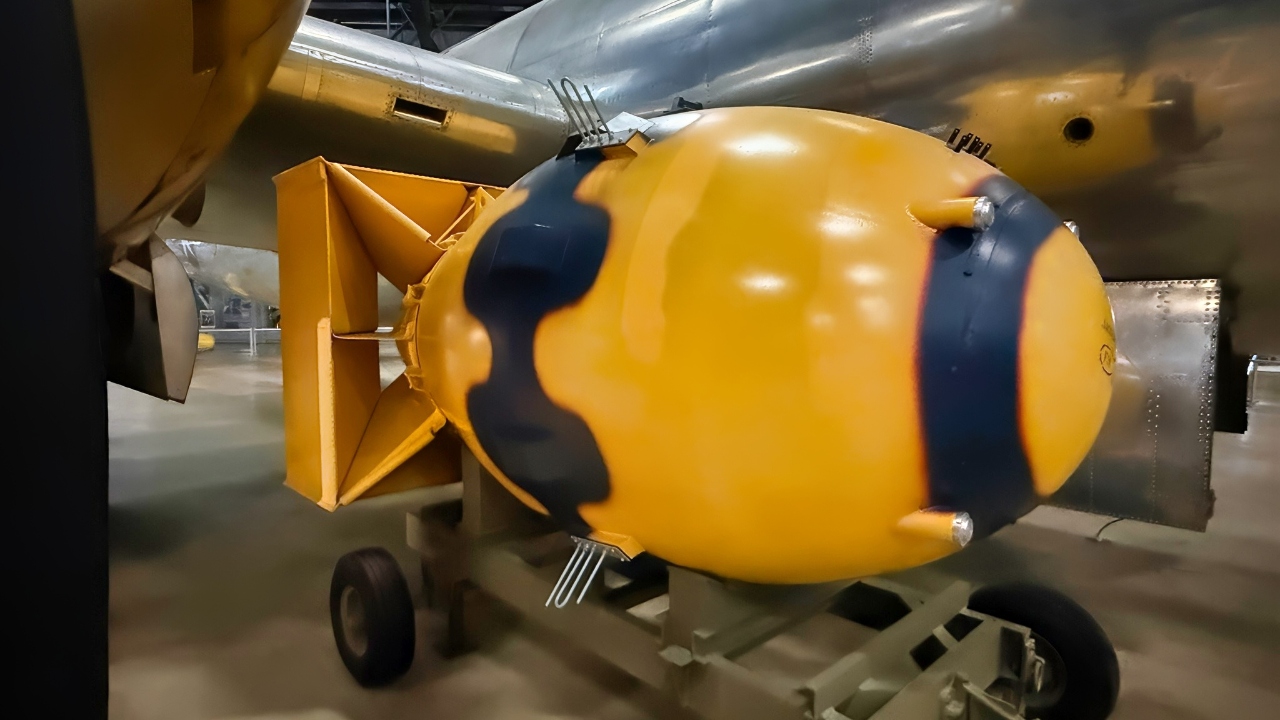
Fat Boy Near B-29 At USAF Museum. National Security Journal Photo.
What Happened Next?
Famous photos of the two tests were in newspapers. President Harry S. Truman was briefed on the results.
No surprise – the ships could not protect the animals from an atomic bomb blast. The radiation killed many of the specimens.
Those natives from Kwajalein were unable to return to Bikini Atoll until 1970, despite being promised a return within a few weeks.
There were 23 detonations of nuclear bombs from 1947 to 1958. Civilians were evacuated again in 1978 because there was just too much radiation.
Bikini Atoll tests were dangerous, and that’s no surprise to us today. “During Operation Crossroads, only 15 percent of personnel received film-badge dosimeters, designed to measure their potential radiation exposure. These measurements were later used to model the effects on personnel, but the secrecy of nuclear weapons testing prevented many veterans from communicating knowledge of potential exposure to their doctors. In the 1970s and 1980s, veterans began speaking out,” according to the Naval History and Heritage Command.
In 1978, the Department of Defense tried to identify veterans of the tests and determine the extent of the radiological effects on those who were exposed. In 1988, Congress acted to help the “atomic veterans” who were suffering from cancer. President Bill Clinton apologized formally to the group.
What was the legacy of the tests at Bikini Atoll for Operation Crossroads? The military was taking a huge risk with so many people who were close to the detonations. And this part wasn’t such a good idea. We need to know how naval fleets would react to atomic bombs.
This is pretty predictable. Some ships would sink, some would be damaged, and some would be filled with radioactive fallout. It didn’t take a genius to know what would happen.
The U.S. fleet was too close to the Bikini Atoll, and the Americans should have realized that this was not a safe long-term solution.
But in those days, much less was known about the long-term effects of radiation. The nuclear weapons program was new, and scientists needed as much data as possible to study the results of atomic activity. It was a shame so many veterans were affected.
However, the Bikini Atoll tests demonstrated how much the United States would soon dominate warfare after World War II. This was the advent of a new era, and the world would never be the same.
About the Author: Brent M. Eastwood
Brent M. Eastwood, PhD is the author of Don’t Turn Your Back On the World: a Conservative Foreign Policy and Humans, Machines, and Data: Future Trends in Warfare plus two other books. Brent was the founder and CEO of a tech firm that predicted world events using artificial intelligence. He served as a legislative fellow for US Senator Tim Scott and advised the senator on defense and foreign policy issues. He has taught at American University, George Washington University, and George Mason University. Brent is a former US Army Infantry officer. He can be followed on X @BMEastwood.
More Military
China Has a Three-Word-Plan to Sink Aircraft Carriers
The Sneaky Reason China Wants a Big Fleet of Aircraft Carriers
USS Kentucky: The ‘Lost’ U.S. Navy Iowa-Class Battleship That Was Never Finished
China’s J-20 Stealth Fighter Simply Summed Up In Just 1 Word
F-22 Raptor vs. China’s New J-35 Fighter: Why You Might Not Like the Answer


