
When Russian forces first crossed into Ukraine in February 2022, the Kremlin was convinced the war would be over in weeks, that Kyiv would fall, and Russia would return to business as usual before the end of the year.
But more than four years later, the conflict has become the defining challenge of Vladimir Putin’s presidency – and his decision to invade may prove to be the beginning of the end for his new Russian empire.

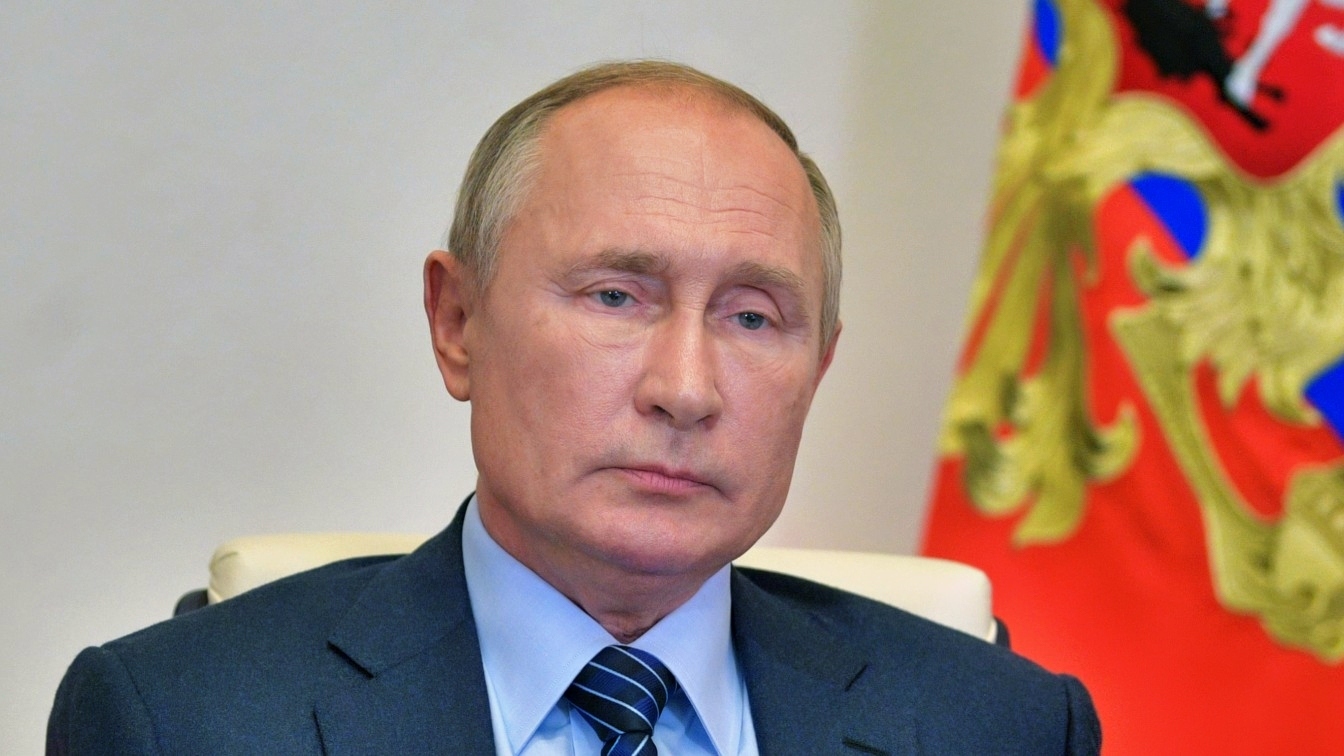
Putin in 2022. Image Credit: Creative Commons.
Kyiv has defied the odds and built a domestic drone industry capable of producing eight million unmanned systems annually.
It has expanded its long-range strike capabilities with domestically produced weapons such as the FP-5 Flamingo, and it relies less on Western governments for approval of additional missile transfers over time.
Ukrainian drones are striking critical Russian oil infrastructure and military facilities, and Russia is now on the back foot, passing legislation that enables banks – yes, banks – to engage in air defense operations across its major cities.
Putin may not be at immediate risk of being ousted.
The war may even last for several more years. But the history books may one day show that the decision to invade Ukraine was the beginning of a slow transfer of power that not only ended Putin’s rule but also gradually eroded his influence over Russia’s future, leaving the country to chart a course very different from the one he envisioned.
Putin Has Spent Years Shielding Himself from Regime Change
If Russia sees regime change, it probably won’t be quick. The Kremlin has spent years building one of the most sophisticated domestic security systems in the world.
Following the 2020 constitutional reforms, Vladimir Putin secured the legal authority to remain in office until 2036, effectively eliminating what could have become a succession crisis had he been forced to step down. Since then, Russia has also expanded censorship laws, with March 2022 legislation criminalizing the spread of so-called “fake” information about the military and imposing prison sentences of up to 15 years for violations.
Putin has also expanded the powers of the Russian security services, with the Federal Security Service (FSB) receiving broader authority to investigate allegations of “extremism” and prosecute anti-war activists and opposition figures.

Vladimir Putin Russian President 2019. Image Credit: Kremlin.
The Kremlin’s response to the 2023 Wagner mutiny also proved how seriously it takes internal threats. After Wagner forces briefly advanced toward Moscow, the rebellion collapsed, and the Russian state tightened control over private military organizations and potential rivals. Russia’s treatment of opposition figures like Alexei Navalny, who spent years in prison before dying in custody, also sends a message to anyone thinking about a coup.
Any movement capable of challenging Putin faces enormous obstacles before it can even organize – but as we are seeing now, the president himself may, in time, simply do the job for them.
Russians Are Showing Signs of War Fatigue
Public attitudes towards the war in Russia are particularly interesting because polls suggest that, while most people still want to see Russia achieve its military and political goals, they also want to see the conflict end in a negotiated conclusion.
A March 2026 Levada survey found support for military operations had fallen modestly compared with previous years, while interest in peace talks increased.
Just as importantly, though, Russians are becoming detached from the war, with surveys also showing that they are paying less attention to daily battlefield developments and growing increasingly concerned about the country’s economic conditions.
Younger Russians in particular are less supportive of Putin than older generations and more likely to consume international media and use virtual private networks.
Those young Russians are engaging with information and media outside of state television – and this generational divide will ultimately decide the future of the Russian state.
Putin’s strongest support consistently comes from older Russians who grew up during the Soviet era, but younger Russians have spent far more of their lives connected to global culture and media.
That does not mean they are pro-Western, but it does mean that they view isolation differently than their parents and grandparents.
And with the Russian economy showing clear signs of exhaustion, including a looming labor shortage, there’s no reason to believe these young Russians will remain loyal to Putin’s vision for Russia through his final decade in office.
Putin Cannot Afford to Lose and Cannot Easily Win
Putin finds himself in an almost impossible position.
After more than four years of war, Russia may still be advancing in some sectors, but at a pace far slower than expected.
Meanwhile, Ukrainian long-range strikes are threatening infrastructure and creating energy shortages and supply chain problems.
If Putin wants it to end, he can withdraw – but the chances of that are slim. After all, Russia has less leverage than it once did, and a settlement perceived domestically as a defeat would undermine one of the central narratives of Putin’s presidency: that Russia is becoming stronger and more influential.
If Putin chooses to escalate, as he already seems to be doing, Russia will be forced to devote enormous resources to its defense production and military recruitment, which are already strangling the Russian economy.
Every additional mobilization effort removes workers from the economy, and every new Ukrainian drone requires more resources spent on protecting infrastructure.
Putin admitted this month that Ukrainian attacks are hurting the Russian economy, and insisted it would bounce back – but that can only happen once the fighting ends, one way or the other.
A Slow-Moving Regime Change
Putin is still firmly in power, and the chances of him being removed in a coup are low, even with the Russian economy in limp mode – but the strongest indication for an eventual political change in Russia, not just in terms of leadership, but also vision, is the fact that Russia cannot remain on this trajectory forever.
The Kremlin is aware of the damage that’s being done, and so are the Russian people. And while Russia has inarguably demonstrated resilience throughout the war, that is not the same thing as recovery.
Between rising military expenditures and a labor shortage, ongoing sanctions, and mounting damage to its infrastructure, economic growth will become impossible.
The war is reshaping society and could eventually reshape the government.
Even if Putin remains in power for years, the Russia that survives this conflict may look very different from the one that entered it.
And as the older generations that form the backbone of Putin’s support age out and are replaced by younger Russians consuming global media, a combination of international isolation and economic stagnation could fundamentally reshape Russia as we enter the mid-21st century.
About the Author: Jack Buckby
Jack Buckby is a British researcher and analyst specializing in defense and national security, based in New York. His work focuses on military capability, procurement, and strategic competition, producing and editing analysis for policy and defense audiences. He brings extensive editorial experience, with a career output spanning over 1,000 articles at 19FortyFive and National Security Journal, and has previously authored books and papers on extremism and deradicalization.


