

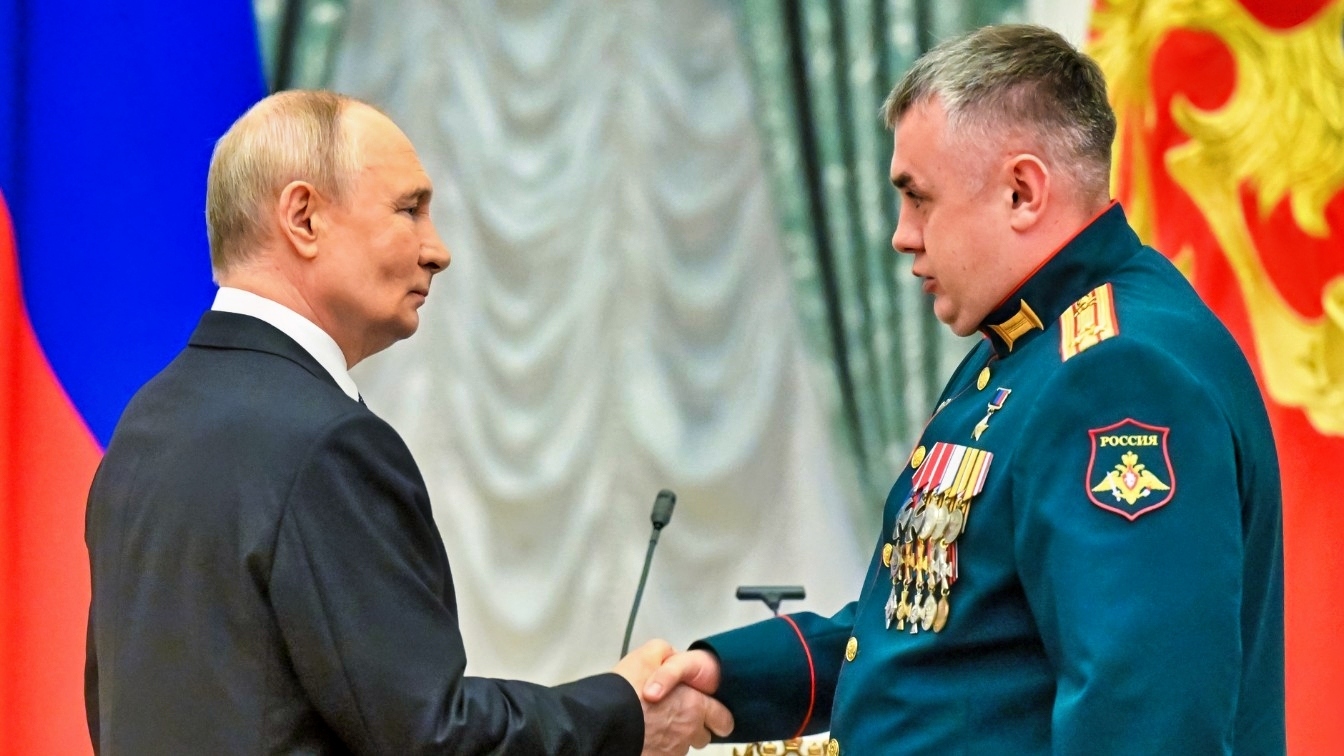
Russia is offering men $80,000 to sign up and fight in Ukraine, more than quadruple the country’s average annual salary, along with debt relief of up to $140,000 for those who would otherwise face penalties for defaulting. According to a CNN report published this week, the money is no longer working: Russian military recruitment fell by 20 percent in the first quarter of 2026 compared with the same period a year earlier, even as billboards and social media feeds promise recruits they will become heroes and earn fast-tracked citizenship.
The sums are extraordinary, and the takers are dwindling, and that combination points to the deepest structural problem the Kremlin faces in its fifth year of war.

T-80 Tank from Russian Army. Image Credit: Creative Commons.
Russia can print rubles and pump oil. It cannot manufacture men.
“Rubles Don’t Fight Wars”: The One Input Russia Cannot Buy
The phrase belongs to Nigel Gould-Davies, a senior fellow for Russia and Eurasia at the International Institute for Strategic Studies, and it captures why money cannot solve the problem that money was meant to solve.
This is the first war in Russia’s history in which the state is paying citizens to fight rather than conscripting them outright, and Gould-Davies argues in a recent IISS report that the incentive has stopped working as designed — that Russia has begun to lose more troops than it can recruit.
Labor, he notes, is scarcer than capital or finance and far harder to increase: a state can build a factory or raise money with effort, but it cannot dictate the birth rate.
Every other input to the Russian war machine can be expanded.
The supply of willing soldiers is the one that cannot, and it is the one now running short.
The Crossover: Losses Outpacing Recruitment
The turning point that independent assessments now describe is the moment Russia started losing soldiers faster than it could replace them.
Western officials put Russian casualties at roughly 30,000 to 35,000 a month, and Ukraine’s armed forces tallied a record 35,351 in March alone, attributing 96 percent of them to drones, according to Al Jazeera’s reporting on the figures.
Against that backdrop, recruitment is falling: Russia aimed for 409,000 contract soldiers this year, a daily rate of about 1,120, but Ukrainian monitoring put the actual figure at about 940 a day in the first quarter, a pace that would leave Moscow tens of thousands short over the year.
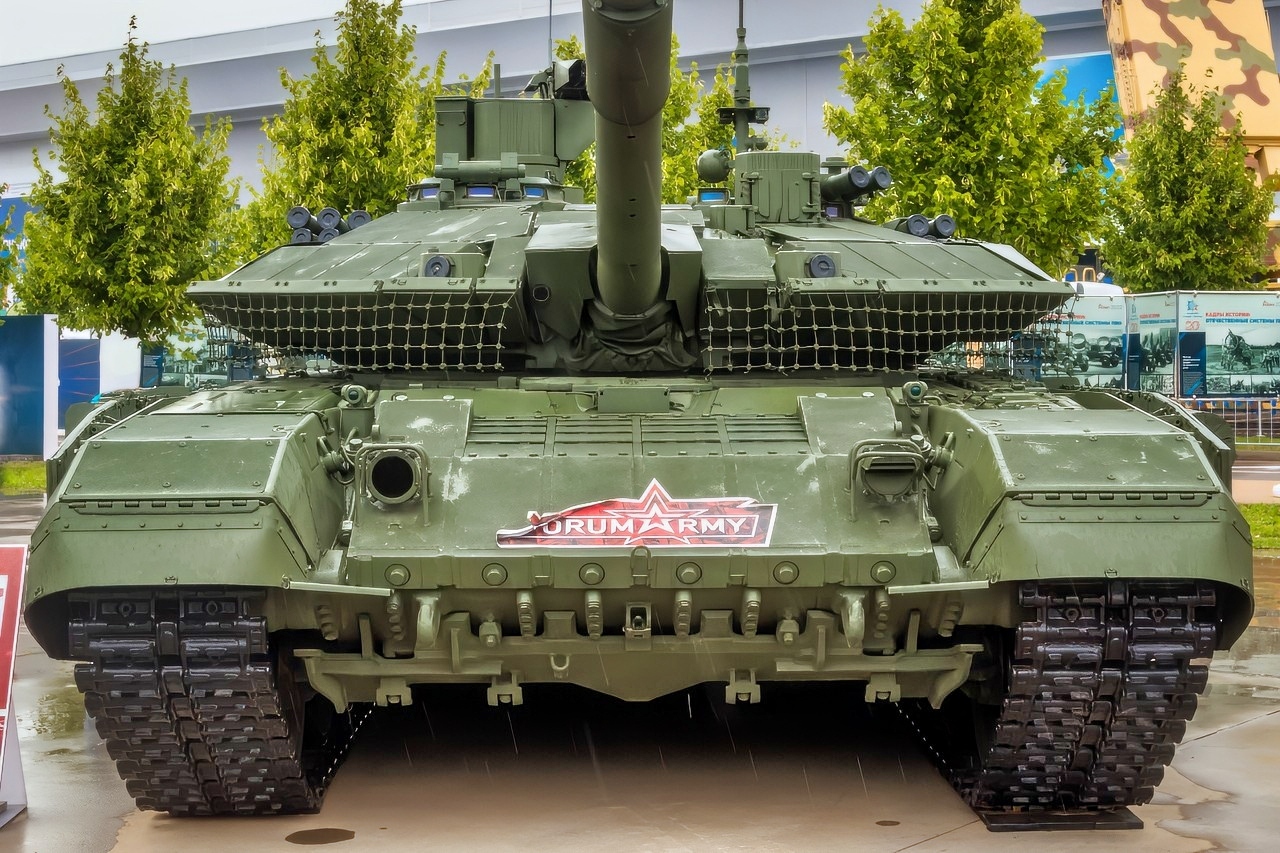
T-90M Russian Army. Image Credit: Creative Commons.
The recruitment shortfall is corroborated by sources outside Ukraine. The German Institute for International and Security Affairs counted roughly 71,000 new contracts in the first quarter, the lowest rate in three years and down from about 90,000 in the same period last year, and a January CSIS report put cumulative Russian battlefield casualties near 1.2 million as of December 2025, including up to 325,000 killed — losses that require more than 30,000 fresh troops every month just to stand still.
These figures originate largely from Ukrainian and Western intelligence, which have an obvious interest in the narrative, but the convergence across separate services and institutes is harder to dismiss than any single claim.
The Desperation Measures Tell The Story
What Russia is doing to fill the ranks reveals how tight the supply has become. The Institute for the Study of War has reported that at least a dozen Russian regions raised signing bonuses by 50 to 80 percent since mid-February and that the Kremlin has committed strategic reserves to the battlefield while intensifying covert mobilization of businesses and universities.
Moscow has already sent tens of thousands of former prisoners to the front, been reinforced by three separate waves of North Korean soldiers, and recruited immigrants and the heavily indebted, with Ukrainian estimates suggesting around 40 percent of new personnel are now drawn from vulnerable groups. A healthy military does not pay a year’s wages several times over for recruits, empty its prisons, and import foreign soldiers. These are the measures of a force straining to replace what it is losing.
The War Is Draining The Economy That Funds It
The manpower crisis does not stop at the front, because the same shortage of men is squeezing the civilian economy. Gould-Davies told CNN that Russia is struggling not only to find people to fight but to find people to employ, and that the country is suffering the most severe labor shortage in its history.
Hundreds of thousands of working-age men have been killed or have left to avoid the draft, and the resulting scarcity is driving up wages, which feeds the inflation already eroding household budgets.
The defense industry, meanwhile, is reported to be running at maximum capacity, its factories working around the clock, which means Moscow cannot easily increase weapons output while the same labor pool is pulled toward both the assembly line and the trench.
The war consumes the workers the economy needs to fund the war.
Not Collapse, But A Choice Putin Has Avoided For Three Years
The honest rebut is that none of this means imminent collapse, and serious analysts say so. Maria Snegovaya of CSIS argues the Kremlin can likely muddle through its recruitment problems by leaning harder on the regions outside Moscow, pushing students toward contracts, and recruiting more foreign nationals, calling the defense sector’s capacity limits a difficulty but “not catastrophic.”
The oil-price spike from the Iran war has refilled Russia’s coffers, and the regime is expanding its repressive apparatus to contain any social discontent the strain produces. Russia is not about to run out of soldiers next month.
The bet Putin made, though, is the one now in question. The Kremlin’s entire strategy was to outlast Ukraine in a war of attrition, trading its larger population against Ukraine’s smaller one until Kyiv broke.
That logic depended on Russia being able to replace its losses, and the evidence of 2026 is that it no longer reliably can — Ukraine posted net territorial gains in May for the second straight month, and its commander-in-chief claimed Ukrainian drone operators that month killed or wounded more Russian soldiers than Russia recruited.
The strategy of grinding the enemy down now grinds against Russia itself. Gould-Davies frames the consequence as a coming choice: the Kremlin must soon decide whether to escalate its demands on Russian society or scale back its war aims.
The first option means a second mobilization, the measure Putin has avoided since the 2022 partial call-up sent hundreds of thousands fleeing the country. The second means admitting the war cannot be won on the terms he set.
A winning military does not face that choice. Russia is facing it now.
About the Author: Harry J. Kazianis
Harry J. Kazianis (@Grecianformula) was the former Senior Director of National Security Affairs at the Center for the National Interest (CFTNI), a foreign policy think tank founded by Richard Nixon based in Washington, DC. Harry has over a decade of experience in think tanks and national security publishing. His ideas have been published in the NY Times, The Washington Post, The Wall Street Journal, CNN, and many other outlets worldwide. He has held positions at CSIS, the Heritage Foundation, the University of Nottingham, and several other institutions related to national security research and studies. He is the former Executive Editor of the National Interest and the Diplomat. He holds a Master’s degree focusing on international affairs from Harvard University.


