

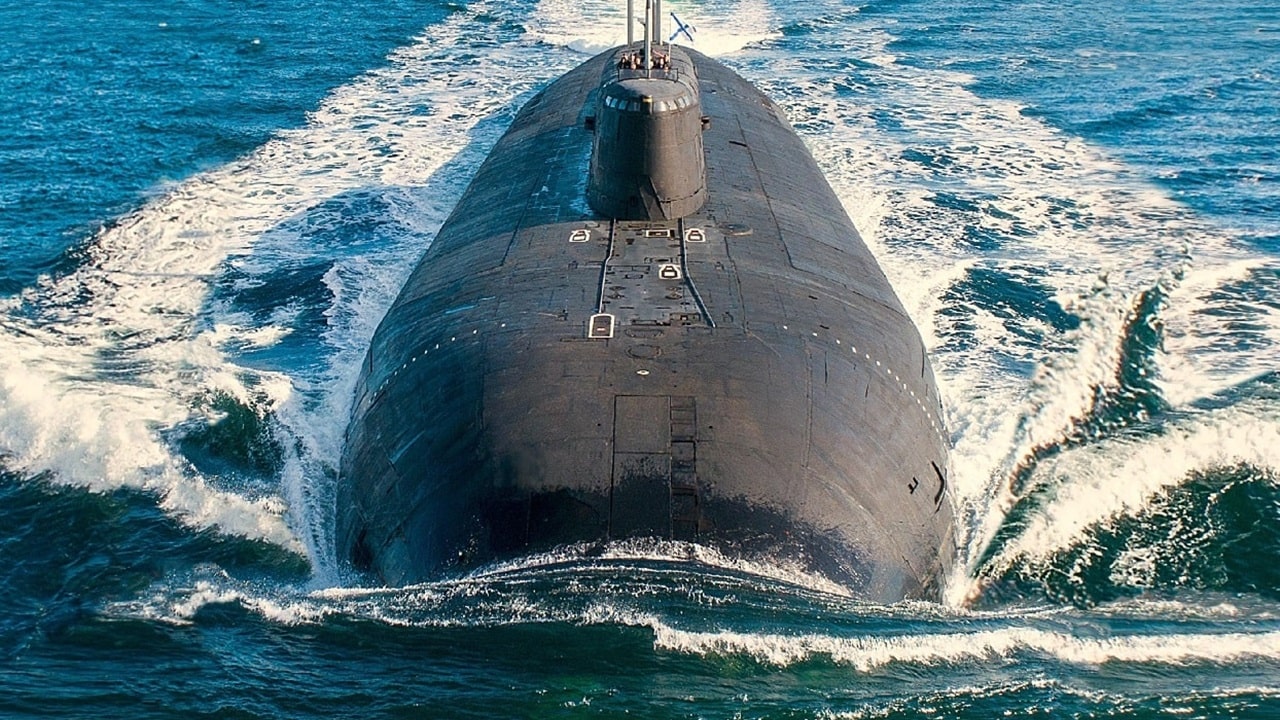
Key Points – Reports from the VChK-OGPU Telegram channel, known for its Russian security service sources, suggest that officers in Russia’s Black Sea Fleet may be purposely sabotaging their own submarines.
-A recent spike in “constant mechanical breakdowns” aboard the Novorossiysk-based submarine fleet shows “obvious signs of interference,” leading to suspicions of internal sabotage rather than Ukrainian action.
-This “quiet revolt” is reportedly motivated by opposition to the war and, more critically, the crews’ fear of suffering the same fate as the flagship Moskva, as Ukraine has successfully destroyed up to a third of the Black Sea Fleet with asymmetric naval drone and missile attacks.
A Quiet Revolt? Russian Officers Purposely Sabotage Their Own Submarines (Report)
There are reports that officers of the Black Sea Fleet of the Russian Navy have been purposely sabotaging their own submarines.
The information comes from the VChk-OGPU Telegram channel that is run by two Russian military bloggers.
These channel content generators have regularly reported stories from inside the Russian intelligence and law enforcement services that have been embarrassing to the Russian military and secret service agencies.
The reporting from this channel has been so on-target that in July 2024, Russia’s Justice Ministry designated the VChK-OGPU Telegram channel a “foreign agent.”
The ministry called out the former Rosbalt journalists Alexander Shvarev and Alisher Abdullayev as the two investigative reporters behind these postings on the channel – reports that have incurred the wrath of Russian authorities on multiple occasions.
According to what they have told Russian journalists, the Russian state censoring agency, Roskomnadzor, has previously ordered Telegram repeatedly to delete posts by VChK-OGPU and the channel itself.
The claimed the two had committed the crimes of violating Russian laws against the publication of “false information” and “extremist materials.”
Their latest postings about what is happening inside of the Russian Navy are likely to precipitate a similar round of angry official recriminations. They are now reporting that the Black Sea submarine fleet is suffering from a sudden dramatic increase in “technical problems”.
A Quiet Revolt in the Ranks
The volume and frequency of these mechanical failures is prompting questions of whether these breakdowns are not really “wear and tear” from regular operations at sea – but are instead purposeful sabotage.
This assessment comes after submarines belonging to the Black Sea Fleet based in Novorossiysk have been chronically kept from sailing due to “constant mechanical breakdowns.”
In past instances, there would have been accusations of Ukraine running a set of special operations that were disabling these boats.
But in this case the channel’s operators have written “it is not [Ukrainian] saboteurs who are under suspicion, but the personnel of the fleet” themselves.
They report “the fleet command, with the participation of divisional mechanical engineers and the commander of military unit 80515 [the 4th Separate Submarine Brigade], Captain 1st Rank Skarga, are focused on constantly fixing the breakdowns.”
“They prefer not to talk about the reasons for what is happening,” but according to the source speaking to the two journalists, “all the breakdowns have obvious signs of interference: a loose lubricator drive, a gearbox failure, etc.”
They also write that “the main suspects are the junior officers who arrived to continue their service.”
Within these ranks there are apparently those who are opposed to the unending prosecution of the war against Ukraine, said another source who spoke with me.
Vulnerabilities at Sea
If these officers are indeed responsible for purposely creating mechanical faults on board these subs, they may have other than moral objections or other humane motivations that are the cause for their actions.
Recent reports from Ukraine are that after Operation Spiderweb struck several strategic bomber bases far behind the Russian lines, and then the underwater drone strike on the Kerch Bridge two days later, Russian analysts have “begun sounding the alarm over the possibility of an even more devastating follow-up.”
To these analysts, according to the same Ukrainian reports, “the Kerch operation wasn’t just a spectacular success—it looked like a rehearsal for something far more dangerous, aimed at Russia’s most sensitive naval bases in the Far East.”
Russia’s submarine fleet could easily be hit in a massive drone strike, according to the same reporting.
“Ukrainians could realistically use container ships laden with concealed naval drones. Ukraine operates “a large fleet of merchant vessels, including container ships. These are more difficult to regulate and inspect, making it easier to smuggle the underwater drones in them.”
This is reportedly the nightmare scenario that Russian analysts now believe their submarine fleet can fall prey to. In this situation, Russian submarine crews in the Black Sea Fleet may not wish to put to sea simply because they fear suffering the same fate as the fleet’s one-time flagship, the Moskva.
Ukraine’s military says it has either destroyed or disabled up to a third of the fleet’s 80 vessels by attacking them with both waterborne drones and anti-ship missiles. Their victims are not only the Moskva but also the Rostov-on-Don Kilo-class submarine, Ropucha-class landing crafts, missile boats and other smaller vessels as well.
At the same time, there are reportedly increasing voices from inside the Russian military suggesting that President Vladimir Putin sue for peace. They are supposedly becoming demoralized and have lost their faith in continuing the war as a response to Russian casualties passing the one million mark.
A senior officer serving on the Kursk front was quoted telling the pro-Kremlin military blogger Maxim Kalashnikov: “I would stop the war altogether. I would just say: ‘That’s it! – Stop!’”
About the Author:
Reuben F. Johnson is a survivor of the February 2022 Russian invasion of Ukraine and is an Expert on Foreign Military Affairs with the Fundacja im. Kazimierza Pułaskiego in Warsaw. He has been a consultant to the Pentagon, several NATO governments and the Australian government in the fields of defense technology and weapon systems design. Over the past 30 years he has resided in and reported from Russia, Ukraine, Poland, Brazil, the People’s Republic of China and Australia.
Hypersonic Weapons In Depth
Russia’s Hypersonic Missiles Summed Up in 4 Words


Usun
June 11, 2025 at 4:44 pm
NAFO propaganda at its finest.
Pingback: US Nuclear Submarines Deployed to Cover Russia?on August 6, 2025 at 11:15 pm - Ukraine News Feed