

As Russia’s fortunes on the battlefield turn decisively against them and they begin to lose territory to Ukraine’s armed forces, the Kremlin turns to the only card it has left to play: Launching one drone and missile barrage after another against Ukraine’s cities.
Russian forces launched 70 missiles and over 600 drones at Ukraine in an overnight attack on 14- 15 June. Of the 34 ballistic missiles Moscow fired, 19 were aimed at the capital of Kyiv.
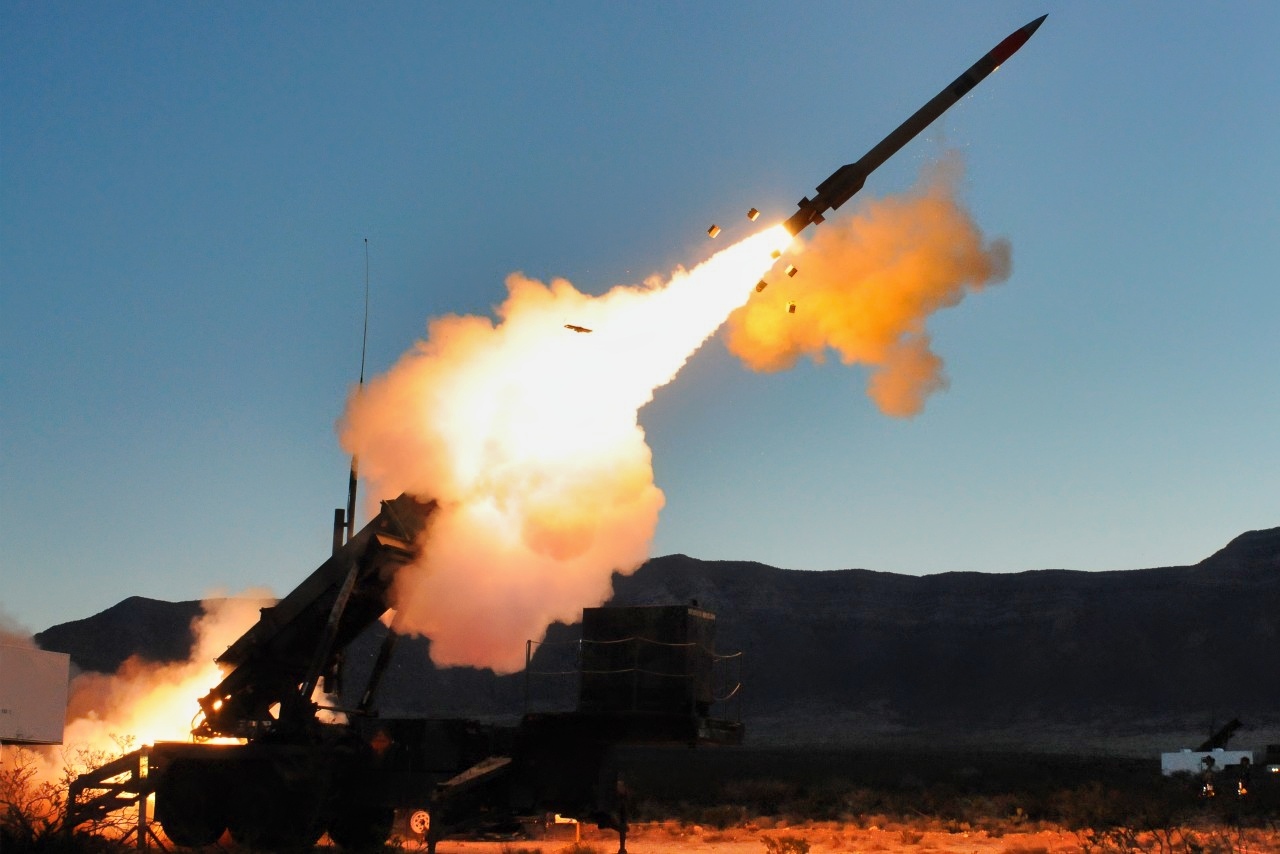
The PAC-3 MSE is a highly sought-after air defense munition due to its advanced capabilities and versatility. As a next-generation interceptor, it offers improved range, speed, and maneuverability, making it an effective counter to a wide range of threats, including tactical ballistic missiles, cruise missiles, and aircraft. (Official U.S. Army photo)
Ukraine’s Air Defense Forces (PPO) fired back with its US-made Patriot Air and Missile Defense (AMD) batteries, intercepting 15 of these missiles, which included taking down five of the six 3M22 Zircon hypersonic cruise missiles that were launched against the city.
The Zircon is a particularly difficult missile to intercept and is among the most destructive of the missiles used by Russia against civilian population centers and energy infrastructure.
It flies at extremely high speeds, but despite its devastation, it can visit upon any target. Its warhead is only about 220 lbs, which is four to five times smaller than those carried by the 9M723 Iskander-M ballistic missile, the Kh-101 cruise missile, or the Kalibr cruise missile.
But the effects of this much smaller warhead are significantly amplified due to the enormous kinetic energy that its high speed generates upon impact.
Any of the missile’s liquid fuel that powers its ramjet motor remaining on board at impact then adds to the explosive force. It makes the missile one of – if not the – number one problem for Ukraine’s PPO.

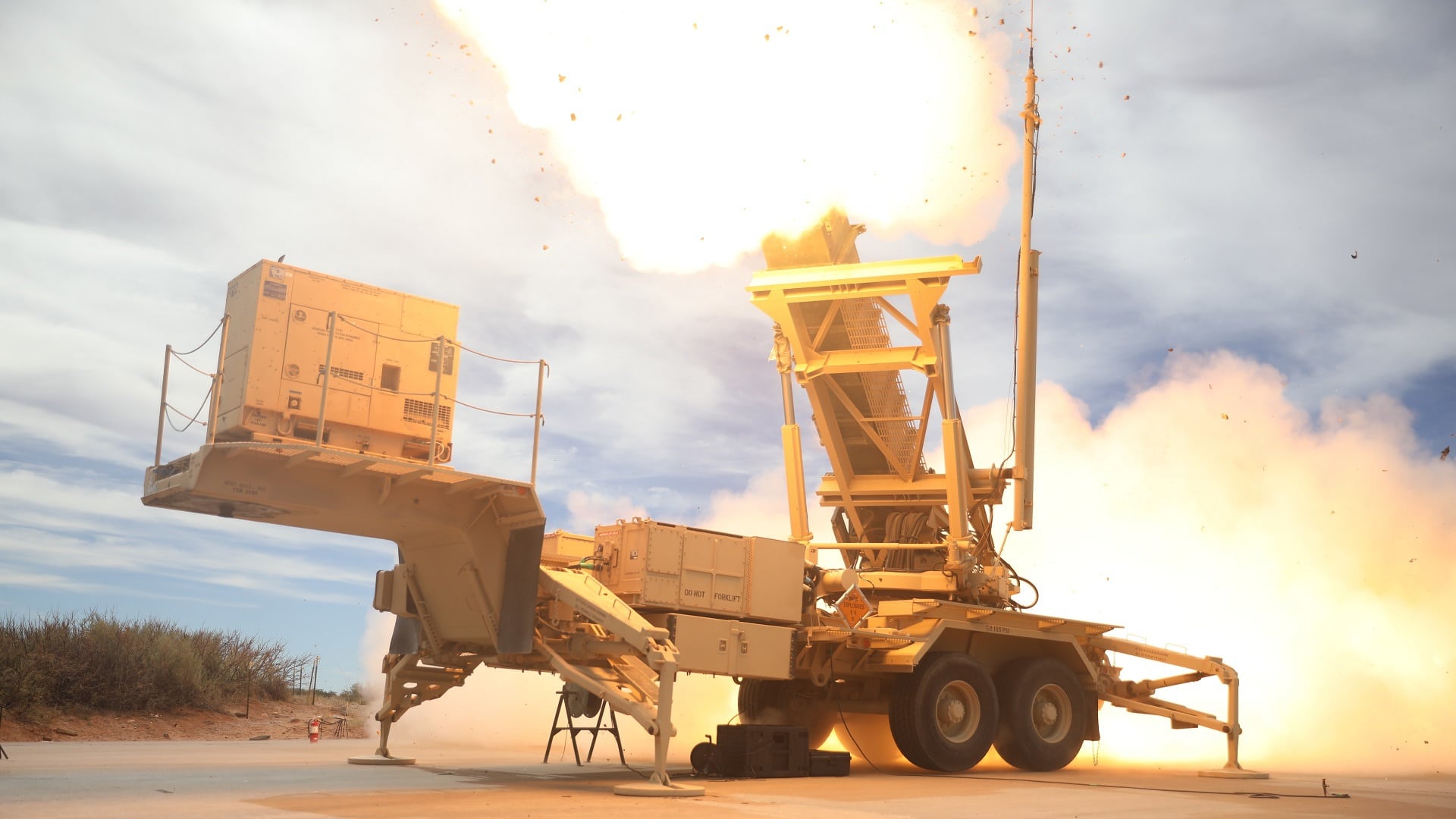
Exercise Artemis Strike is a German-led tactical live fire exercise with live Patriot and Stinger missiles at the NATO Missile Firing Installation in Chania, Greece from Oct. 31-Nov. 09. Over 200 U.S. soldiers and approximately 650 German airmen will be participating in the realistic training within a combined construct, exercise the rigors associated with force projection and educate operators on their air missile defense systems. The 10th Army Air Missile Defense Command will deploy, operate and fire live missiles within a tactical scenario, under Supreme Headquarters Allied Powers Europe operational readiness evaluation criteria.
Stretched To Their Limits
The increasing number of missiles that Russia is launching today is overwhelming Ukraine’s AMD networks.
This is despite the fact that the many different types and ranges of air defense missile batteries provided to Ukraine by NATO and other allied nations have permitted the establishment of effectively layered missile defense architectures.
On the night of the 14-15 June attack, five people were killed, and 35 more were injured in Kyiv.
One of the Russian drones, reportedly a Geran-series, which is the Russian-produced copy of the Iranian Shahed drone, damaged the Kyiv Pechersk Lavra.
This is one of Orthodox Christianity’s most important religious sites and was supposedly protected by its inclusion on the UNESCO World Heritage List.
The longer-term concern is that as the months flip by on the calendar, winter is getting closer.
Each year, as autumn ends, Russia begins to more thoroughly and deliberately target Ukraine’s energy grid so that those living in these cities will be left to shiver in the dark during the subzero months.

German soldiers assigned to Surface Air and Missile Defense Wing 1 fire the Patriot weapons system at the NATO Missile Firing Installation (NAMFI) during Artemis Strike Nov. 7 in Chania, Greece. Artemis Strike is a German-led multinational air defense exercise. German soldiers Over 200 U.S. soldiers and approximately 650 German airmen will be participating in the realistic training within a combined construct, exercise the rigors associated with force projection and educate operators on their air missile defense systems. (Photo By Officer Candidate Sebastian Apel, Air Defence Missile Group 24)
Ukrainian President Volodymyr Zelenskiy has said at the G7 summit that he wants to bring the war to an end by the beginning of winter.
However, the only chances of that happening would appear to be by Ukraine continuing the campaign of drone and missile strikes deep inside of Russia that shut down the nation’s petroleum industry.
Licensed Production? Trump Seems Positive on It, but Far from Action
“Everyone sees that there is no desire on Russia’s part to end this – that it is playing games, that it is [Russian President Vladimir] Putin who does not want to end it. But he must be forced to do so,” Zelenskiy said at the G7 event. He also confirmed that another main item on the agenda was securing additional air defense systems for Ukraine.
“Everyone recognizes this, and everyone will help,” he said, and he added that “the entire G7 will work to strengthen our defenses.”
What this means more than anything else is that Ukraine needs more Patriot batteries and – more importantly – the interceptor missiles that they fire at incoming Russian IRBMs.
Zelenskyy confirmed on Tuesday, 16 June, that he had once again raised this item with US President Donald Trump at the same G7 summit.
“I discussed with Trump the transfer of licenses for the production of these systems,” Zelenskiy said after the two had met on the sidelines of the summit. “The US leader responded positively,” he added
“Our team will be working on this. God willing, this time we will manage to obtain licenses to manufacture the relevant anti-ballistic systems and missiles.”
The license Ukraine is requesting would enable its industry to build the Missile Segment Enhancement (MSE) missile, one of the three missiles typically loaded with the Patriot system.
It is the most capable of the Patriot interceptors, but it is also the most expensive to build, and the rate at which it is produced in the US is close to anemic.
Only 620 MSE interceptors were delivered to militaries in 2025, while Kyiv has received only about 600 during the four years of war.
Lockheed Martin produces 500-600 PAC-3 interceptors annually and has recently agreed to surge production to 2,000 over the next seven years.
It is estimated that the Pentagon purchased an average of roughly 270 PAC-3 MSE missiles annually between 2015 and 2024, at a per-unit cost of approximately $3.7 million.
What is even more problematic is the willingness – or the lack thereof – of the US to agree to transfer the closely held technology that is part of the MSE production process.
Most of the US industry specialists the National Security Journal contacted believe that kind of technology transfer would take a long time to receive approval and might never be approved.
About the Author: Reuben F. Johnson
Reuben F. Johnson has thirty-six years of experience analyzing and reporting on foreign weapons systems, defense technologies, and international arms export policy. Johnson is the Director of Research at the Casimir Pulaski Foundation. He is also a survivor of the Russian invasion of Ukraine in February 2022. He worked for years in the American defense industry as a foreign technology analyst and later as a consultant for the U.S. Department of Defense, the Departments of the Navy and Air Force, and the governments of the United Kingdom and Australia. In 2022-2023, he won two awards in a row for his defense reporting. He holds a bachelor’s degree from DePauw University and a master’s degree from Miami University in Ohio, with a specialization in Soviet and Russian studies. He lives in Warsaw.


FRED ADAMS
June 18, 2026 at 11:48 am
“Lockheed Martin produces 500-600 PAC-3 interceptors annually and has recently agreed to surge production to 2,000 over the next seven years.”
Hmm. 500 a year for 7 years is 3500 missiles. So how is 2000 missiles over 7 years a surge? Do you mean a surge to 2000 per year?