

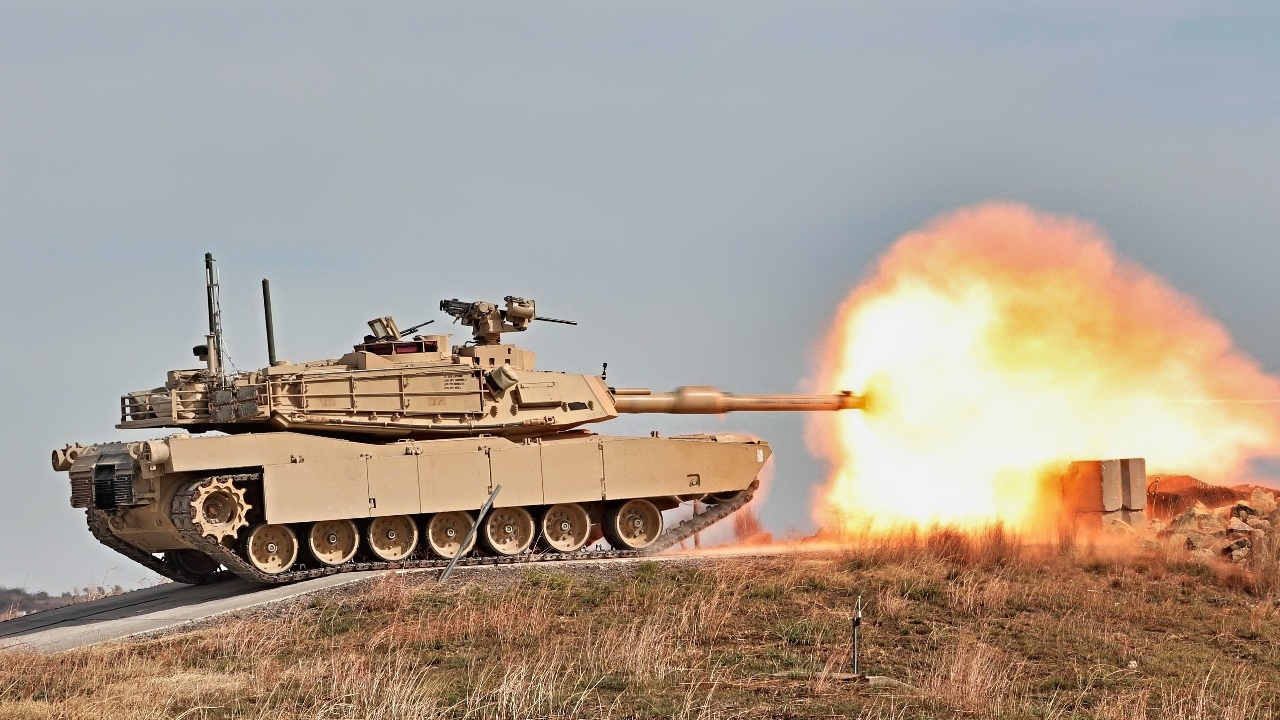
Ukraine Is Still the Graveyard of Tanks and Armor: Anyone even casually familiar with Russian military theory and analysis of Moscow’s armed forces knows that massed mechanized assaults on an enemy position have always been presented as the centerpiece of how they would prosecute a war. This is how we were always told that the then-Soviet military and its Warsaw Pact allies would roll over NATO and be at the English Channel in a matter of weeks, if not days.
The beginning of the Ukraine conflict proved what has always been said about generals always preparing to fight the last war – or at least what the last Cold War era war was supposed to be like. So, in the beginning of the conflict, those mechanized attacks backed up by armor were the order of the day.
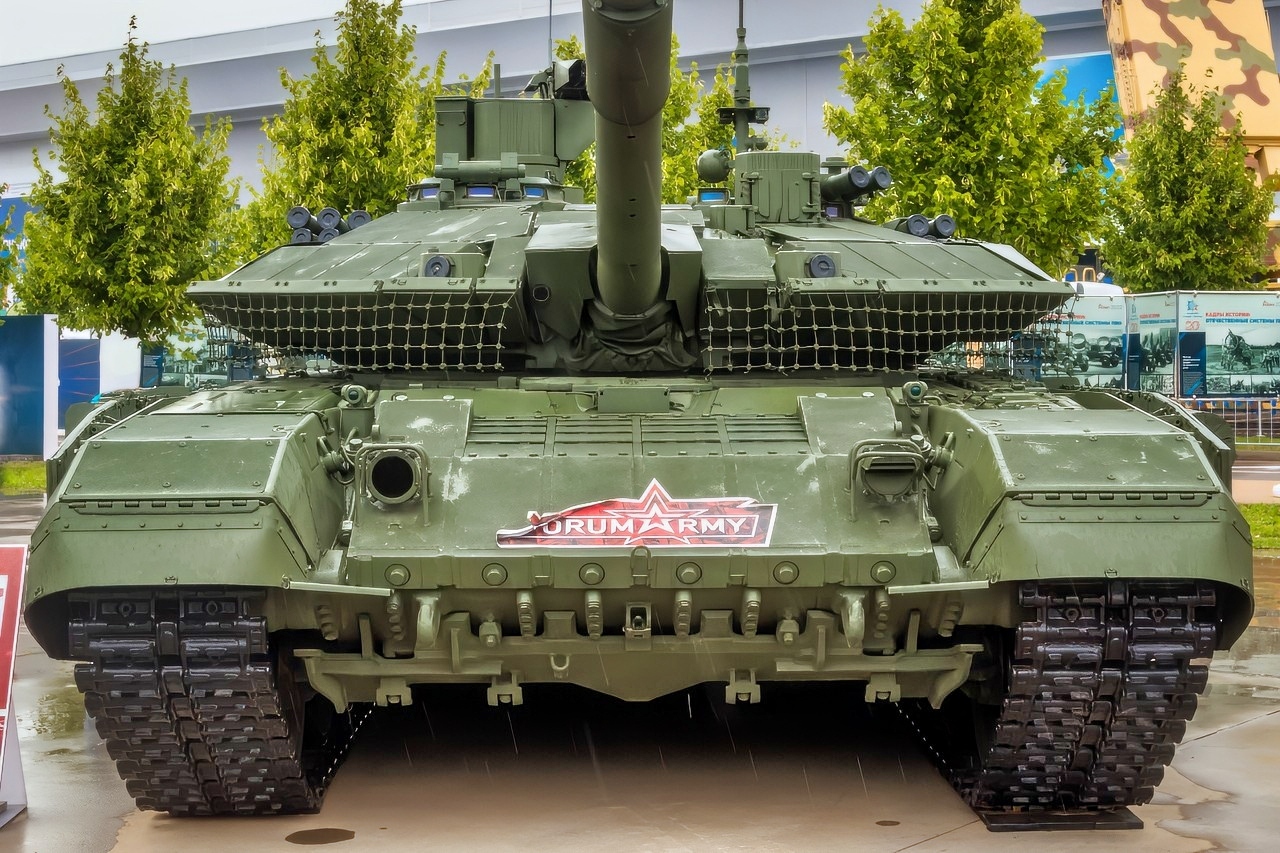
T-90M Russian Army. Image Credit: Creative Commons.

T-90 Tank from Ukraine War. Image Credit: Creative Commons.
But they were long ago deleted from the battle plans on both sides of the Russia-Ukraine War.
Much of this was due to Ukraine’s drone-based defenses, which made the kind of armored breakthroughs practiced in typical military exercises from the 1980s onward impractical, if not impossible, to carry through to completion.
What Russian forces have been known for as of late is mounting small-unit infiltration movements—sometimes no more than a handful of soldiers.
Their tactic is to bypass the main Ukrainian strongholds and then seize a piece of critical terrain that would allow them to control a large area and make it difficult for Ukraine to retake it.
An Attempt At a Mechanized Assault
But these attacks fail more than they succeed and contribute to Russia’s extremely high casualty numbers on the front lines.
When they do work, what typically happens, said one UK military commentator recently, is that you have a small group of exhausted soldiers who have broken through the front lines but are now out there on their own, with no means of being resupplied.
On 22 July, the Russian forces decided to try and break this stalemate of non-performance and kicked off what has proven to be their largest mechanized assault in many months against Ukraine’s front-line positions. Due to Russian President Vladimir Putin’s obsession with taking control of the entirety of the region by the end of the year, the attempted offensive thrust was conducted in the Donetsk Oblast.
But, as one would expect, this effort failed as well.
Ukraine’s reconnaissance drones detected this large movement of Russian personnel and equipment. Response units that were spring-loaded and designed to break up the assault swung into action: FPV drones, heavy bomber drones, and artillery.
Other units on the ground assaulted the Russian columns from fortified positions. Ukrainian units had also previously laid minefields along most likely avenues of any Russian offensive movements and damaged bridges leading toward their positions.
The Russian Ministry of Defense (MoD) has not released any details following the operation. Therefore, it is unknown whether any of the Russian units reached their assigned objectives.
Based on reports from the field, it is unlikely that any armored vehicles advanced beyond the engagement area without being detected and were most likely destroyed.
Lessons Learned
The fact that the assault failed is testimony to the impossible situation that the Russian military finds itself in. Any progress in taking Ukrainian territory has turned into a slaughterhouse that has high costs in lives and is demoralizing the Russian front-line units.
The timing is also not in Russia’s favor either. There are consistent reports out of Moscow that Putin intends to mobilize between 300,000 and 500,000 personnel for the Russian military at the start of October. This is the prediction from Ukraine’s President Volodymyr Zelensky, made in an interview this week with the UK broadcaster Sky News.
Any such call-up, however, is likely to be widely unpopular and could spark internal opposition to the Putin regime. It should be recalled that when Putin issued a call-up for 300,000 reservists in the fall of 2022, protests broke out across Russia. Tens of thousands of people fled the country to avoid being drafted and sent into battle.
Today, the reaction could be far worse. The war is far more unpopular than it was in 2022.
In May, Russia’s Levada Center reported that only one in four Russians supports the war. Another mobilization will have a sudden and negative impact on those already dismal polling ratings. News of how the largest offensive in months came to a bloody and ignominious end and had almost no impact on the disposition at the front will not improve those numbers either.
About the Author: Reuben F. Johnson
Reuben F. Johnson has thirty-six years of experience analyzing and reporting on foreign weapons systems, defense technologies, and international arms export policy. Johnson is the Director of Research at the Casimir Pulaski Foundation. He is also a survivor of the Russian invasion of Ukraine in February 2022. He worked for years in the American defense industry as a foreign technology analyst and later as a consultant for the U.S. Department of Defense, the Departments of the Navy and Air Force, and the governments of the United Kingdom and Australia. In 2022-2023, he won two awards in a row for his defense reporting. He holds a bachelor’s degree from DePauw University and a master’s degree from Miami University in Ohio, specializing in Soviet and Russian studies. He lives in Warsaw.


