

Four years ago, almost to the day, the Journal of Democracy published an essay on how the economic and social conditions in Russia were already being turned upside down due to the war that Russian President Vladimir Putin launched in February 2022.
Setbacks to Russia’s international relations and its image in the eyes of the world were equally catastrophic for the future of the nation.
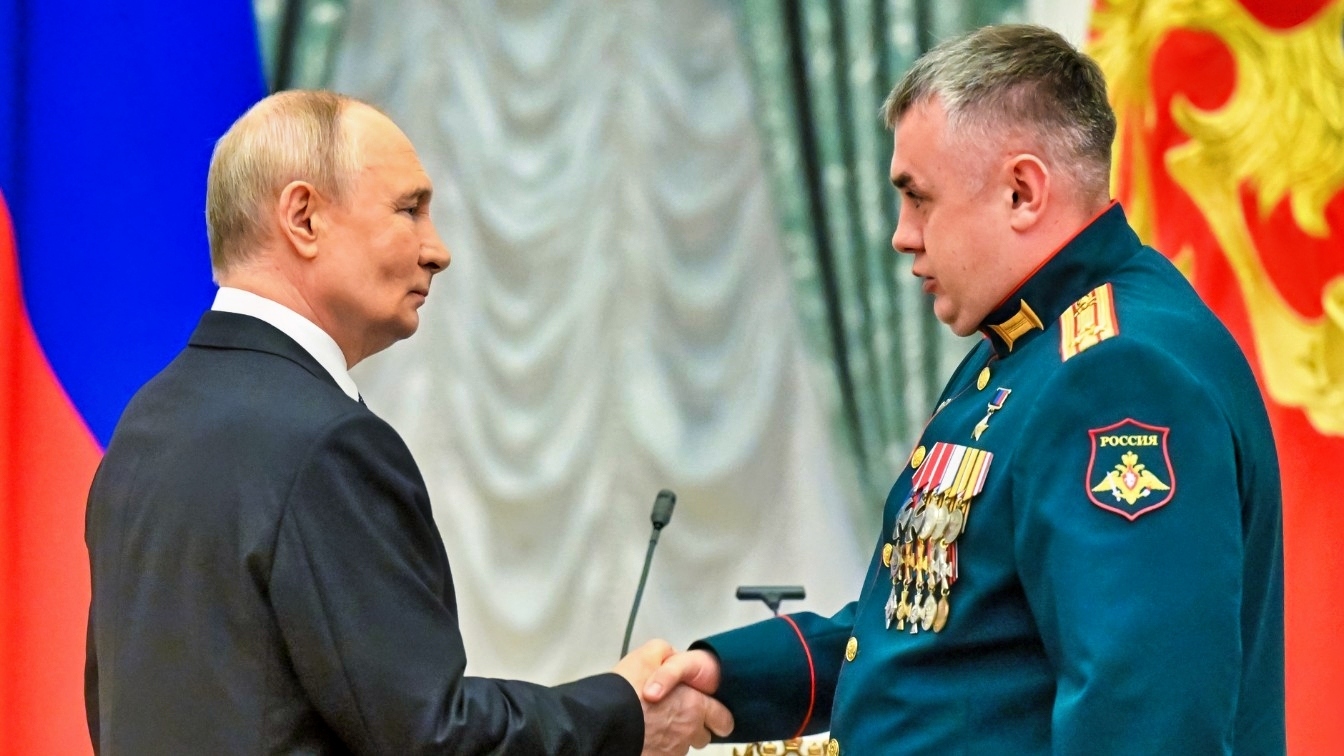
Putin and Russian Military Creative Commons Image
The first two months of war alone, writes the author of the essay, “turned the Russian clock back decades, undoing thirty years of post-Soviet economic gains and reducing the country to an international pariah state.
Three decades after the collapse of the Soviet empire, Russians are being dragged back in time to when Soviet citizens lived isolated from the rest of the world, in a bubble of failed ideology and misinformation.”
Ironically, as the article points out, that old Soviet system “fell apart under just the kind of autarky and autocracy that Putin hopes to reimpose. Just as the Soviet system collapsed, Putin is also failing Russia, erasing the gains of the post-communist period in a feckless attempt to rebuild a doomed empire.”
Today in 2026, those words seem prescient, to say the least. One cannot click on a single Russian social media site now without seeing a cavalcade of videos of angry citizenry – all documenting the current chaos that is resulting from fuel shortages and other fallout from Ukraine’s escalating drone campaign.
Tensions are high all over Russia, and there are increasing calls for Putin’s resignation.
Gutting the Country
Commentators in Kyiv also outline the numbers from the war – numbers that detail just how Vladimir Putin is gutting Russia’s military, industrial, and financial foundations.
But unfortunately for the former JGB Lt. Col., these are the same foundations he needs to sustain his war effort.
Meanwhile on the frontlines, the war is no longer trending in Putin’s favor.

Putin on Direct Line Back in 2019. Image Credit: Creative Commons.
Up to the end of June 2026, Russian forces gained only 241 square miles of territory but at a price of horrendous losses. In the month of June alone, Russia suffered 39,500 casualties to take control of just 12 square miles.
Now Putin has declared this week that his military will capture the remaining Ukrainian-held territory in Donetsk by the end of 2026.
But at the current rate of advance, pushing Ukraine out of all this region would take another 14 years, and at the current casualty rates this would also cost the lives of millions more Russians.
Some observers point out that in past years, when the battlefield situation deteriorates, Russia has shown the ability to regroup, rebuild its forces and then consolidate them to mount a new offensive thrust.
Fallback Structures Are Being Destroyed
But the problem for Putin today is that rebuilding combat power after a Ukrainian advance requires calling on resources his military has been reusing to keep reconstituting one new attack after another.
But soon those resources may no longer be there.
Across all of Russia, Ukraine’s long-range and mid-range drone strikes are removing the systems and facilities that his military would fall back on after each battlefield loss.
In recent months, these long-range attacks have hit 25 refineries that are responsible for 82 percent of Russia’s petrol production capacity.
The early July attack on the mammoth Omsk refinery has shut down the largest supplier of fuel in Russia, and now Ukraine is hitting the transit stations that supply oil being transported from the oil fields to those same refineries.
Ukraine is thus attacking the industry from the petrol production centers first and then back down the entire “food chain” of the oil industry.
Last month, in June, refinery output collapsed. Crimea’s rail traffic collapsed from a high of 94 trains daily to 4 per day.
At the same time, ferry boats, tankers, power grids, and supporting road routes came under attack. Fuel shortages are now being seen in 88 of Russia’s 89 regions.
This has forced not just the Russian military, but also farms, freight networks, factories, and emergency services to compete for the same shrinking supply of petrol and diesel.
As fuel, transport, and other infrastructure wobble, financial pressure is mounting in Russia. Banks, businesses, public services, and Putin’s own ruling circle are feeling the system is under duress.
War-directed loans have created $30 billion in annual interest, corporate debt has reached $98 billion, and the Kremlin has also expropriated more than $58 billion from private owners. “Russia’s economy is an ‘illusion’ built on debt, and a banking crisis is ready to explode,” reads a European intelligence agency assessment that was reported by Fortune magazine.
The act of mobilizing more soldiers to increase military gains only adds inexperienced personnel to depleted units and generates only minimal results.
But with the numbers of those already killed in this war, additional conscription means stripping more workers from their positions at factories, farms, railways, and essential services.
As more analysts are concluding, Putin is no longer spending in order for Russia to win. He is down to spending so that Russia can survive – and that survival is by no means guaranteed for long.
About the Author: Reuben F. Johnson
Reuben F. Johnson has thirty-six years of experience analyzing and reporting on foreign weapons systems, defense technologies, and international arms export policy. Johnson is the Director of Research at the Casimir Pulaski Foundation. He is also a survivor of the Russian invasion of Ukraine in February 2022. He worked for years in the American defense industry as a foreign technology analyst and later as a consultant for the U.S. Department of Defense, the Departments of the Navy and Air Force, and the governments of the United Kingdom and Australia. In 2022-2023, he won two awards in a row for his defense reporting. He holds a bachelor’s degree from DePauw University and a master’s degree from Miami University in Ohio, specializing in Soviet and Russian studies. He lives in Warsaw.


