

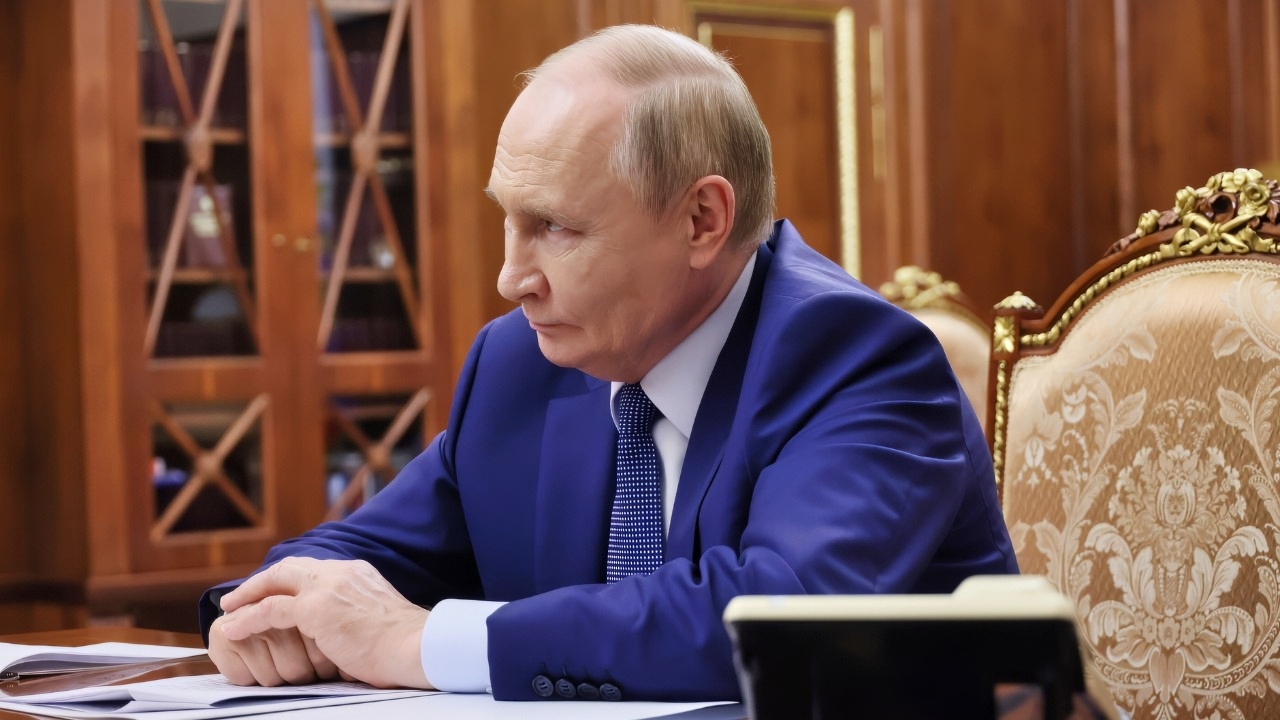
Key Points and Summary – Russia has responded to escalating U.S. military pressure on Venezuela by threatening to send advanced missiles, including the new Mach 10 Oreshnik.
-A senior Russian official stated there are “no obstacles” to arming its ally, which comes after U.S. forces killed 60+ alleged “narco-terrorists” in the Caribbean.
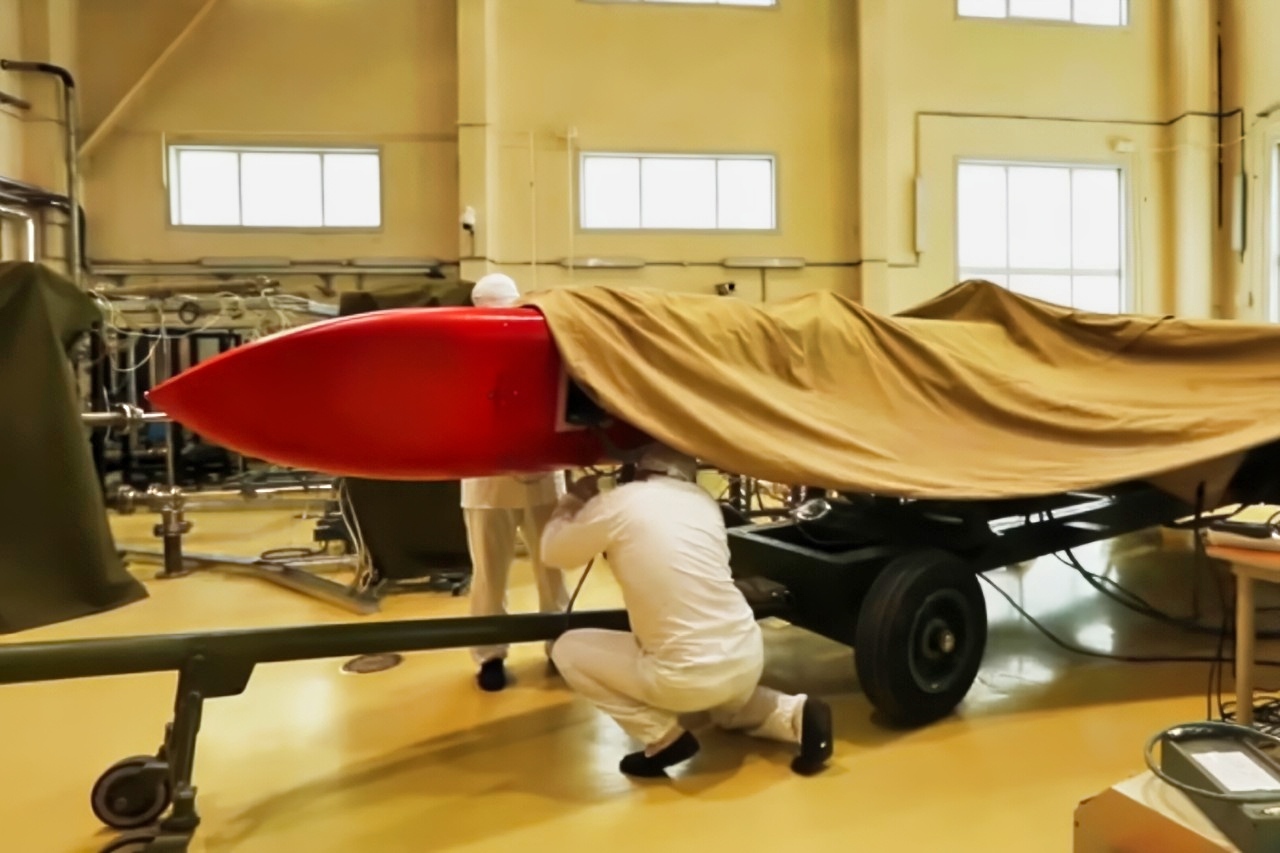
Skyfall Missile Russian Flying Chernobyl. Russian Government/Screenshot.
-The threat may be a bluff; Putin only just announced the start of Oreshnik’s serial production (Nov 4), and Ukrainian President Zelenskyy recently claimed his intelligence services destroyed one of the few prototypes, alleging only six remain.
-The posturing comes as leaked letters show Venezuelan President Maduro is also asking Russia for parts to repair his Su-30 fighter fleet.
Putin Makes a Mach 10 Hypersonic Threat
To provide some firepower to a South American ally under pressure from Washington, Russian officials suggest they could send their industry’s most advanced hypersonic missiles to Venezuela. A statement to that effect comes after Venezuelan President Nicolás Maduro reached out to Russia, China, and Iran to request military assistance.
Tensions between the Latin American nation and the United States have been escalating almost daily. The Trump administration has deployed fighter aircraft, bombers, surveillance drones, spy planes, U.S. Navy ships and Marines near Venezuelan shores.
The official rationale for this build-up of U.S. military power is to subdue the illegal drug trafficking that has long been conducted from the Caribbean. Since September, the U.S. has conducted more than a dozen strikes on various ships and killed more than 60 individuals Washington says are suspected drug traffickers. Many of those eliminated were manning vessels that originally departed from Venezuela.

(April 8, 2017) The future USS Gerald R. Ford (CVN 78) underway on its own power for the first time. The first-of-class ship — the first new U.S. aircraft carrier design in 40 years — will spend several days conducting builder’s sea trials, a comprehensive test of many of the ship’s key systems and technologies. (U.S. Navy photo by Mass Communication Specialist 2nd Class Ridge Leoni/Released)
This past Sunday, U.S. President Donal Trump was asked on 60 Minutes if the U.S. was planning to go to war with Venezuela. “I doubt it. I don’t think so,” he replied. “But they’ve been treating us very badly, not only on drugs—they’ve dumped hundreds of thousands of people into our country that we didn’t want, people from prisons—they emptied their prisons into our country.”
Russia’s Threatening Response
Alexei Zhuravlyov, deputy chairman of Russia’s parliamentary defense committee, told Gazeta.Ru there were “no obstacles” to providing Oreshnik or Kalibr missiles to the “friendly” nation of Venezuela in response to Maduro’s plea for help.
“Russia is actually one of Venezuela’s key military-technical partners,” he said. “We supply the country with nearly the entire range of weapons, from small arms to aviation. The details and volumes of deliveries [of weaponry] are classified, so the Americans might be in for a surprise. I see no obstacles to providing our friendly nation with new systems such as the Oreshnik or the well-proven Kalibr missiles. No international commitments restrict Russia in this regard.”
Maduro also previously reached out to Russian President Vladimir Putin and Deputy Prime Minister Denis Manturov in personal letters that were hand-delivered to both during an official visit to Moscow by Venezuela’s Transportation Minister Ramón Celestino Velásquez.
Copies of these letters were obtained by U.S. intelligence and shown to the Washington Post. They contained requests for air defense missiles, as well as numerous spare engines, radars, and other subsystems needed to bring Venezuela’s fleet of Russian-made Sukhoi Su-30MKV fighters up to mission-capable status.
Expect the Unexpected
Russia and Venezuela have signed multiple agreements in recent years, including a strategic partnership treaty aimed at expanding military and economic cooperation. The strengthening of bonds and military cooperation between the two countries is a consequence of both seeking ways to counter U.S. influence in Latin America.
The Oreshnik missile is an intermediate-range ballistic missile billed as capable of reaching Mach 10 and exceeding the typical range for a missile of this class. It can deliver conventional and nuclear warheads.
However, there are doubts that Moscow could supply sizable numbers of the Oreshnik to any nation’s military; including its own. In December 2024, Putin promised that his missile factories could begin mass-producing Oreshnik missiles “in the near future.”
On Nov. 4, almost a year later, he announced that serial production of the missile is only now beginning.
“We have developed and deployed the Oreshnik medium-range missile system, and have begun serial production, and equipped our intercontinental ballistic missiles and submarine-launched missiles with modern anti-ballistic missile systems,” Putin said.
One of the few known Oreshnik prototypes was destroyed in a special operation last summer by the Ukrainian intelligence services, Kyiv recently revealed.
“They had three shots, and they used one,” said Ukrainian President Volodymyr Zelenskiy, indicating that only a small number of these missiles exists at present. Zelenskiy added that Ukrainian intelligence now believes Moscow can carry out no more than six additional launches.
About the Author: Reuben F. Johnson
Reuben F. Johnson has thirty-six years of experience analyzing and reporting on foreign weapons systems, defense technologies, and international arms export policy. Johnson is the Director of the Asia Research Centre at the Casimir Pulaski Foundation. He is also a survivor of the Russian invasion of Ukraine in February 2022. He worked for years in the American defense industry as a foreign technology analyst and later as a consultant for the U.S. Department of Defense, the Departments of the Navy and Air Force, and the governments of the United Kingdom and Australia. In 2022-2023, he won two awards in a row for his defense reporting. He holds a bachelor’s degree from DePauw University and a master’s degree from Miami University in Ohio, specializing in Soviet and Russian studies. He lives in Warsaw.
More Military
Northrop Grumman Is Likely Winner of F/A-XX, But Big Questions Remain
USS United States: The Aircraft Carrier Designed to Launch Bombers
The U.S. Air Force’s B-21 Raider Bomber Nightmare Has Just Begun
How Long Can a Nuclear U.S. Navy Aircraft Carrier Stay in Service?
The Air Force’s B-52 Stratofortress Bomber ‘Nightmare’ Is Real


