

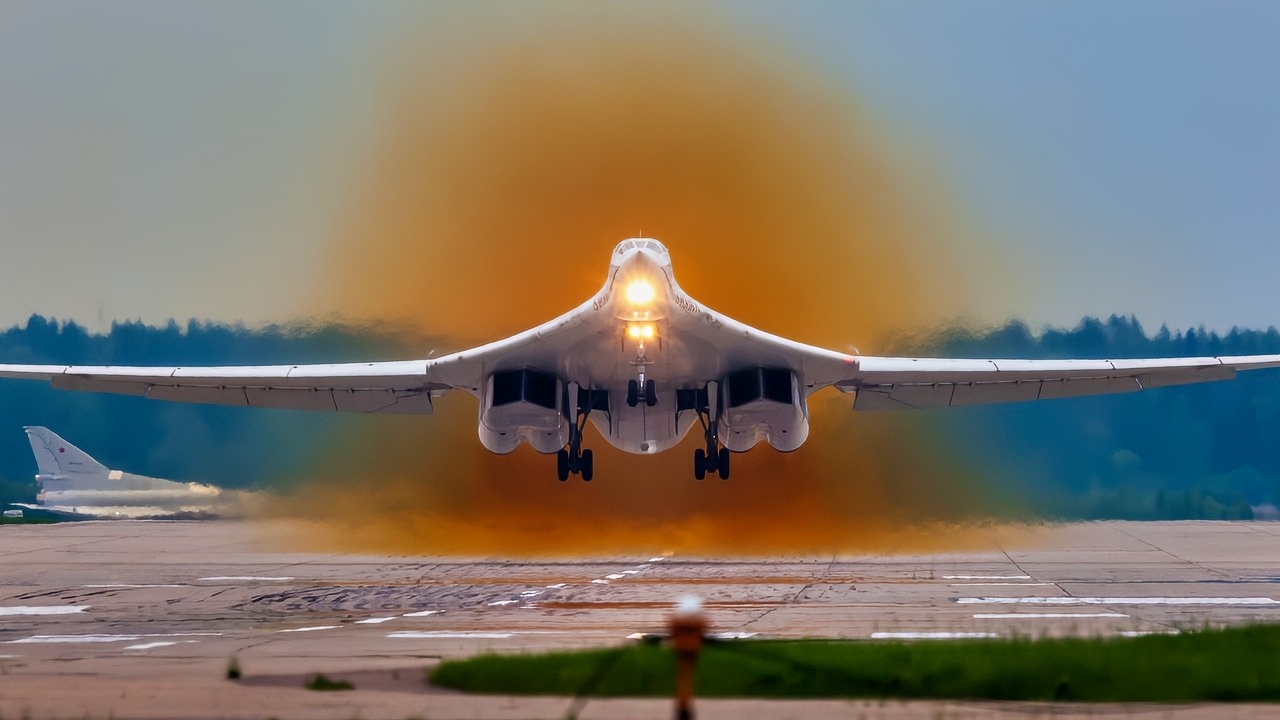
Key Points and Summary – According to an Oct. 31 Washington Post report, Venezuelan President Nicolás Maduro sent Vladimir Putin a personal request for military help—chiefly to restore Caracas’s Russian-made Su-30MKV fighters.
-Maduro seeks three-year financing via Rostec to overhaul engines, radars, and secure logistics, touting Su-30s and Kh-31A anti-ship missiles as key deterrents as the U.S. surges naval power in the Caribbean.
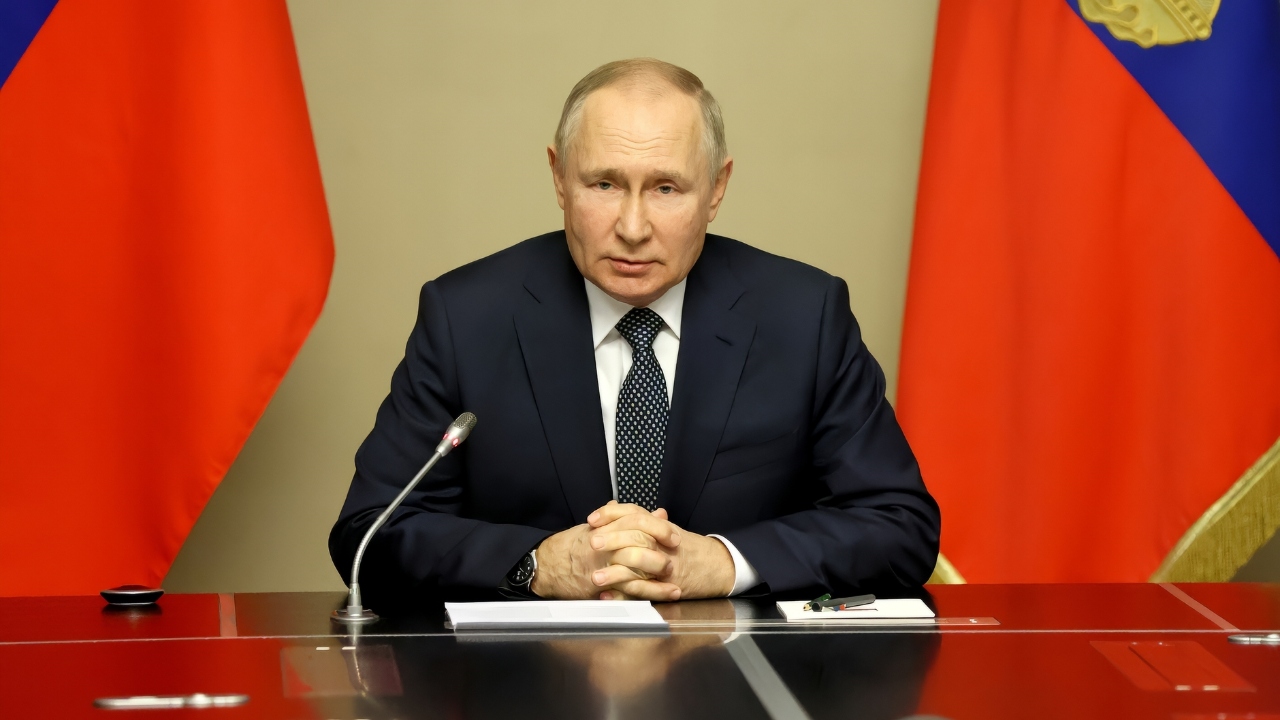
Putin November 2022. Image Credit: Creative Commons.
-Yet Venezuela’s fleet is small and degraded—fewer than five jets were reportedly serviceable by 2018—casting doubt on near-term combat value.
-The ask underscores Caracas’s dependence on Moscow, the role of Putin allies like Sergei Chemezov, and the limited, symbolic leverage aging systems provide.
Venezeula Needs Russia Help
According to a report in the October 31 Washington Post, Venezuelan President Nicolás Maduro has made a request of Russian President Vladimir Putin for military assistance. This request largely concerns support for Russian-made weapons operated by the South American country.
The Venezuelan request comes as the United States continues a military build-up in the Caribbean that could possibly be the precursor to a military intervention.
The Washington paper’s story states that it had seen internal US government documents that included a copy of a personal letter from Maduro to Russian President Vladimir Putin. The letter was reportedly to be hand-delivered by Venezuelan Transportation Minister Ramón Celestino Velásquez during a visit he made to Moscow in mid-October. During the visit, he also met with his Russian counterpart, according to US Government documents.
Maduro was specifically requesting support for the maintenance and overhaul of some of the Russian military equipment acquired by Venezuela in the past two decades. One of the main items on the list from the Venezuelan strongman is assistance with the country’s fleet of Sukhoi Su-30MKV fighter aircraft.
In the correspondence to Putin, Maduro emphasized that the Russian-made Sukhoi fighters “represented the most important deterrent the Venezuelan National Government had when facing the threat of war.” However, in response to the declining economic conditions in Venezuela, Maduro requested that Moscow provide a “medium-term financing plan of three years,” as the country lacks the ability to pay upfront for the items on its wish list.
Venezuela’s Airpower Problem
The Latin American nation had been the biggest buyer of Russian military hardware on the continent. The Su-30MKV aircraft were originally acquired in the early 2000s and were a special modification of the Su-30MK2 that was initially developed for the Chinese People’s Liberation Army Navy (PLAN).
The Venezuelan aircraft were reported to have been retrofitted with some more advanced on-board systems that were initially equipment developed for the Su-35 program.
The Venezuelan Air Force, at one time, had been rated as operating the most advanced fighter fleet in all of Latin America. However, more recent reporting on these fighter aircraft states that “while cutting edge for its time,” the avionics on board these Su-30 models are “increasingly considered out of date.”
That fleet is also limited by its size, comprising only 22 fighters in total, and a number of these are out of service due to a lack of serviceable subsystems. Maduro specifically requested overhauls of eight of the aircraft’s AL-431F jet engines and five radars. The list of items also included unspecified requirements for Moscow to provide “logistical support.”
One of the items that Caracas is attempting to use to intimidate the US Navy flotilla gathering in the Caribbean is the Kh-31A anti-ship missile (ASM) carried by the Su-30MKV. This weapon, which reaches speeds between Mach 2.4 (2,939 km/h) at sea level and Mach 3.3 (4,042 km/h) at higher altitudes, is powered by a ramjet engine. This makes it more than double the speed of comparable US systems and other ASMs – made possible by their ramjet engine.
The missile features a high-explosive fragmentation warhead that weighs between 94 and 110 kg, depending on the variant. However, it has a limited range of only about 44 miles.
Personal Connections With Putin
Maduro’s emissary also requested that the financing for the hardware needed to bring the Su-30MKVs up to operational status be provided through Rostec, the Russian state-owned defense-industrial conglomerate. The documents did not specify the amount to be financed.
Rostec has been run from its inception and continues to be led by Sergei Chemezov, a longtime ally and confidant of Putin. Rostec supplies up to 80 per cent of the weapons used by the Russian army in its war against Ukraine. These include fighter jets, combat helicopters, missiles, drones, tanks, and artillery systems.
Chemezov’s association with Putin dates back to their service in the notorious Soviet-era secret police and intelligence agency, the KGB. The two initially met and served together in the 1980s in the former East German Democratic Republic until the fall of the Berlin Wall.
“Maduro wanting to do business with Chemezov on these weapons deals most likely means that there will be the usual kickbacks and other ‘commissions’ being paid, which Putin is always angling for in these arms transactions,” said a US Government analyst on Latin America who spoke to National Security Journal.
Velásquez was also supposed to meet with and deliver a second letter to another major Putin ally, the Russian First Deputy Prime Minister Denis Manturov. In the world of arms production, he is the most important official, holding the portfolios of Minister of Trade and Industry in addition to his title as Deputy Prime Minister.
The big question is whether any of the hardware Venezuela has in inventory, even if these systems can be restored to operational status, poses a challenge to the US military.
One former Venezuelan military official, who spoke to the Washington Post on the condition of anonymity due to the fear of reprisals, said that by 2018, Venezuela had fewer than five of the Su-30MKVs still serviceable. Chávez had also purchased Russian helicopters and stocked Russian missiles, he said. However, many of them are old and pose no real threat to the US military.
“Chávez bought, or Russia sold Venezuela, pure junk,” he said.
About the Author: Reuben F. Johnson
Reuben F. Johnson has thirty-six years of experience analyzing and reporting on foreign weapons systems, defense technologies, and international arms export policy. Johnson is the Director of the Asia Research Centre at the Casimir Pulaski Foundation. He is also a survivor of the Russian invasion of Ukraine in February 2022. He worked for years in the American defense industry as a foreign technology analyst and later as a consultant for the U.S. Department of Defense, the Departments of the Navy and Air Force, and the governments of the United Kingdom and Australia. In 2022-2023, he won two awards in a row for his defense reporting. He holds a bachelor’s degree from DePauw University and a master’s degree from Miami University in Ohio, specializing in Soviet and Russian studies. He lives in Warsaw.
More Military
The British Army’s Big Challenger 3 Tank Mistake Still Stings
F-35 Stealth Fighter Program Has Passed the Point of No Return
The Iowa-Class Battleships Have A Message for Any Navy on Earth
Canada Has a Big Message for the Eurofighter Typhoon
The Mach 2 F-16 Fighting Falcon Fighter Has a Message for the U.S. Air Force


