

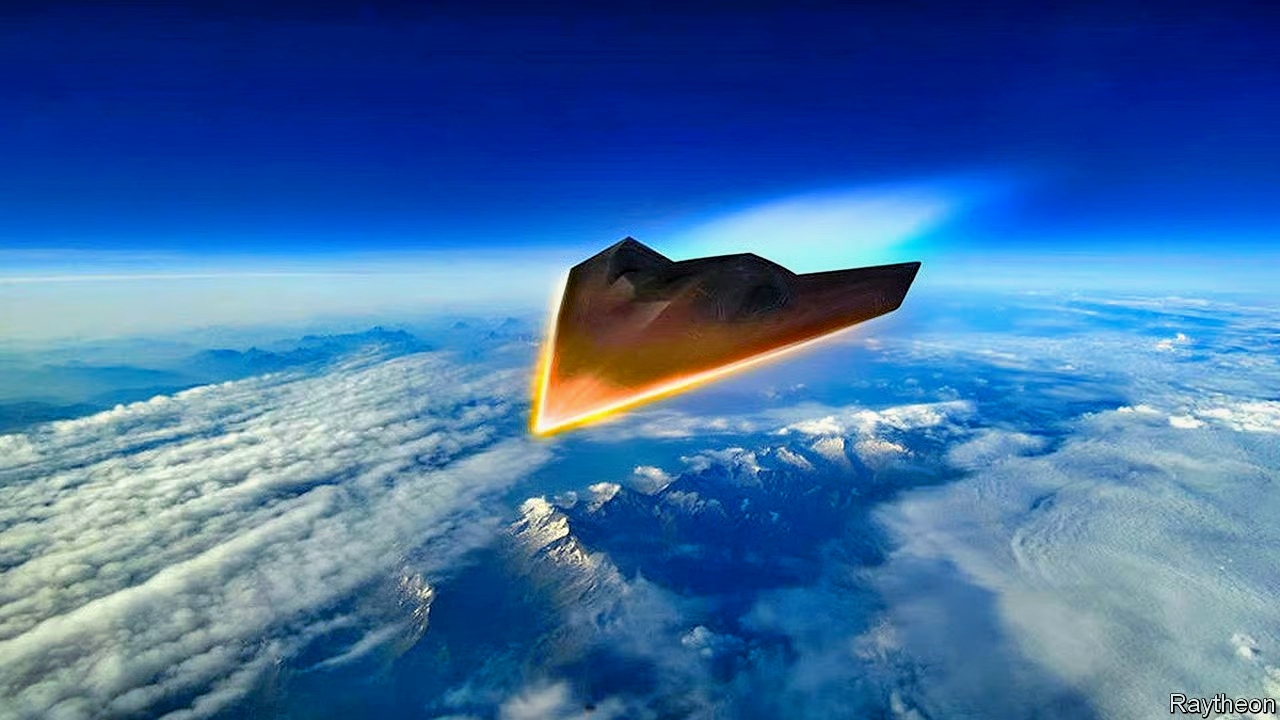
Russia’s Avangard is the only operational hypersonic glide vehicle in service anywhere in the world. Developed from Soviet Project Albatross, which began in the 1980s to defeat Ronald Reagan’s Strategic Defense Initiative, the system rides an R-28 Sarmat intercontinental ballistic missile into the upper atmosphere, separates, and glides toward its target at speeds between Mach 20 and Mach 27. Estimates put the warhead at 800 kilotons to 2 megatons, with a range exceeding 6,000 kilometers. Russia revealed the system in 2018 after Putin first teased it in 2004. The U.S. LRHW only completed its trials in 2024.
Russia’s Avangard Hypersonic Missile Is Dangerous

Typhon Hypersonic Missile. Image Credit: YouTube Screenshot.
Avangard (Vanguard) is a Russian hypersonic intercontinental ballistic missile system.
The system is currently the only operational hypersonic glide vehicle in Russian service, making it one of the most capable weapon systems available to the Russians. Avangard was developed from earlier Soviet projects that researched the feasibility of hypersonic ICBMs.
The system officially entered service in 2018 and has since entered full-scale production, although it is not currently known how many missiles Russia currently possesses.
Project Albatross: Origin of the Avangard
Development of the Avangard system began back during the final days of the Cold War as a way to bypass the United States’s Strategic Defense Initiative.
The Strategic Defense Initiative (or the Star Wars program) was a feint by the U.S. to trick the USSR into investing its precious few resources in countering a capability the Americans never possessed: space-based missile defense systems.
In response to this initiative, which the Soviets believed was genuine, the USSR launched Project Albatross, a program to develop a new kind of ballistic missile nearly impossible to intercept.

Mako Hypersonic Missile. Image Credit: Creative Commons.
Researchers at the time were interested in creating warheads capable of traveling far faster than conventional missiles. Project Albatross was eventually canceled after the fall of the USSR, but the program’s research would later influence the development of the Avangard complex.
Development on a hypersonic ICBM continued in 2002, after the U.S. withdrew from the ABM Treaty of 1972.
The project was first teased to the public in 2004, when Vladimir Putin described a new weapon in development that could maneuver at hypersonic speeds. However, due to the program’s technological complexity, the system was difficult to develop.
One of the major hurdles was that many guidance and control systems were manufactured in newly independent Ukraine, and thus a domestic alternative had to be developed before the project could advance.
According to American intelligence reports, the first tests took place in 2016-2017. In 2018, the Avangard system was officially revealed to the public and entered service and serial production later that year.
Specs and Characteristics
The technical characteristics of Avangard remain heavily classified, with only estimates and uncorroborated statements available.
Reports indicate it can travel at speeds between Mach 20 and Mach 27, which is more than 20 times the speed of sound.
At such speeds, the system can cover intercontinental distances in a very short period of time.

Russian Mobile ICBM Nuclear Weapons. Image Credit: Creative Commons.
In addition to its speed, the Avangard system uses a boost-glide flight path rather than a simple ballistic trajectory. After being carried into the upper atmosphere by an ICBM, the glide vehicle separates and begins moving through the atmosphere using aerodynamic lift. This allows it to maintain high speeds while also changing direction during flight.
Avangard’s maneuverability is a key factor in its effectiveness.
Traditional ballistic warheads follow paths that can be calculated once they are detected, allowing missile defense systems to plan interceptions. In contrast, Avangard can alter both its altitude and direction while traveling at hypersonic speed.
This ability makes it far more difficult to track and intercept, as defensive systems must respond to a constantly changing trajectory.
The glide vehicle can also carry various payloads, including both nuclear and conventional warheads.
While precise details remain classified, official statements seem to indicate that the system can carry a nuclear payload of around 800 killotons to 2 megatons.
In terms of physical characteristics, it is estimated to be about 5.4 meters long and weigh roughly 2,000 kilograms, with a range exceeding 6,000 kilometers depending on the launch platform.

Sentinel ICBM. Image Credit: Creative Commons.
Avangard vs Traditional ICBMs
Avangard operates similarly to many other hypersonic ICBMs.
The process begins with the launch of a heavy intercontinental ballistic missile, in this case, the R-28 “Sarmat” rocket, which carries the glide vehicle into space. After reaching a high altitude, the Avangard separates from the booster and reenters the atmosphere, transitioning into a controlled glide. During this phase, it continues traveling at hypersonic speed while maneuvering toward its target.
Unlike a traditional warhead that descends along a fixed path, it behaves more like a high-speed aircraft, adjusting its flight path as needed before delivering its payload. This unique flight profile is a major reason why it is considered difficult to intercept with current defense systems.
The Avangard system plays an important role in maintaining Russian nuclear deterrence.
The system is currently operated by Russia’s Strategic Missile Forces, and it is intended to form the backbone of Russia’s defensive posture alongside the Sarmat ICBM. Its design is intended to overcome modern missile defense systems that rely on predicting the trajectory of an incoming warhead.
By introducing unpredictability and reducing the time available for a response, it helps ensure that a retaliatory strike can still reach its target even in the face of intense defensive measures.
The Hypersonic Arms Race
Avangard is part of a broader global effort to develop hypersonic technology. Other countries, including the United States and China, are working on similar systems as they recognize the strategic advantages of speed and maneuverability.
This has contributed to what many analysts describe as a hypersonic arms race. China, for its part, has already put several hypersonic ICBMs into service, most notably the DF-17 and the YJ-20. Meanwhile, the U.S. has entered the hypersonic race late, with the LRHW completing trials in 2024 after a long series of delays.
Hypersonic weaponry will likely become more common worldwide as the technology matures, but the Avangard remains among the most formidable missiles currently in existence.
About the Author: Isaac Seitz
Isaac Seitz, a Defense Columnist, graduated from Patrick Henry College’s Strategic Intelligence and National Security program. He has also studied Russian at Middlebury Language Schools and has worked as an intelligence Analyst in the private sector.


