

Russia’s Avangard hypersonic glide vehicle, reportedly capable of traveling at more than Mach 20 while maneuvering laterally and vertically through the atmosphere, was placed on combat duty at the Dombarovsky missile base in December 2019 — designed specifically to defeat every U.S. and NATO missile defense system in operation.
President Vladimir Putin unveiled the program in 2018 and tied its development directly to the U.S. withdrawal from the Anti-Ballistic Missile Treaty in 2002.
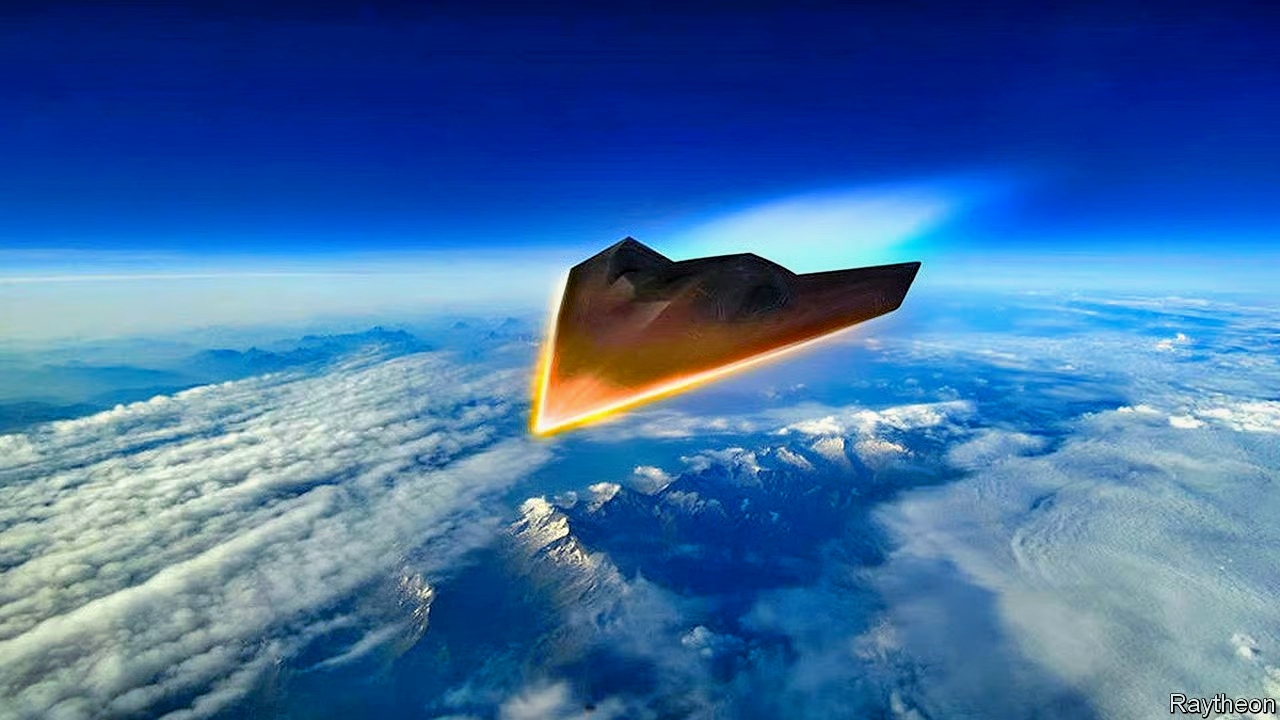
Hypersonic Glide Vehicle. Image Credit: Raytheon.
Russia now fields an operational hypersonic arsenal that includes the Mach 20 Avangard, the Mach 10 Kinzhal air-launched missile, and the Mach 9 Zircon naval cruise missile — while the U.S. Army’s Dark Eagle, expected to reach Mach 5+, has yet to enter service.
Russia’s Avangard Hypersonic Looks Dangerous
Russia is preparing to deploy its new Oreshnik intermediate-range ballistic missile system in neighboring Belarus, according to recent statements from Belarusian President Alexander Lukashenko and satellite analysis published by Reuters. The revelations from late last year have drawn new attention to Moscow’s growing interest in advanced hypersonic weapons as part of its nuclear deterrence strategy.
Researchers from the Federation of American Scientists identified in 2025 what appeared to be a likely Russian missile deployment site near the city of Krichev in eastern Belarus, roughly 45 miles from the Russian border.
Lukashenko had previously stated that Belarus expected to receive the nuclear-capable Oreshnik missile system from Russia as military cooperation between Moscow and Minsk began to deepen during the Ukraine War.
The deployment is significant because Oreshnik is part of a number of Russian strategic weapons designed to complicate American and NATO missile defenses. Although Oreshnik itself is a different system, the focus on Russian hypersonic missiles brings us back to Avangard, Russia’s first operational hypersonic glide vehicle and one of the Kremlin’s most important nuclear modernization programs.
What the Avangard Weapon Is
President Vladimir Putin first publicly unveiled the Avangard system during his 2018 address to the Russian Federal Assembly, where he announced several new strategic weapons programs that he claimed could bypass or challenge American missile defenses. During the speech, Putin directly pointed to the United States’ withdrawal from the Anti-Balistic Missile Treaty in 2002 and the subsequent expansion of U.S. missile defense systems in Europe and elsewhere as motivating factors behind the development of Avangard.

Typhon Hypersonic Missile. Image Credit: YouTube Screenshot.
Unlike a traditional ballistic missile warhead, Avangard is a hypersonic glide vehicle mounted atop an intercontinental ballistic missile, which separates during flight and maneuvers through the atmosphere toward its target at extreme speed.
Russia has claimed the weapon can travel at more than Mach 20 while changing altitude and direction during flight, making interception significantly more difficult than against conventional ballistic missile trajectories.
That distinction is important because standard ballistic missile warheads generally follow predictable trajectories after reentering the atmosphere. Existing missile-defense systems are primarily designed to calculate and intercept missiles following those trajectories.
Avangard, however, was specifically built to introduce unpredictability into the terminal phase of flight by maneuvering laterally and vertically while still traveling at hypersonic speed.
Russia formally placed Avangard on combat duty with the Strategic Rocket Forces in December 2019 at the Dombarovsky missile base in the Orenburg region near Kazakhstan.
Why Russia Built It
Since its inception, Avangard has been described by Moscow as a direct response to American missile defense programs rather than simply another offensive nuclear weapon – but it could easily be described as the latter.
For years, officials in Moscow have argued that expanding U.S. interceptor systems could eventually threaten Russia’s second-strike capability by giving Washington the theoretical ability to destroy surviving Russian missiles after a nuclear exchange.
That concern has shaped much of Russia’s nuclear modernization strategy over the last two decades – in addition to Avangard, Moscow has invested heavily in systems such as the Sarmat heavy intercontinental ballistic missile, the Kinzhal air-launched hypersonic missile, the Zircon naval hypersonic cruise missile, and the Poseidon nuclear-powered underwater drone. Each one of those systems is designed in different ways to complicate American and NATO defensive planning.
Today, Russian military doctrine increasingly focuses on ensuring that enough nuclear weapons could still penetrate missile defenses under any circumstances. That does not necessarily mean Moscow believes the United States is close to neutralizing Russia’s nuclear arsenal today, however.
Current American missile defense systems remain relatively limited compared to the scale of Russia’s strategic forces, so, instead, Russian planners appear to be concerned about preserving deterrence decades into the future as interceptor technologies continue to improve.
Avangard is therefore both a military and a political asset. Militarily, it complicates interception calculations, and politically, it tells adversaries that attempts to weaken its nuclear deterrent through missile defense expansion will fail.
Hypersonic Weapons Today
Russia currently possesses one of the most mature operational hypersonic arsenals, with Avangard already deployed alongside the Kh-47M2 Kinzhal air-launched missile and the S-3M22 Zircon naval hypersonic cruise missile.
Kinzhal has been used repeatedly during the Ukraine War from MiG-31K interceptors and reportedly travels at speeds up to Mach 10 with a range of roughly 1,200 miles. Zircon, meanwhile, was officially deployed aboard the frigate Admiral Gorshkov in 2023 and is designed for anti-ship and land-attack missions, with speeds reported to be around Mach 8-9.
China is also aggressively developing its hypersonic weapons capabilities, particularly through the DF-17 medium-range ballistic missile system, which is equipped with the DF-ZF hypersonic glide vehicle. The system reportedly entered service around 2020 and is specifically intended to threaten U.S. naval forces and regional bases in the Indo-Pacific.
The United States is behind Russia and China in fielding operational hypersonic weapons, although several major programs are advancing rapidly.
The Army’s Long-Range Hypersonic Weapon, known as Dark Eagle, uses a common hypersonic glide body shared with the Navy’s Conventional Prompt Strike program and is expected to achieve speeds above Mach 5 at ranges exceeding 1,700 miles.
About the Author: Jack Buckby
Jack Buckby is a British researcher and analyst specializing in defense and national security, based in New York. His work focuses on military capability, procurement, and strategic competition, producing and editing analysis for policy and defense audiences. He brings extensive editorial experience, with a career output spanning over 1,000 articles at 19FortyFive and National Security Journal, and has previously authored books and papers on extremism and deradicalization.


