

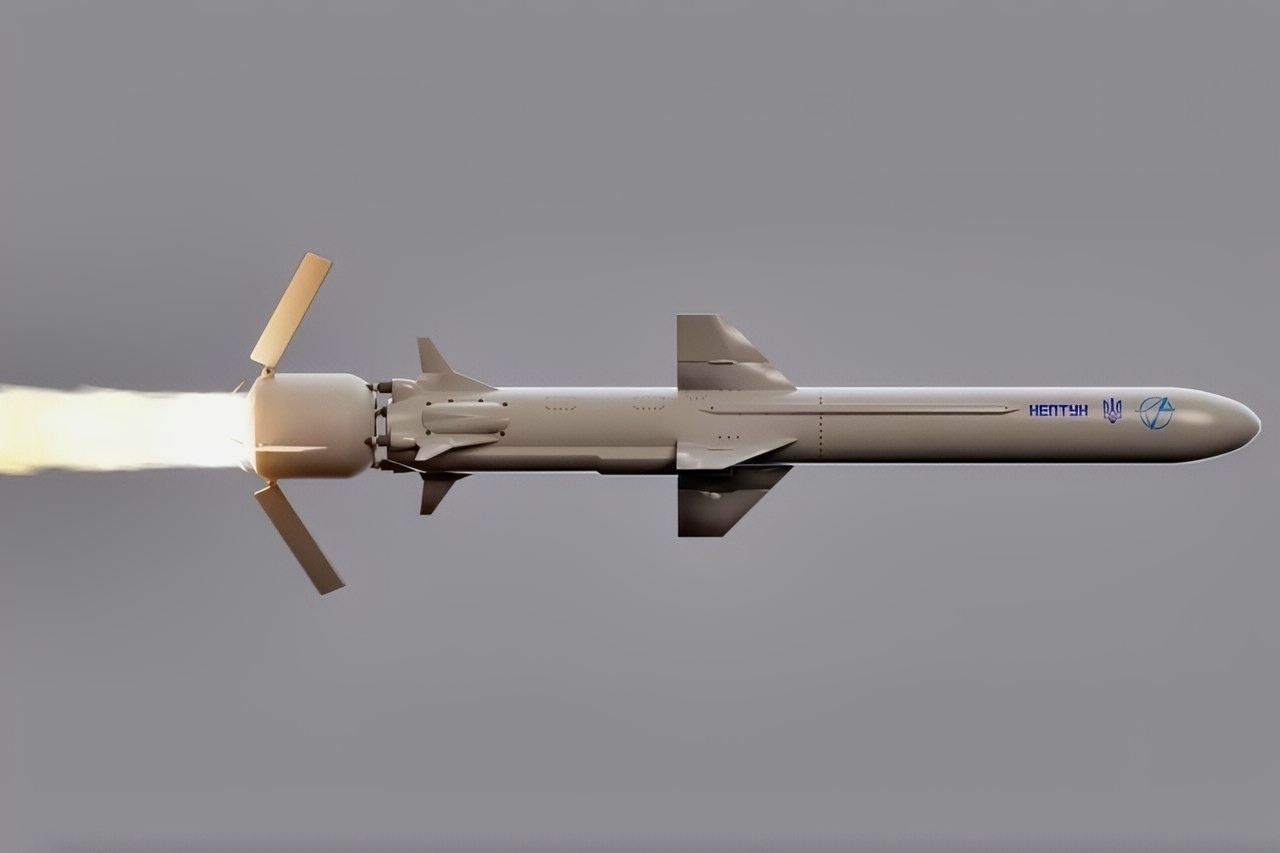
According to an intensive investigation by the London-based Financial Times, Russia has been engaged in a multi-year classified program to covertly assist Iran in developing advanced supersonic cruise missiles.
This is another, but ominous, development in Russia’s continuing cooperation with Iran in weapons development – a partnership that has become a standard feature of Moscow’s war in Ukraine.

Iran’s Drones That Russia Is Using. Image Credit: Creative Commons.
What We Know
The most visible of examples is the series of suicide attack drones that were provided to Russia by Iran in August 2022.
These were originally based on the Iranian Shahed-series of designs that began to be used in attacks on Ukraine the same year.
But as an Atlantic Council report from March 2026 analyzing Iran, Russia, and defense industry supply chains, this relationship “now appears to be coming full circle.” Comments made earlier this year by Ukrainian President Volodymyr Zelenskiy revealed that Russia is now supplying Iran with improved versions of these Shahed models.
Moscow’s war on Ukraine, which was initially aided by Iran, has now become a symbiotic relationship where the two nations now support one another in both of their respective wars.
The Russian design improvements for Iran have included replacing the Shahed’s propeller-driven design with the newer Geran-series configuration.
These Russian-modified models are equipped with a jet propulsion system, which makes them far more difficult to intercept.
But this newly revealed missile program would give Tehran the capability to produce supersonic cruise missiles beyond the kind of military-technical assistance from Moscow that has ever been seen before. It represents an unprecedented level of sophisticated and significant defense industrial capability being provided to Iran’s mullahs.
“This is the transfer of a highly strategically sensitive military technology from Russia that the Iranians have wanted to acquire for decades,” according to Fabian Hinz, an expert on Iranian missiles and senior analyst with Conflict Armament Research (CAR) who spoke to the FT.
This UK-based weapons-tracking organization has performed numerous assessments in technology transfer and the use of components in internal weapon configurations. They have also reported extensively on Russian-designed weapons used in the Ukraine war.
Developing The C430L
The investigation reveals an effort by Russia to deliver to Iran the know-how necessary to design and produce all the major elements of a missile program now designated C430L.
The information was all discovered by the London daily through a series of “leaked Russian correspondence, travel records and analysis of military patents.”
The program was kept well under wraps and involved some of the most experienced Russian missile design specialists.
Their goal was to develop a new, advanced design of an anti-ship cruise missile (ASCM) that would be used against US aircraft carriers in the Middle East theatre.
Developments on the program carried on even after the beginning of the US-Israeli war against Iran.
Even with missile and bomb strikes hitting numerous military sites in Iran, both Moscow and Tehran carried on, with the two sides continuing to negotiate on moving the program into its next stages.
NPO Mashinostroyenia
As with almost all of Moscow’s major international cooperative programs, the C430L program was coordinated by the notorious Russian state-run arms export monopoly, Rosoboronexport.
Another old name also involved in the C430L effort is NPO Mashinostroyenia.
Located in the suburb of Reu, this design bureau was the main Russian defense enterprise involved in Moscow’s well-known program to develop a supersonic anti-ship missile: the joint Russia-India BrahMos project.
Despite the C430L being a “we have been here before” case, the FT report makes no mention of this previously developed program.
This is possibly due to the BrahMos development having begun previously and being accepted into Indian military service. “There is not much corporate memory in the reporting on this manner of programs,” said a former US senior naval intelligence officer. “It is not unusual that almost three decades later someone would miss the connection that here is the same Russian design bureau involved in another irresponsible act of transferring that advanced missile technology into a volatile region of the world.”
Another curious detail is that the missile’s designation, C430L, specifically the “C” prefix, is similar to that of export models previously provided to Iran by the People’s Republic of China (PRC).
Specialists who spoke to National Security Journal suggested that Iran could have purposely used this name for the missile to make it appear to be a Chinese design and mask its true Russian origins.
About the Author: Reuben F. Johnson
Reuben F. Johnson has thirty-six years of experience analyzing and reporting on foreign weapons systems, defense technologies, and international arms export policy. Johnson is the Director of Research at the Casimir Pulaski Foundation. He is also a survivor of the Russian invasion of Ukraine in February 2022. He worked for years in the American defense industry as a foreign technology analyst and later as a consultant for the U.S. Department of Defense, the Departments of the Navy and Air Force, and the governments of the United Kingdom and Australia. In 2022-2023, he won two awards in a row for his defense reporting. He holds a bachelor’s degree from DePauw University and a master’s degree from Miami University in Ohio, with a specialization in Soviet and Russian studies. He lives in Warsaw.


