

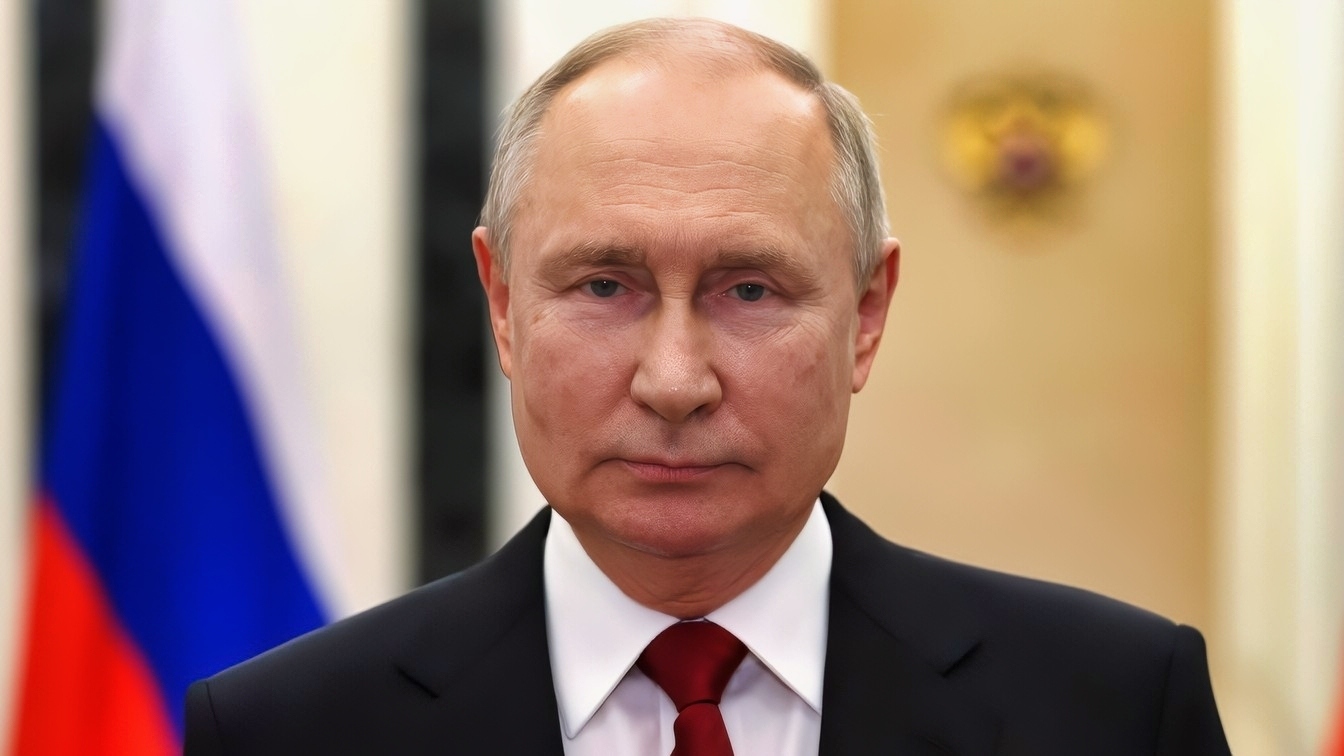
After four years of wartime spending, the Russian economy somehow continues to soldier on despite the ever-increasing cracks in its foundations.
Since the initial invasion of Ukraine in 2022 and the first rounds of sanctions from the West, economists and analysts have been predicting Russia’s economic collapse for some time now.

Su-27 Flanker Fighter from Russia. Image Credit: National Security Journal.
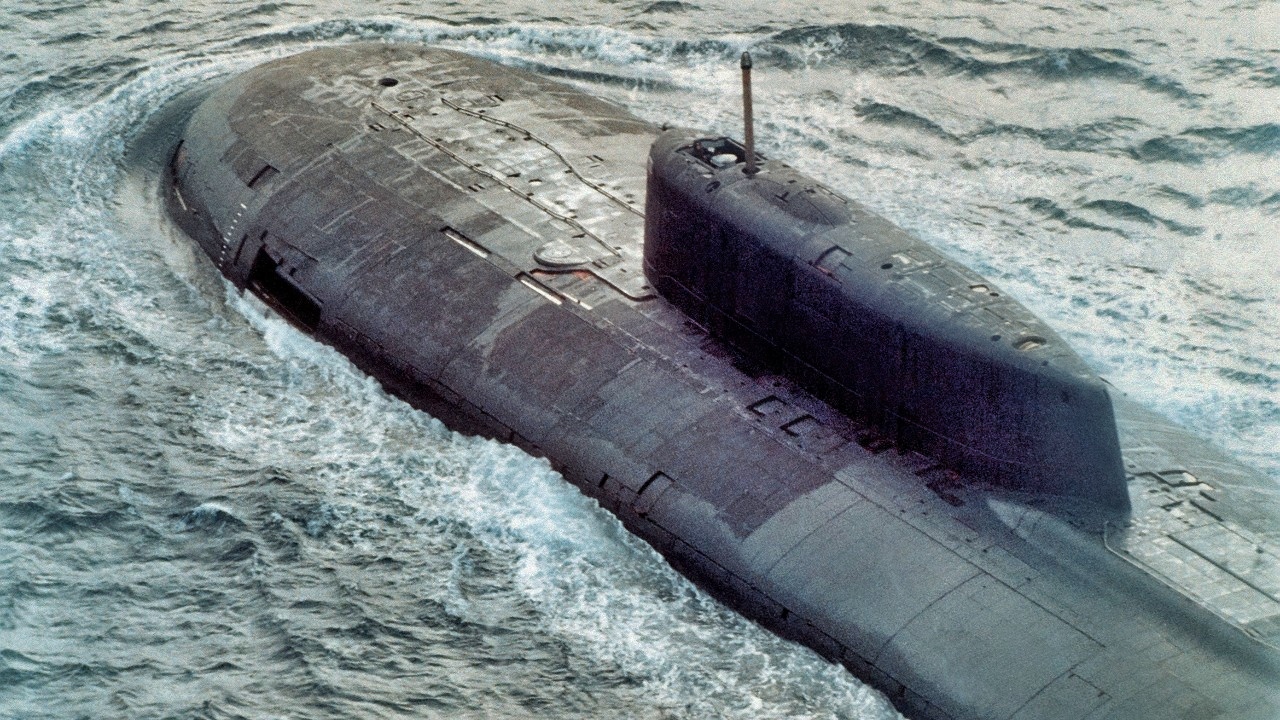
An elevated port side view of the forward section of a Soviet Oscar Class nuclear-powered attack submarine. (Soviet Military Power, 1986) Image Credit: Creative Commons.
After Ukraine’s recent attacks against oil refineries and commercial warehouses, the topic of economic collapse has once again resurfaced in the West.
While the economy is unlikely to completely collapse anytime soon, as the war prompts high government spending for a fourth year in a row, the Kremlin is forced to look in new places to maintain its wartime budget.
Looking for New Sources of Revenue
The war in Ukraine has, in some ways, created many opportunities for growth in Russia.
Factories producing weapons provided a slew of new jobs in some regions, bonuses for military service provided an influx of cash for some of Russia’s more rural regions, and the shortage of Western goods has forced Russia to invest in domestic alternatives.
The result is that wages in most parts of the country have increased and its top billionaires have become noticeably richer. Furthermore, Russia’s Purchasing Power Parity (PPP) has also increased over the past four years, surpassing the likes of Germany, France, and even Japan—though noticeably lacking behind the U.S., India, and China.
These economic developments have allowed Russia’s economy to remain relatively stable despite Western sanctions and high government war spending, but they cannot last forever.
With the war in its fourth year, the government is looking anywhere it can to slash the budget and generate new sources of revenue.
In June, the Russian State Duma introduced new legislation that would transfer up to $40 billion in private pension savings back to the government.
Gennady Zyuganov, the leader of Russia’s Communist Party, encouraged the Kremlin to go even further and confiscate the savings of large firms and wealthy individuals currently sitting in state banks, which could provide the state with an immediate $1.8 trillion.
Balancing Moscow’s Rising War Budget
One such source of revenue that the Kremlin has found is the private assets of billionaires in the country. Since the beginning of hostilities in Ukraine, Russia has confiscated several billion worth of assets from wealthy Russians.
According to some reports, between 2022 and 2025, prosecutors have claimed roughly $60 billion in assets. Bloomberg reported that some major tycoons like Vadim Moshkovich, founder of Ros Agro Plc, one of Russia’s largest agricultural holdings, had his assets seized by the state, a fate shared by many wealthy businessmen in the country.
Consequently, many of Moscow’s wealthiest have been quietly moving their assets out of the country, away from the Kremlin’s grasp, while others try to appease the government by voluntarily donating large sums of cash directly to state coffers.
The state has also raised taxes as another attempt to balance the war budget.
In 2025, the profit tax rate climbed from 20% to 25%, which Russian officials estimate would generate $22 billion per year.
This accounts for little more than a month of the state’s current military spending. Earlier this year, the government also considered implementing a 20% windfall profit tax, which would extract a company’s revenue from its profits in 2025.
These measures were later dropped as it was revealed that most companies had taken a net loss in 2025, with overall expenditures exceeding profits by around $150 billion.
This year, in one of Moscow’s more politically risky moves, the state raised the value-added tax to 22% from 20%, along with a 27% rise in utility rates for gas and electricity.
These measures, the state said, were necessary to maintain security and national defense.
Running Low on Options
The problem now facing the Kremlin is that it is running out of politically affordable sources of revenue. The other measures listed above have already garnered some criticism from the public, and the more the state taps into social services, the more discontent is likely to rise among the average citizens in Russia.
The problems have only been exacerbated by Ukraine’s increasing campaign against the Russian economy, which has seen strikes against Russian fuel refineries and warehouses belonging to the online retailer Wildberries.
Of course, the situation is not all doom and gloom; there have been some areas of growth. The war in Iran, for example, has given Russia a slight windfall as oil prices have increased, but these revenues are temporary.
At the end of the day, however, the Kremlin needs not the support of its people, but their submission. While rising dissatisfaction in Russia may be costly in this year’s local elections, no one sincerely believes that Putin fears being voted out in the next presidential elections in 2030.
The public can complain as much as it wants, but the possibility of a popular revolution or an internal coup occurring from within the Kremlin is little.
The war will end when Moscow allows it, or if Ukraine can militarily force Russia into a settlement, which is also unlikely.
About the Author: Isaac Seitz
Isaac Seitz, a Defense Columnist, graduated from Patrick Henry College’s Strategic Intelligence and National Security program. He has also studied Russian at Middlebury Language Schools and has worked as an intelligence Analyst in the private sector.


