
The Houthi rebels are once again gaining territory in Yemen.
After recent renewed hostilities in the country’s long-running civil war, the Houthis are threatening Saudi Arabian shipping routes and targeting the country’s civilian infrastructure.
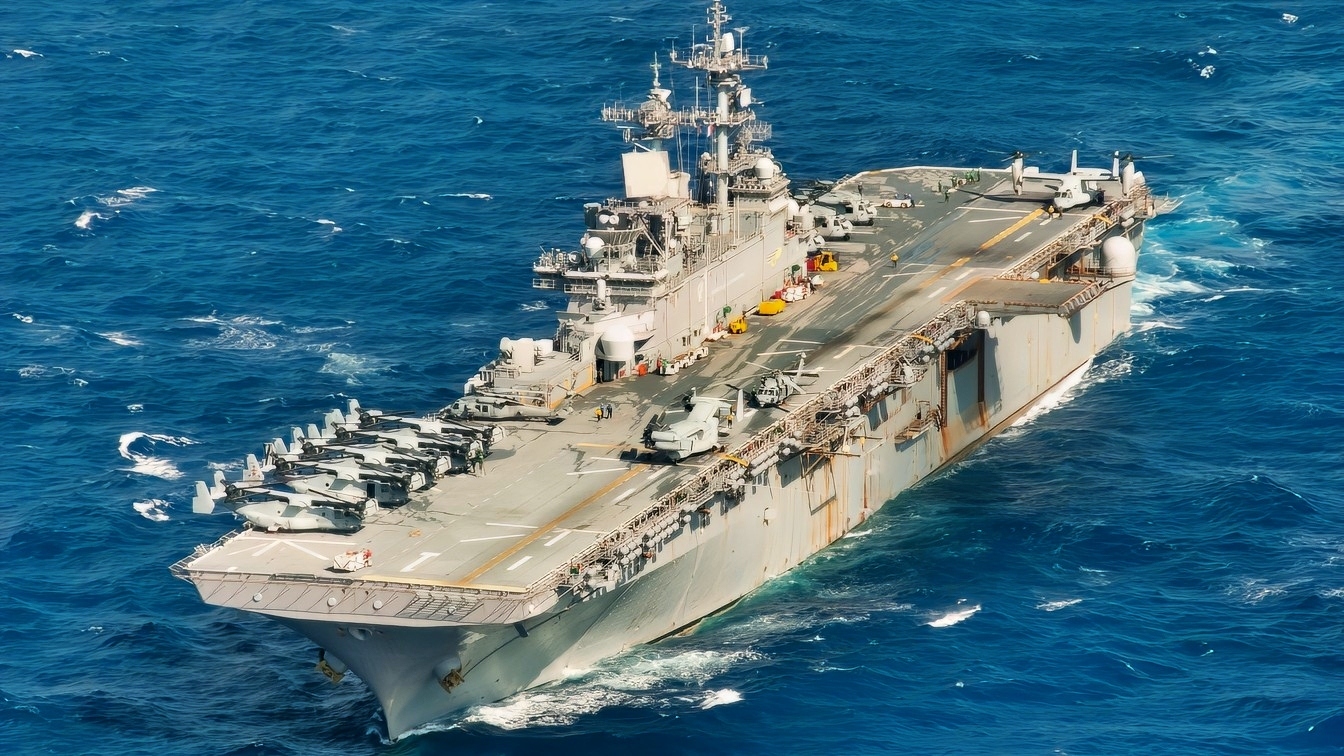
The amphibious assault ship USS Wasp (LHD 1) sails in the Philippine Sea Aug. 26, 2018 during a Passing Exercise (PASSEX) with the Japan Maritime Self Defense Force. PASSEX enabled the Wasp ARG and the JMSDF a chance to practice communications and maneuvering procedures. The Wasp Amphibious Ready Group is currently operating in the region to enhance interoperability with partners and serve as a ready-response force for any type of contingency. (U.S. Navy photo by Mass Communication Specialist 3rd Class Taylor King)
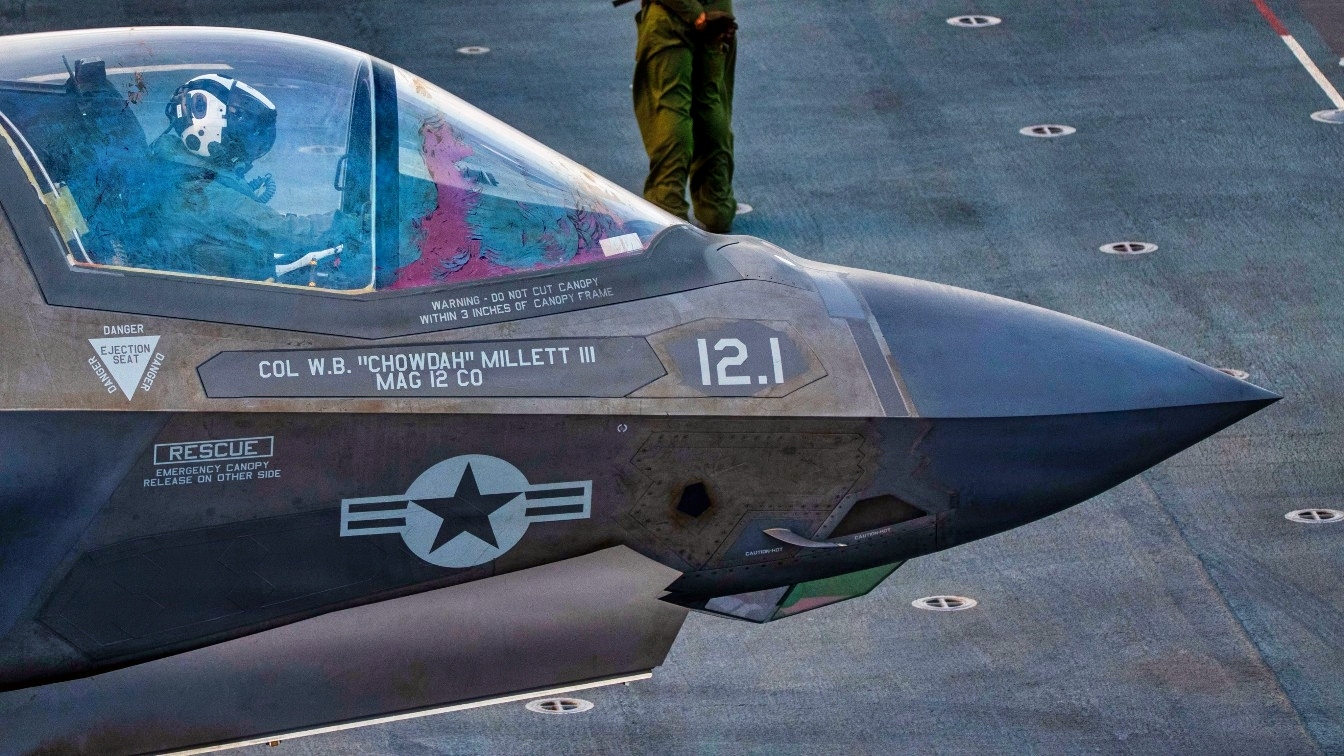
A U.S. Marine conducts pre-flight checks on an F-35B Lighting II, attached to Marine Fighter Attack Squadron (VMFA) 121, on the flight deck of America-class amphibious assault ship USS Tripoli (LHA 7), May 22, 2026. Tripoli is deployed to the U.S. 5th Fleet area of operations to support maritime security and stability in the Middle East. (U.S. Navy photo)
Despite more than a decade of fighting, the group remains strong and shows no signs of slowing down.
The question is rather simple: “How?”
A Wider War
The Houthis control much of an area that was formerly known as the Yemen Arab Republic (or North Yemen) until the country’s unification in 1990.
Political and civil troubles were frequent in Yemen’s early history, and in 2004, Shia cleric Hussein Badreddin al-Houthi launched an uprising against the Yemeni government.
Fighting continued until, in September 2014, the Houthis gained control of Yemen’s capital, Sanaa, sparking civil war in the country.
The civil war is far more complex than a Houthis vs. Government scenario.
The main conflict has been between the rebels and the Presidential Leadership Council (PLC) – internationally recognized as the government of Yemen backed by a Saudi-led coalition.
Until January this year, the Southern Transitional Council, supported by the United Arab Emirates, also controlled Aden and parts of the country’s south until a PLC offensive. Moreover, smaller militant groups operate in parts of the country.
This war on multiple fronts has stretched the capabilities of the PLC, providing time for the Houthis to strengthen during a United Nations-brokered ceasefire.
Alas, the Houthis have been able to gain territory at a rapid rate since hostilities re-escalated earlier this month.
Mountainous Territory and Mutual Friends
Much of what was once North Yemen is a large, mountainous territory where the Houthis can deploy fighters and build military infrastructure.
This dispersal of assets makes air strikes less effective and makes a ground offensive harder for Saudi-backed forces.
The Houthis also receive weaponry and training from Iran and its proxy militia groups across the Middle East.
The collapse of Hamas and Hezbollah in recent years has led to Iran redirecting its focus onto the Houthis, allowing for rapid growth.
Michael Knights, long-time observer of the group and head of research at Horizon Edge, told the Associated Press that the Houthis are “the most committed, the most ideologically pure and the most aggressive” of Iran’s allies. “They’ve been developed by the Iranians in a fast-track way.
Things that took Hezbollah 20 years to develop, the Houthis have developed in five.”
A Well-Armed Militia
The U.N. has previously outlined extensive military support for the Houthis by Tehran in violation of an international embargo.
Iran denies arming the group, but Iranian weapons and parts have been seized from Yemeni-bound shipments as recently as last year.
The group possesses ballistic missiles, cruise missiles, attack drones, anti-ship missiles and naval drones, and is capable of striking across the Gulf and into Israel.
The group can also manufacture many of its weapons domestically, with Iran believed to be providing key components such as guidance systems.
There are additional reports that the Houthis are using artificial intelligence to develop advanced weapons.
Difficult Decisions
The Iran war has taken up much of Saudi Arabia’s attention over the past year, with the Kingdom’s air defenses kept busy by Iran and its proxies in Iraq.
Riyadh is faced with the prospect of a war on two fronts, with Shia forces to its north and its south.
It may be hesitant to engage, but at some point the Kingdom may need to act as the Houthis seize control of the Bab al-Mandeb Strait – Saudi Arabia’s alternative export route to the Strait of Hormuz.
Victory over the Houthis will be no easy achievement.
The group has swelled in numbers to 350,000 from 30,000 a decade ago.
As the war in Iran has proved, air strikes only achieve so much towards military victory; ground troops are needed to secure territory and regain control of key assets.
Yemen’s anti-Houthi forces are far from a united front, and divisions remain rife over the future of the country.
A Saudi-led ground offensive, considering the wider context of the Iran war, would almost certainly involve prolonged fighting and a high casualty rate.
It would also give the Houthis more reason to strike Saudi Arabia, risking the lives of civilians in the Kingdom’s south.
Notwithstanding, the U.S., still occupied by its conflict with Iran, seems reluctant to help.
About the Author: Shay Bottomley
Shay Bottomley is a British journalist. He has written for the Western Standard, Business Insider, Maidenhead Advertiser, Slough Express, Windsor Express, Berkshire Live and Southend Echo.