

A figure has been circulating on Russian military channels that captures how lethal the war in Ukraine has become for the men sent to fight it. Russian soldiers who reach certain stretches of the front, the bloggers claim, can expect to survive an average of 20 to 35 minutes. The number was relayed by Oxford historian Peter Frankopan in a Foreign Policy report and has not been independently verified, and it may be less a measurement than the grim shorthand of soldiers who have seen what the drones do. What can be measured is bleak enough, and it points to a battlefield that cheap drones have remade into something more deadly to infantry than any in recent memory.
The Drone Kill Zone Has Remade The Ukraine Front

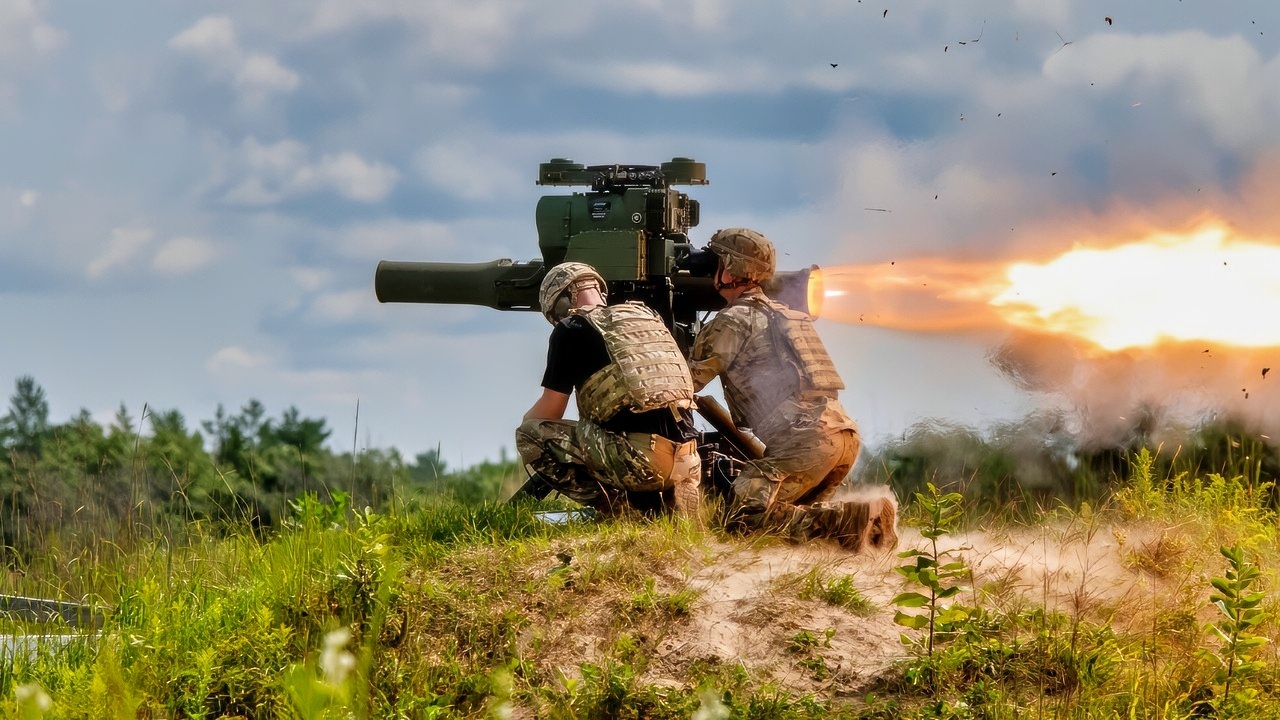
A soldier from the Idaho Army National Guard, Charlie Company, 2-116th Combined Arms Battalion, 116th Cavalry Brigade Combat Team makes Idaho National Guard history with the first firing of a Javelin anti-tank missile. In a historic moment of training for the Idaho Army National Guard, soldiers from Charlie Company, 2-116th Combined Arms Battalion, 116th Cavalry Brigade Combat Team, fired the FGM – Javelin portable anti-tank missile on Sunday while conducting a series of field training exercises scheduled for the week on the Orchard Combat Training Center ranges.
The change runs to the basic math of ground combat. First-person-view drones, small and cheap and guided onto their targets by a pilot watching a live feed, now saturate the front in a band that soldiers and analysts call the kill zone.
Within it, the heavy weapons that once dominated a battlefield have become liabilities. Tanks and artillery are spotted and struck before they can do much, and any concentration of troops draws drones within minutes. As Fortune reported, citing the Center for Strategic and International Studies, drones are, for the first time in military history, making it effectively impossible for either side to mass significant numbers of soldiers without being seen.
That has forced both armies away from the large mechanized assaults of the war’s early years. Russia, unable to rely on artillery now easily picked off, has turned to infiltration, sending small groups of soldiers forward on foot or on motorcycles to probe for gaps, a tactic that exposes them to the drones and has made the fighting bloodier.
Ukraine, facing the same kill zone, has gone the other way where it can, using unmanned systems to do work that once required men. Ukrainian President Volodymyr Zelensky says drones now account for more than 80 percent of Russian losses, and the official in charge of Ukraine’s defense industry, Oleksandr Kamyshin, summed up the approach when he said there is “no need to send a human being where the robot can do the job.”
More Russians Are Being Killed Than Wounded
The signature of this drone war is a casualty pattern that breaks with most of modern military history. In conventional fighting, battlefield medicine and casualty evacuation mean the wounded outnumber the dead, often by three to five to one.
Estimates of the Russian toll now suggest the reverse. Zelensky said in March that of Russia’s total losses, 62 percent were killed and 38 percent wounded, a ratio of nearly two to one, citing intelligence assessments reviewed by Ukraine. Analysts attribute the shift to the drones themselves.
An FPV drone often carries enough explosives to kill a soldier outright, and as military analysts told the Kyiv Independent, a Ukrainian outlet, reaching and evacuating a wounded man under constant drone surveillance has become extremely dangerous and at times impossible for both sides. A soldier who might once have survived his wounds now often does not.
The Casualty Numbers Are Staggering, And Contested
How many Russians have died is a question without a verified answer, and the available estimates vary widely. Britain’s signals-intelligence agency, GCHQ, assessed in May that nearly 500,000 Russian soldiers have been killed since the 2022 invasion, the highest on-record figure from any government. The Center for Strategic and International Studies has estimated around 1.2 million total Russian casualties, including roughly 325,000 killed.
Ukraine’s defense ministry claims it has taken more than 1.4 million Russian troops off the battlefield, and Foreign Policy cited estimates that Russia is now losing eight men killed or seriously wounded for every one Ukraine loses.
Those numbers deserve caution. Neither Russia nor Ukraine releases its own casualty data, which is why the figures come from foreign intelligence services, think tanks, and the warring governments themselves, and why they diverge so much, with the count of Russian dead alone ranging from CSIS’s 325,000 to GCHQ’s nearly 500,000. Independent trackers such as Harvard’s Russia Matters state plainly that they cannot verify the casualty totals cited by any source.
What is not in dispute is the scale. Even the lower estimates place Russian deaths well beyond any conflict the country has fought since the Second World War, many of them among young men from its poorer regions.
Ukraine Faces Its Own Strain
The drone advantage has not spared Ukraine, nor has it been decisive on its own. Ukraine has its own manpower shortage, and military analyst Rob Lee told CBS News that some Ukrainian infantry have held positions for more than a year without rotation.
Despite its enormous losses, Russia continues to grind forward in parts of the eastern Donetsk region, with Ukrainian commanders reporting last week that Russian troops were trying to infiltrate the outskirts of the industrial city of Kostiantynivka.
Earlier coverage of the toll the war is exacting on Russia laid out the broader picture.
The 20-to-35-minute figure cannot be checked, and Russia’s own silence about its dead means it may never be.
The measurable reality is grim on its own terms. Drones now inflict the large majority of casualties, more Russian soldiers are being killed than wounded, and by Western estimates, the war has killed something on the order of half a million Russians, with no end to the manpower drain that either side can comfortably sustain.
About the Author: Harry J. Kazianis
Harry J. Kazianis (@Grecianformula) was the former Senior Director of National Security Affairs at the Center for the National Interest (CFTNI), a foreign policy think tank founded by Richard Nixon based in Washington, DC. Harry has over a decade of experience in think tanks and national security publishing. His ideas have been published in the NY Times, The Washington Post, The Wall Street Journal, CNN, and many other outlets worldwide. He has held positions at CSIS, the Heritage Foundation, the University of Nottingham, and several other institutions related to national security research and studies. He is the former Executive Editor of the National Interest and the Diplomat. He holds a Master’s degree focusing on international affairs from Harvard University.


