

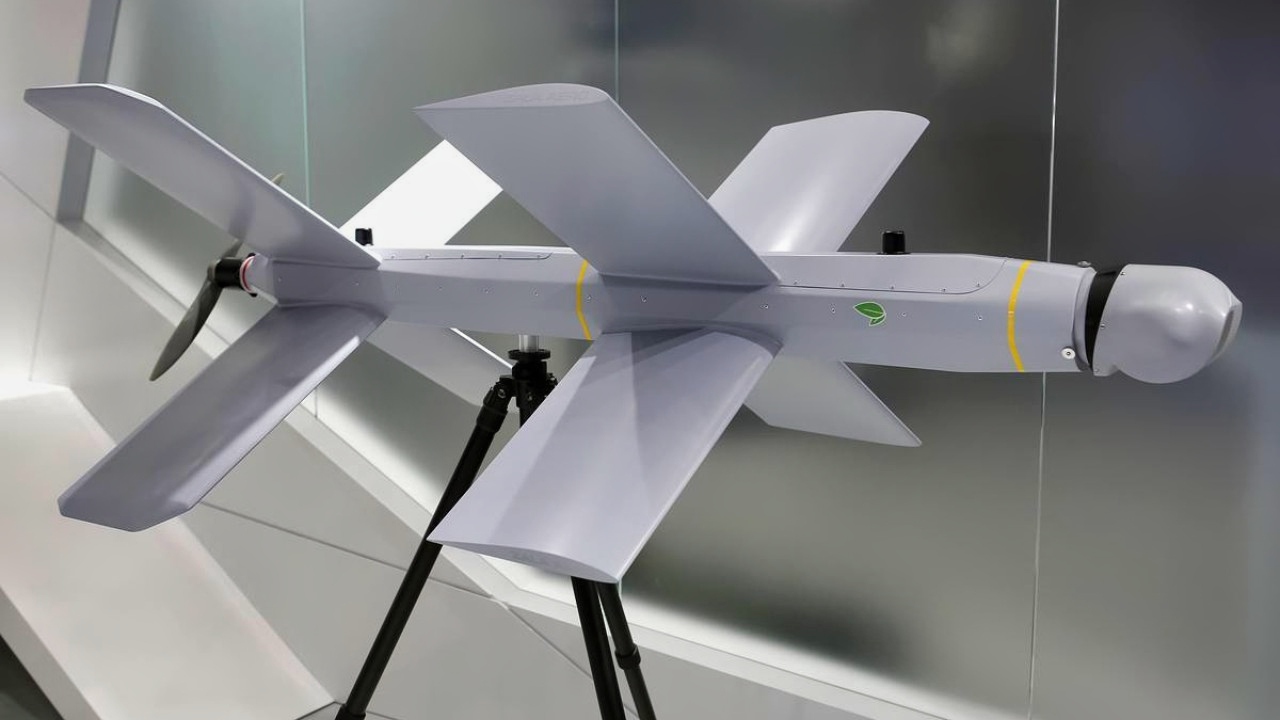
Key Points and Summary – Russia sent 19 drones from Belarus into Polish airspace, loitering for seven hours before one crashed and three were shot down.
-Beyond a scare, the incursion exposes NATO’s thin air-and-drone defenses, sluggish command-and-control, and intelligence blind spots.
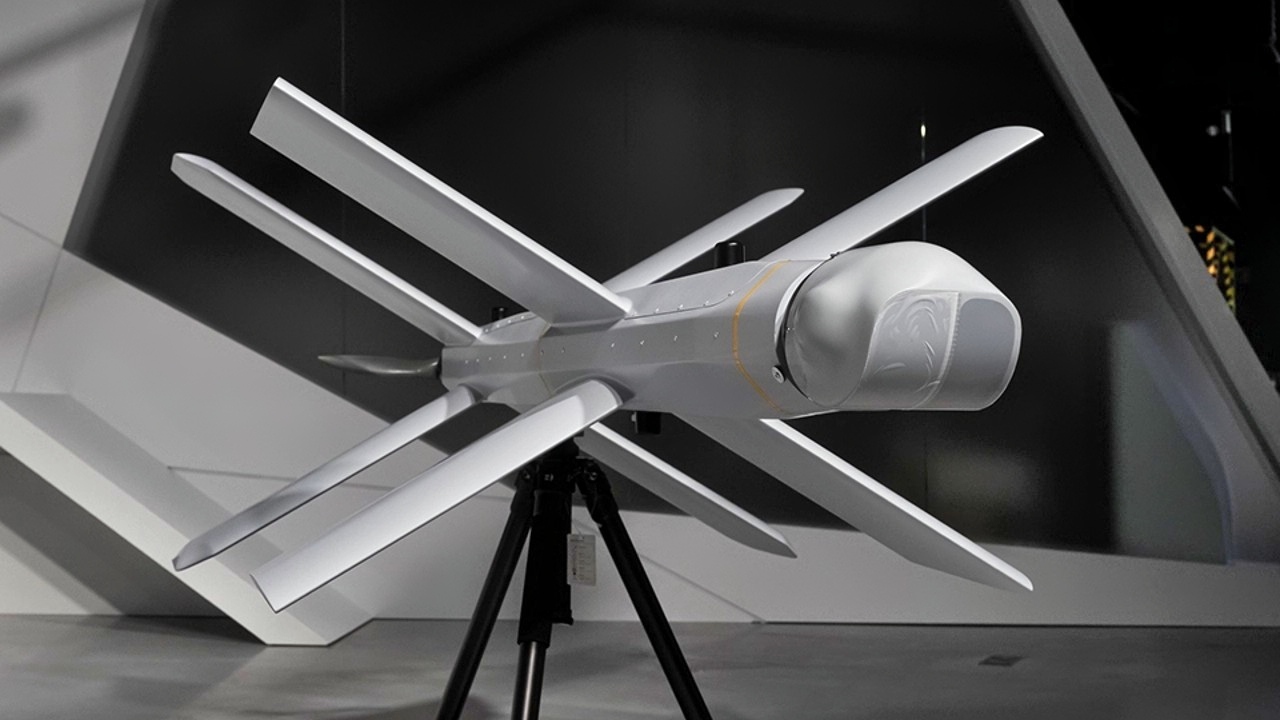
Lancet Drone from Russia. Image Credit: Creative Commons.
-Moscow likely treated the raid as razvedka—recon in force—to test readiness and warn against allied ‘peace force’ ideas.
-It also highlights Belarus’s de facto subordination to Moscow and nuclear hosting. Critics argue talk of sanctions and summits won’t deter Putin; only steady arms for Ukraine, real secondary sanctions, and rapid rearmament can restore credible deterrence. Absent action, further probes and escalation are likely.
19 Drones, 7 Hours: What Russia Just Learned About NATO
On Sept. 9-10, Russia dispatched 19 drones from Belarus into Polish air space, where the drones loitered for seven hours before one crashed into a house and NATO air defenses shot down three others.
These are the facts that we know, but there are more aspects to this story that we can discuss here. First, the episode reveals just how unready NATO is to defend its member-states and their territory, let alone to deter Russian attacks.
This is not solely due to the absence of a viable integrated air defense and anti-drone network, although that is a factor. This attack – for an attack by Russia is what this was – also revealed huge gaps in NATO intelligence, reconnaissance, and command-and-control capabilities. These drones were in Polish air space for seven hours before their mission was forcibly terminated, and only three of the 19 drones were shot down. Thus, for all the talk of improving defenses, and all the acknowledgment of the threat that Russia might be planning a war against alliance members, NATO remained asleep at the wheel.
Russia Is Probing and Measuring Readiness
NATO has been talking a big game about rearmament since Russia’s large-scale invasion of Ukraine in 2022 – and even before that, after Russia seized Crimea in 2014. But while Ukraine has stood Russia off for three and a half years, NATO has clearly not done anywhere near enough to organize its own defense. So, to quote Churchill and the Prophet Joel (from whom Churchill got the line), the years since 2022 have been the years the locusts have eaten.

Shahed Drone from Ukraine. Image Credit: Creative Commons.
But Russia’s drone incursion is equally important because of what it tells us about Moscow’s plans. In that context, the operation was simultaneously an act of war and a Razvedka (an intelligence probe, or reconnaissance in force).
The operation aimed to determine the readiness of NATO’s defenses and to threaten Poland and NATO with further attacks – or even an invasion – if the alliance pursues the idea of sending a peace force to Ukraine. Thus, this operation represents another escalation in the Russian war against Europe, which has carried forward for several years now. Russian drones have crossed into Poland before, and they have also conducted aerial reconnaissance over Germany to spy on the routes by which allied forces and equipment move eastward.
At the same time, Russia’s threatening rhetoric against NATO has intensified. Russian President Vladimir Putin has spoken menacingly of a European party of war aiming to support Ukraine. His running dog Sergei Medvedev, director of Russia’s Security Council, unleashed a tirade of threats against Finland. Such threats, especially when directed against the Baltic states and littoral states such as Poland, have dramatically increased recently.
Russian information warfare, influence operations, and espionage, have gone on continuously for years and evidently have increased by an order of magnitude since the war against Ukraine began.
Baltic Sea infrastructure, e.g. cables linking the various littoral states, have become prominent targets for Russian attacks. Jamming of aerial GPS has also become a permanent feature of Russian attacks across the Baltic Sea, targeting Finland and Sweden.
Talk Won’t Stop Anything
This episode was more than reconnaissance in force. It was an act of war against NATO and Poland, and an escalation in Russia’s long-term conflict against NATO. And once again NATO, and not least the U.S., flubbed the test.
Talk about further sanctions and peace forces has gone on for months, with no action in sight. Meanwhile, the Pentagon has been cutting air-defense supplies to Ukraine, ostensibly because Washington does not have sufficient air defenses of its own.
Putin will surely escalate further in the absence of any coherent NATO or U.S. response. Indeed, U.S. President Donald Trump is pressing allies to impose huge secondary sanctions upon India and China. But he will not take that kind of action against China, lest his trade talks with Beijing fall through.
The fact that these drones took off from Belarus signifies the total subordination of Belarus to Russia, and its virtual reunification with that country. President Alexandr Lukashenko has been effectively reduced to the status of an oblast party secretary in the USSR, and Belarus’ sovereignty has been de facto nullified. Worse yet, the country has become a base for Russian intermediate- and short-range nuclear weapons over which it has no control.
Apart from nullifying Belarus’ sovereignty and territorial integrity, this development violates agreements Belarus made not to host nuclear weapons. It all amounts to another serious escalation, even as Putin repeatedly calls Trump’s and NATO’s bluffs.
Yet all we see in response is rhetoric and diplomatic hand-wringing – never the actions that will get Putin’s attention. True pushback would mean constant and comprehensive support for Ukraine in the form of consistent weapons shipments; genuine sanctions on Russia, China, and India; and the regeneration of a credible NATO conventional and nuclear deterrent, along with the renaissance of the U.S. and European defense industries that would sustain these policies. Absent these actions on the ground, all else is talk.
And talk is cheap.
About the Author: Dr. Stephen Blank
Dr. Stephen J. Blank is a Non-Resident Senior Fellow in the Foreign Policy Research Institute’s Eurasia Program. He has published over 900 articles and monographs on Soviet/Russian, U.S., Asian, and European military and foreign policies, testified frequently before Congress on Russia, China, and Central Asia, consulted for the Central Intelligence Agency, major think tanks and foundations, chaired major international conferences in the US and in Florence; Prague; and London, and has been a commentator on foreign affairs in the media in the US and abroad. He has also advised major corporations on investing in Russia and is a consultant for the Gerson Lehrmann Group. He is the author of Russo-Chinese Energy Relations: Politics in Command (London: Global Markets Briefing, 2006), and Natural Allies? Regional Security in Asia and Prospects for Indo-American Strategic Cooperation (Carlisle, PA: Strategic Studies Institute, US Army War College, 2005). Dr. Blank is also the author of The Sorcerer as Apprentice: Stalin’s Commissariat of Nationalities (Greenwood, 1994); and the co-editor of The Soviet Military and the Future (Greenwood, 1992).
More Military
SR-72 Darkstar: The Mach 6 Spy Plane That Makes Russia and China Nervous
F-15EX Eagle II vs. Russia’s Su-35: Who Wins?
Why China’s J-20 and J-35 Can’t Be the F-22 or F-35
The B-1B Lancer Bomber Can Come Back ‘From the Dead’ Thanks to the Boneyard
F-15EX Eagle II vs. China Brand New J-35 Fighter: Who Wins a Fight?



Jim
September 15, 2025 at 1:51 pm
From the article: “It was an act of war against NATO and Poland…”
Casus belli is an act or an event that either provokes or is used to justify a war.
There is no casus belli from 20 dummy or decoy drones with no warheads.
Likely, these were decoy drones Russia had sent into Ukraine, then fell to earth, their fuel spent. Then collected over time, refurbished, and later launched at a time of Kiev and sponsor’s choosing… look to MI6.
But, say the author is right. Does this episode constitute a casus belli for a Conventional World War Three in Europe?
Does anybody have the appetite for World War Three?
Really?
Hard to believe for war supporters, but the best outcome is a neutral Ukraine, whatever is left at the end of hostilities… the sooner the better.
However,
Retired General Keith Kellog gave a presentation in Kiev just yesterday stating flat out: Russia is losing the war (and he gave his reasons and his yardsticks to justify his conclusion).
Looks like the war continues to the bitter end.
When one side wins… it’ll be clear to all.
You won’t be able to spin that.
Doyle
September 16, 2025 at 9:59 am
I guess you missed the part where the drones loitered for several hours. The fact that they were all unarmed speaks volumes to intent. Your willingness to enslave the Ukrainian people and give that Russian tyrant a pass and even claim victim hood for him is telling Ivan.