

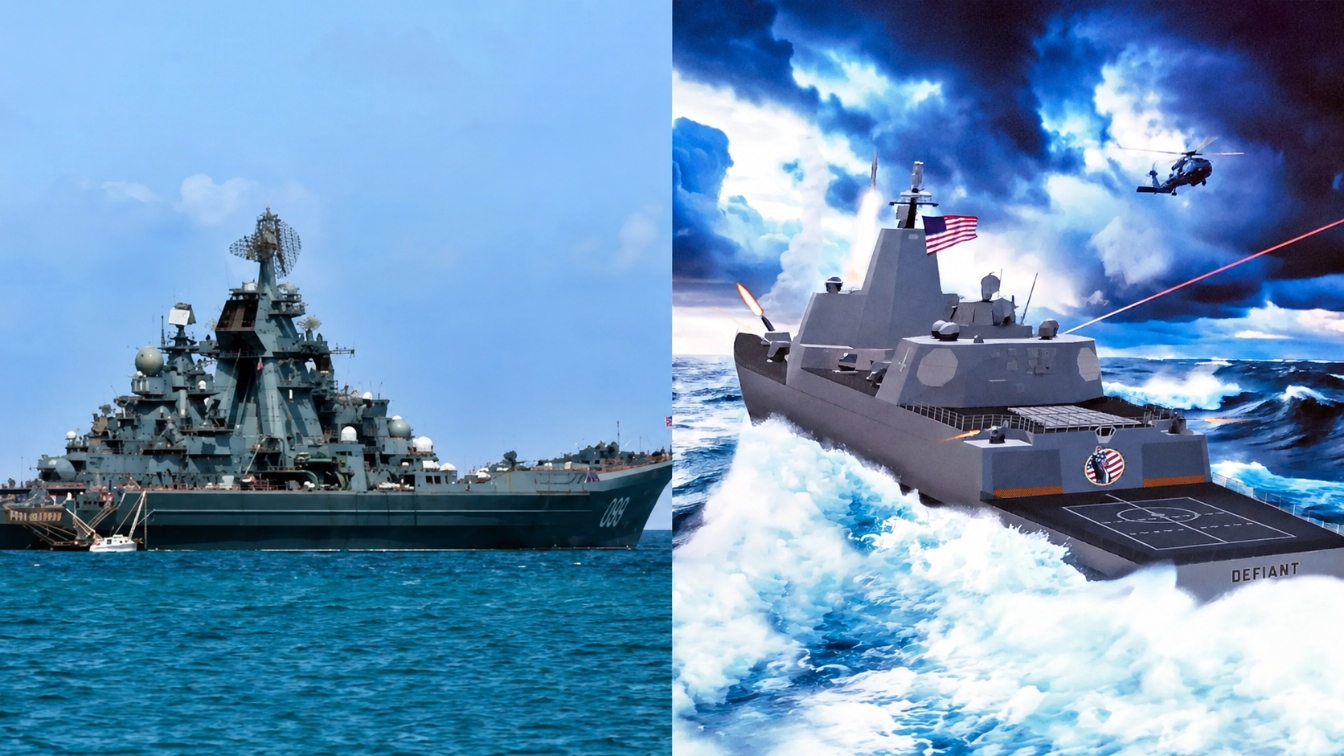
The Russian Kirov-class battlecruiser Admiral Nakhimov has approximately 176 Vertical Launch System (VLS) cells — approximately 38% more than the U.S. Navy’s planned Trump-class (BBG(X)) battleship. The Trump-class USS Defiant could cost approximately $17 to $20 billion per ship — potentially the most expensive naval vessel in history.
The Trump-Class Battleship Won’t Have the Most Missiles: Russia Wins That Fight

Trump-Class Battleship. Image Credit: White House.
You are now aware of the newly proposed Trump-class battleship.
And you probably love it or hate it, depending on your political outlook and how interested you are in saving money, because this ship could run as high as $17 to $20 billion, which would make it the most expensive naval vessel in history. The USS Defiant will be chock-full of missiles, equipped with a powerful rail gun, a laser, and the kind of technology that has the president thinking he has re-invented the wheel.
The USS Defiant Is Receiving a bona fide spending proposal
The BBG(X) is chugging ahead despite early critics wondering whether it can be built and dominate the waves as Secretary of Defense Pete Hegseth wants. Hegseth already submitted a request to Congress for $1.8 billion in startup costs for FY2027. This could include another $46 billion over the next five years. The Navy would like 20 to 25 Trump-class battleships.
More on the Trump-class
Designers foresee a ship that will displace nearly 40,000 tons. There will be 128 Vertical Launch System cells and 12 hypersonic Conventional Prompt Strike missiles. A 32-megajoule railgun and a 600 kW laser system are planned for onboard use. The Trump national security team would love for the Navy to lead the first construction effort, planned to begin in 2028.
How About More Missile Launch Tubes Like the Russian Kirov-class?
There could be a way to make the USS Defiant into a bigger “missile barge” by looking to Russia for inspiration.
Vladimir Putin’s navy features the Kirov-class battlecruiser.

Kirov-Class from the Russian Navy. Image Credit: Creative Commons.

Kirov-Class Russian Navy. Image Credit: Creative Commons.
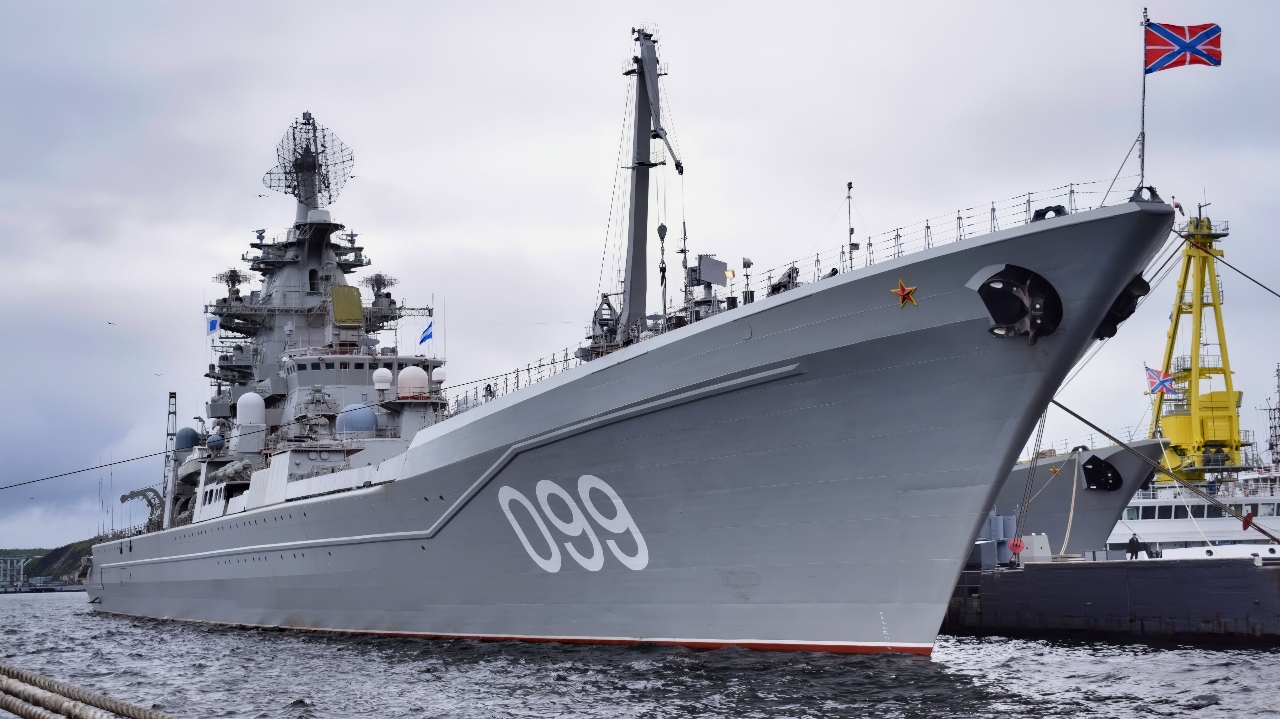
Kirov-Class Russian Navy Cleaned Up. Image Credit: Creative Commons.
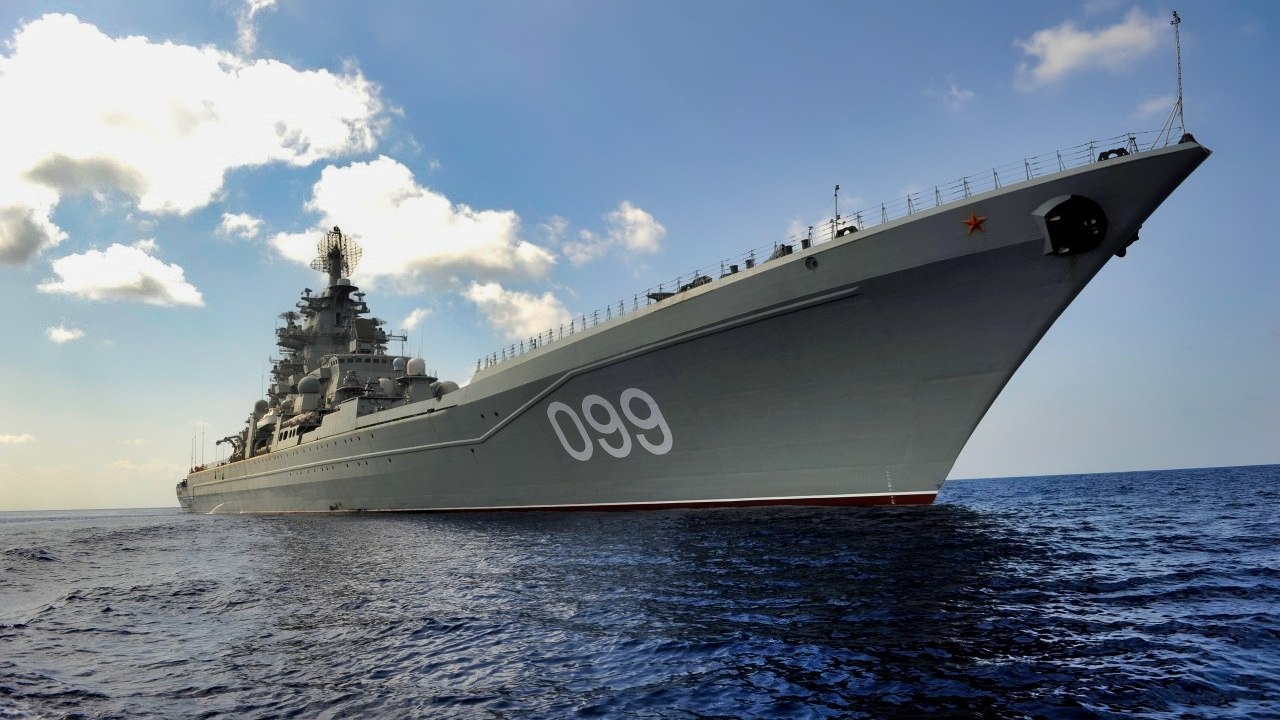
Kirov-Class Battlecruiser Russian Navy. Image Credit: Creative Commons.
This vessel is just as powerful in its weapon systems and has even more missile launch cells than what is planned for the Trump-class. The Admiral Nakhimov battlecruiser has approximately 176 vertical launch cells. That is almost 38 percent more than the BBG(X).
What Is the Kinetic Missile Fight?
Since the Trump-class is in the planning stages, perhaps the designers could place as many as 200 VLS cells on the new battleship. That would make it an even more powerful missile barge, allowing it to compete more effectively in what I call the Kinetic Missile Fight.
This is the dominant phase of modern warfare I foresee: large-scale combat driven by long-range missiles, one-way drones, cruise missiles, and interceptors rather than classic close-range dogfights and mass armored maneuvers on land. Whoever can produce the most anti-ship missiles with a deep magazine could win the next war.
More difficult to shoot down JASSMs and LRASMs, and they become front and center in the Kinetic Missile Fight, and the name of the game will be which side has the larger magazine depth with more accurate projectiles.
The Trump-class Needs a Bigger Missile Delivery System
Now is the time for Trump-class designers to discover the Kinetic Missile Fight and double down on more missile launch systems. One problem with the Navy is that it is losing a large capacity for precision-guided missile strikes.
Four Ohio-class SSGNs, each capable of launching 154 Tomahawk cruise missiles, are scheduled for retirement this year, so the Navy faces a substantial VLS cell disadvantage. These SSGNs should probably be extended until the Tomahawk capacity can be addressed.

Puget Sound Naval Shipyard, Wash. (Aug. 14, 2003) — Illustration of USS Ohio (SSGN 726) which is undergoing a conversion from a Ballistic Missile Submarine (SSBN) to a Guided Missile Submarine (SSGN) designation. Ohio has been out of service since Oct. 29, 2002 for conversion to SSGN at Puget Sound Naval Shipyard. Four Ohio-class strategic missile submarines, USS Ohio (SSBN 726), USS Michigan (SSBN 727) USS Florida (SSBN 728), and USS Georgia (SSBN 729) have been selected for transformation into a new platform, designated SSGN. The SSGNs will have the capability to support and launch up to 154 Tomahawk missiles, a significant increase in capacity compared to other platforms. The 22 missile tubes also will provide the capability to carry other payloads, such as unmanned underwater vehicles (UUVs), unmanned aerial vehicles (UAVs) and Special Forces equipment. This new platform will also have the capability to carry and support more than 66 Navy SEALs (Sea, Air and Land) and insert them clandestinely into potential conflict areas. U.S. Navy illustration. (RELEASED)
Tomahawk Cruise Missiles Are Running Low
We know that the United States lost much of its Tomahawk magazine strength during Operation Epic Fury against Iran. It will take years to replace them. When that happens, they could go on the Trump-class with what I believe could tilt the balance in the Kinetic Missile Fight toward the United States. Two hundred VLS cells loaded with Tomahawks and anti-ship missiles could dominate the fight.
Trum-class Skeptics Are Coming Out in Force
All this assumes that the Trump-class will actually be built. There are ample political headwinds. Trump will eventually leave office, and that could spell the end of the BBG(X) program that is so expensive. His Democrat political opponents could nix the battleship, cut its budget, or cancel it completely. The Washington, DC military policy community has already criticized the Trump-class.
But there needs to be some system to overcome the missile shortage. That is one argument for the USS Defiant. Unfortunately, 200 VLS cells could add to the size and displacement of the BBG(X). The ship needs to be nuclear-powered, too, which makes it more expensive.
But to win the Kinetic Missile Fight, the U.S. government must make investments in the future. The Trump-class may be far-fetched, but its ability to throw as many projectiles in the air at any given time is alluring.
Plus, the Russians seem to enjoy having the Kirov-class battlecruiser, which is so well armed with missile launch systems.
The Chinese Get a Vote
And don’t forget the Chinese with their assortment of conventional and hypersonic anti-ship missiles that could kill a carrier, and the Trump-class, for that matter.
More Strategic Foresight from the CNO Is Needed
For all of this to happen, we need to hear more from Chief of Naval Operations Admiral Daryl Caudle. It is unclear what he thinks of the future missile strategy for his service branch. Caudle has been outspoken about the USS Gerald R. Ford supercarrier. The admiral is happy that the Ford is heading back home after a record-setting deployment marked by an accidental fire and sewage issues.

The aircraft carrier USS Gerald R. Ford (CVN 78) completes the first scheduled explosive event of Full Ship Shock Trials while underway in the Atlantic Ocean, June 18, 2021. The U.S. Navy conducts shock trials of new ship designs using live explosives to confirm that our warships can continue to meet demanding mission requirements under harsh conditions they might encounter in battle. (U.S. Navy photo by Mass Communication Specialist 3rd Class Riley B. McDowell)
I’d like to see Caudle go from tactical and operational mode to strategic. Perhaps when the National Defense Authorization Act process gets into high gear this summer, the CNO will testify to Congress, and we can glean some more information about the Trump-class and the Kinetic Missile Fight. This could give the Navy a path forward about what future warfare will look like and if BBG(X) is a wise endeavor that could be a substantial part of Trump’s Golden Fleet.
About the Author: Brent M. Eastwood, PhD
Author of now over 3,500 articles on defense issues, Brent M. Eastwood, PhD, is the author of Don’t Turn Your Back On the World: A Conservative Foreign Policy and Humans, Machines, and Data: Future Trends in Warfare, plus two other books. Brent was the founder and CEO of a tech firm that predicted world events using artificial intelligence. He served as a legislative fellow for US Senator Tim Scott and advised the senator on defense and foreign policy issues. He has taught at American University, George Washington University, and George Mason University. Brent is a former US Army Infantry officer. He can be followed on X @BMEastwood.


