

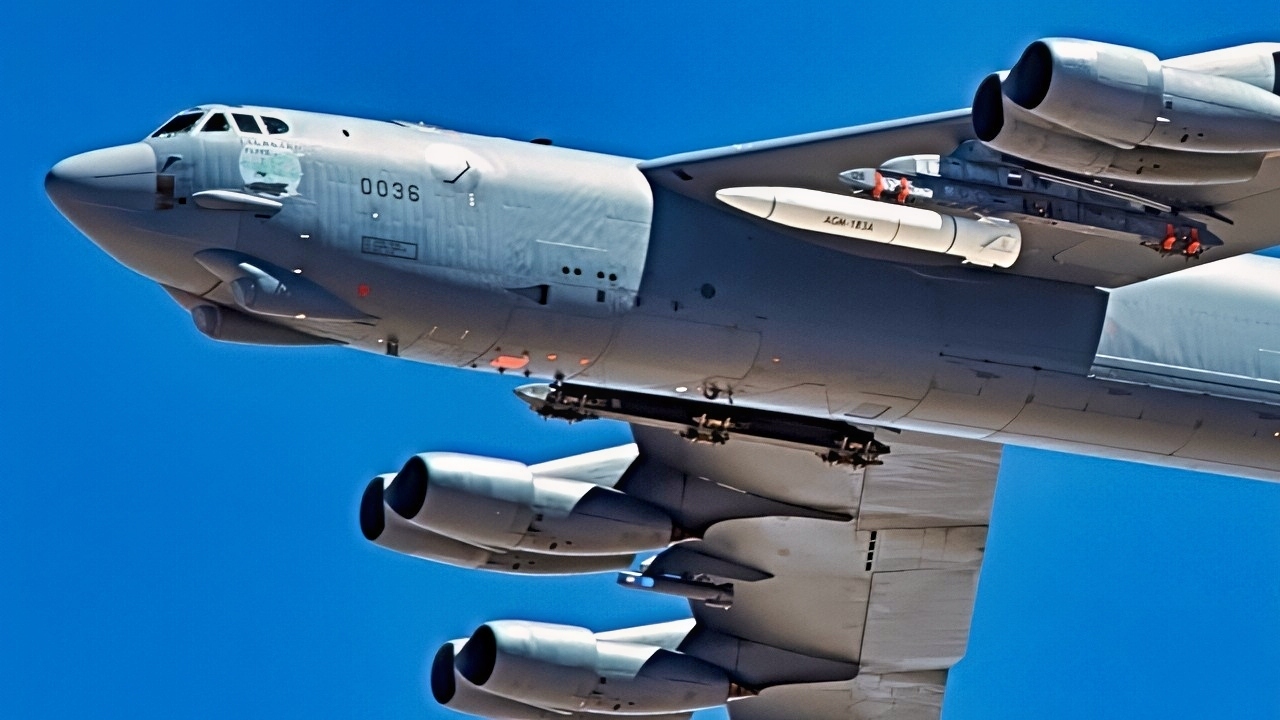
The U.S. Air Force wants $296,000,000 to turn the AGM-183A ARRW hypersonic missile into a Chinese aircraft carrier killer. The funding is part of the FY2027 budget request. The new variant is called Increment 2. It will receive an “all-new seeker” to engage moving targets, such as aircraft carriers. The AGM-183A ARRW is launched from B-52 and B-2 bombers. The hypersonic missile can reach speeds of Mach 7 to Mach 20. It has a 1,000-mile range. The missile is 22 feet long and weighs 6,600 pounds. The base model ARRW was successfully tested from a B-52 at Andersen Air Force Base in Guam.
The ARRW Hypersonic Missile Should Make China Worry
The “Kinetic Missile Fight” in a potential U.S.-China war in East Asia will be devastating. Hundreds of ballistic and cruise missiles will be launched on the first day of the conflict, delivering death and destruction not seen since the Russo-Ukrainian war. This development will feature hypersonic weapons that leverage their plus-MACH 5 speed and maneuverability to knife through the air, delivering maximum damage on impact.
What Is the Latest Development in the Kinetic Missile Fight?
Now, the United States may have one up on China during the Kinetic Missile Fight. The new variant of the Air-launched Rapid Response Weapon (ARRW) hypersonic missile is being brought back from the dead after a cancellation attempt, as a new article from The War Zone (TWZ) explains. The latest version of the ARRW, called “Increment 2,” has the ability to take out ships. The ARRW Increment 2 can destroy moving targets, giving the United States an advantage in sea warfare in the coming years.
This Couldn’t Have Happned at a Better Time
The ARRW, officially known as the AGM-183A, could tip the balance in favor of the Americans, who have lagged behind the Chinese in hypersonic weapon development. The ARRW has an “all-new seeker” that will enable it to deliver a ship-killing capability.
The new FY2027 U.S. Air Force budget request includes a $296 million line item to develop Increment 2 of the ARRW.
Funding Request Is Great News
This investment would fund ‘the design, test, and evaluation of Air-Launched Rapid Response Weapon (ARRW) Increment 2 with terminal seeker and data link capability and other cost reduction production initiatives into ARRW,” according to Air Force budget documents, reviewed by TWZ.
DARPA Is Involved Too
Another interesting tidbit about the Increment 2 ARRW is that research and development by the secretive DARPA Future Technology Office has already been completed. The long-range prompt strike concept is one of DARPA’s future projects that aims to give the Air Force a shot in the arm to compete with China.
The nearly $300 million investment helps the ARRW across the board.
The Air Force and DARPA have already created a prototype of the new ARRW version, and the goal is to sink enemy ships with a mega-fast projectile that will be difficult for China and other adversaries to intercept.
“FY27 [Fiscal Year 2027] plans to begin [ARRW] INC 2 technology efforts, such as but not limited to integrating pre-planned product improvements, design, trade studies, hardware upgrades, facilitization, affordability initiatives, and testing,” the budget language to substantiate the $296 million request stated.
ARRW Specs Are Impressive
ARRW is a boost-glide vehicle-type hypersonic missile, TWZ explained. This design is perfect for optimal altitude, high speed, and maneuverability. U.S. adversaries will have trouble spotting, identifying, and tracking it. ARRW could hit unreal speeds of MACH 7 to MACH 20. Its range is 1,000 miles. The ARRW is 22 feet long and weighs 6,600 pounds. It has a conventional, kinetic-energy projectile warhead, and it is guided by a GPS-enabled inertial navigation system. ARRW is launched from B-52s and B-2 bombers.
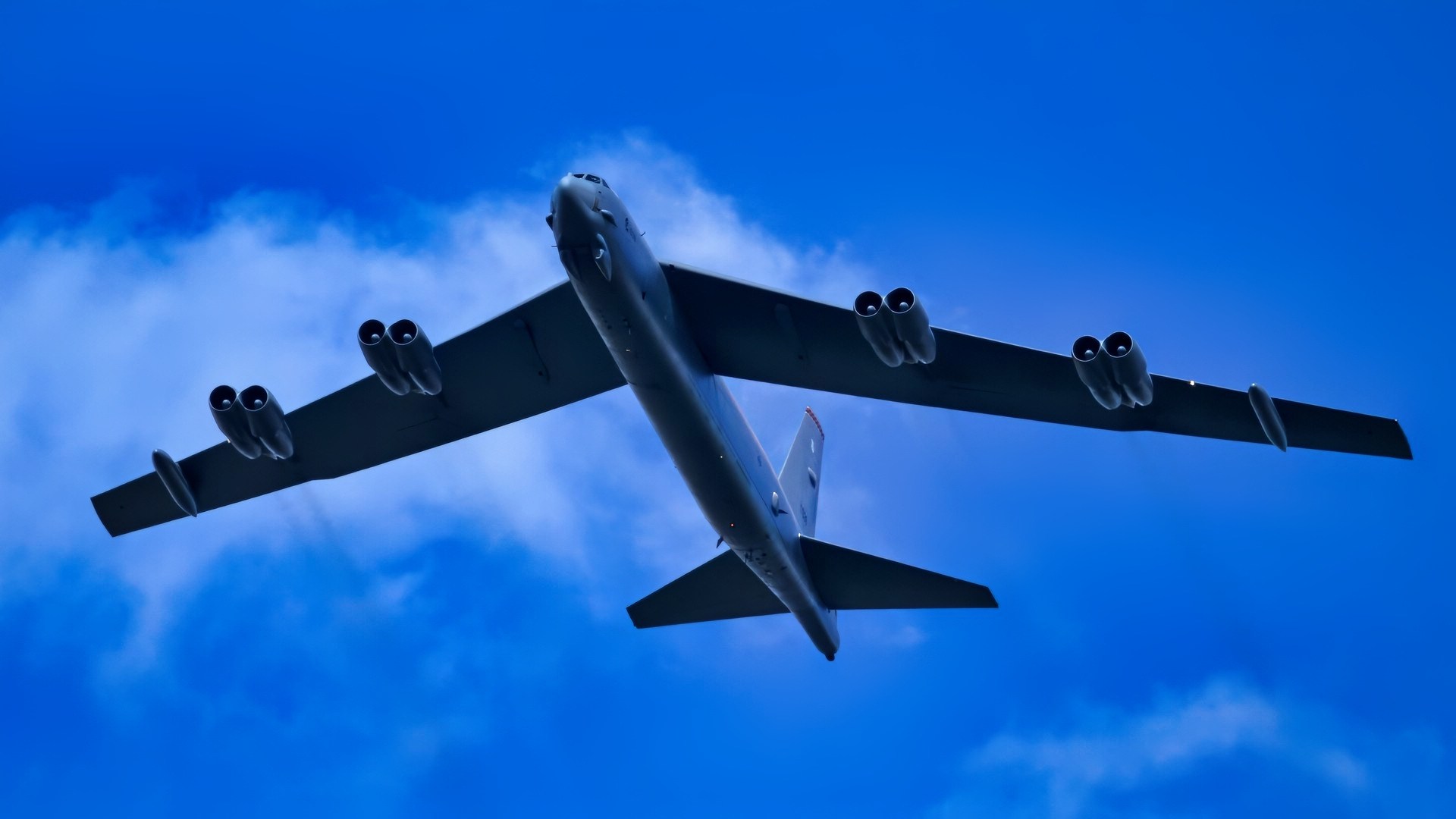
Boeing B-52H Stratofortress. Image Credit: Creative Commons.

B-52 Stratofortress, 40th Expeditionary Bomb Squadron, loaded with 12 Joint Direct Attack Munitions (JDAM) heads toward Iraq with it’s new mission directive. The bomber’s mission is to provide close air support for coalition troops stabilizing the country of Iraq, April 15, 2003. Operation Iraqi Freedom is the multi-national coalition effort to liberate the Iraqi people, eliminate Iraqi’s weapons of mass destruction and end the regime of Saddam Hussein. (U.S. Air Force photo by Tech. Sgt. Richard Freeland) (Released)
Defeating China’s Anti-Access/ Area Denial Strategy
“The Air Force will employ units equipped with ARRW to provide an offensive, high-speed strike capability to destroy high-value, time-sensitive, land-based targets in anti-access/area-denial environments,” according to a report TNW obtained from the Department of Defense that was released in March. “Launched from bomber aircraft, ARRW provides standoff capability to prosecute targets in a timely fashion.”
Integrating a new seeker onto the ARRW to enable it to hit moving ships will not be easy. The ARRW generates significant heat, and scientists at DARPA may still be investigating the best way to guide the hypersonic weapon to target surface fleet vessels.
Getting Help From the Army
ARRW Increment 2 could borrow the seeker used on the Army’s Precision Strike Missile that Lockheed Martin has already developed. The mammoth defense contractor is also the manufacturer of the ARRW.
The base model ARRW, without Increment 2 upgrades, was successfully tested with a launch from a B-52 flying from Andersen Air Force Base, Guam, in 2024.
In Line With the Pacific Deterrence Initiative
Increment 2 is mentioned in the new Department of Defense “Pacific Deterrence Initiative.” This is a strategy to counter China’s military buildup in the South China Sea and other regions where Beijing has made territorial claims
The Secretary of Defense called for the plan in 2021 to “establish an initiative to carry out prioritized activities to enhance the United States deterrence and defense posture in the Indo-Pacific region, assure allies and partners, and increase capability and readiness,” according to the Congressional Research Service.
Killing Chinese Carriers Could Be the Goal
Could ARRW Increment 2 become a “carrier killer?” That seems to be what the Air Force has in mind to match capabilities with China. The People’s Liberation Army Navy is proud of its three aircraft carriers and aims to counter the Americans in the Indo-Pacific. Having the ARRW Increment 2 would even the balance in the missile arsenal.

China New Carrier Type 003 CCTV Screencap Photo.
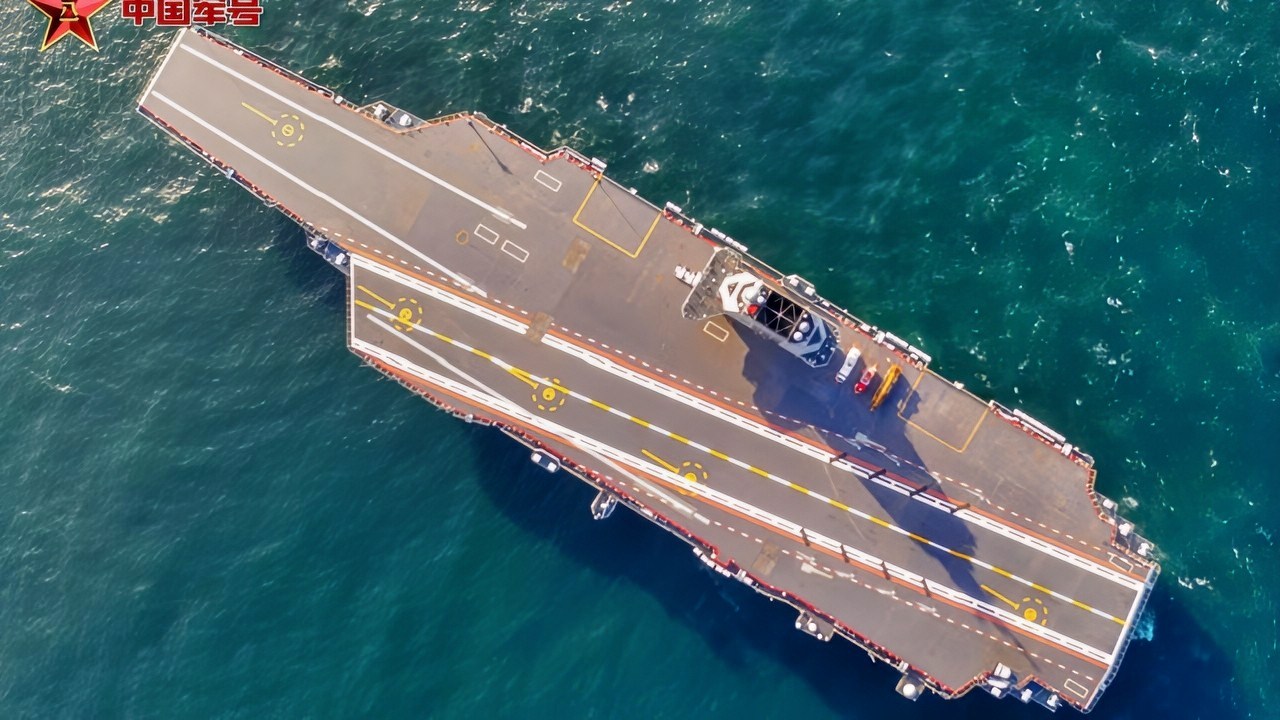
CV-18 Fujian aircraft carrier from China. Image Credit: Creative Commons.
ARRW Increment 2 is thus an important part of the Kinetic Missile Fight, and Congress should approve the Air Force funding request for the anti-ship hypersonic missile. This is a formidable development for the U.S. military. Every weapon that can be used during the Kinetic Missile Fight against China is welcome for high-end combat in a contested environment. More hypersonic missiles, especially those capable of sinking enemy ships, will be needed.
About the Author: Brent M. Eastwood, PhD
Author of now over 3,500 articles on defense issues, Brent M. Eastwood, PhD, is the author of Don’t Turn Your Back On the World: A Conservative Foreign Policy and Humans, Machines, and Data: Future Trends in Warfare, plus two other books. Brent was the founder and CEO of a tech firm that predicted world events using artificial intelligence. He served as a legislative fellow for US Senator Tim Scott and advised the senator on defense and foreign policy issues. He has taught at American University, George Washington University, and George Mason University. Brent is a former US Army Infantry officer. He can be followed on X @BMEastwood.


