

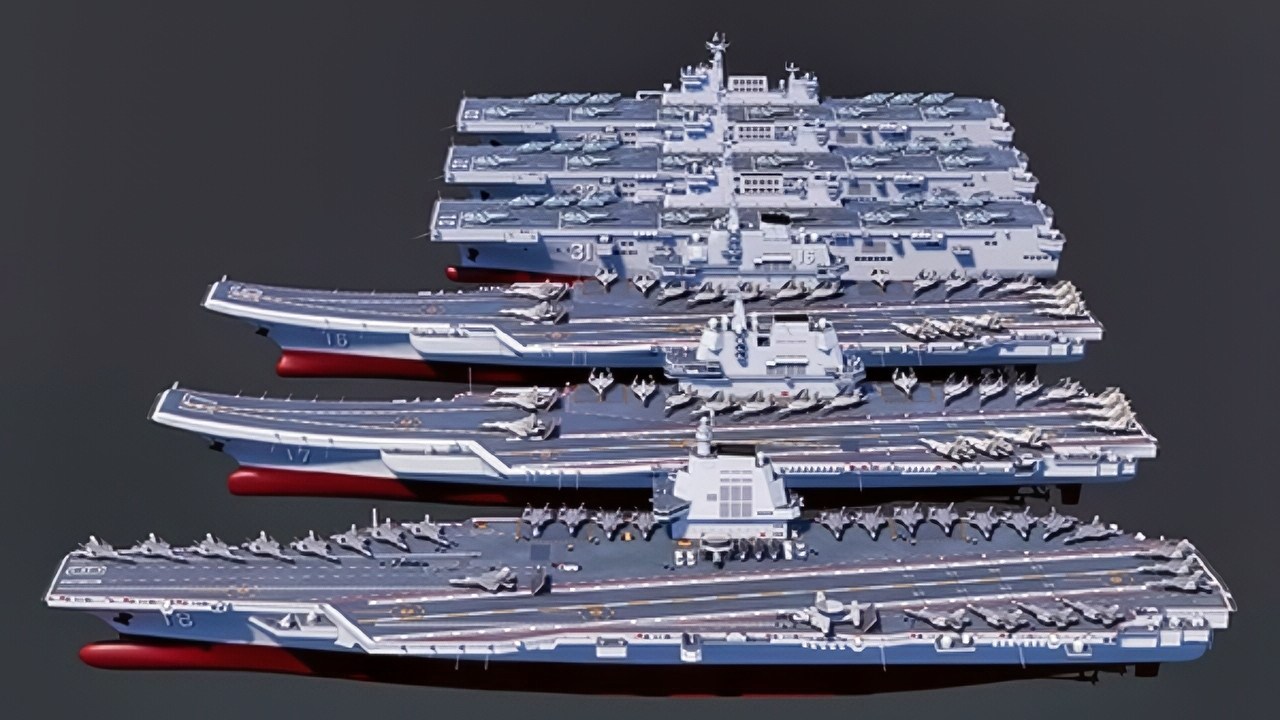
The Chinese Navy plans to build 6 new aircraft carriers by the 2030s. This will bring China’s total to 9 carriers by 2035. The U.S. Navy currently operates 10 Nimitz-class carriers plus the Ford-class. China currently has 3 carriers — the Liaoning, Shandong, and Fujian. The Fujian and USS Ford are the only EMALS-equipped carriers in the world. China is now building a Type 004 nuclear-powered carrier. The Type 004 will weigh approximately 120,000 tons — larger than the Ford-class.
China’s Massive Aircraft Carrier Surge
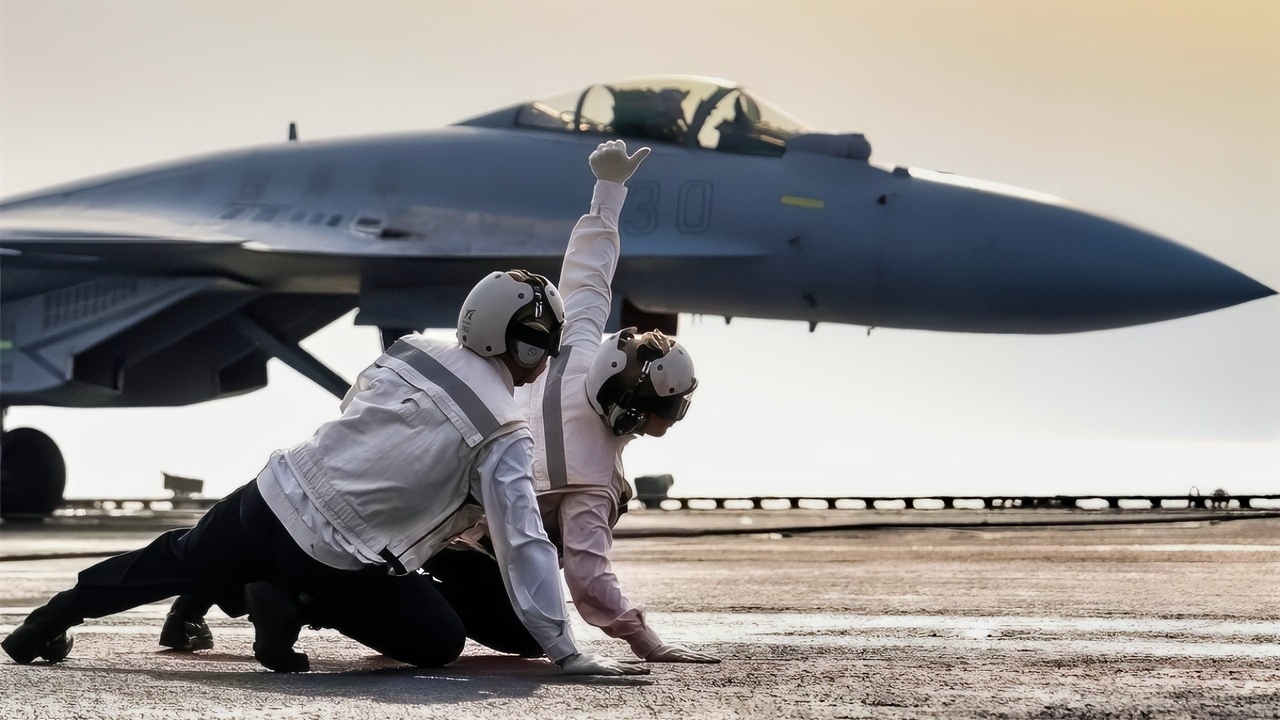
China Aircraft Carrier Operations. Image Credit: Chinese Navy.
The Chinese Navy (PLAN) plans to build a fleet of six new aircraft carriers by the 2030s, bringing its total to nine by 2035. That massive increase in carrier building would be a direct threat to US hegemony at sea.
They currently have three carriers, but two are older ski-jump models. One was the former Soviet-built and retrofitted Liaoning, which carries 24 fighters, and the indigenously built Shandong, another ski-jump-type carrier that is slightly larger and carries eight additional aircraft.
Their third carrier is the much more modern Fujian, which operates with a Ford-class-like electromagnetic catapult (EMALS). It and the USS Ford are the only EMALS-equipped carriers in the world. It is the largest non-nuclear warship in the world.
The Fujian carries about 40 fighters but is conventionally powered, so its range without refueling is more limited. The PLAN’s oiler fleet is limited and would constitute vulnerable targets for U.S. forces. But the next carrier won’t have that issue.
China Is Building a Fourth (Nuclear) Carrier
Beijing recently released a military propaganda video that they titled “Sailing Toward the Ocean,” which not-so-subtly hinted that a fourth aircraft carrier—the third to be entirely built in China and the first that will be nuclear-powered.
The video featured a trio of officers whose names mirrored the PLAN’s three current operational carriers: the Type 001 CNS Liaoning, the Type 002 CNS Shandong, and the Type 003 CNS Fujian.
The three officers were joined by a fourth, named “He Jian”, which is Mandarin for “nuclear vessel.”
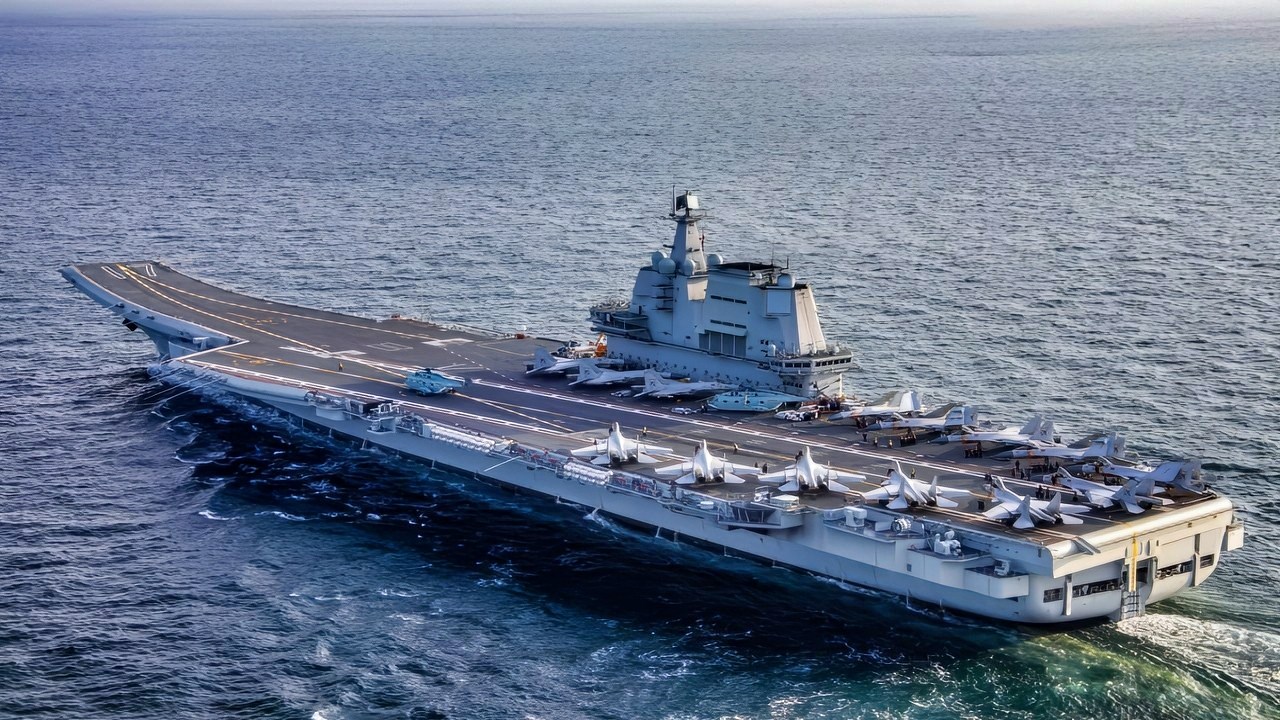
New China Aircraft Carrier. Image Credit: Weibo.

China New J-35 Fighter on Aircraft Carrier. Image Credit: Chinese Weibo.
The only countries that currently operate nuclear-powered aircraft carriers are the United States and France.
Bigger Than The Ford And A Shift In Navy Doctrine
The fourth Chinese carrier, reportedly under construction, Type 004, at 120,000 tons, may be even larger than the Ford-class, with four electromagnetic catapults, instead of the current two.
This enormous nuclear-powered carrier represents a doctrinal shift for the PLAN, switching from a coastal defense force operating close to the Chinese homeland to a sustained, modern, global blue-water power-projection navy.
Analysts and naval intelligence estimates indicate the carrier would probably enter operational service between 2029 and 2030. It will be equipped with electromagnetic launch systems, nuclear propulsion, and an air wing potentially comprising more than 100 aircraft.
In contrast, the USS Ford can carry up to 90 aircraft but typically carries 75-80 during a deployment. Ford’s EMALS has had reliability issues, which are still being ironed out.
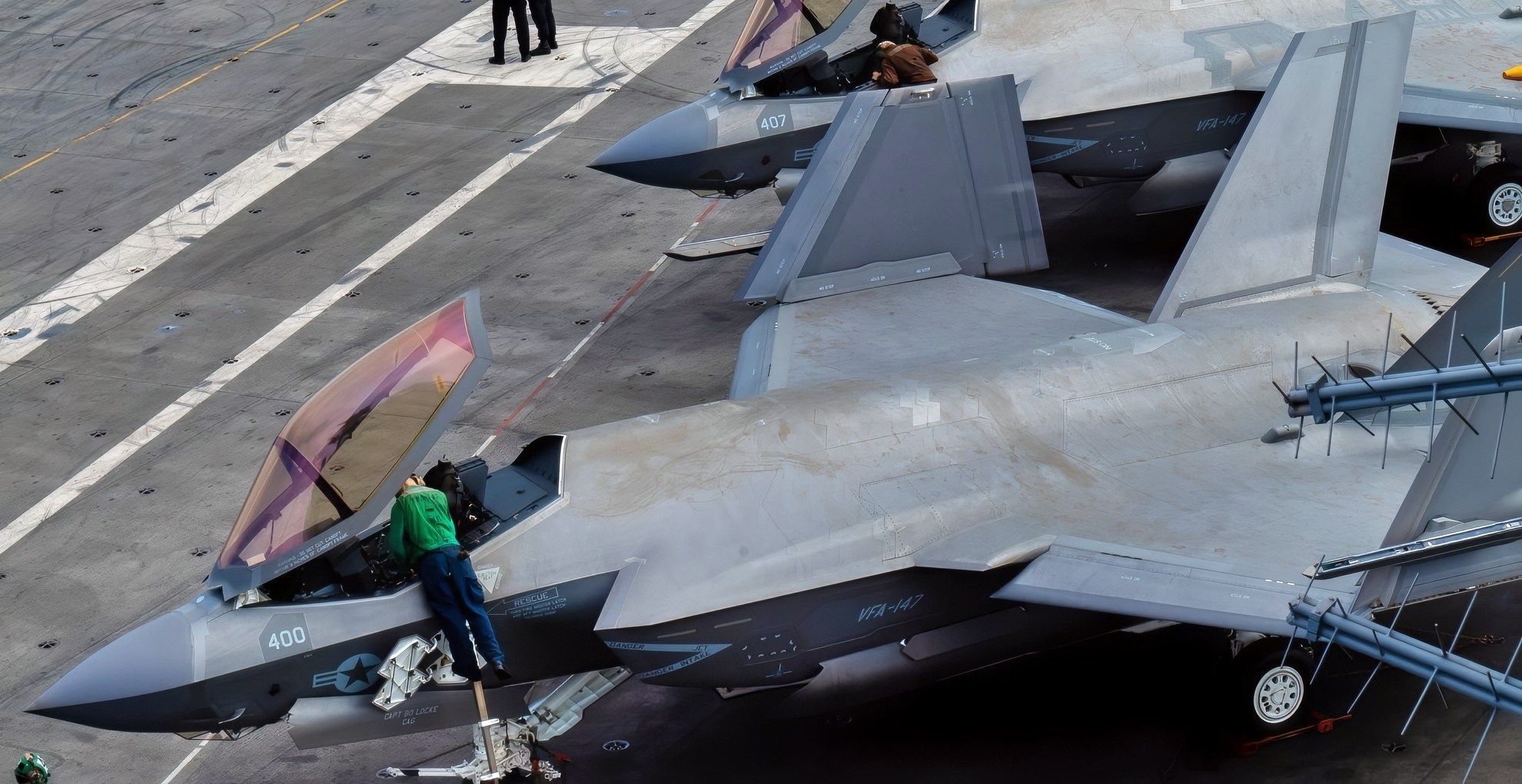
SOUTH CHINA SEA (Jan. 15, 2022) Sailors preform pre-flight checks on several F-35C Lightning II’s, assigned to the “Argonauts” of Strike Fighter Squadron (VFA) 147, on the flight deck of Nimitz-class aircraft carrier USS Carl Vinson (CVN 70), Jan. 14, 2022. Carl Vinson Carrier Strike Group is on a scheduled deployment in the U.S. 7th Fleet area of operations to enhance interoperability through alliances and partnerships while serving as a ready-response force in support of a free and open Indo-Pacific region. (U.S. Navy photo by Mass Communication Specialist Seaman Apprentice Derek Kelley)
The US still operates 10 Nimitz-class Catapult Assisted Take-Off Barrier Arrested Recovery CATOBAR carriers.
One area that the PLAN will have to evolve with the new Type 004 carriers is its integrated air defenses.
Protective Screening And Missile Defense Will Need To Evolve
China has quite an array of “carrier killer” missiles that it can deploy against US aircraft carriers; however, currently, China’s carriers are more vulnerable to US anti-ship missiles when operating farther from its shores than American carriers are.
Many analysts believe China’s carriers would be vulnerable to missile and submarine attacks, noting that the People’s Liberation Army Navy (PLAN) has not perfected protective screening operations, particularly antisubmarine warfare.
China’s aircraft carriers have limited anti-missile defenses because they are designed to operate under the protection of land-based missile networks, rather than to possess comprehensive on-board defenses like U.S. carriers.
This strategy relies on land-based missile systems to create an anti-access bubble, a stark contrast to U.S. carriers, which are built to be self-sufficient and operate as “roaming nerve centers” for a wider network.
Because of this, China’s naval strategy emphasizes asymmetric warfare, using long-range anti-ship missiles to threaten enemy carriers from a distance. In contrast, their own carriers remain relatively vulnerable to direct attack.
This means that China is far from having carrier strike groups that project power from anywhere other than close to its own shores. They will have to incorporate this into their new carriers.
“Unlike other parts of their military modernization, there is something politically theatrical about their carrier deployments so far,” said Trevor Hollingsbee, a former British naval intelligence analyst.
“Carrier operations are a very complicated game, and China’s got to figure this out all by itself. It still has a long, long way to go.”
Early Warning Aircraft Additions To The Air Wing
Chinese early-warning aircraft are largely land-based aircraft. This is not conducive to operating anywhere but near their shores. However, that is now changing as well.
A new aircraft, the KJ-600, designed to perform a similar role to the E-2C/D Hawkeye launched from U.S. carriers, is still in testing, according to the Pentagon’s latest annual report on China’s military. But those will soon be incorporated into the Type 004’s aircraft air wing.
Like the US’s new design, the USS Ford, the Chinese new carrier, the Fujian, has also encountered some issues.
Flight Deck Layout Is An Issue That Limits Air Operations
Some military analysts questioned the efficiency of the ship’s flight deck layout. They believe that the design layout could create launch and recovery bottlenecks during combat operations.
Apparently, the Chinese have already recognized this potentially fatal flaw and are working on a radical redesign for the next carrier, according to a South China Morning Post report.
Two former US Navy officers, Captain (ret.) Carl Schuster, and Lt. Cdr (ret.) Keith Stewart has noticed a design flaw on the flight deck: the angled landing area crosses the deck at a narrower angle than on US carriers, reducing the space between the recovery strip and the forward catapults.
One of those catapults is located in the landing area, which means it can’t be used while the carrier is recovering aircraft.
Schuster said, “The Fujian’s operational capability is only about 60 percent of that of the Nimitz class,” in an interview with CNN. This design flaw means the carrier can’t launch and recover aircraft simultaneously, a prerequisite for carriers of this size.
The Fujian Island Location Creates Flight Deck Bottlenecks
Another problem area is the placement of the island superstructure, which sits closer to the middle of the flight deck than on American carriers. The Shipborne Weapons Defense Review magazine noted that this positioning reduces usable deck space and creates bottlenecks during aircraft operations.
The superstructure was positioned closer to the middle of the flight deck, the report stated, noting that one of the two catapults was also placed too close to an aircraft elevator, which limits deck flow and creates another choke point.
The Fujian has only two catapults, while the US Ford-class carriers have four.
These issues arose due to a late design change: the Chinese switched from steam catapults to electromagnetic catapults during the carrier’s construction.
China’s Carrier Strike Groups Are Learning On The Job
The Chinese aircraft carriers still have a long way to go to match the U.S. Navy, primarily due to a significant gap in operational experience, crew training, and military doctrine.
While China is rapidly advancing technologically, it is still in the early stages of sustained 24-hour air operations, anti-submarine warfare, and sea-based logistical support, all of which can only be developed with time and experience.
Aircraft and systems integration are behind the US. While China’s new carriers can launch jets with electromagnetic catapults, the U.S. has more advanced landing software and battle-tested systems.
Night operations and operations in adverse weather conditions are staples of American carrier operations, as are continuous flight operations, which the Chinese are just beginning to master.
“The continuous operation of its carriers sits at the very core of what makes the U.S. military absolutely preeminent,” said Singapore-based defense analyst Alexander Neill.
The Type 004 will be a significant leap in Chinese technology, enabling them to project power globally for the first time. It remains to be seen if they will encounter teething issues with a new design, their first in a nuclear-powered carrier setting.
They still have operational work to do before they are truly ready to supplant the US as the #1 carrier force.
The US Navy has an 80+-year head start in those types of operations.
About the Author: Steve Balestrieri
Steve Balestrieri is a National Security Columnist. He served as a US Army Special Forces NCO and Warrant Officer. In addition to writing on defense, he covers the NFL for PatsFans.com and is a member of the Pro Football Writers of America (PFWA). His work was regularly featured in many military publications.


