
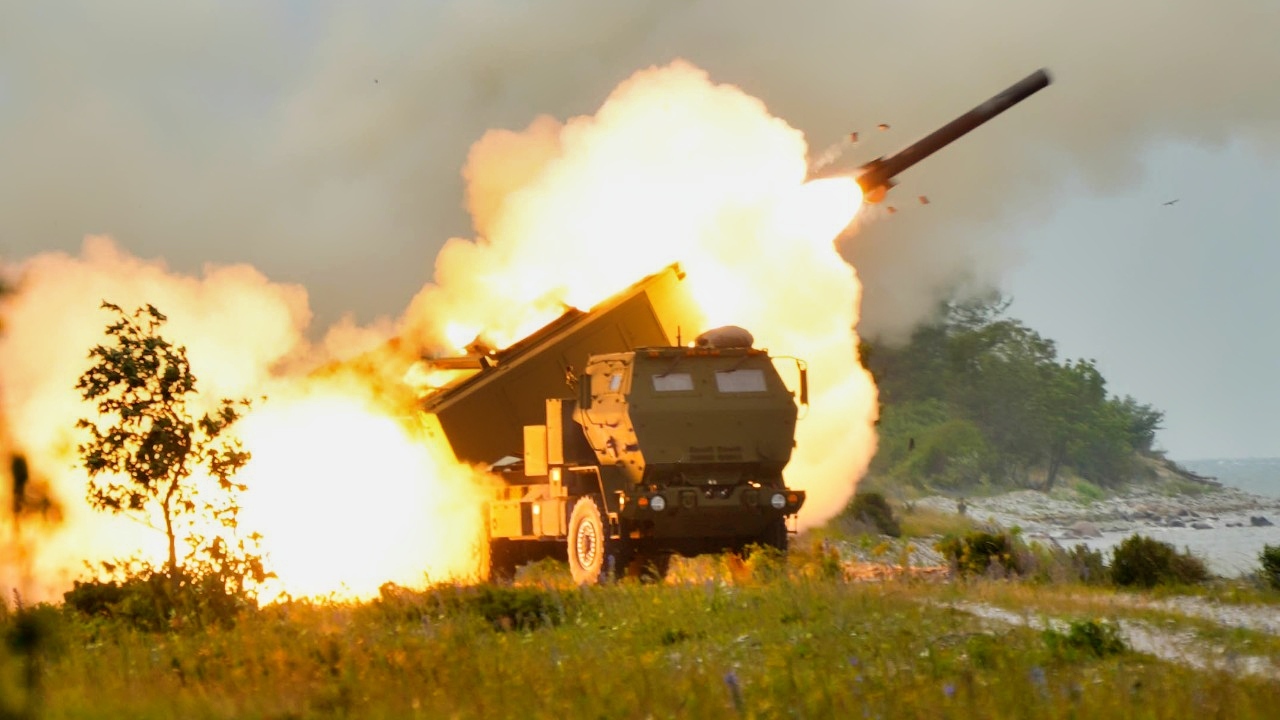
Russia’s Deadliest Overnight Attack This Year – Russia continues its overnight assaults against Ukrainian infrastructure, with a strike into Saturday morning killing 37 people being described as the deadliest of the year so far. An additional overnight assault into Ukraine on August 30 saw two Iskander-M ballistic missiles and 130 drones fired at targets throughout Kyiv, Mykolaiv, and beyond.
The strikes come as Russian assaults begin extending into the mornings, afternoons, and even evenings, turning what used to be nightly attacks into day-long events that make it difficult for rescue workers to assess damage and help survivors.
Putin March 2023 Image Credit Creative Commons

Putin Back in July of 2020 Creative Commons Image
Overnight Strikes Into Saturday Kill 37
Late on Friday, August 28, a Russian drone hit an ammunition warehouse in Myla, a village located in the Bucha district to the west of Kyiv. That initial strike triggered a series of secondary explosions as ammunition stored inside the facility detonated, causing fires in surrounding buildings and residential areas. The strikes killed 37 people, but that number had risen to 38 by Sunday, with four people still missing.
Ukrainian officials say that the facility contained artillery shells, mines, drones, and other forms of ammunition, contributing to the scale of the damage and the large number of deaths. Russia’s Defense Ministry claimed the site was an ammunition depot connected to Ukrainian defense company Fire Point and contained components for Ukraine’s FP-1 and FP-2 long-range drones.
The resulting explosions caused extensive damage throughout Myla. At least 50 residential buildings were damaged, while fires spread into nearby homes. Roughly 400 people were evacuated as emergency crews tried to bring the fires under control. A nearby care home for elderly and disabled residents was particularly badly affected, with Ukrainian officials reporting that 34 of those killed were residents of the facility. The incident has also prompted questions among Ukrainian authorities over why such large quantities of ammunition were being stored together and so close to civilians, with President Volodymyr Zelenskyy describing the situation as the result of “terrible negligence.” He also confirmed that criminal proceedings had been opened as a result of the damage.
Ukrainian prosecutors say they are investigating whether the explosives were legally stored at the site and whether the necessary permits and approvals were obtained.
Zelenskyy said in a statement that those responsible for storing ammunition near residential buildings will be held accountable for their decisions, and the Ukrainian Defense Ministry has also ordered a broader review of ammunition storage practices following the disaster.
Sustained Campaign Against Kyiv
The Myla strike came during an unusually sustained Russian air campaign against Kyiv and the surrounding region. Russian attacks had continued for three consecutive days by Saturday, with Ukrainian officials arguing that Moscow is increasingly prioritizing the frequency of its attacks to exhaust air defenses and disrupt everyday life. Separate Russian drone attacks on Saturday also killed a two-year-old girl in Kyiv, while another attack killed a 14-year-old in the wider Kyiv region.
The attack’s scale was particularly shocking and reflects an intensifying campaign that Russia now deems necessary as it sees diminishing returns on the front line, and as Ukraine inflicts serious economic damage.
130 Drones Strike Overnight Into Sunday
The massive attacks continued overnight into Sunday, August 30, with Russia launching two Iskander-M ballistic missiles and 130 drones at targets across Ukraine. The missiles were launched from Russia’s Kursk region, while the drones came from several locations in Russia, occupied Donetsk and Crimea. Ukraine’s Air Force said the barrage included Shahed and Gerbera drones, S8000 Banderol missiles and Parodiya decoys, with most of the drones reportedly jet-powered. Ukrainian forces claimed to have shot down or suppressed 125 of the 130 drones, though Russian projectiles still hit 13 locations and debris from intercepted weapons fell at four additional sites.
Kyiv was among the primary targets in the attack.
At least three people were injured by a fire caused by a fire between the second and fifth floors of a 12-story building in the Obolonskyi district. A non-residential building was also hit in Podilskyi, and an administrative building caught fire in Holosiivskyi. Another fire was later reported in Holosiivskyi that spanned 3,000 square meters.
Targets Hit In Southern Ukraine
Targets were also hit in southern Ukraine. Russian Shahed drones and Banderole missiles struck port infrastructure in the Mykolaiv region, while an energy facility was also hit. In the Odesa region, at least three people were injured after Russian strikes hit warehouses used to store food supplies.
At least 20 overnight attacks also targeted Dnipropetrovsk, with both drones and artillery hitting sites in the region. According to local officials, the strikes damaged a business and a private home in the Nikopol district and hit infrastructure near Kryvyi Rih, the hometown of the Ukrainian president. A supermarket and gas station in Pavlohrad were also hit.
The barrage then continued into the morning, with additional drone attacks reported in Kyiv on Sunday morning and afternoon.
About the Author: Jack Buckby
Jack Buckby is a British researcher and analyst specializing in defense and national security, based in New York. His work focuses on military capability, procurement, and strategic competition, producing and editing analysis for policy and defense audiences. He brings extensive editorial experience, with a career output spanning over 1,000 articles at 19FortyFive and National Security Journal, and has previously authored books and papers on extremism and deradicalization.


