

Russia launched another overnight barrage against Ukraine last night, testing its air defenses and leaving devastation in the wake of the assault.
A series of critical sites, including logistics facilities, energy infrastructure, and some civilian buildings, were hit overnight as Moscow apparently intensified its campaign to overwhelm Ukraine’s strained air defenses.
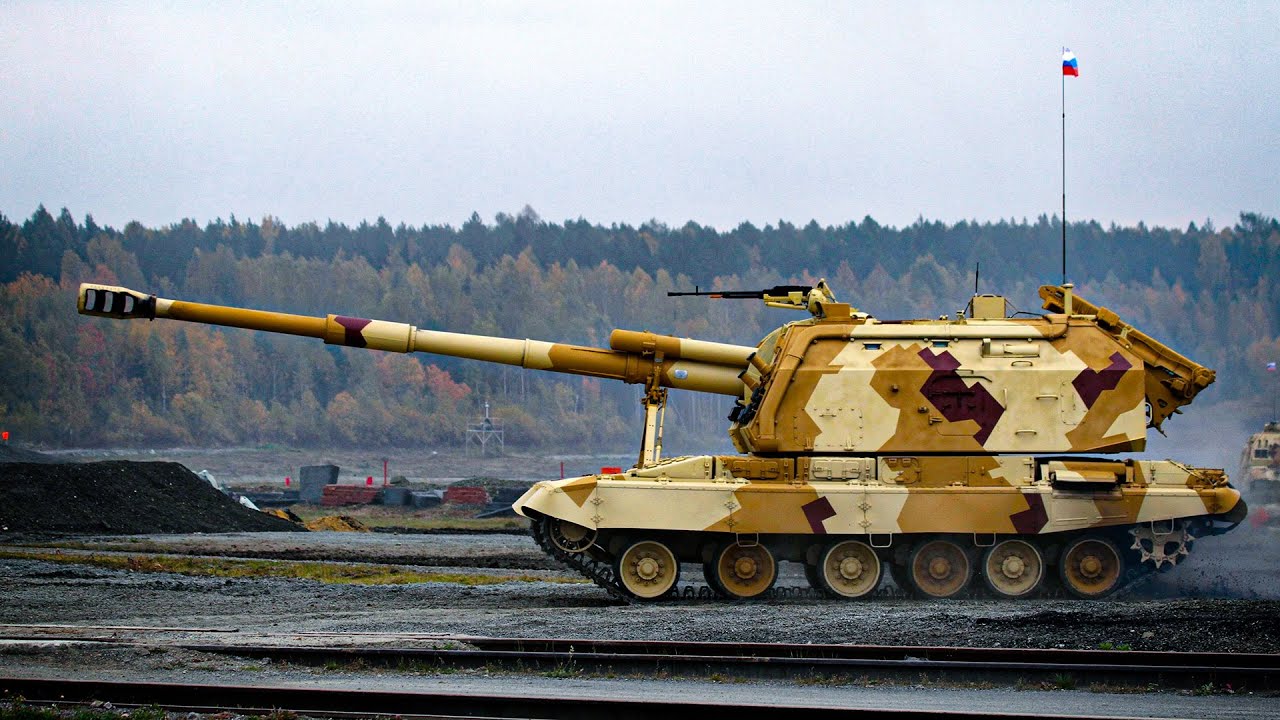
MSTA Russian Artillery Creative Commons Image
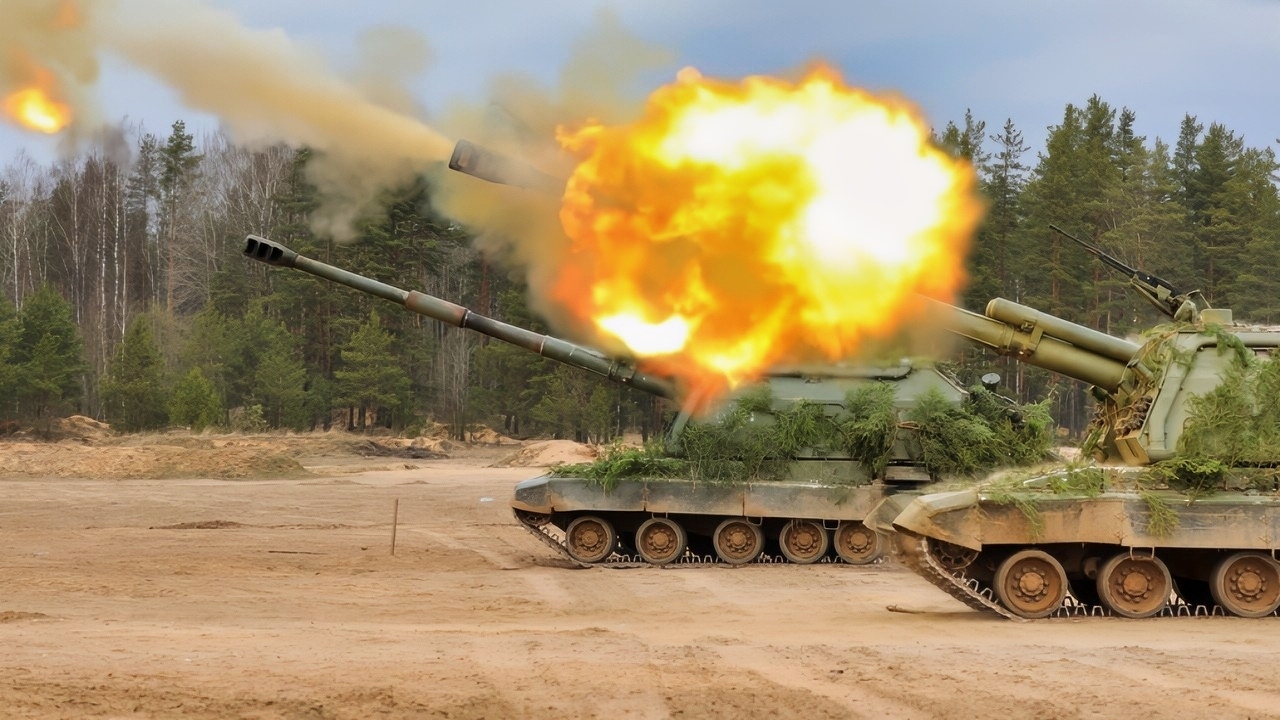
MSTA Artillery Firing Creative Commons Image
The strikes began overnight from Wednesday, August 26, into Thursday, but unlike previous strikes, the attacks continued throughout Thursday morning, afternoon, and evening.
By Friday, the attacks had continued for a second consecutive day, with everything from warehouses and private homes to commercial facilities among the damaged sites.
The strikes present a problem for Kyiv, with Ukraine still struggling with a shortage of U.S.-made Patriot interceptor missiles and Russia increasingly deploying faster jet-powered drones alongside ballistic missiles.
And with the United States now grappling with its own shortage of Patriot interceptors, and reports suggesting that Russian President Vladimir Putin now sees the U.S. as “weakened” by the Iran war, Moscow appears to be testing Ukraine’s defenses ahead of a possible escalation.
Russia Launches Ukraine-Wide Assault
On Thursday, the Russian Defense Ministry described the operation as a “massive” series of strikes against military-related targets in nine Ukrainian cities, including industrial facilities and port infrastructure.
But Ukraine reported substantial damage far beyond military sites.
In Kyiv, drones hit residential buildings, schools, warehouses, and civilian infrastructure, with explosions continuing into daylight hours.
Russian strikes also hit sites in the Poltava, Sumy, Odessa, Kharkiv, Zaporizhzhia, and Kherson regions.
In Zaporizhzhia, a 78-year-old woman was killed, and another was killed in Kharkiv. At least 14 other people were reported wounded across the country. The attacks also disrupted Ukraine’s rail network, with some trains reportedly delayed by up to 13 hours.
Russia then continued the attacks into Friday, with Reuters reporting that another wave of drone attacks damaged 14 warehouses, 16 homes, and three apartment buildings. Ukrainian delivery firm Nova Poshta’s logistics facilities were also struck.
Moscow Hits Ukraine Logistics Network
In recent weeks, Russia has gradually amplified the frequency and scale at which it strikes Ukrainian commercial and logistics infrastructure.
By Friday, Russia was striking logistics facilities operated by Ukraine’s largest private delivery company, Nova Poshta.
The company said in a Telegram post on August 28 that Russian attacks had destroyed two of its sorting centers – one in the Kyiv region and another in the northern city of Sumy.
Four Russian guided aerial bombs hit the Sumy terminal and damaged three trucks, and a drone destroyed the sorting depot located near the capital city.
The company confirmed that all of its employees survived the strike and that operations were continuing despite the damage.
But the attack near Kyiv was particularly notable because Russian attacks started again, targeting the same facility soon after emergency crews arrived to begin assessing the damage.
Anton Ovsiienko, the head of the Bilohorodka community, said on Facebook that Russia struck the location twice more while firefighters were attempting to put out a fire.
“Another difficult night for the Bilohorod community.
We have a hit on the warehouse premises of Nova Poshta and a damaged production facility located nearby in Sviatopetrivske,” Ovsiienko wrote.
“Today, the enemy is using a tactic of repeated strikes. Almost an hour after the first hit, two more strikes were carried out at this location during firefighting. The rescuers managed to retreat to a safer place. That is why I strongly ask you not to approach the scene. It is dangerous. As of now, significant smoke is observed at the scene. I ask residents of Sviatopetrivske and adjacent areas to close their windows, and if possible, not to go out to the street if necessary,” he continued.
Ukraine Finally Stops Russian Ballistic Missiles
After weeks of reports from Ukrainian authorities that its air defenses were completely incapable of intercepting Russian ballistic missiles, the most recent strikes appear to have seen Ukrainian air defense systems put back into action.
Ukraine’s Air Force said that seven Iskander-M or North Korean-made KN-23 ballistic missiles were destroyed during Thursday’s assault, along with an Onyx anti-ship missile, three Banderol cruise missiles, and 222 drones.
The interceptions came after newly supplied Patriot missiles finally arrived in Ukraine.
President Zelenskyy confirmed the delivery shortly before the latest Russian attack on August 25, noting that the missiles came from U.S. stocks and were obtained through the NATO-coordinated Prioritized Ukraine Requirements List (PURL), under which European allies finance purchases of American weapons to be sent to Ukraine.
The exact number of interceptors in the most recent shipment to Ukraine has not been disclosed.
Zelenskyy also announced on August 23 that Germany had agreed to finance an additional 600 PAC-2 Patriot interceptors for delivery between 2027 and 2028.
It means Ukraine is looking to a future supply of interceptors, but still has no sustainable solution to keep intercepting Russian ballistic weapons over the coming winter.
About the Author: Jack Buckby
Jack Buckby is a British researcher and analyst specializing in defense and national security, based in New York. His work focuses on military capability, procurement, and strategic competition, producing and editing analysis for policy and defense audiences. He brings extensive editorial experience, with a career output spanning over 1,000 articles at 19FortyFive and National Security Journal, and has previously authored books and papers on extremism and deradicalization.


