

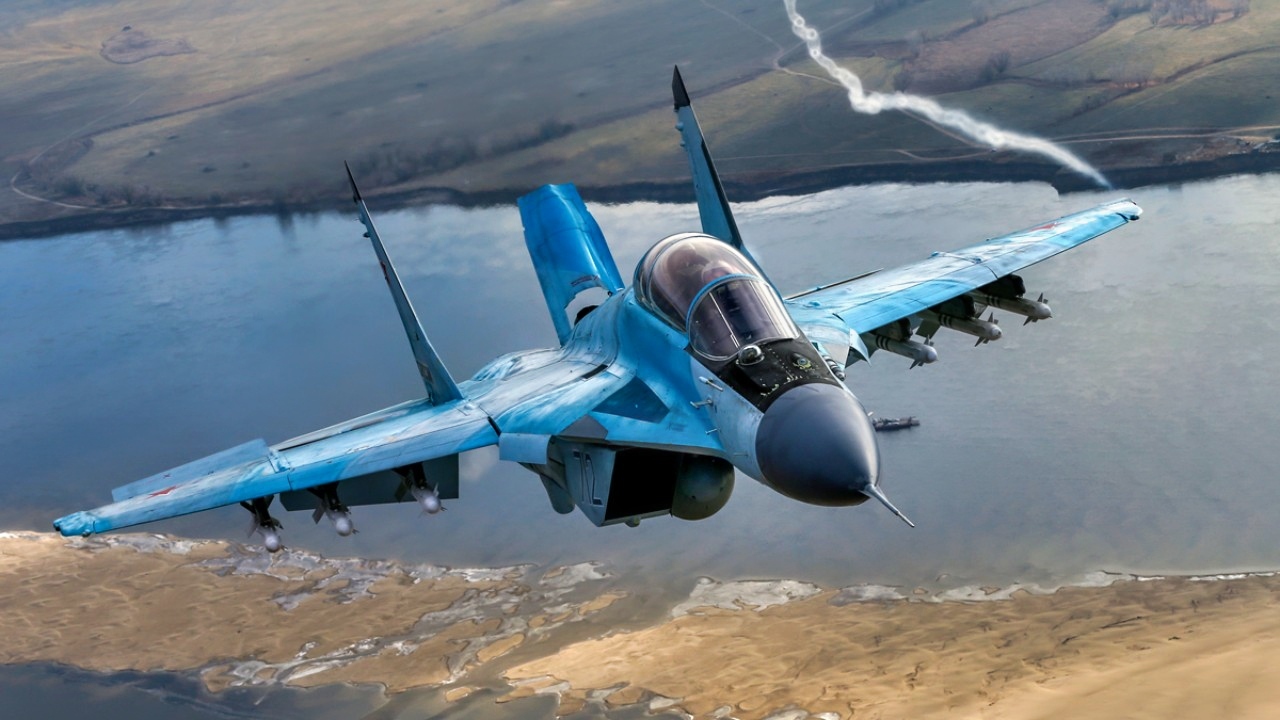
Key Points and Summary – Russia’s MiG-35, comically dubbed a fourth-generation “+++” fighter, is an overrated “paper tiger” that has been a non-factor in the Ukraine war.
-With only a handful of aircraft in service, the program is a failure, plagued by significant drawbacks. It lacks its intended advanced AESA radar, its missiles are outmatched, its engines are aging, and its electronic warfare suite is subpar.
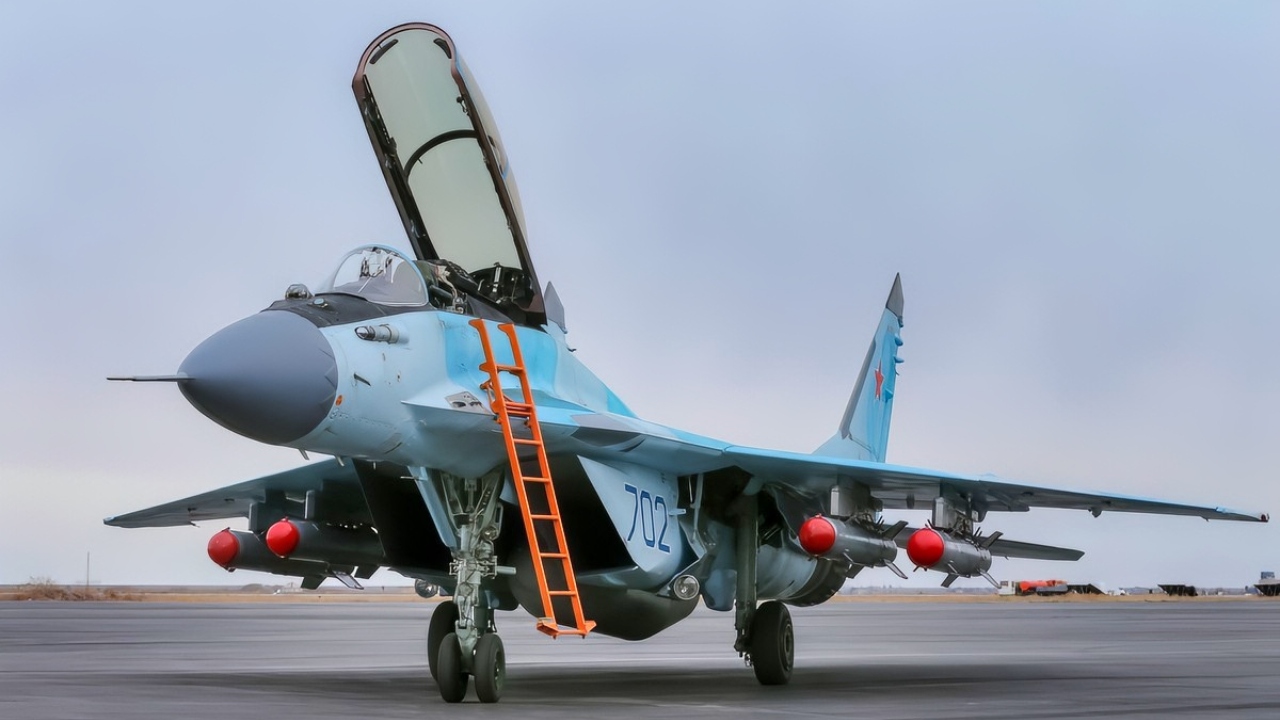
MiG-35 On the Runway. Image Credit: Creative Commons.
-Instead of a revolutionary dogfighter, the MiG-35 is a symbol of the Russian aviation industry’s inability to deliver on its ambitious promises, making it another costly and ineffective platform.
Russia’s MiG-35 Is an Overrated Paper Tiger
The Russian MiG-35 has been a forgotten airplane during the war in Ukraine.
It is rarely a newsmaker, and when it is mentioned in the media, the coverage is generally unfavorable.
But Vladimir Putin’s air force could use a shot in the arm. We know the war has been disastrous for the service branch. There is no semblance of air superiority on the Russian side.
Bombers and fighters stay out of the way of Ukrainian air defenses, while Russian pilots seem to be over-matched and less skilled than their counterparts.
Are There Really Only Six in Service?
The MiG-35 was intended to revolutionize dogfighting and provide a significant advantage for the Russian air force.
There were ambitious plans to sell it overseas and produce it in large quantities.
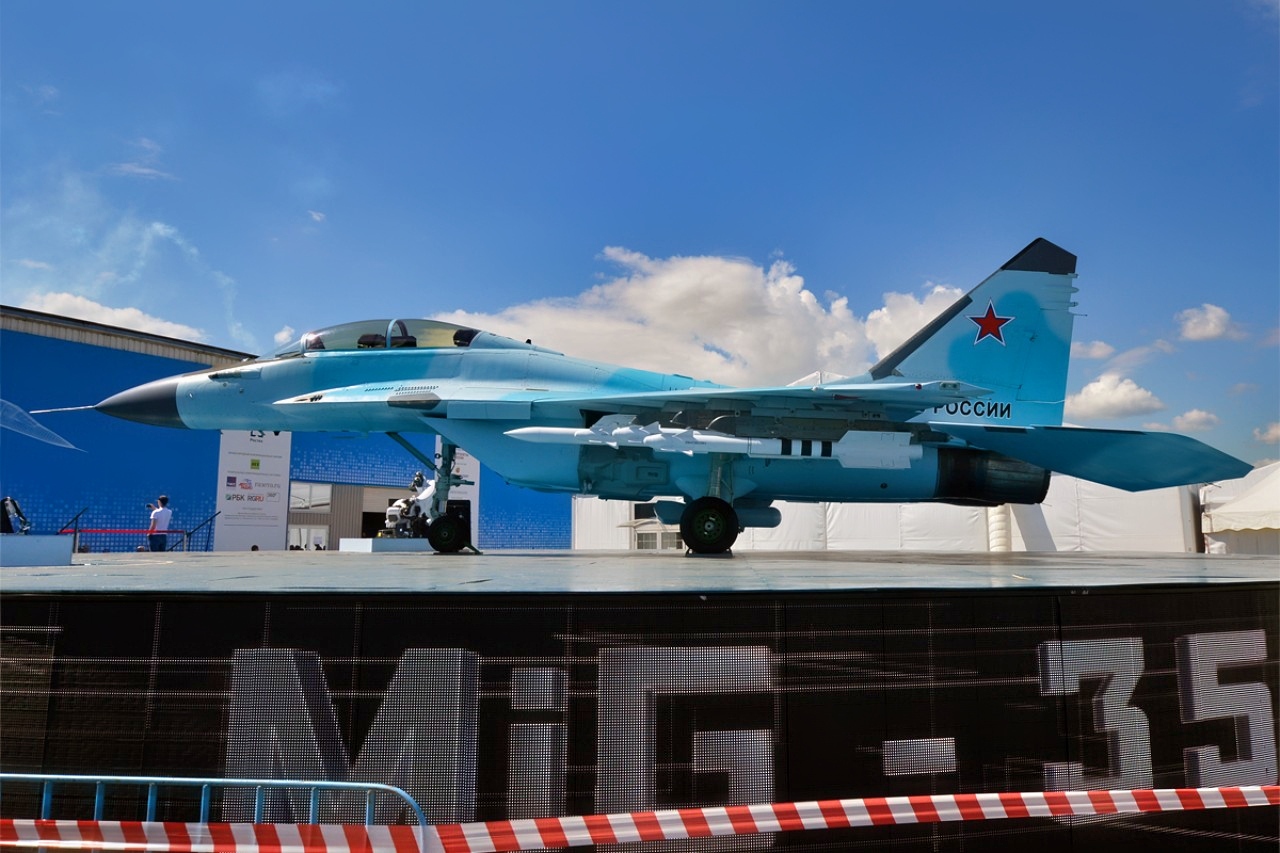
MiG-35. Image Credit: Creative Commons.
That hasn’t happened. Foreign militaries have kicked the tires but have not entered into substantial acquisition contracts.
The Russians have only produced around 10 MiG-35s despite an original order of 24 by 2027. Perhaps just six MiG-35s are on active duty.
No, It Is Not a Fourth Generation “+++” Jet
The Russians comically consider the MiG-35 to be a fourth-generation “+++” fighter. This is an exaggeration, and frankly, I have never heard of a “+++” fourth-generation warbird. But they do want to make more MiG-35s and deploy them before the war ends, hopefully giving the Russian air force something to be proud of.
It is going to be slow going. Russia, of course, is subject to international sanctions, and obtaining advanced components, such as chips and microprocessors, is challenging.
Engineers and technicians are exhausted from trying to make up for all the losses in Ukraine. Additionally, there is a greater need to produce new tanks and armored vehicles.
Fighter jets are not at the forefront of new manufacturing. Nevertheless, the MiG-35 may come back from the dead after all.
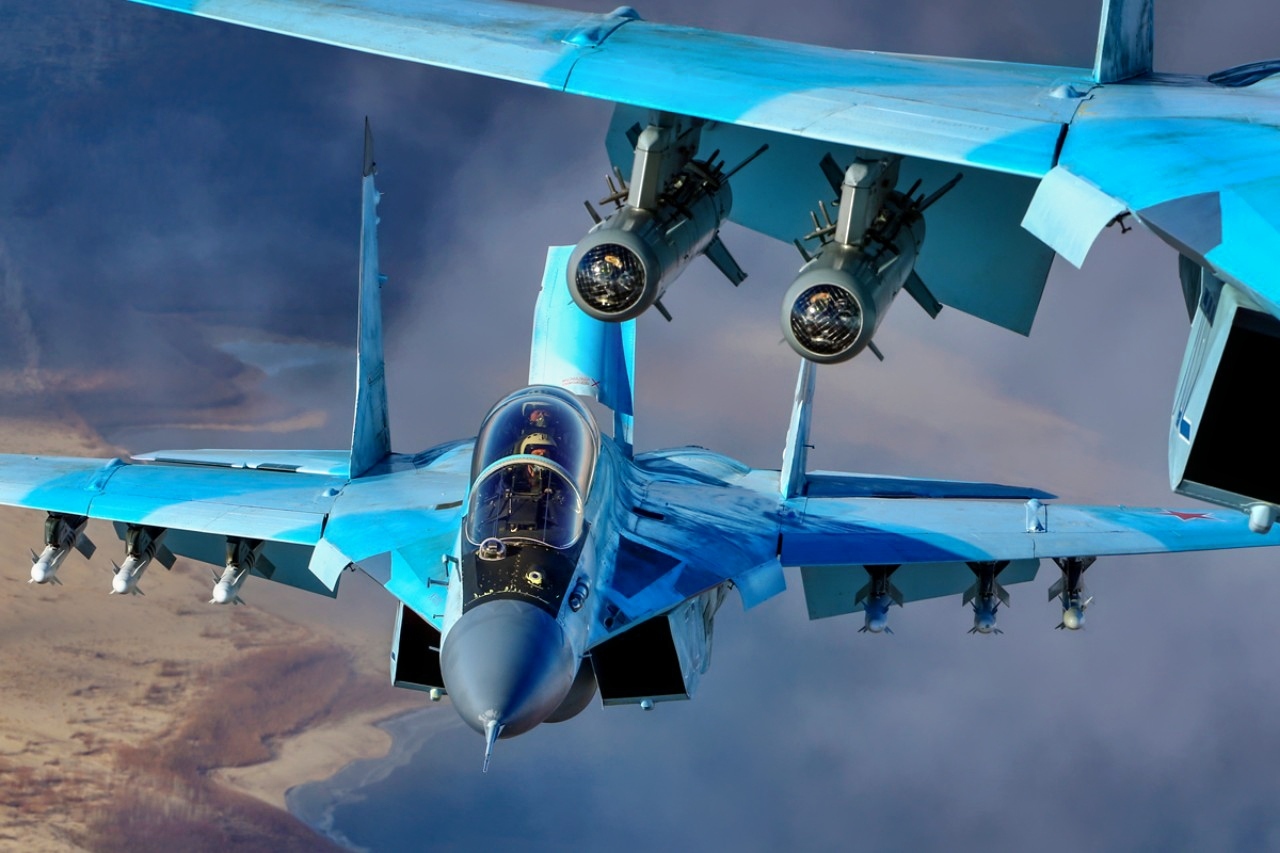
MiG-35 Fighters from Russia. Image Credit: Creative Commons.
Not the Best Radar
The MiG-35 has the most advanced avionics of any other Russian fighter. However, the airplane does not have the technically sophisticated Phazotron Zhuk-A AESA radar that was removed to save money. That’s a bad choice by the Russians, as the sensor system needs to be improved for better survivability in combat.
Some Redeeming Qualities
However, the MiG models are known to have fewer maintenance requirements than those produced by Sukhoi. The MiG-35 could be cheaper to maintain in the air, too.
This would be one advantage that would make the MiG a valuable addition to the fleet. The MiG-35 can also take off and land from shorter and less improved runways.
The MiG-35 has a decent range of 1,250 miles without external fuel tanks and aerial refueling. This will allow it to remain at air bases out of the range of some Ukrainian drones.
How to Make the MiG-35 Better
However, the armaments are not that great. The MiG-35 relies on the R-77M air-to-air missile. These have less than desirable range and are not as advanced as American AMRAAMs or Chinese PL-15s. Even China’s workhorse J-10 fighter could outclass the MiG-35 when it comes to munitions.
The MiG-35 also does not have the payload or altitude to utilize the Izdeliye 810 missile, which is a significant drawback. It would also be nice if the MiG-35 could fire the Kh-59MK2 cruise missile that is onboard the Su-57.

MiG-35 Fighter from Russia. Image Credit: Creative Commons.
The MiG-35 could also utilize a helmet-mounted targeting system to enhance the pilot’s ability to succeed in dogfights.
And there needs to be improved electronic warfare (EW)on the warbird, and it could easily fall victim to Ukrainian surface-to-air missiles. When it comes to EW, the MiG-35 is more like a lower-rated fourth-generation airplane, hardly “+++” as the Russians claim.
Moreover, the MiG-35 doesn’t have the best engines. “The MiG-35 has continued to rely on these ageing engines, and could see its flight performance, range, and the amount of energy available for onboard subsystems all improved significantly if integrating a more modern powerplant that utilizes more of the technologies developed in the past 30 years,” according to Military Watch Magazine.
The Bottom Line
Despite these drawbacks, it is surprising that the Russian air force aims to keep the MiG-35 at the forefront, but pilots need something different to throw at the enemy. Russia could use all of the fighter jets it can assemble. The MiG-35 should have been much better. Perhaps it can perform better than expected and attract international buyers, generating more revenue from foreign military sales that could then be invested in the MiG-35 program.
This airplane is no “+++” model. There are numerous drawbacks, and the systems are less than ideal.
The Russians could make more and throw them into the fight.
There would be a need for some of the best engineers to make improvements to the airframe and bring it up to speed. Until then, the MiG-35 should be considered another failure by the Russian aviation industry. It lacks the necessary qualities, and there is a reason it is not selling on the export market. Chalk this one up to a lack of planning and follow-through by the Russians.
The MiG-35 is overrated and is more of a paper tiger than a difference maker.
About the Author: Brent M. Eastwood
Brent M. Eastwood, PhD is the author of Don’t Turn Your Back On the World: a Conservative Foreign Policy and Humans, Machines, and Data: Future Trends in Warfare plus two other books. Brent was the founder and CEO of a tech firm that predicted world events using artificial intelligence. He served as a legislative fellow for US Senator Tim Scott and advised the senator on defense and foreign policy issues. He has taught at American University, George Washington University, and George Mason University. Brent is a former US Army Infantry officer. He can be followed on X @BMEastwood.
More Military
Canada’s Army Is on the Comeback Trail
You Can’t Stop the Nimitz-class aircraft Carrier


Michael Mixon
August 26, 2025 at 2:34 pm
The Mig-35 may not be an effective weapon but is definitely a beautiful plane.
David Smith
August 27, 2025 at 7:31 am
Someone with a PhD wrote this? Jesus Christ.