

Key Points and Summary – Russia’s PAK DA stealth bomber program, envisioned as a rival to the U.S. B-21 Raider, is now widely regarded as a failure after two decades of development.
-The ambitious flying-wing bomber, meant to replace Russia’s aging Tu-95 and Tu-160, is plagued by persistent delays and significant technological hurdles, particularly in achieving true stealth.

Tu-95 Bomber from Russia. Image Credit: Creative Commons.
-Exacerbated by Western sanctions and the economic strain of the war in Ukraine, there are serious doubts that Russia has the industrial capacity or workforce ever to put the PAK DA into full-scale production, leaving its future uncertain.
Russia’s PAK DA Stealth Bomber Has Failed
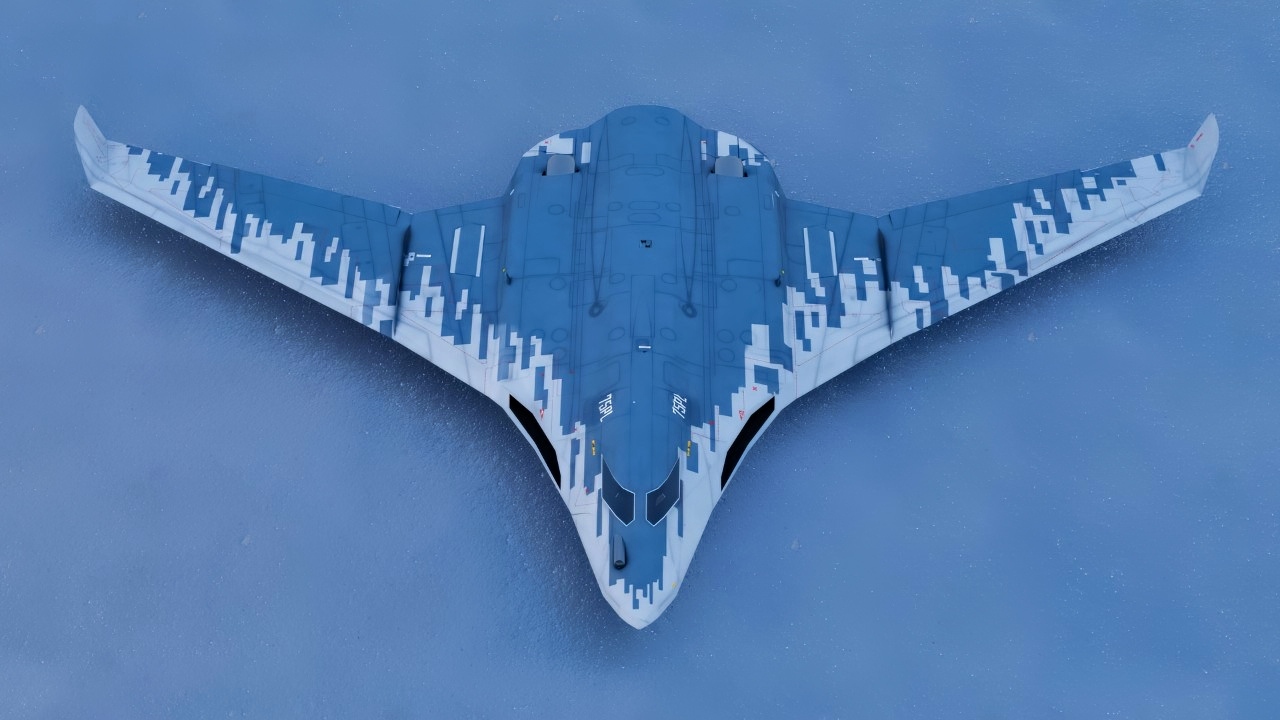
The Russian PAK DA is a stealth bomber under development as part of the PAK [Perspectives of Aerial Complexes] program.
Officially named the “Long-Range Aviation Complex,” the PAK DA stealth bomber, codenamed Poslannik (Envoy or Messenger), is expected to replace the aging Tu-95 and Tu-160 bombers, the latter of which have been very effectively used in Ukraine.
Designed by the Tupolev design bureau, which has produced the Tu-95 and the Tu-160, this aircraft is expected to undertake various missions, ranging from nuclear deterrence to conventional strike operations.
It will focus on stealth and advanced avionics to evade the latest air defense systems.
Well, that is, if it ever flies. And that seems like a longshot.
Where Is the PAK DA?
The PAK DA program has been in development for two decades, with initial timelines repeatedly pushed back. And it still hasn’t flown.

PAK DA Stealth Bomber. Image Credit: Creative Commons.
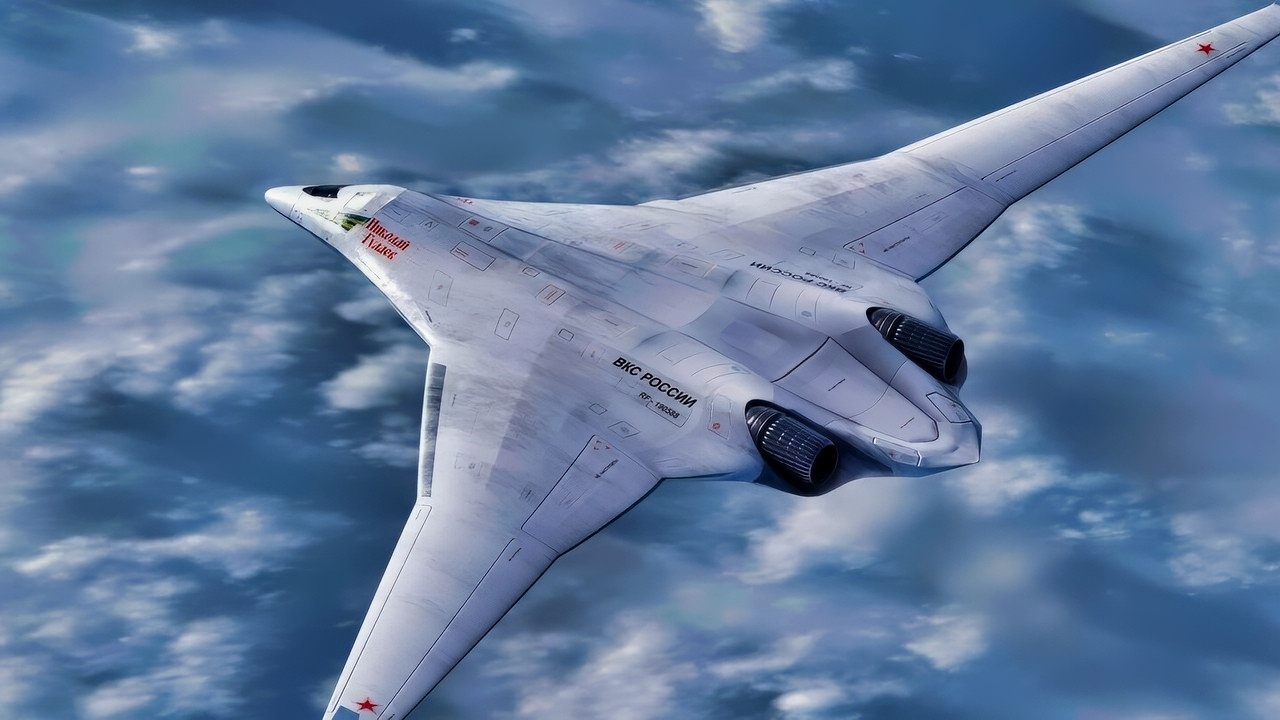
PAK DA Bomber from Russia. Image Credit: Creative Commons.

PAK DA Bomber from Russia. Image Credit: Creative Commons.
The PAK DA stealth bomber program is widely considered a failure due to a combination of factors, including persistent development delays, reliance on outdated technologies, and the impact of Western sanctions and resource diversion caused by the conflict in Ukraine.
While initially envisioned as a rival to the US B-21 Raider, the program has struggled to overcome technical challenges, particularly in developing the necessary stealth technology and integrating advanced systems.
Flying Wing Design, Russia’s Answer To The B-2, B-21:
In August 2021, then-Deputy Prime Minister of Industry and Trade Denis Manturov said that the first PAK DA prototype had begun production.
Then, things get a little confusing. He added that the prototype would be ready by 2023, with full-scale production scheduled to begin in 2027.
That was an ambitious timeline, considering they were building an entirely new aircraft system. But then, a few months later, Russia invaded Ukraine.
The Goal
The Russian stealth bomber is touted as a subsonic sixth-generation aircraft capable of carrying 30 tons of nuclear and conventional weapons with a range of 7,500 miles.
However, since the invasion, sanctions, a lack of funding, and the struggle to produce the necessary stealth technology have slowed progress.
The PAK DA would feature a flying-wing design, internal weapons bays, AI, and drone-teaming (loyal wingman) capabilities. Again, if it ever takes flight.
Russia’s PAK DA Bomber Claims Are…Well, Just That:
The Russians have sought a stealth bomber design since the earliest days of the American B-2 bomber, aiming to drop bombs undetected on radar.
The B-2 is about to be retired for the new B-21 Raider.
Having a new aircraft program with a new engine that is ahead in its development compared to the actual aircraft itself is a rare phenomenon in the Russian aircraft industry.
The Russian Aerospace Forces (VKS) have developed numerous fighters and bombers since the end of the Cold War. However, creating a radical new flying wing design, something they haven’t done yet, infusing it with stealth technology, with a new engine, and the ability to carry 30 tons of ordinance (double that of the B-21 Raider) is a difficult task.
The Russian “stealth” Su-57 fighter is hindered by Russia’s struggle to bond the aircraft’s body panels as tightly as necessary to minimize radar return and by its modified 4th-generation engines. Why would the PAK DA be any different?
Russia’s claims should always be taken with a healthy grain of salt. They are long known to be long on promises and short on delivery.
Another area of concern for Russia is that it has never sold any Tupolev bombers on the foreign market. This meant that the workforce there has generally eroded and moved on to other firms or other projects. If they ever do get past the prototype stage, will they even have a sufficient workforce for the bomber?
PAK DA In 1 Word: Failure
The PAK-DA is a cooperative program between several enterprises. These include the Kazan Aircraft Production Association, where the Tu-160 long-range bombers were built, the Novosibirsk Aircraft Production Association, which still manufactures the Su-34 medium-range bomber aircraft, and the Beriev Aircraft Plant in Taganrog.
None have ever developed aircraft on par with the best American stealth aircraft. What could go wrong?
Bottom line: the chances of this Russian bomber ever flying are most likely zero. The PAK DA stealth bomber appears to be total hype.
About the Author: Steve Balestrieri
Steve Balestrieri is a National Security Columnist for National Security Journal based in Florida. He served as a US Army Special Forces NCO and Warrant Officer. In addition to writing on defense issues, he covers the NFL for PatsFans.com and is a member of the Pro Football Writers of America (PFWA). His work was regularly featured in many military publications.
More Military
We Almost Touched the F-117 Stealth Fighter


Joaquin
August 4, 2025 at 12:01 pm
Doesn’t Exist