

Summary and Key Points: On the surface, the Iran war has stalled into a tense ceasefire. Underneath, the regime is coming apart: prices are soaring, exports have collapsed, and a government can no longer reliably pay the troops it’s counting on. Iran is using the lull to rebuild — but the same pause has handed Washington a menu of ways to push the regime past the edge, short of the ground war the headlines keep warning about.
America Has Options When It Comes to Iran

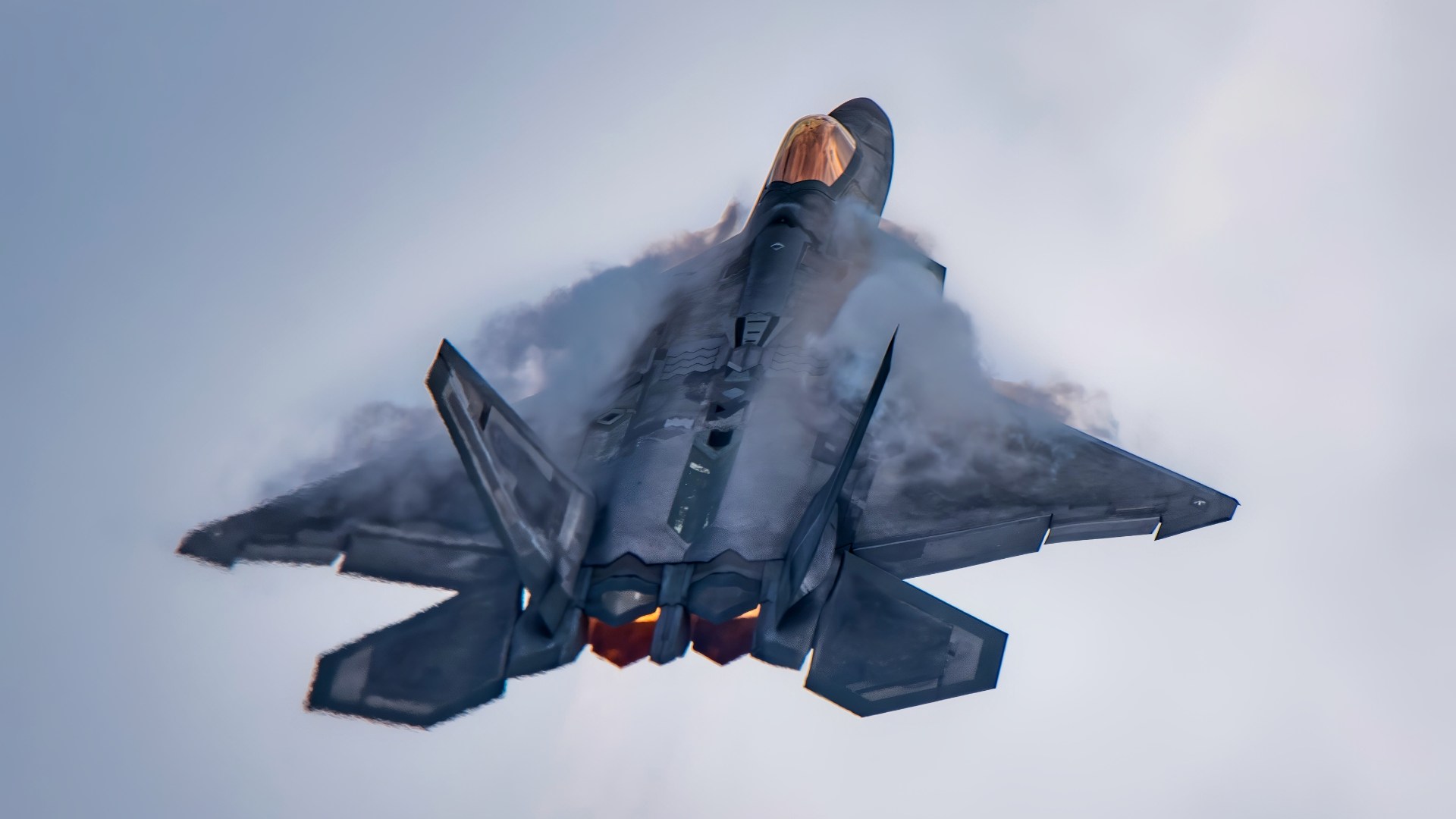
F-22 Raptor Elephant Walk. Image Credit: Creative Commons.

A U.S. Air Force F-22 Raptor assigned to the 3rd Wing conducts flight operations at Joint Base Elmendorf-Richardson, Sept. 28, 2023. The F-22 Raptor is a critical component of the Global Strike Task Force, and is designed to project air dominance rapidly and at great distances to defeat threats. (U.S. Air Force photo by Senior Airman Julia Lebens)
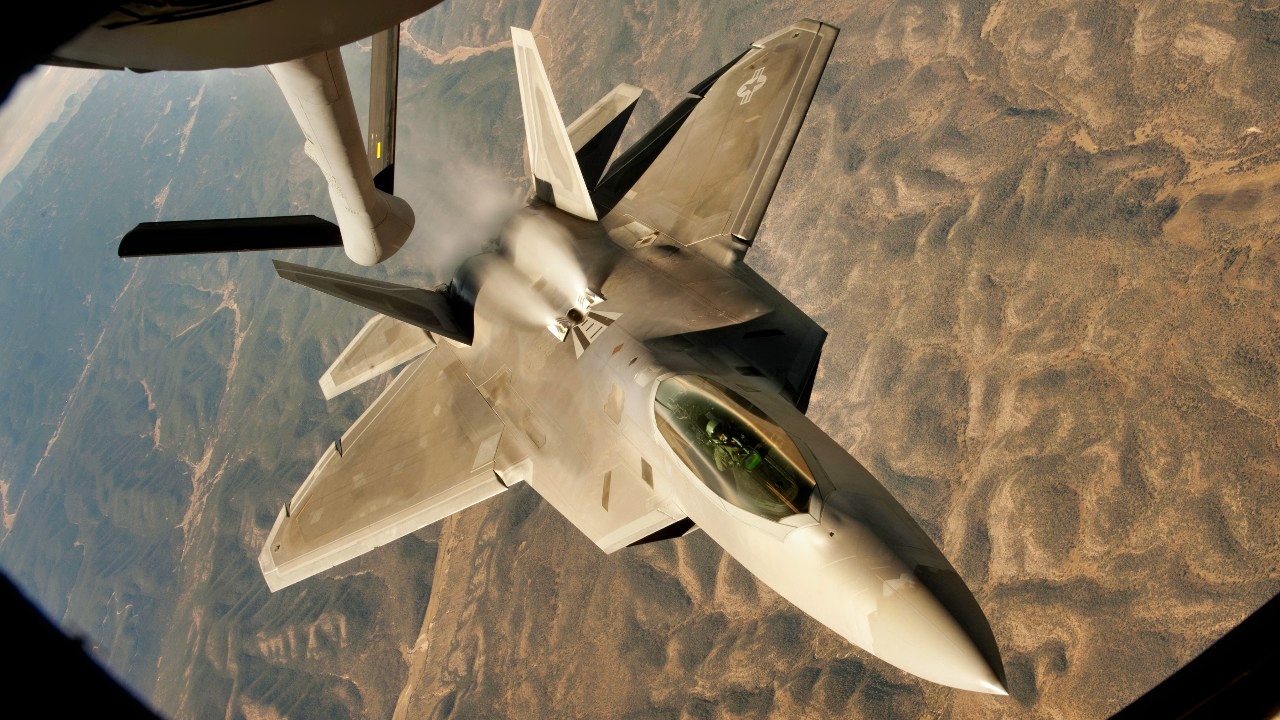
A U.S. Air Force F-22 Raptor backs away from a KC-135 Stratotanker after conducting an in-flight refueling during a training mission over central New Mexico on Oct. 23, 2013. The Raptor is assigned to the 49th Fighter Wing at Holloman Air Force Base, N.M. The Stratotanker is assigned to McConnell Air Force Base, Kan. DoD photo by Airman 1st Class John Linzmeier, U.S. Air Force. (Released)
The United States and Israel severely degraded Iran’s air defenses, nuclear facilities, and military forces in just a few weeks at the outset of the air campaign against the terrorist regime.
However, since the ceasefire in April, which has dragged on, has yielded no meaningful negotiations, the Iranians, true to form, are stalling for time while they rebuild their shattered defenses.
They have continually violated the ceasefire by attacking neighboring Gulf countries, attempting to mine the Strait of Hormuz, and attacking American ships. Now, President Trump’s attempts to avoid further bloodshed are working against him.
House Democrats Force War Powers Act Resolution
The Democrats in the House of Representatives have forced a resolution through to invoke the War Powers Act and end the conflict. To have the effect the Democrats are seeking, it must pass the Senate, and then the president will have 60 days to end military action.
As far as military options for the US, the president has several to choose from.
Key US Military Options In Iran
The US can continue its deterrence and blockades by leveraging a massive U.S. military buildup in the Middle East—including multiple aircraft carriers, strike aircraft, and missile defense batteries—to exert pressure, deter Iranian escalation, and blockade ports.
Iran’s already stretched-thin economy is teetering amid severe economic hardship. Inflation in April was running at a soaring 67 percent, and millions of Iranians have lost their jobs, as the cost of basic goods and food rises.
Seaborne trade has dried up, and the regime cannot currently pay its troops. The Iranian rial is dropping to historic lows.
Iran has been trying to circumvent the blockade by using rail lines to ship oil to China via Pakistan and the Caspian Sea, but those routes are less efficient than sea routes through the Strait and would be targets for interdiction if the air campaign is restarted.
With the ceasefire teetering daily, the administration has the option of restarting limited kinetic and cyber Strikes.
The US and Israel can once again execute surgical airstrikes targeting Iran’s missile arsenal, drone infrastructure, and remaining nuclear-related sites to diminish immediate threats.
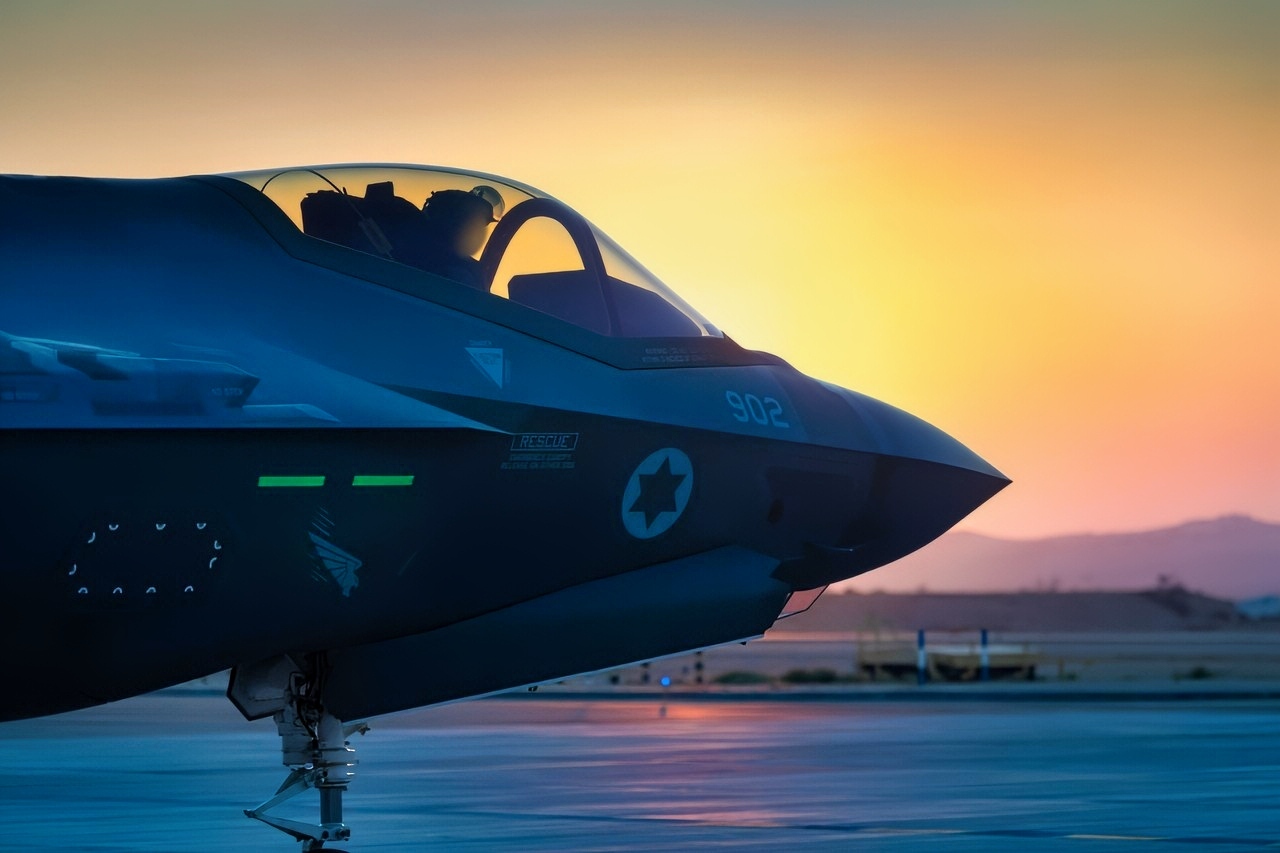
F-35I Adir Israel Stealth Fighter. Image Credit: IDF
The US has kept strikes “limited”; operations are typically designed to degrade specific capabilities without restarting a full-scale air campaign. Targets have included Iranian radar installations, drone and missile launch sites, fast boats laying naval mines, and select nuclear infrastructure.
The U.S. also utilizes cyber capabilities to disrupt the regime’s infrastructure and surveillance apparatus. During the airstrikes from June of last year, the US used its cyber capabilities to digitally disrupt Iranian air missile defense systems.
“U.S. Cyber Command was proud to support Operation Midnight Hammer and is fully equipped to execute the orders of the Commander-in-Chief and the Secretary of War at any time and in any place,” a command spokesperson said in a statement.
Decapitation and regime change operations can recommence, which would scrap any semblance of a ceasefire and return to a full-blown air campaign.
Approving military action designed to cripple the Islamic Revolutionary Guard Corps (IRGC) or regional security headquarters, or employing targeted strategies aimed at toppling the regime.
In the early hours of the air campaign back in late February, US-Israeli “decapitation strikes” significantly altered the Iranian political and military landscape. These operations targeted command and control centers and killed top Iranian leadership, including Supreme Leader Ayatollah Ali Khamenei.
This caused shock and confusion in Tehran, and subsequent strikes further compounded the confusion as secondary commanders were also eliminated. However, the ceasefire shortly afterward has enabled the IRGC to weather the storm and reorganize, albeit to a lesser extent than previously.
Strategic Resource Interdiction operations are a definite possibility. Conducting operations against critical Iranian infrastructure—such as the primary oil export terminals on Kharg Island—to sever the nation’s primary revenue source and force concessions.
Kharg Island handles nearly 90 percent of Iran’s crude oil exports; it acts as the primary lifeline for the Iranian economy, making it a critical hub for any interdiction campaign.
While U.S. forces have repeatedly struck military targets on Kharg Island, seizing or destroying its economic lifeblood pushes Iran to an existential breaking point. The US has not attempted to destroy the island’s oil facilities to prevent global oil prices from skyrocketing, and the president has made it clear he wants Iran in the future to be able to trade in oil, just not the current regime.

The Air Force’s newest fighter, the F-15EX Eagle II, was revealed and named during a ceremony April 7 at Eglin Air Force Base, Fla. The aircraft will be the first Air Force aircraft to be tested and fielded from beginning to end, through combined developmental and operational tests. (U.S. Air Force photo/Samuel King Jr.)
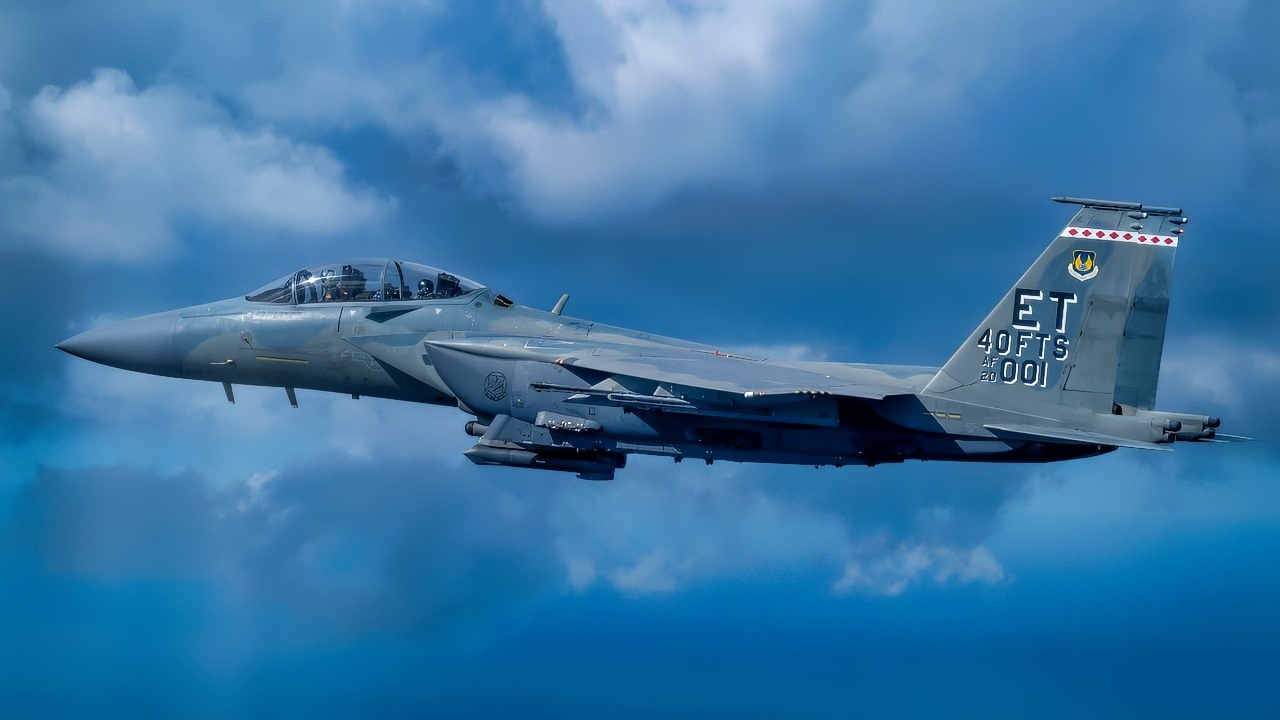
A U.S. Air Force F-15EX Eagle II fighter jet assigned to Eglin Air Force Base, Florida, flies near Jacksonville, Florida, Nov. 2, 2024. Airmen from the 40th Flight Test Squadron and 96th Aircraft Maintenance Unit supported a flyover for the annual Florida-Georgia college football game. (U.S. Air Force photo by Staff Sgt. Blake Wiles)
Qeshm Island, positioned near the entrance of the Strait, extends Iran’s surveillance reach and supports naval drone operations and anti-ship missile coverage.
A Ground Invasion of Iran Is Not, And Never Has Been, In The Cards
The United States has not mobilized for a full-scale ground invasion of Iran. Instead, ongoing efforts remain focused on targeted air campaigns, maritime security, and economic leverage as part of the broader conflict that began in early 2026.
Iran’s size would require hundreds of thousands of troops and an enormous logistical tail. While news media continue to tout the possibility, the relatively small number of ground troops in the immediate region speaks otherwise.
The administration favors strategic air strikes, naval blockades, and targeted special operations (such as the rescue of the F-15 pilot) over sustained boots-on-the-ground campaigns.
About the Author: Steve Balestrieri
Steve Balestrieri is a National Security Columnist. He served as a US Army Special Forces NCO and Warrant Officer. In addition to writing on defense, he covers the NFL for PatsFans.com and is a member of the Pro Football Writers of America (PFWA). His work was regularly featured in many military publications.


