

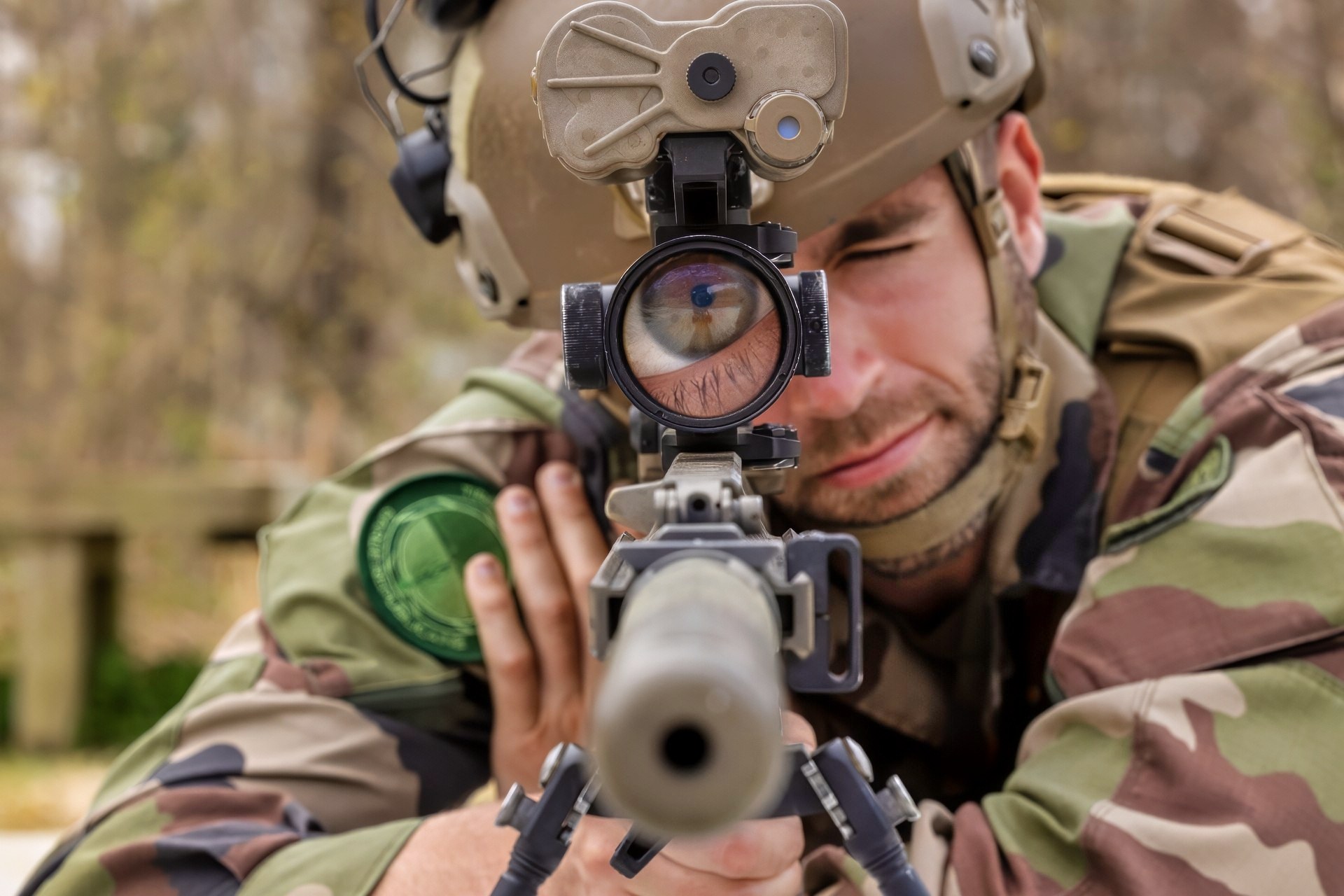
A Ukrainian sniper from the “Pryvid” (Ghost) unit made a 4,000-meter (4,374-yard) sniper kill shot in August 2025 — the longest confirmed sniper kill in history. The 4,000-meter distance is equivalent to approximately 2.5 miles. The Ukrainian sniper used a Snipex Alligator 14.5×114mm bolt-action anti-materiel rifle.
Sniper History Made
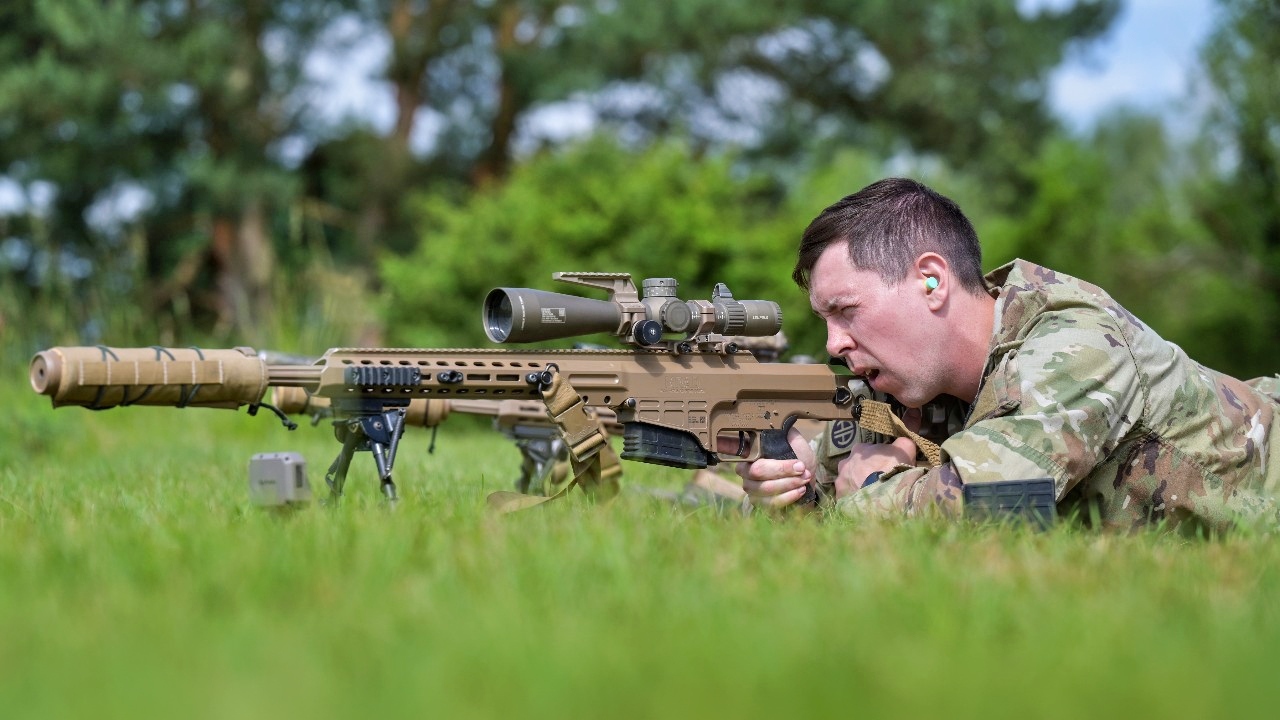
U.S. Army Staff Sgt. Alexander Trott, a paratrooper with 1st Squadron, 91st Cavalry Regiment, 173rd Airborne Brigade, fires his MK22 Advanced Sniper Rifle during sniper training at the 7th Army Training Command’s Grafenwoehr Training Area, Germany, June 7, 2024. A 1-91 CAV sniper team will participate at the International Danish Sniper Competition later this month. The 173rd Airborne Brigade is the U.S. Army’s Contingency Response Force in Europe, providing rapidly deployable forces to the United States European, African, and Central Command areas of responsibility. Forward deployed across Italy and Germany, the brigade routinely trains alongside NATO allies and partners to build partnerships and strengthen the alliance. (U.S. Army photo by Markus Rauchenberger)
Military snipers use many tools to make long-distance shots, in addition to a spotter and a rangefinder. They also learn to incorporate factors such as wind direction, wind speed, air density, and even the Earth’s rotation when making their shot count.
And in the midst of all of those calculations, enemy troops may be actively trying to find and kill them.
There are some well-documented, incredible feats of marksmanship in the sniper world. But the longest sniper kill in history occurred just last year during the Russian invasion of Ukraine.
Ukrainian Sniper Shot From More Than Two Miles Away
The longest confirmed sniper shot in combat history is a 4,000-meter (4,374-yard) kill achieved in August 2025 by a Ukrainian sniper from the “Pryvid” (Ghost) unit during the Russo-Ukrainian War. This record-breaking distance is equivalent to approximately 2.5 miles.
The kill shot was made with a unique, large weapon.
The Snipex Alligator is a Ukrainian-made 14.5×114mm-caliber bolt-action anti-materiel rifle designed to destroy armored vehicles, equipment, and fortified positions at long range.
Adopted by the Armed Forces of Ukraine in 2021, it is noted for its massive 2-meter length, weight of 55 pounds, and high-power ammunition, which claimed the 4,000-meter kill shot in 2025.
The Previous Record Was Set By A 58-Year Old Man
In 2023, a 58-year-old Ukrainian sniper had set the previous world record for a sniper kill, a distance of over two miles away. The Russian soldiers in the line of fire would not have even heard the gunshot.
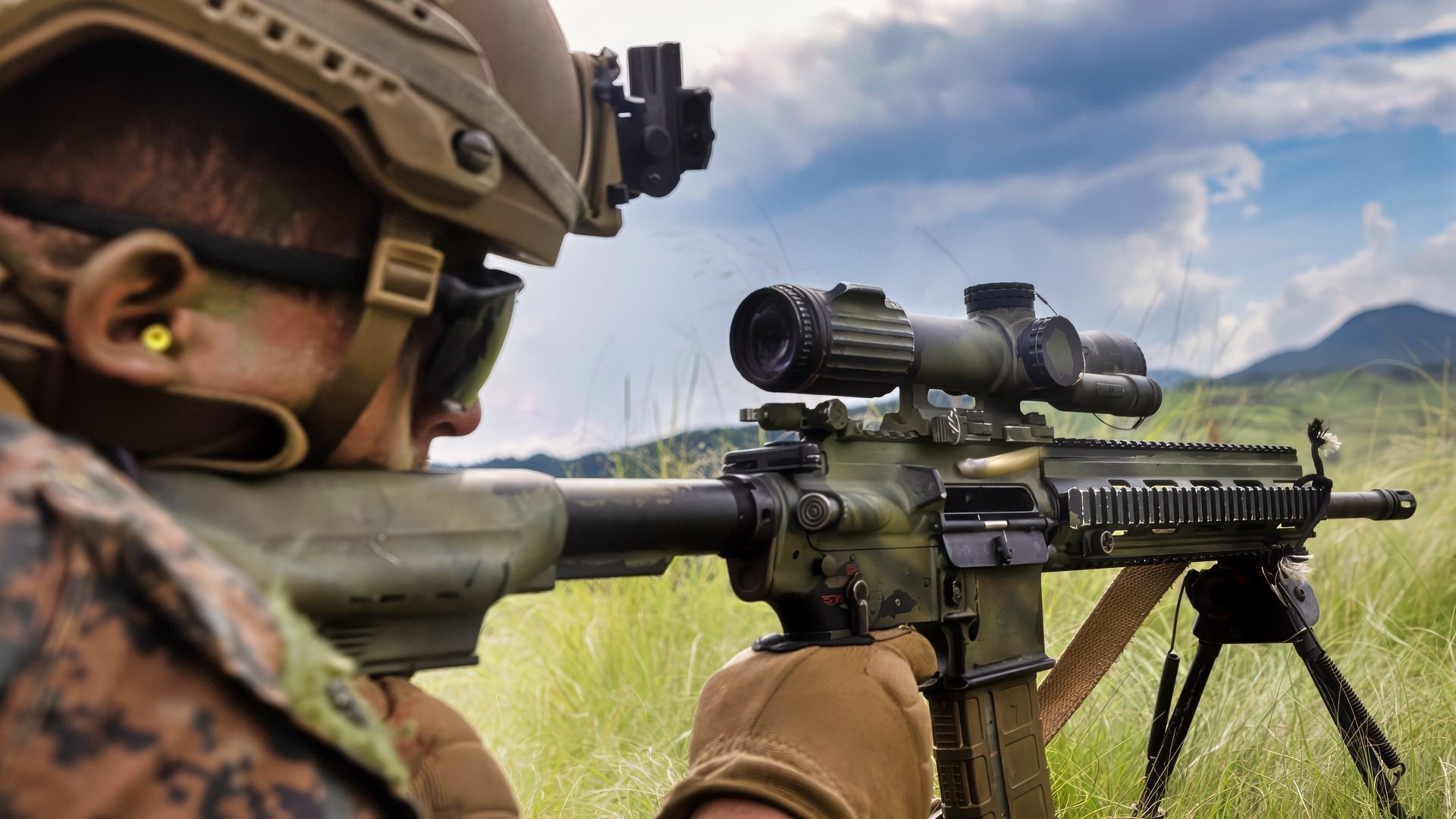
U.S. Marine Corps Cpl. Wyatt Mccullough, a rifleman with 12th Littoral Combat Team, 12th Marine Littoral Regiment, 3rd Marine Division, fires the M27 Infantry Automatic Rifle during Resolute Dragon 25 at Hijudai Maneuver Area, Oita Prefecture, Japan, Sept. 15, 2025. Resolute Dragon is an annual bilateral exercise in Japan that strengthens the command, control, and multi-domain maneuver capabilities of U.S. Marines in III Marine Expeditionary Force and Japan Self-Defense Force personnel, with a focus on controlling and defending key maritime terrain. Mccullough is a native of Texas. (U.S. Marine Corps photo by Lance Cpl. Rodney Frye)

A Swedish Marine with the 2nd Amphibious Battalion, 1st Marine Regiment reloads an Automatkarbin 5 service rifle during a live fire range as part of exercise Archipelago Endeavor 25 in Berga, Sweden, Aug. 28, 2025. Exercise Archipelago Endeavor 25 increases compatible interoperability between the U.S. Marine Corps and Swedish Amphibious Forces by executing combined amphibious operations in and around the Baltic Sea littorals. (U.S. Marine Corps photo by Lance Cpl. Frank Sepulveda Torres)
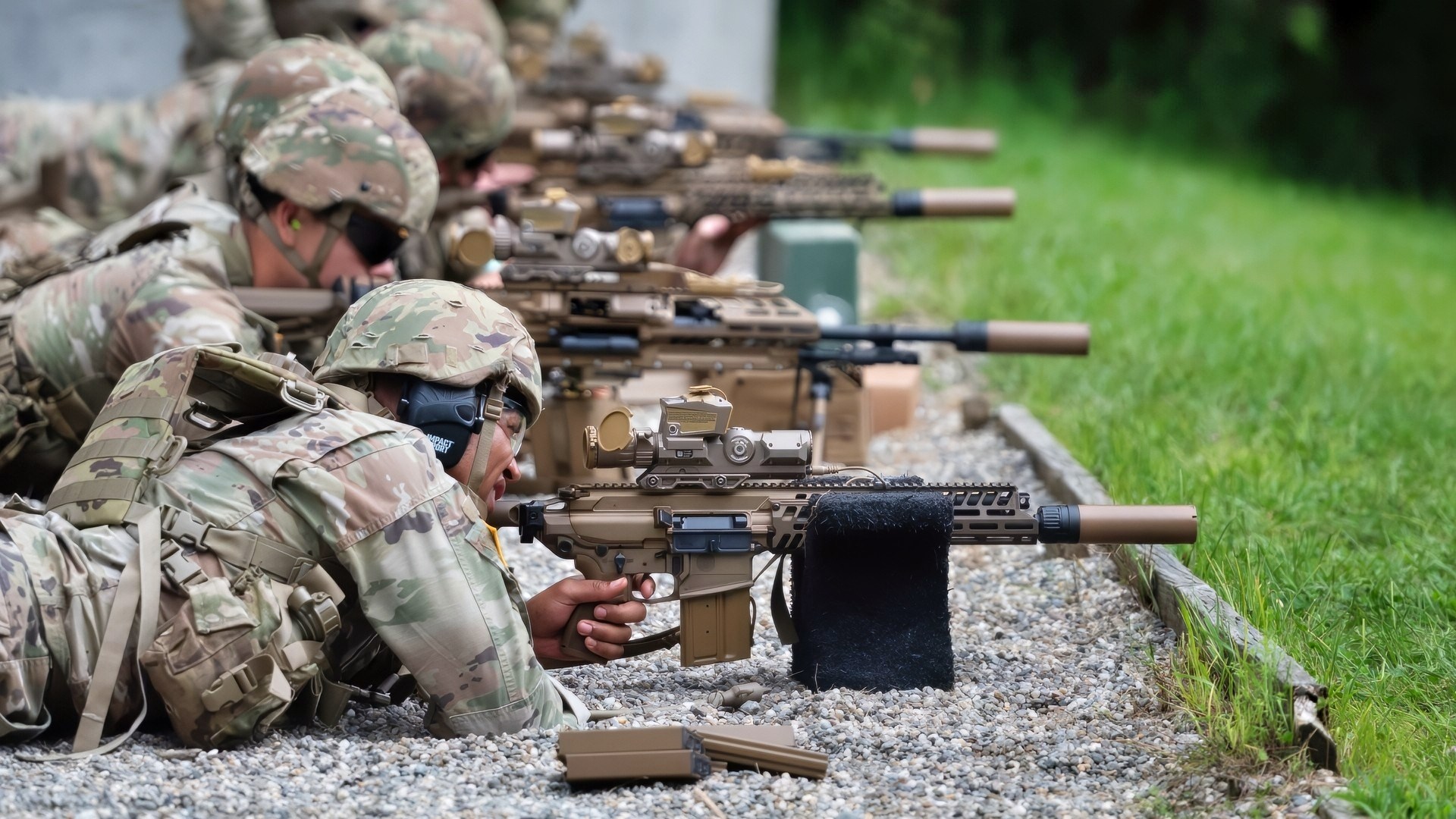
Contenders get a chance to fire the XM7 and XM250, future replacements for the M4 and M249 respectively. Soldiers from across the nation compete in the National Best Warrior Competition in Jericho, VT Aug 3-9, 2024. All competitors are victors of previous regional competitions, where they have proved their competence in a series of events that test individual soldier knowledge, skills, and endurance. (Utah Army National Guard photo by Rob Harnden)
In fact, since Russia’s invasion of Ukraine, three of the top six sniper kills have been made by Ukrainian snipers.
Where did the term “sniper” come from?
An outstanding guide for the art of sniping (and it IS an art) is Sniper Central. The site is an outstanding reference about the art, what a sniper is, and where the term originated…
What Is a Sniper, And How Did The Term Originate?
When referring to the role of a sniper in a military environment, we are referring to a soldier who engages the enemy with precision fire from their individual rifle, often operating from a concealed position on their own or with a small team. Sniping is a more calculated and precise attack than the normal infantry unit attack, where a countless number of rounds are expended in the general direction of the enemy to provide suppression as well as direct attack.
The word sniper originated during the British occupation of India in the 19th century and referred to snipe hunters. The Snipe is a game bird, and at that time, it was desirable to shoot the bird in the head to preserve the meat, which required excellent marksmanship. As such, these snipe hunters became known as “snipers,” and it was a tribute to the high degree of marksmanship required to be proficient.
The Role Of A Sniper Has Evolved Over Time
The role of the sniper has never been more recognized than it is today. All countries have sniper programs, and while many use different tactics they teach and emphasize as necessary, most follow the same two missions. Engage and eliminate key select targets and targets of opportunity with long-range precision rifle fire, and provide reconnaissance and intelligence gathering to battlefield commanders.
And as the training has improved, so have the weapons. Today, many snipers have dedicated sniper rifles that can “reach out and touch someone” from a mile away. And some have rifles that can eliminate targets at much greater distances.
When snipers make these incredible long-distance shots, it isn’t like a made-for-TV movie where the hero lays his weapon down, adjusts the scope, and “BOOM!” No, much more goes into the shot, which may take a long time to set up.
Snipers have to account for and correct a whole host of factors. They need to estimate every external force working on the bullet—wind speed, wind direction, elevation, angle, air density, gravity, and more—from the moment it leaves the barrel until it reaches its target.
Depending on the distance, they might even have to account for the Earth’s curvature and rotation. The actual curvature of the Earth affects distances farther than 2.9 miles. That’s what makes the longest shot so incredible.
Meet Ukrainian Sniper Vyacheslav Kovalskiy
Unlike many snipers who have recently set distance records, mostly from dedicated Special Operations units, the man who broke the existing record for the Ukrainian Army isn’t a professional soldier. He wasn’t in the military until 2022 when Russia invaded his country. And he was 58 years old.
Vyacheslav Kovalskiy looks like a fifty-something businessman; he was before the invasion. And yet, a year later, he hit a shot most snipers half his age dream about.
“I was thinking that Russians would now know that is what Ukrainians are capable of,” he said to the Wall Street Journal in his first interview.
“Let them sit at home and be afraid.”
Kovalskiy’s Incredible Long Sniper Shot Made History (Briefly)
According to video footage, Kovalskiy and his “spotter” initially observed Russian soldiers cutting wood in what appears to be a snowy forest, but deemed them too low-ranking to shoot.
Moments later, they spotted a Russian officer giving orders to a group of men near the cluster of soldiers. They had found their target, but Kovalskiy waited several hours in freezing temperatures to shoot.
“You can,” his spotter instructed him.
After the colleague gave him the go-ahead, Kovalskiy used special software he prepared for the strike. He measured his exact distance from the target, the direction and speed of the wind, the air temperature, the humidity level, and even accounted for the curvature of the earth, which was necessary given the distance of the shot.
First, he fired a test round and realized he had miscalculated the wind speed. After making the proper adjustments, Kovalskiy fired again—this time, he was successful. His shot set the bar for a new world record and successfully eliminated a target 12,468 feet away—the distance of over 42 football fields.
“You have to shoot immediately because the wind changes constantly,” Kovalskiy explained to the WSJ.
The footage, which went viral, showed one of the Russian soldiers dropping to the ground after the Ukrainian sniper took the long-distance shot.
His record stood until 2025.
The Specialized Rifle, Dwarfs A .50 Caliber Sniper Rifle
The Ukrainian-made weapon, known as “Horizons Lord,” was already well-known among weapons-makers before it broke the world record.
The Ukrainian company that makes it, MAYAK, claims that a “good” sniper can reach targets at approximately 8,202 meters with the weapon.
By comparison, the MacMillan Tac-50, which the previous record holder in Iraq used, ranged from 5,905 meters. Both guns fall under the anti-material rifles (AMR) category, which were first designed to hit tanks in the First World War before being reinvented for modern warfare.
The ammunition Kovalskiy used in his rifle was approximately 6.2 inches long. Such a size is considered extremely large for a sniper shot, falling halfway between a .50-caliber round and a 20 mm cannon round.
This type of custom-manufactured ammunition is made in Ukraine specifically for long-distance travel. And it certainly did.
Coincidentally, in World War II, courtesy of Sniper Central, the top female sniper was from Ukraine, also; Lyudmila M. Pavlichenko, she is credited with killing 309 enemy soldiers.
There is a sign at the USMC sniper school that reads “The average rounds expended per kill with the M16 in Vietnam was 50,000. Snipers averaged 1.3 rounds. The cost difference was $2300 v. 27 cents.”
About the Author: Steve Balestrieri
Steve Balestrieri is a National Security Columnist. He served as a US Army Special Forces NCO and Warrant Officer. In addition to writing on defense, he covers the NFL for PatsFans.com and is a member of the Pro Football Writers of America (PFWA). His work was regularly featured in many military publications.


