

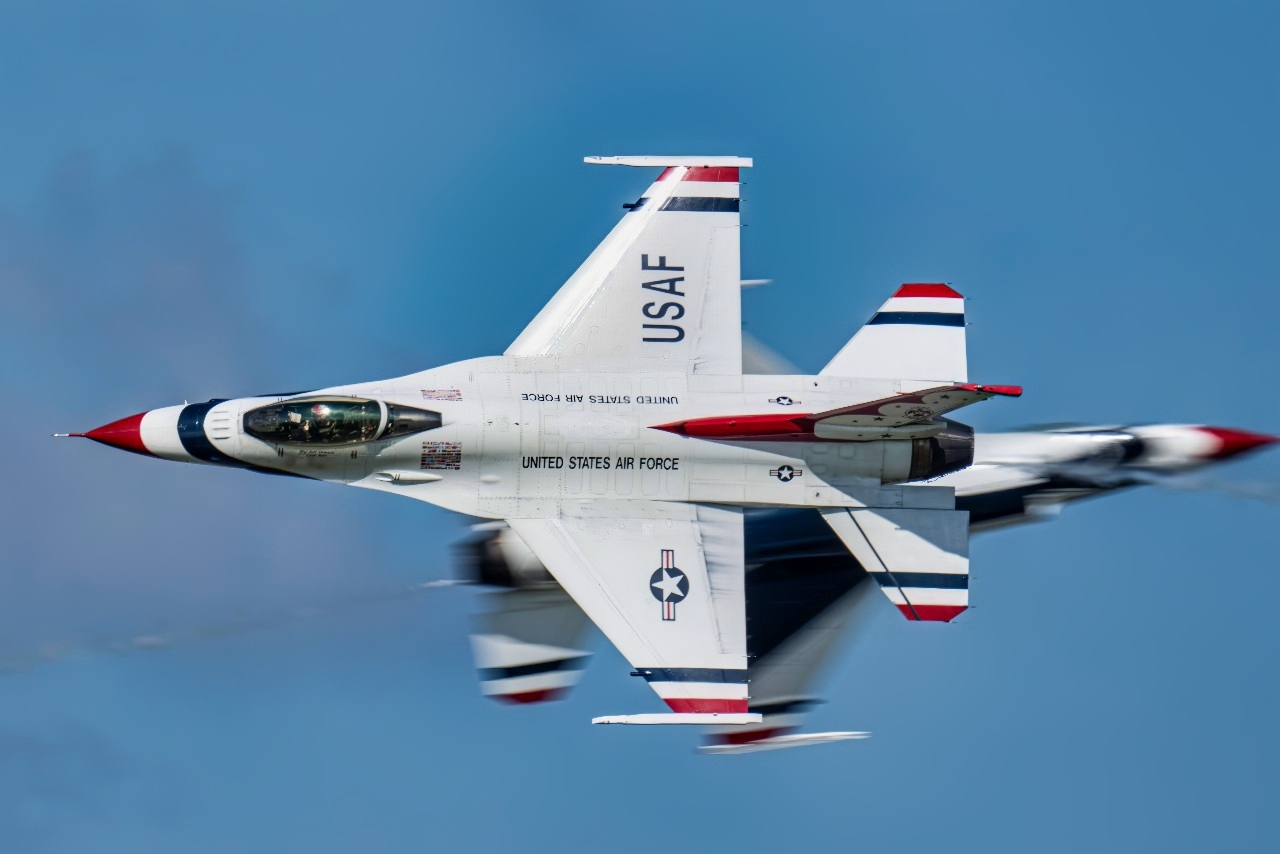
The F-16 was supposed to be retired in favor of the F-35. Instead, Lockheed Martin gave the 40-year-old Fighting Falcon airframe a 4.5-generation upgrade — an AN/APG-83 SABR AESA radar, helmet-mounted cueing, and avionics shared with the F-35 stealth fighter. The F-16V Block 70/72 now has ten foreign air force customers, with South Korea building it domestically.
The F-16V Viper Is One Amazing Fighter: Not In the U.S. Air Force

A 35th Fighter Squadron F-16 Fighting Falcon flies near the Korean peninsula during a dogfighting training scenario during exercise Ulchi Freedom Shield 25 at Kunsan Air Base, Republic of Korea, Aug. 20, 2025. UFS25 is a combined, joint, all-domain military training exercise that integrates ground, air, naval, space, cyber and information elements, enhancing readiness through realistic combat simulations. (U.S. Air Force photo by Senior Airman Landon Gunsauls)
The F-16V (Block 70/72) Viper is a heavily modernized version of the F-16 Fighting Falcon. With heavily upgraded avionics, the aircraft is now firmly in the 4.5-generation family, with many of its avionics sharing commonality with the F-35. The F-16V is a multi-role aircraft capable of engaging in both air-to-air and air-to-surface missions, unlike earlier versions of the F-16, which were strictly air-superiority fighters. The aircraft has gained international recognition and is currently operated by more than 10 air forces worldwide.
Development of the F-16 Viper
The F-16V is a derivative of the reliable and proven F-16 Fighting Falcon.
The F-16 was originally planned to be phased out entirely in favor of the F-35; however, due to delays in the F-35 program, it was deemed more cost-effective to extend the F-16’s service life in the short term.
Lockheed Martin, therefore, set out to design a comprehensive modernization package for the aircraft. The plans for the F-16 Viper were first revealed at the 2012 Singapore Air Show, and its first flight took place in 2015.
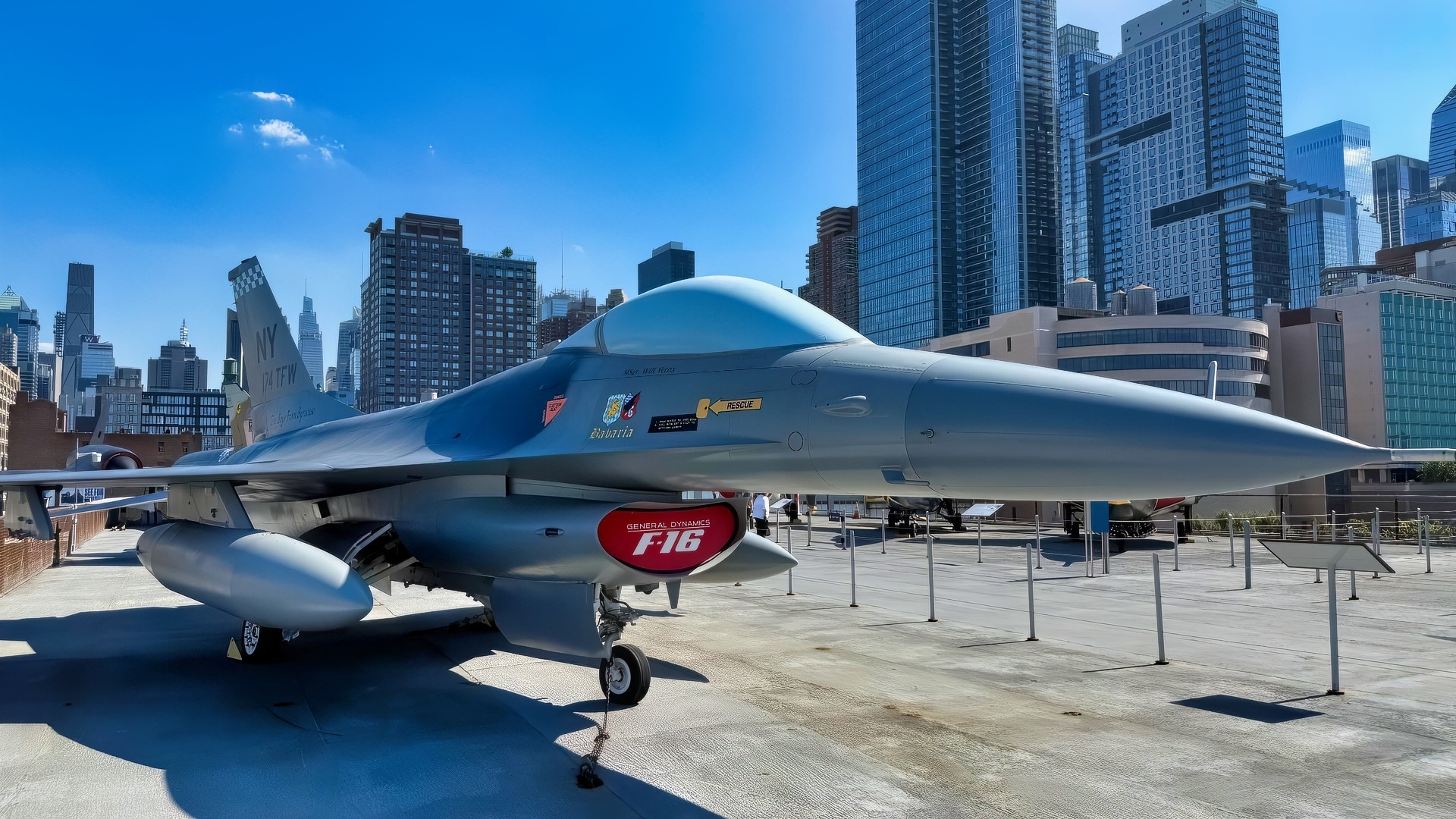
F-16 Fighting Falcon National Security Journal Photo. Taken on 9/18/2025, onboard USS Intrepid.
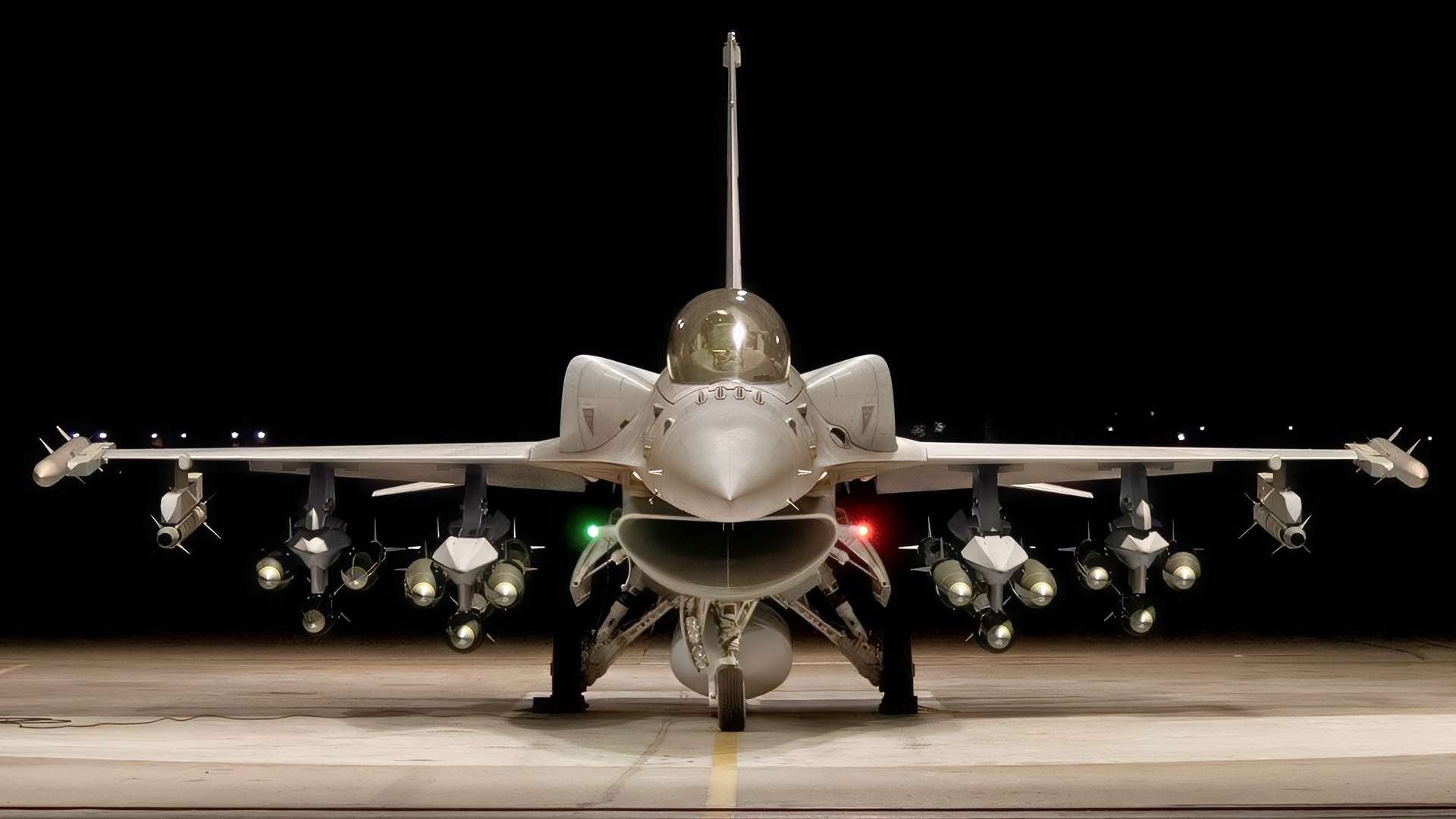
F-16V Viper Lockheed Martin Image.
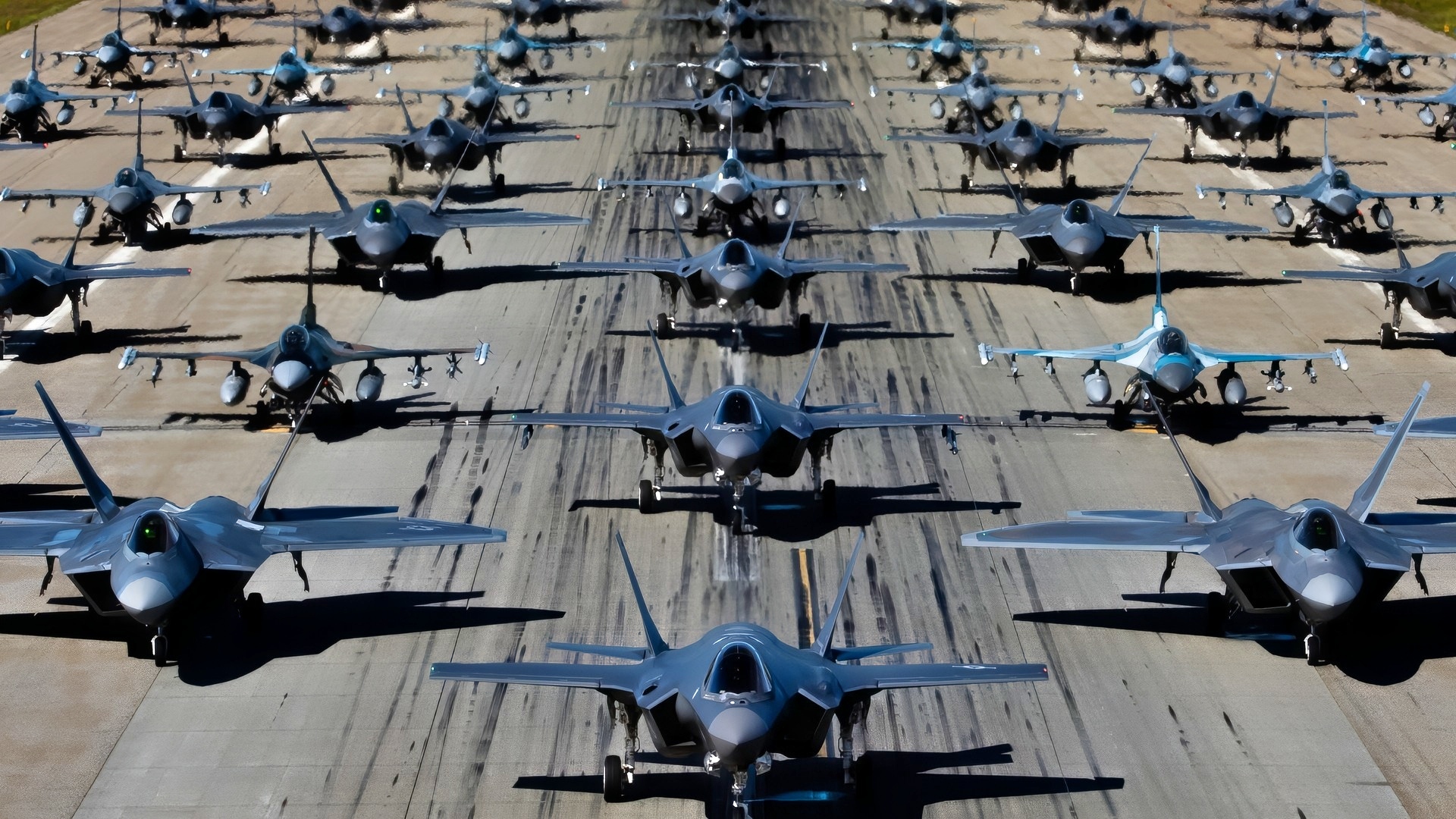
The 354th Fighter Wing conducts a 75-fighter jet formation at Eielson Air Force Base, Alaska, Aug. 12, 2022, in honor of the U.S. Air Force’s 75th Anniversary. This capabilities demonstration included F-35A Lightning II, F-16 Fighting Falcon and F-22 Raptor aircraft from across Pacific Air Forces. (U.S. Air Force photo by Senior Airman Gary Hilton)
The upgraded aircraft immediately drew the attention of Taiwan, which was looking to modernize its older F-16s anyway, and of the U.S. With a solid customer base already established, the project moved forward.
Since its inception, the F-16 Block 70/72 has received considerable attention in the global arms market.
Currently, 10 air forces, not counting the U.S., have placed orders for the aircraft. Taiwan was one of its first customers, with South Korea following suit and securing an agreement to produce the F-16V domestically. Since then, the aircraft has secured orders across Europe, Asia, and Africa.
Its success in the arms market is aided by the fact that the F-16 is one of the most widely exported American aircraft in modern history. Many allied air forces already have experience flying and operating the aircraft, so an upgraded version would naturally sell well.
What Makes the F-16V So Special?
The F-16 Block 70/72 is far and away the most technologically advanced version of the Fighting Falcon to have flown. Rather than creating an entirely new aircraft, Lockheed focused on integrating modern technologies into the proven F-16 platform.
One of the most important enhancements is the addition of an AESA radar system, specifically the AN/APG-83 SABR.
This radar dramatically improves the aircraft’s ability to detect, track, and engage multiple targets at long distances. It also provides enhanced resistance to electronic jamming and allows for high-resolution ground mapping, making the aircraft more effective in both air-to-air and air-to-ground missions.
The F-16V cockpit has been extensively modernized to incorporate fifth-generation technologies.
The traditional instrument layout has been replaced by a large, high-resolution display that presents critical flight and combat information in a clear and integrated manner.
This display, combined with improved processing power and advanced software, enables more efficient data fusion, allowing the pilot to receive and interpret information from multiple sensors. Helmet-mounted cueing systems further enhance the pilot’s ability to quickly lock onto targets simply by looking at them.
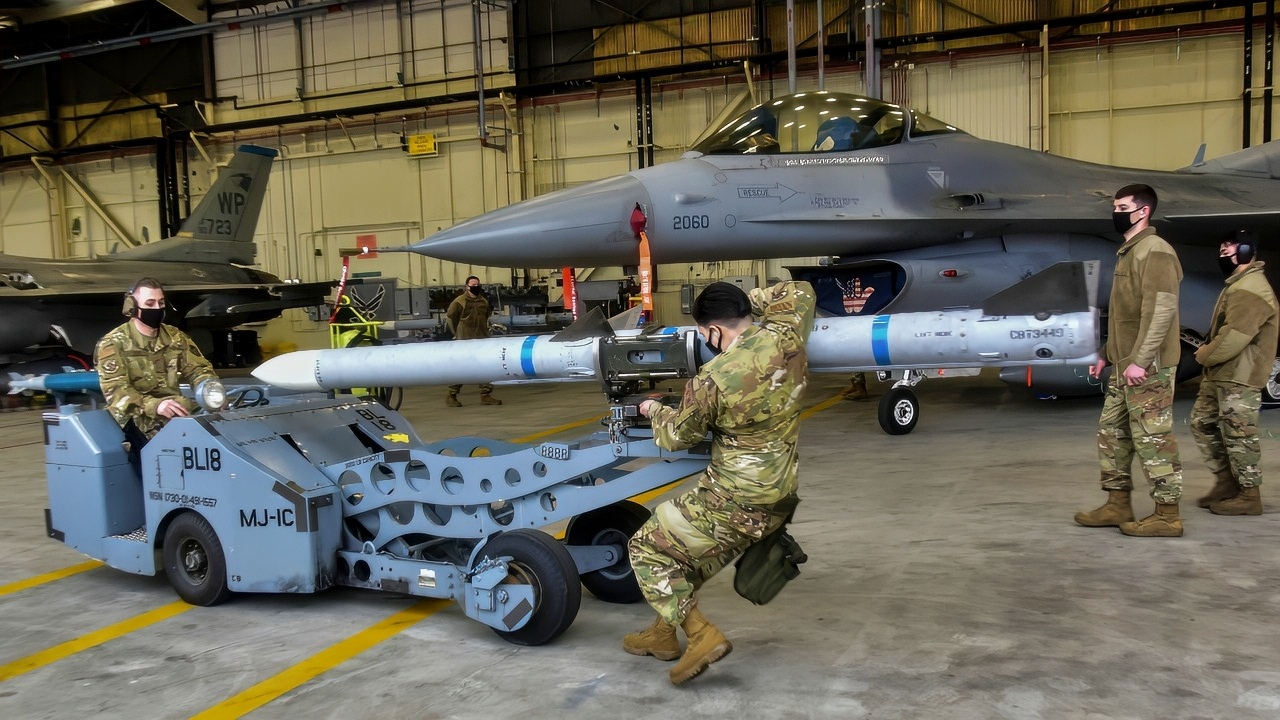
Airmen from the 35th Aircraft Maintenance Unit weapons load crew, transport an AIM 9 L/M Sidewinder with an MJ-1 bomb lift truck during the Annual Load Crew Competition at Kunsan Air Base, Republic of Korea, Feb. 6, 2021. Weapons load crews from the 35th Aircraft Maintenance Unit, 80th AMU and 8th Maintenance Squadron were evaluated on how quickly and effectively they could load munitions onto F-16 Fighting Falcons. (U.S. Air Force photo by Tech. Sgt. Kristin High)
Survivability and Airframe Improvements
While the Viper is no stealth fighter, it is fitted with a number of EW and countermeasures systems to increase its survivability.
The F-16V incorporates advanced electronic warfare systems that help detect threats and counter enemy radar and missile systems.
It is also equipped with the latest threat-warning systems, electronic countermeasure pods, and flare/chaff dispensers for last-resort defense. By enhancing its ability to operate in contested environments, the F-16V remains a viable and effective platform even against modern adversaries.
To increase the aircraft’s longevity, the F-16V also includes improvements to the aircraft’s structural frame.
Many existing F-16s have been flown extensively over decades, and extending their service life is both economically and strategically beneficial. The upgrade program extends the airframe’s lifespan to around 12,000 flight hours, allowing operators to continue using their fleets for many years without the need for immediate replacement.
Still the Same Reliable F-16
Despite being based on a design that is more than 40 years old, the F-16V remains highly competitive in terms of performance.
It can reach speeds of around Mach 2 and operate at altitudes up to 50,000 feet. Its ability to carry a wide range of weapons further enhances its versatility, allowing it to adapt quickly to different mission requirements. Whether engaging enemy aircraft, striking ground targets with precision-guided munitions, or neutralizing air defense systems, the F-16V can perform effectively in any role.
Modern warfare relies heavily on connectivity and coordination between different systems, and the F-16V is designed with this in mind. It features advanced data-link capabilities that enable it to share information with other aircraft, ground units, and command centers in real time.
This network-centric approach enhances situational awareness and enables more coordinated and effective operations across the battlefield.
About the Author: Isaac Seitz
Isaac Seitz, a Defense Columnist, graduated from Patrick Henry College’s Strategic Intelligence and National Security program. He has also studied Russian at Middlebury Language Schools and has worked as an intelligence Analyst in the private sector.


