

Article Summary – Britain’s Global Combat Air Programme—better known as Tempest—is London’s shot at rejoining the cutting edge of airpower in the sixth-generation fighter race.
-Developed with Italy, Sweden and Japan, GCAP aims to replace the Eurofighter Typhoon with a stealthy, long-range jet built around digital design, open architecture and heavy internal payloads.
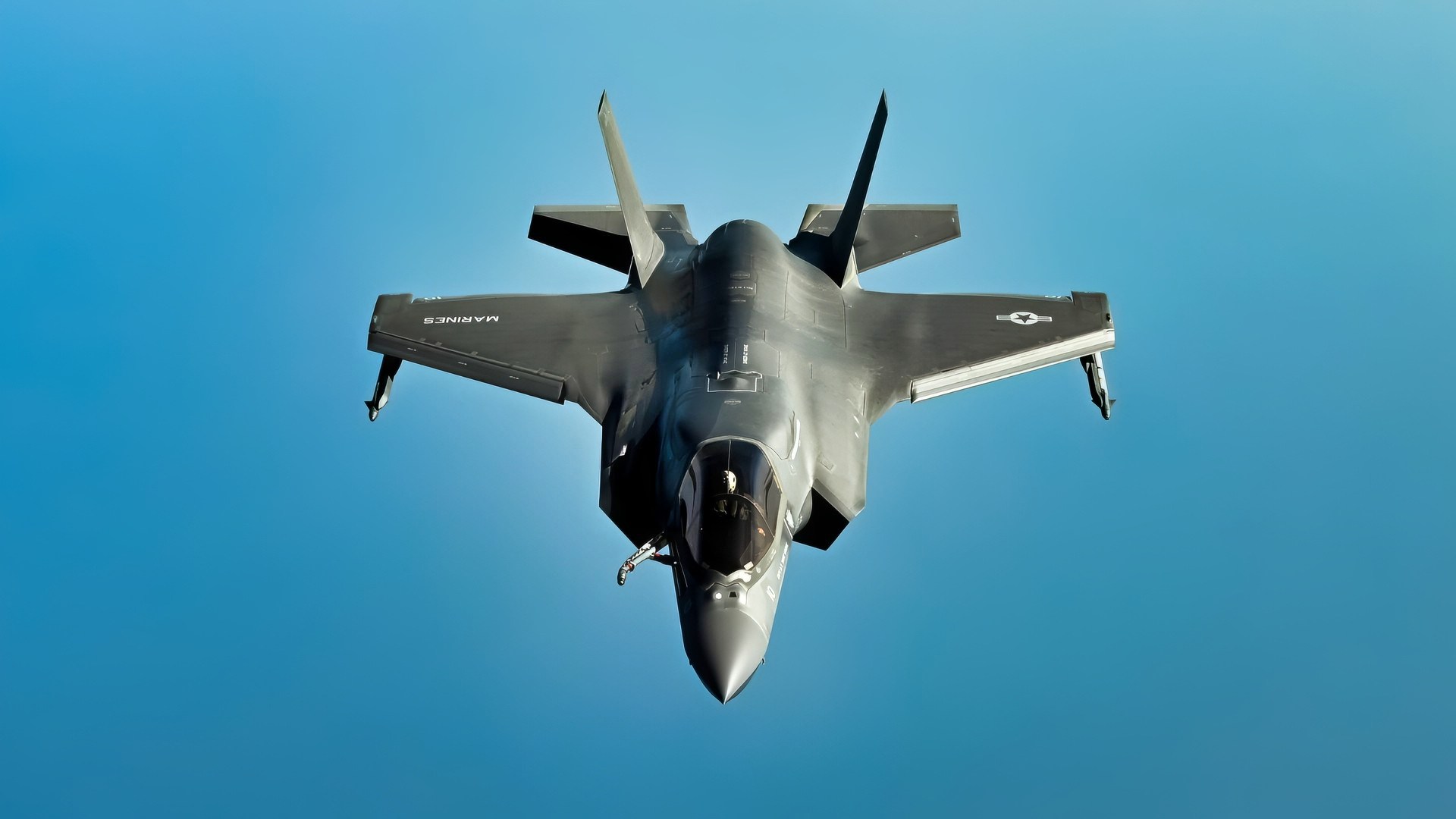
A U.S. Marine Corps F-35B Lightning II resumes a combat air patrol after aerial refueling with a U.S. Air Force KC-135 Stratotanker over the U.S. Central Command area of responsibility, Sept. 19, 2025. More than a fighter jet, the F-35’s ability to collect, analyze and share data, is a powerful force multiplier that enhances all airborne, surface and ground-based assets in the battlespace. (U.S. Air Force photo by Senior Airman Keegan Putman)
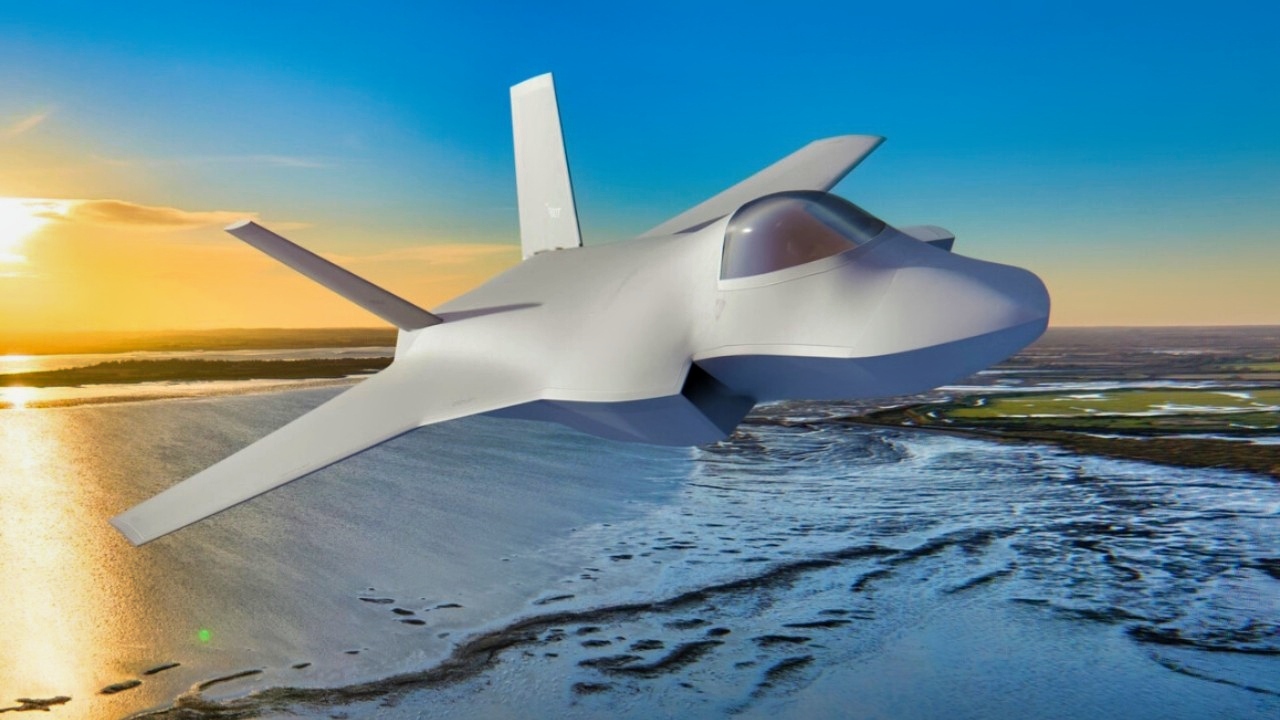
-The new Combat Air Flying Demonstrator, with its chined fuselage and refined delta wing, is slated to fly by 2027 as a technology testbed.
-Until Tempest arrives in the 2030s, the RAF will bridge the gap with its growing fleet of American-made F-35B stealth fighters.
GCAP AKA Tempest: Britain’s Own Entry Into The Great 6th Generation Fighter Race
When it comes to the race to build a sixth-generation fighter plane, most of the focus is on the great power competition between America’s F-47 Next Generation Air Dominance, Russia’s MiG-41, and China’s J-50 and J-36.
Generally lost in the shuffle is a sixth-generation fighter being developed by a nation that may no longer be considered a great power, but not too long ago had an empire upon which “the sun never set.” National Security Journal now takes a renewed look at Great Britain’s Global Combat Air Programme (GCAP), aka the Tempest.
Tempest Traditions: A Proud Aerial Namesake
The film industry loves sequels and reboots, and the same goes for military aircraft naming conventions. Tempest is a proud namesake in the history of Britain’s Royal Air Force, as the up-and-coming Tempest takes its name from the Hawker Tempest fighter, a propeller-driven World War II plane.
And in another instance of history repeating itself, just as the old-school Tempest replaced the piston-engine Hawker Typhoon fighter-bomber, the sixth-generation Tempest, if all goes according to plan, will replace the 4.5-generation Eurofighter Typhoon.
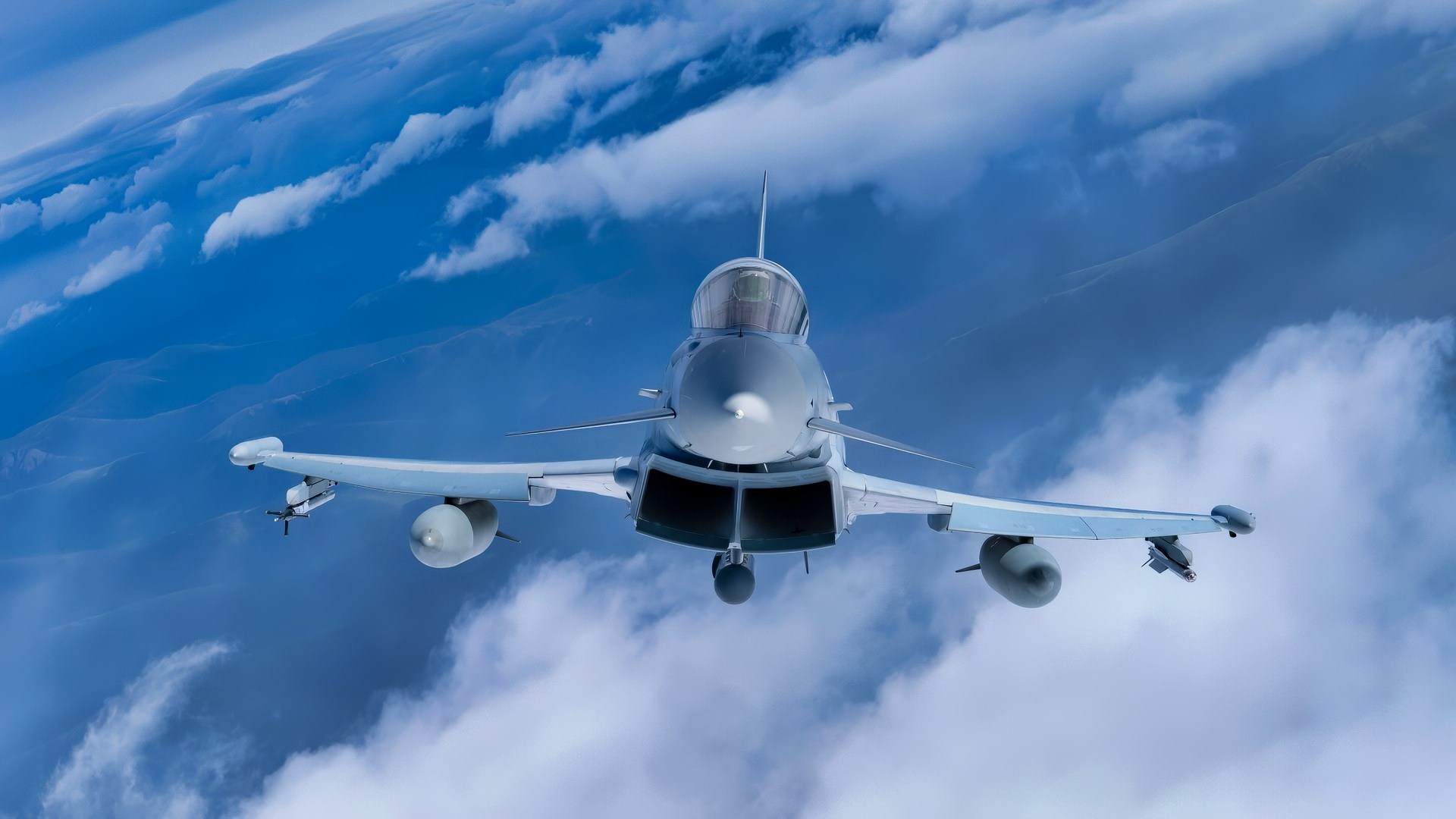
A German Air Force Eurofighter Typhoon flies over Alaska during exercise Arctic Defender 24 at Joint Base Elmendorf-Richardson, Alaska, July 8, 2024. Arctic Defender is a German Air Force-led exercise that provides a unique opportunity to integrate various forces into joint, coalition and multilateral training from simulated forward operating bases and is part of several exercises under Pacific Skies 24. Pacific Skies is a combination of several exercises in the Indo-Pacific theater in which German, French and Spanish air forces participate with U.S. forces. (U.S. Air Force photo Senior Airman Shelimar Rivera Rosado)
Tempest: The Next Generation (The Premise, That Is)
The GCAP, which is also known as the Future Combat Air System, is not purely a British venture, but rather a multinational effort. To not assign proper credit to the Brits’ international partners would undoubtedly cause the diplomatic equivalent of the proverbial “tempest in a teapot.”
The ambitious project is being developed jointly by the British, Swedish, and Italian air forces and their respective contractors, BAE Systems , SAAB, and Leonardo. Japan is also involved in a minor capacity. Other contractors who have been involved at one point or another include Collins Aerospace, MBDA, and Rolls-Royce.
Unveiling the Demonstrator (Prototype)
The physical appearance of the GCAP Tempest was purely speculative until this past summer, when the cover was taken off the final design for the Combat Air Flying Demonstrator. As Joanna Bailey wrote in July for Aerospace Global News, “There are no real surprises in the design, with the aircraft featuring the same v-tail and bubble cockpit as previous renders. However, there are some slight differences which can provide a clue as to the priorities of GCAP.”

GCAP 6th Generation Fighter.
Among these subtle differences:
-A larger delta wing than some graphics had projected (although not as expansive as earlier concept art), indicating an emphasis on stealth and internal fuel, but with moderation for agility and efficiency.
-A chined fuselage with sharper angles that help suppress radar waves and improve the stealth of the airframe.
All in all, the demonstrator appears largely in line with what would be expected of a sixth-generation warbird. It is a design that lends itself to a long-range, high-speed and heavy-payload fighter jet, made for stealth rather than dogfights.
The Way Forward for GCAP
While the UK is not the sole country developing this warplane, the Tempest is nonetheless a major point of pride for the Brits, as It would be the first manned supersonic aircraft designed in the United Kingdom in 40 years.
The Combat Air Flying Demonstrator is not the final iteration of the Tempest, but rather serves as a testbed for the technologies being integrated into the airframe.
BAE Systems executives are confidently projecting that the prototype will make its maiden flight by 2027. As Tony Godbold, BAE’s director of the FCAS program, puts it, “By combining 3D printing, cobotics [collaborative robotics], and model-based engineering, we’re reshaping how fighter jets are built.
This demonstrator is not just a prototype — it’s a foundation for the aircraft of the 2030s.” Indeed, the current prototype already has two-thirds of its structural weight in production.
Meanwhile…
All well and good, but what is the Royal Air Force doing in the meantime to bridge the gap between the 4.5-generation Typhoon and the sixth-generation Tempest?
To meet that need, His Majesty’s government looked abroad, purchasing the American-made fifth-generation Lockheed Martin F-35 Lightning II.
According to the World Directory of Modern Military Aircraft, the Royal Air Force currently has 33 F-35B airframes in its fleet, with an additional 104 units on order.
About the Author: Christian D. Orr, Defense Expert
Christian D. Orr is a Senior Defense Editor. He is a former Air Force Security Forces officer, Federal law enforcement officer, and private military contractor (with assignments worked in Iraq, the United Arab Emirates, Kosovo, Japan, Germany, and the Pentagon). Chris holds a B.A. in International Relations from the University of Southern California (USC) and an M.A. in Intelligence Studies (concentration in Terrorism Studies) from American Military University (AMU). He is also the author of the newly published book “Five Decades of a Fabulous Firearm: Celebrating the 50th Anniversary of the Beretta 92 Pistol Series.”
More Military
The Mach 15 X-43D ‘Hypersonic Scramjet’ Has a Message for the U.S. Air Force


Matthew Hatton
November 20, 2025 at 9:27 am
“The ambitious project is being developed jointly by the British, Swedish, and Italian air forces and their respective contractors, BAE Systems , SAAB, and Leonardo. Japan is also involved in a minor capacity. Other contractors who have been involved at one point or another include Collins Aerospace, MBDA, and Rolls-Royce.”
Que squeals!!!- you’ve got that WRONG!!
Japan is very much involved with a MAJOR part, while Sweden technically is just observing!
I’d fix that now if I were you before you’re lynched!
Michael
November 21, 2025 at 12:41 am
Sweden was only ever an observing member in the prior UK-led Tempest program and officially withdrew from all combat air collaboration in 2023, shortly after Japan formally joined GCAP. They are not a current GCAP partner.
Saying Japan is involved in a “minor capacity” is a severe misunderstanding of the program’s current structure.
The partnership is built on the merger of the UK/Italy-led Tempest and Japan’s F-X program.
Japan and the UK had already been collaborating on engine technology (IHI and Rolls-Royce) since 2019.
When Japan joined GCAP in late 2022, they became a co-equal partner to the UK. While the high-level legal structure is a 33/33/33 equal split in terms of veto power and rights, the estimated financial contributions are far from equal: Japan and the UK are each expected to contribute roughly 40% of the funds, with Italy providing the remaining ~20%.
Japan’s involvement is, in fact, the program’s main driver. The current GCAP timeline is being pushed by Japan’s hard requirement to replace its F-2 fighters, which provides the crucial deadline that is focusing Italy and the UK to commit to a timely design.
Saying Japan is involved in a “minor” capacity means you have no real understanding of the GCAP program outside of the most basic, outdated facts. “
Joseph Modesto
November 21, 2025 at 1:11 am
The emphasis on achieving Mach 2+ speeds for a 6th-generation fighter is a fascinating return to raw performance metrics, which had taken a backseat to stealth and sensor fusion in 5th-gen design. It signals a clear doctrinal shift to counter increasingly sophisticated long-range threats, where the ability to rapidly reposition or disengage may be as critical as low observability.
With such a focus on extreme speed and likely high energy output, what is the prevailing theory on the greatest trade-off the TEMPEST designers will have to make? Will it be in radar cross-section, weapons payload capacity, or range?
Anthony Tatum
November 21, 2025 at 3:54 pm
FCAS is the German/French 6th Gen project, GCAP is the UK/Japan/Italy project. Japan is a key partner, Sweden isn’t. Terrible journalism.
George
November 21, 2025 at 7:11 pm
This is a poorly researched article fcas and GCAp are two different programmes.
Ross hughes
November 22, 2025 at 6:22 am
The tempest is a combination between Japan and Britain’s 6th gen projects, Italy bought into Britain’s project when it started and the Swedish were hesitant and are observing possibly with the intention to develop it’s own programme later or to see which European 6th gen would be better or first into production.
I would add that the F35 isn’t an American aircraft it’s a global programme that the British played a major role in the development of and and are also allowed to modify and fit with British equipment to fit British needs.