

Key Points and Summary – A rundown of five of the greatest U.S. military aircraft that were canceled before entering service highlights how even promising designs can fail.
The list includes the X-44 MANTA, a tailless F-22 successor shelved after 9/11; the F-16XL “hot rod,” which lost out to the F-15E; the F-15SE Silent Eagle, a stealthy F-15 made redundant by the F-35; the Mach 3 XF-108 Rapier, canceled in favor of ICBMs; and the F-20 Tigershark, an export fighter that was overshadowed by the F-16 and suffered fatal crashes.

X-32 and YF-23 Together at U.S. Air Force Museum. Image: National Security Journal.
5 of the Greatest U.S. Fighter Warplanes That Never Made It
The U.S. Air Force has a robust system of research and development for new aircraft.
Engineers and designers are highly educated at the best schools with rigorous aerospace coursework. Entities like Lockheed Martin’s Skunk Works deliver awesome airframes and innovative concepts.
Testing and evaluation are excellent with some of the best test pilots in the world. Air Force acquisition efforts are typically well-funded and well-resourced.
Sometimes the airplanes in development never make it off the drawing board.
They may be too ambitious, or the design has flaws hampering production in greater numbers.
These programs can get canceled due to a lack of money or shifting geopolitical events and different threat environments.
I’ve come up with a list of the five greatest U.S. warplanes that never made it.
The X-44 MANTA
The X-44 MANTA (Multi-Axis No-Tail Aircraft) was an audacious program. Skunk Works, NASA, and the Air Force were all involved and some brainiacs developed the concept with great technical support.
This project began in the late 1990s as the follow-on aircraft to the F-22 Raptor. The idea behind it was a good one.

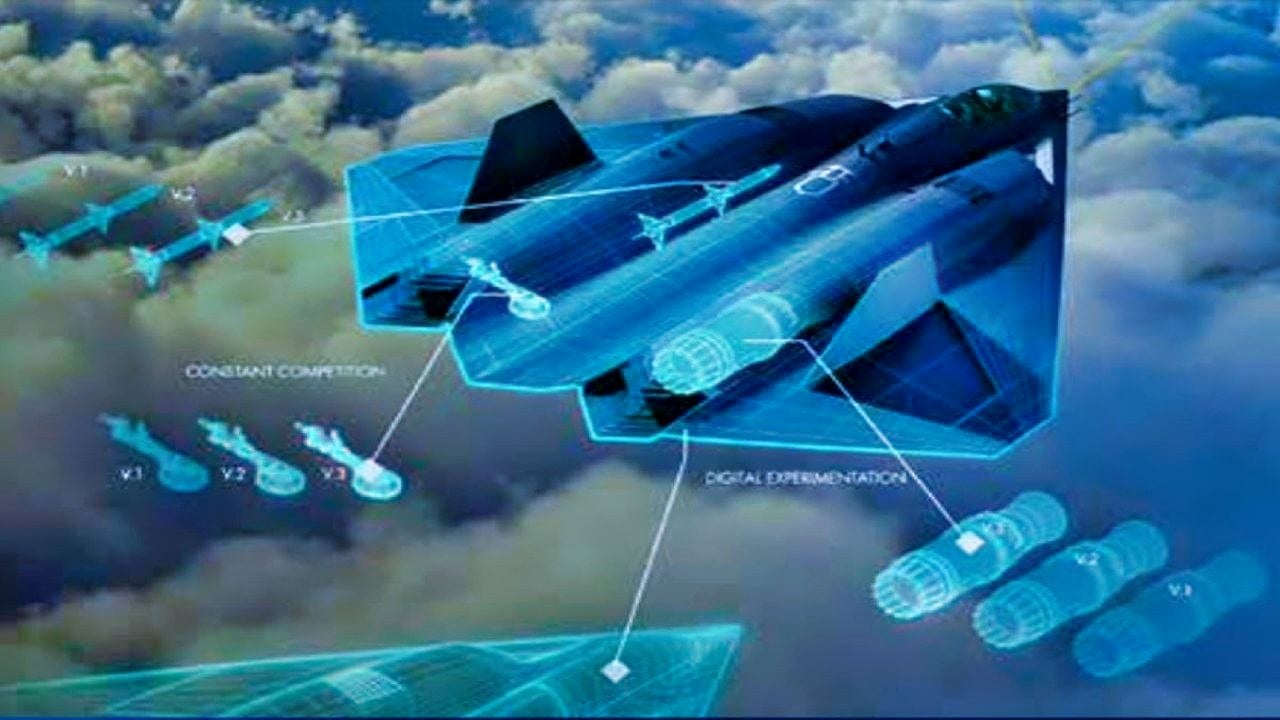
X-44 MANTA concept art.
The designers aimed to replace the conventional rudders, flaps, and slats with 3D thrust-vectoring nozzles.
This would allow the airplane to have less weight, leading to greater speed and performance. The MANTA was planned to be even stealthier than the F-22.
Unfortunately, this was not the time to build a new fighter.
The terrorist attacks of 9/11 led to the U.S. military placing much emphasis on counter-terror and counter-insurgency operations in Afghanistan and Iraq. Soldiers and marines needed close air support and ground strike, not air superiority and dominance in dog-fighting.
These mission sets were more desirable.
The technology behind the 3D thrust-vectoring nozzles was not ready for prime time. The X-44 looked cool, though, and it’s too bad the program was canceled.
The innovations were expensive and ahead of their time.
The F-16XL Fighter
The F-16XL would have been a Fighting Falcon on steroids.
This airplane would be a hot rod that the engineers and technicians were excited about. It had a cranked delta wing that delivered excellent performance, boasting speed and maneuverability in spades. It would have enjoyed twice the range and twice the weapons payload of the Fighting Falcon.
The F-16XL was planned to be produced at an affordable price and kept on schedule through economies of scale and manufacturing efficiencies.
Plus, it would fly in beast mode, chock full of missiles.

F-16XL Fighter. Image Credit: Creative Commons.

F-16XL Fighter from NASA. Image Credit: Creative Commons.
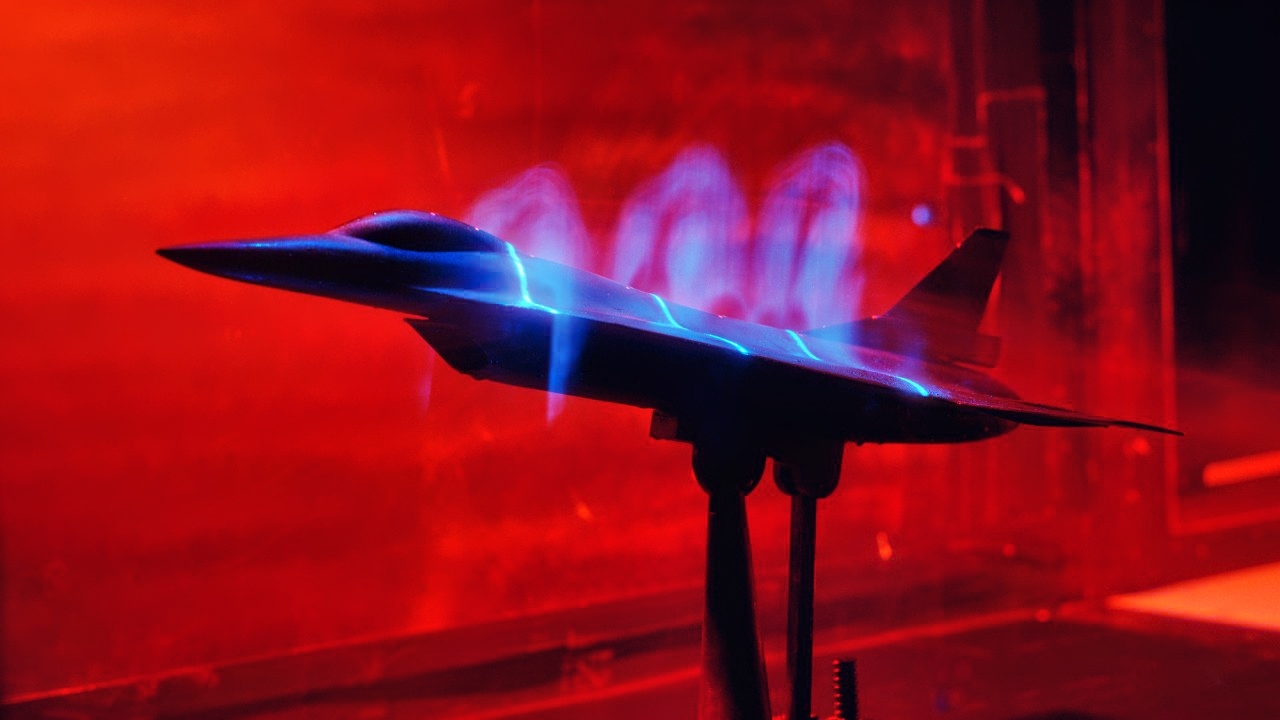
F-16XL Fighter Concept. Image Credit: Creative Commons.

F-16XL. Image Credit: Creative Commons.
However, the F-15E Strike Eagle was also being developed.
The Air Force sought a larger, twin-engine interceptor with ground strike capabilities, similar to the F-15E.
The F-16XL had too many features and was ahead of its time with all the complexities of the cranked delta-wing. The F-16XL was also heavier, and that made it challenging to land; the turn radius wasn’t as good as the F-16.
The F-15SE Silent Eagle
The F-15SE Silent Eagle was another interesting idea. Boeing had a brain flash. The F-15E was a great multi-role fighter. Why not make it into a stealth warbird?
It was 2009, and more stealth fighters were needed to serve as a bridge between fourth-generation and fifth-generation warplanes. Pilots already loved the F-15, and it was a versatile jet.
The new design lent itself to radar evasion with conformal weapons bays, vertical stabilizers, and canted tails.

F-15SE Silent Eagle. Image Credit: Creative Commons/Boeing.
The F-15SE would have been superior to other jets on the export market, such as the Eurofighter Typhoon and Dassault Rafale, but it never gained widespread international recognition.
The United States decided to skip over the F-15SE and focus on the F-35 and F-22. It did not need that “tweener” of a transition airplane.
The F-35 could better perform the Silent Eagle’s ground strike capabilities, and the F-15SE stayed on the drawing board.
The XF-108 Rapier
It was the 1950s, and the Americans wanted a fast air superiority jet that could put the Soviet Union in a state of shock concerning U.S. ingenuity.
The XF-108 Rapier would have gone MACH 3 with two General Electric J93 afterburning turbojets. The great speed was irresistible, but the main innovation was the XF-108’s internal rotary missile launcher.
These are old hat today, but at the time, this was a significant breakthrough. It would have carried three huge GAR-9 missiles.

XF-108 Rapier. Image Credit: Creative Commons.
The doors, as The War Zone described, were “on a T-shaped assembly, [was] designed to fit the relatively slim stores bay in the lower fuselage between the XF-108’s huge engines and intakes. As the weapons bay door opened, it rotated to expose the missiles, meaning there were no doors that extended into the airstream.”
However, the XF-108 was overcome by events. Even the fastest fighter jets can get shot down. Gary Powers’ U-2 spy plane was destroyed over Soviet airspace in 1960, and it created an international incident. The U.S. military decided that the best way to fight a war was with ICBMs.
This was considered a safer and more efficient way to deliver nuclear warheads, and the XF-108 was not needed.
The F-20 Tigershark Fighter
Northrop’s F-20 Tigershark had all the looks of a winner. It was the 1980s during President Ronald Reagan’s military build-up, and the time to overawe the Soviets with new airplanes that could win the Cold War. The F-20 was light and fast with a penchant for having less maintenance.
It was also designed to be interoperable with NATO allies and intended for the export market. The support logistics from the United States would be excellent, and the Europeans could fly this warbird to their heart’s content.
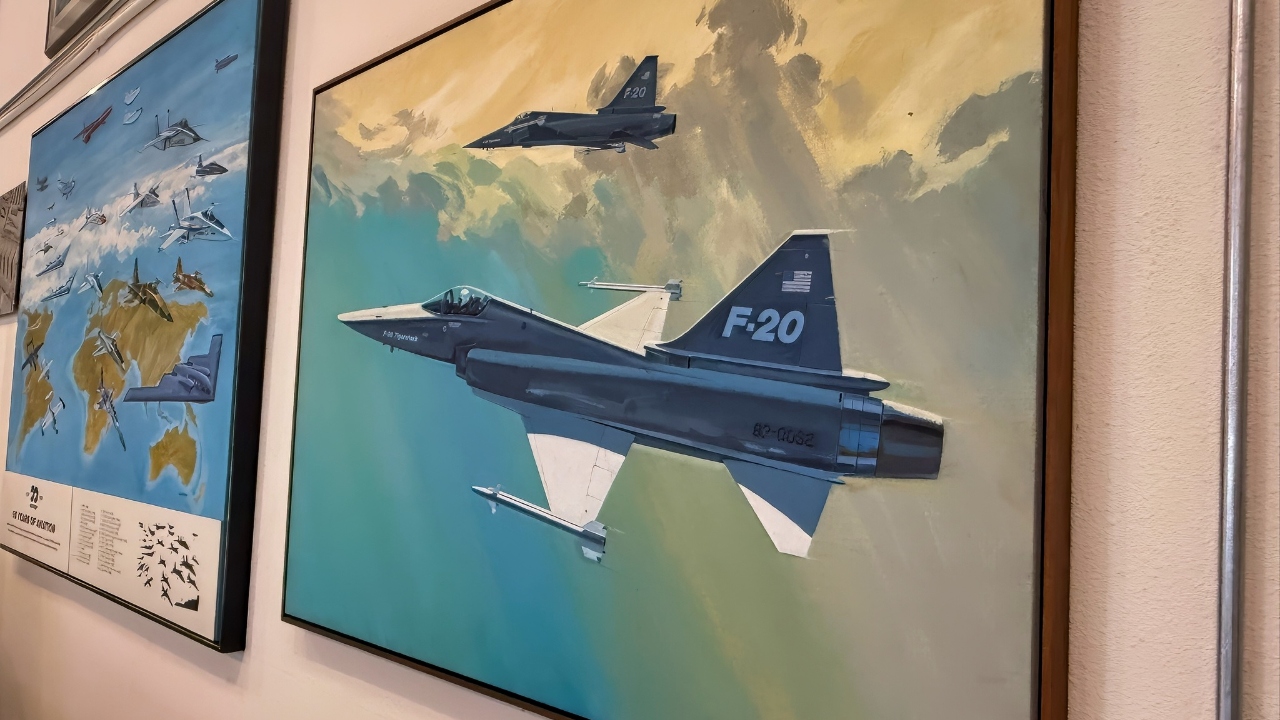
F-20 Tigershark Painting. Image taken by Harry J. Kazianis at the Western Museum of Flight on August 16, 2025.
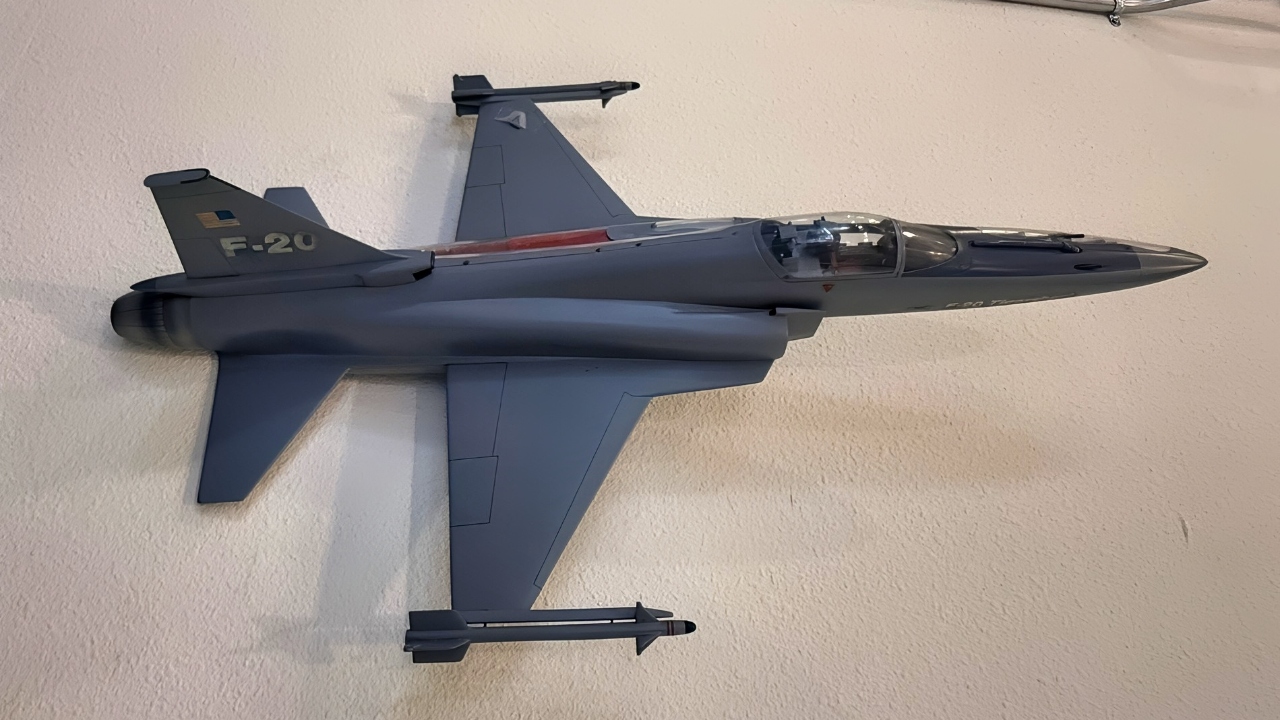
F-20 Tigershark Model at Western Museum of Flight. Image Credit: Harry J. Kazianis/National Security Journal Image Taken on August 16, 2025.
Unfortunately, the Tigershark had competition. The F-16 was seen as a better choice due to increased speed and stellar performance.
The Americans shifted their attention to the Fighting Falcon as a new export option. The F-20 had a destructive testing run, too. Only three prototypes were built, and two crashed during evaluation flights, and the pilots.
The Fighter Bottomline
Sometimes, even the most promising airplanes never make it to fruition. It makes one wonder if the United States is spending too much money on jets that remain in development and do not reach serial production.
This is the well-worn trail of the defense acquisition “death valley” that some airplanes never make it across. It’s too bad some of these airplanes remained experimental because they had much to offer, but the drawbacks outweighed the advantages.
About the Author: Brent M. Eastwood
Brent M. Eastwood, PhD is the author of Don’t Turn Your Back On the World: a Conservative Foreign Policy and Humans, Machines, and Data: Future Trends in Warfare plus two other books. Brent was the founder and CEO of a tech firm that predicted world events using artificial intelligence. He served as a legislative fellow for US Senator Tim Scott and advised the senator on defense and foreign policy issues. He has taught at American University, George Washington University, and George Mason University. Brent is a former US Army Infantry officer. He can be followed on X @BMEastwood.
More Military
The First 48 Hours of a War With China ‘Could Be Ugly’
Russia Tried to Build Their Very Own F-22 Raptor. Calling It a Disaster Would Be a Gift
The Royal Navy’s Queen Elizabeth-Class Aircraft Carriers Simply Summed Up in 4 Words


