

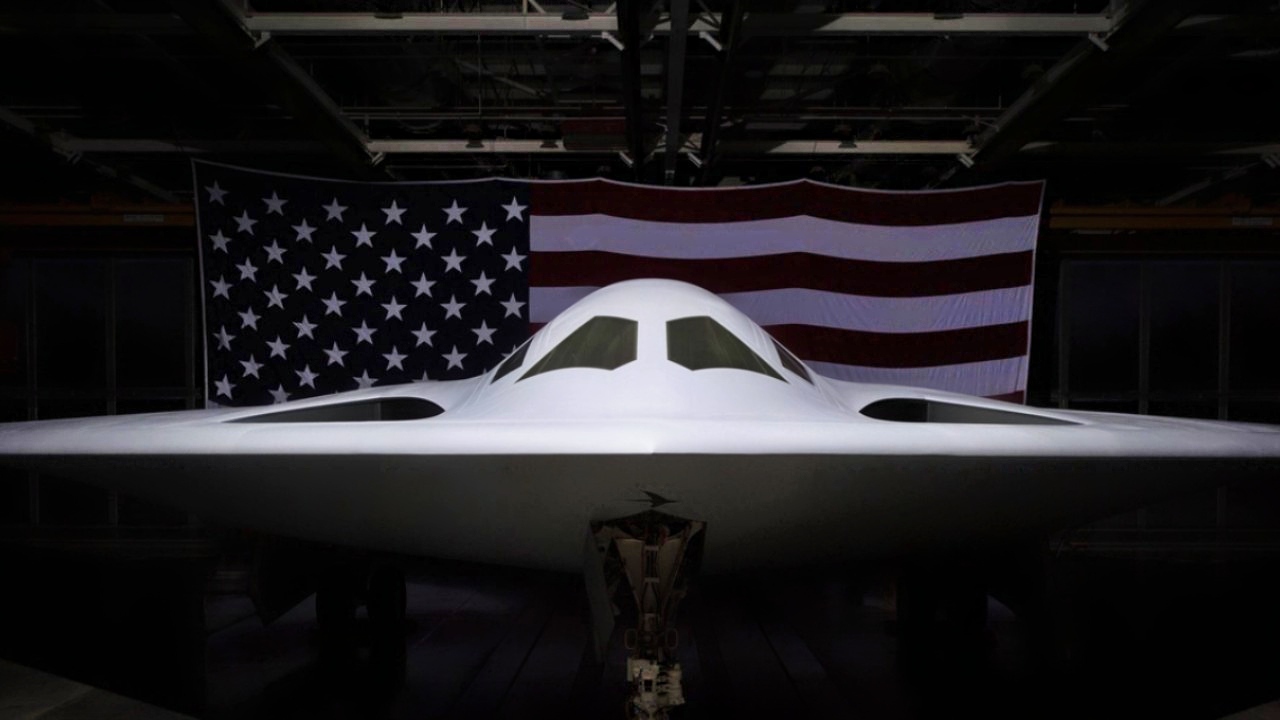
Key Points – Despite the rise of combat drones, the B-21 Raider stealth bomber remains essential for future US air power, as it combines capabilities that unmanned systems cannot yet replicate.
-A human pilot provides superior real-time decision-making (the OODA loop) and is necessary for strategic nuclear deterrence missions.
-Furthermore, the B-21 is not made obsolete by drones but is designed to lead them, acting as a “drone quarterback” for Collaborative Combat Aircraft (CCAs) in roles like electronic warfare and reconnaissance.
-This manned-unmanned teaming concept ensures the B-21’s relevance and lethality against peer adversaries like China for decades to come.
Will Modern Warfare Evolve to a Time When the B-21 Is Not Needed?
New airplanes, such as the B-21 Raider, have problems. The mission parameters are difficult to determine. It is a challenging task to forecast the amount of money required for investment. The math is another question—just how many Raiders are needed?
This numerical requirement changes as the geopolitical facts evolve. Namely, there is a new war between Iran and Israel, and Americans are waiting for this to be over before they figure out the lessons learned from the conflict and how that new analysis affects the B-21 program.
It appears that stealthiness is one of the most important aspects so far during Israel’s attacks on Iran’s military and nuclear infrastructure. The F-35I Adir is likely the best warplane in the world, and that high level of radar evasion is what the Americans want to see in the B-21.
The B-21 Has a Math Problem
But how many bombers still need to be built? So far, 100 is the consensus number, but others want more. Some observers hope the Northrop Grumman factory can pump out at least 150. The B-21 is on a budget, though. The new F-47 NGAD is going to suck resources away from the B-21 program.
Fewer F-35s will be built depending on how much Congress sticks to the latest Trump administration’s budget proposal. The Air Force has already cut about $1 billion from the B-21 program in FY2025.
The redeeming quality of the B-21 is that the project is currently on time and under budget. Let’s hope it can stay that way. If the engineers and designers remain lean and mean throughout, there is less likelihood of cutting the numbers down.
What Will the Future of Warfare Bring to the Decision-Making Calculus?
And regarding the geopolitical calculus I mentioned earlier, it changes almost every month. New warfare doctrines are shifting as we speak. We know that the Ukrainians and Russians can deliver long-range strikes with drones. These types of unmanned loitering munitions have resulted in numerous missions that can menace civilian or military targets.
Additionally, technological advancements may emerge that could favor Russia and China’s development of their stealth bombers. By the time production hits 100 B-21s, the preference could shift toward more advanced drones that could make the B-21 obsolete by the mid-2030s.
Manned Flight Has Disadvantages
There are also obvious problems with manned flight. Losing a pilot is a public relations disaster for the United States. A mistake in testing resulting from human error could cause a catastrophe during the evaluation phase. Humans also take longer to train and cost additional money until pilots can fully adjust to flying the bomber at the optimum level.
Despite these challenges, it would be great to make the B-21 in numbers eclipsing 100 airplanes, especially if they can drop bunker-busting bombs against underground facilities that have proven so difficult to destroy in Iran. Eliminating hardened targets will be the name of the game in future conflicts.
The B-21 is nuclear-capable, and this is one aspect of the airplane that makes it better than a massive attack from swarming drones that could not deliver a nuclear weapon. And if it is drones you like so much, the B-21 can execute the concept of manned-unmanned teaming.
Unmanned-Manned Teaming Is the Future of Aerial Combat
The B-21 can be a “drone quarterback” that would lead a flight of Collaborative Combat Aircraft (CCA). The CCAs can fly out ahead and conduct electronic warfare roles or bomb damage assessments. Determining how well prior bombing missions succeed is extremely important, as the Israelis are finding out. How well have prior bombing runs been in taking out intended targets? It is more efficient if the targets can be eliminated with one strike.
This efficiency will make the B-21 highly valuable in the years to come. CCAs, as they develop, will be a force multiplier for the Raider.
What About When Warfare Is Irregular?
Combining manned and unmanned flight will be crucial for future warfare if the United States needs to conduct long-range missions against China. CCAs can clear the airspace on Day One of warfare to pave the way for the F-47 and F-35s. Against adversaries like irregular forces such as the Houthi terrorists in Yemen, when the United States has already determined that it has air superiority, the B-21 will be especially effective in unconventional combat against non-state actors.
The Aviationist delivered an excellent quote about future aspects of the B-21 working in tandem with the F-47. “If adapted for an air-to-air role, the B-21 could serve as a powerful ‘arsenal plane,’ carrying long-range missiles like the secretive AIM-260 Joint Advanced Tactical Missile (JATM) to deter or neutralize enemy formations. This would leverage the B-21’s stealth and data-linking capabilities, allowing it to operate effectively alongside CCAs and manned NGAD aircraft,” the media outlet said.
This ability to team up as the B-21 and F-47 fly future missions is one way the manned bombers and fighters are superior to drones. These two airplanes will be expensive but ultimately worth it as the Trump national security team considers future aerial warfare. The Air Force is excited about the B-21, and the F-47 is the president’s baby as he excitedly rolled out the fighter to the media from the Oval Office in March.
We can’t predict how warfare will change in the next 10 years. We know that drones will become increasingly important. The Israeli-Iranian conflict will offer many lessons about manned flight while Ukraine and Russia are teaching a master class on long-range unmanned strikes. It is a pivotal time for the B-21, but the future still looks bright.
It has created a bit of a mathematical problem for the Air Force as it ponders just how many bombers to acquire and how much to spend. However, even if the Americans choose the low-end option (100 bombers), there will still be plenty to deliver a powerful punch to enemies.
About the Author: Dr. Brent M. Eastwood
Brent M. Eastwood, PhD is the author of Don’t Turn Your Back On the World: a Conservative Foreign Policy and Humans, Machines, and Data: Future Trends in Warfare plus two other books. Brent was the founder and CEO of a tech firm that predicted world events using artificial intelligence. He served as a legislative fellow for U.S. Senator Tim Scott and advised the senator on defense and foreign policy issues. He has taught at American University, George Washington University, and George Mason University. Brent is a former U.S. Army Infantry officer. He can be followed on X @BMEastwood.
Submarines Like No Other
Japan Might Have a Stealth Submarine the U.S. Navy Would Love


