

Key Points and Summary – A mysterious unit patch tied to the Air Force’s F-47—its sixth-gen NGAD fighter—has been confirmed as a real, early design.
-The circular crest shows a phoenix, six red stars, and what looks like China’s coastline, plus a Latin motto used by NGAD insiders: “We overcome. We persist. We rejoice.”
F-47 ‘Phoenix’ Patch Authentic, Still A Work In Progress, U.S. Air Force Confirms
The patch, created within the F-47 System Management Office, has some very interesting features.
Story: https://t.co/Pej3sDXTYc
— Tyler Rogoway (@Aviation_Intel) September 30, 2025
-Officials say no one is wearing an official patch yet, but the imagery tracks: rebirth after a near-cancellation, ties to secret testing, and a Pacific mission set alongside autonomous “wingmen.”
-With Boeing building the first airframe and a 2028 first flight targeted, the F-22’s successor is moving from rumor to reality.
F-47 Patch Design Confirmed As Real
A patch design connected to the U.S. Air Force’s new sixth-generation F-47 fighter program, Next-Generation Air Dominance (NGAD), has been confirmed as genuine, though officials say it remains unfinished. The circular insignia, which first appeared on social media earlier this month, features a phoenix as a central motif alongside symbols that hint at the jet’s mission, its development history, and the future of American airpower.
“The patch is an early design concept that was generated within Air Combat Command’s F-47 System Management Office,” an Air Combat Command spokesperson told The War Zone following the patch’s appearance online. “It is still being developed, and there is currently no official patch being worn by anyone in the Air Force.”
The image was first shared by aviation watcher @SR_Planespotter, and quickly sparked speculations about whether the F-47 may already carry an unofficial nickname: the Phoenix.
What We Saw
The patch that surfaced online features a stylized bird, resembling a phoenix or some kind of mythical firebird, in the center.
Surrounding it are six red stars – three above and three below – and gold triangular details with trailing lines. Curiously, the imagery appears to include a white outline that traces part of the Chinese eastern coastline.
The letters “ACC F-47 SMO” appear on the patch design, alongside the acronym “FBC” – which has yet to be explained by analysts or officials with knowledge of the design.
Underneath the phoenix is the phrase “Superamus Perstamus Letamus” in Latin, meaning, “We overcome. We persist. We rejoice.”
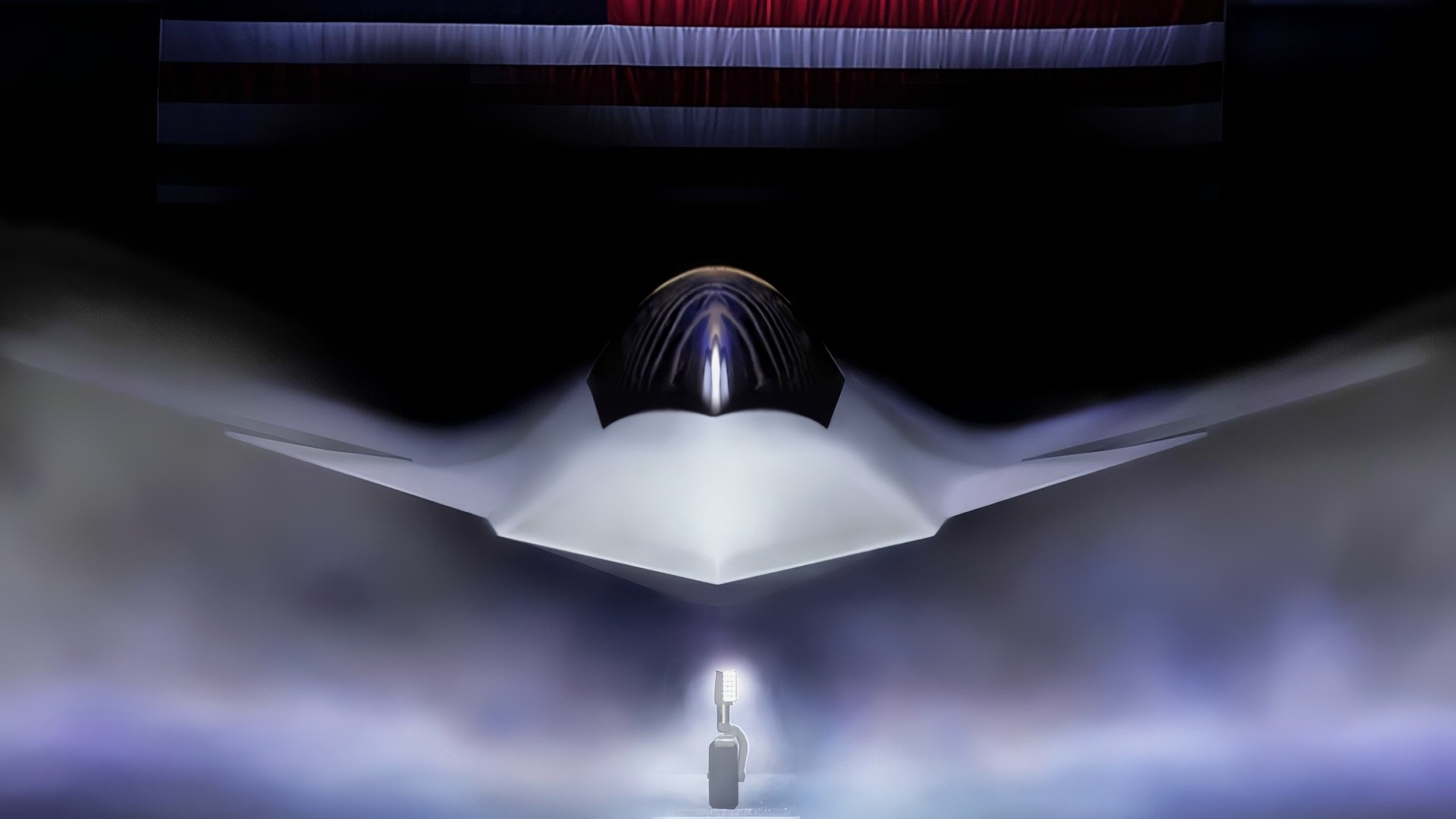
Shown is a graphical artist rendering of the Next Generation Air Dominance (NGAD) Platform. The rendering highlights the Air Force’s sixth generation fighter, the F-47. The NGAD Platform will bring lethal, next-generation technologies to ensure air superiority for the Joint Force in any conflict. (U.S. Air Force graphic)
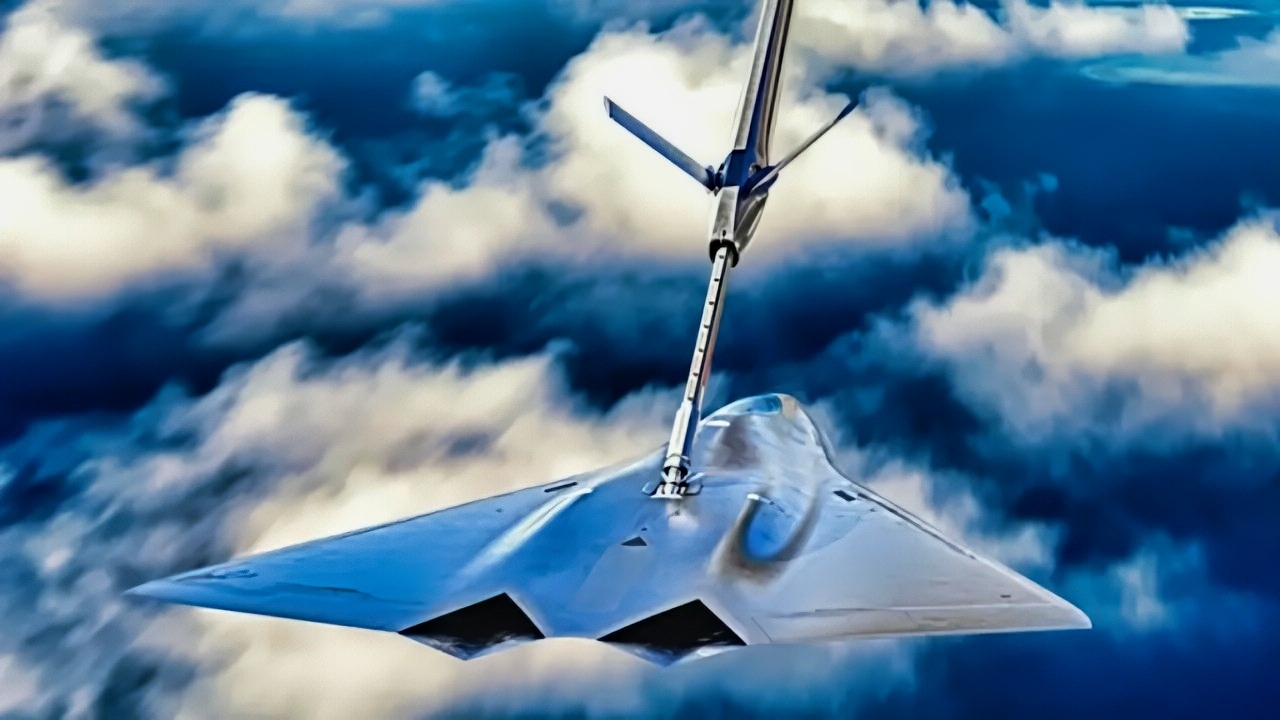
F-47 Lockheed Photo. Image Credit: Lockheed Handout.
The motto immediately indicated to some analysts online that the patch could be authentic, given that it has previously been linked to the NGAD initiative. The words have also appeared on earlier insignias from the Agile Development Office, which is the unit that coordinated NGAD development before it matured into today’s F-47 program.
Each element seen on the patch carries some kind of meaning. The six stars on the patch are reportedly a nod to Groom Lake – better known as Area 51 – where secret flight testing has taken place for decades.
The Chinese coastline is no mistake, either; the map outline could potentially reflect the role the F-47 is expected to play: the spearheading of U.S. air operations in the Pacific.
The choice of a phoenix also reflects the history of the F-47. The program was almost shut down over funding fears – but was reinvigorated after President Donald Trump returned to the White House in January 2025. The program not only received the green light to continue pursuing the development of a sixth-generation fighter for the U.S. Air Force, but it was even prioritized over the Navy’s own next-generation F/A-XX project – before that project was also bolstered with additional funding this summer.
In mythology, the phoenix represents immortality and rebirth.
Historic Connections
The F-47 designation is already layered with meaning – just like the unconfirmed patch. The name references the P-47 Thunderbolt, a World War II workhorse fighter jet that was later redesignated the F-47 before it was ultimately retired.
The U.S Air Force has also confirmed that the “47” designation reflects the year of its founding – 1947. The name even offers a nod to the man whose administration ensured the program went ahead – 47th President of the United States, Donald Trump.
Analysts have speculated that the aircraft’s nickname may also have historic connections, and may not, in fact, be “Phoenix” as the patch design could indicate. Instead, analysts have suggested that the name “Thunderbolt” – from the aircraft that inspired the F-47 naming – could become available to use again soon.
The A-10 attack aircraft is already officially known as the “Thunderbolt II” in homage to the original P-47 – although it has long been better known by its unofficial moniker, the Warthog. But with the A-10 on track to be retired before the F-47 enters service, the name “Thunderbolt” could once again be used.

A-10 Warthog NSJ Photos. Image taken on 7/20/2025.
The Next-Gen Fighter Is Coming
The F-47 is the Air Force’s flagship sixth-generation fighter. Its development was formalized in March 2025 when Boeing was awarded the Engineering and Manufacturing Development (EMD) contract to build the platform, but the emergence of a patch just reinforces the fact that the program is moving full steam ahead.
The F-47 program’s mission is to succeed the F-22 Raptor by improving stealth, speed, sensor fusion, weapons systems, and more. The next-generation aircraft is designed to operate alongside autonomous drone “wingmen,” also known as collaborative combat aircraft (CCAs).
The first F-47 airframe is already under construction, and the Air Force has set a target for its first flight in 2028. The aircraft is intended to enter operational service some time before 2029, though many analysts suggest that true combat-ready units are likely to arrive closer to the early 2030s.
About the Author:
Jack Buckby is a British author, counter-extremism researcher, and journalist based in New York who writes frequently for National Security Journal. Reporting on the U.K., Europe, and the U.S., he works to analyze and understand left-wing and right-wing radicalization, and reports on Western governments’ approaches to the pressing issues of today. His books and research papers explore these themes and propose pragmatic solutions to our increasingly polarized society. His latest book is The Truth Teller: RFK Jr. and the Case for a Post-Partisan Presidency.
More Military
China’s New J-35 vs. America’s F-35: Stealth Is Close. Experience Isn’t.
The B-21 Raider Stealth Bomber ‘Math Problem’ That Needs Solving
J-20 Mighty Dragon vs. the World: 5 Strengths That Make China’s Stealth Jet a Problem
U.S. Navy Nimitz-Class Aircraft Carrier: 5 Biggest Complaints
What Makes U.S. Navy Aircraft Carrier USS Harry S. Truman A Powerhouse? 1 Word.


