


Key Points and Summary – After a 101-day strike that delayed F-15EX deliveries, Boeing machinists ratified a new contract (68% to 32%).
-While the union won significant pay raises and protected healthcare benefits, Boeing held the upper hand.
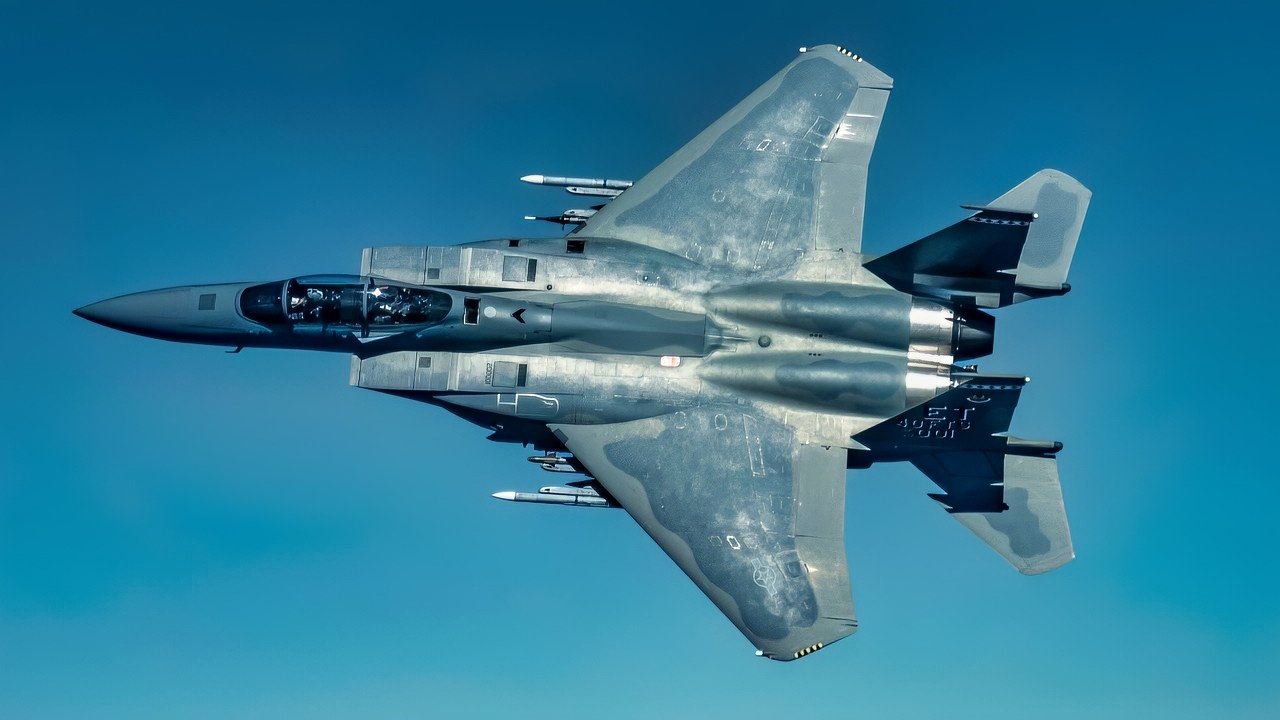
U.S. Air Force Lt. Col. Richard Turner, 40th Flight Test Squadron commander flies 40 FLTS Senior Enlisted Leader, MSgt Tristan McIntire during a test sortie in the F-15EX Eagle II over the Gulf of Mexico on Jun. 14, 2022. Assigned to the 96th Test Wing at Eglin Air Force Base, Fla., the F-15EX Eagle II is the Air Force’s newest 4th generation fighter being tested at the 40 FLTS. (U.S. Air Force photo by Tech. Sgt. John McRell)
-A union member admitted the company “outlasted” the “fatigued” strikers, who were facing the holidays and the threat of permanent replacements.
-Boeing, which called the strike’s financial impact “immaterial,” successfully resisted the union’s primary demand for a Seattle-style retirement plan.
Who Won the Boeing strike?
After 101 days, the Boeing machinist strike in the St. Louis area has come to an end, following the union’s ratification of the new contract by the International Association of Machinists and Aerospace Workers (IAM) District 837. The workers are set to return to duty as soon as Sunday.
The strike began in early August.
Per Reuters, the long strike “has hampered production of fighter jets and other programs” at the facilities where the F-15 and F/A-18 fighter jets are assembled, and where production will take place for the new F-47. The work stoppage, Reuters reported, “has disrupted F-15 deliveries to the US Air Force and slowed production across several key programs.”
“IAM District 837 members stood strong and united for over three months,” the union said in a statement after the end of the strike. “We’re proud of what our members have fought for together and are ready to get back to building the world’s most advanced military aircraft.”
The union added that “we look forward to continuing to fight for fairness and respect for the world’s best defense workers in the contracts to come.”
Boeing also expressed happiness that the strike had ended.
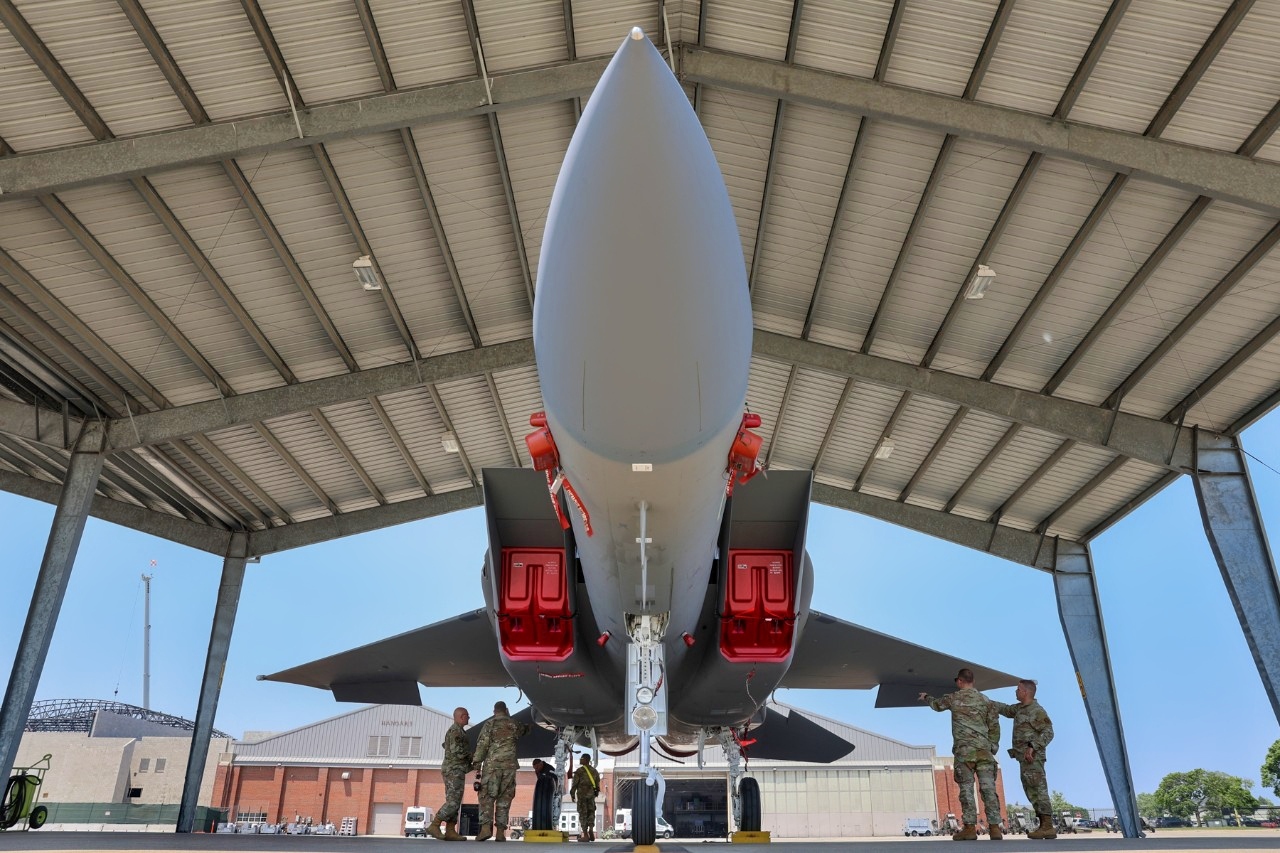
An F-15EX Eagle II from the Defense Contracting Management Agency Boeing St. Louis, sits on the flight line at Selfridge Air National Guard Base, Michigan, June 11, 2025. The aircraft visited the base as part of a site activation task force, an initial step to prepare the 127th Wing with the right infrastructure, personnel, and support the incoming F-15EX and KC-46 Pegasus missions . (U.S. Air National Guard photo by 1st Lt. Elise Wahlstrom)
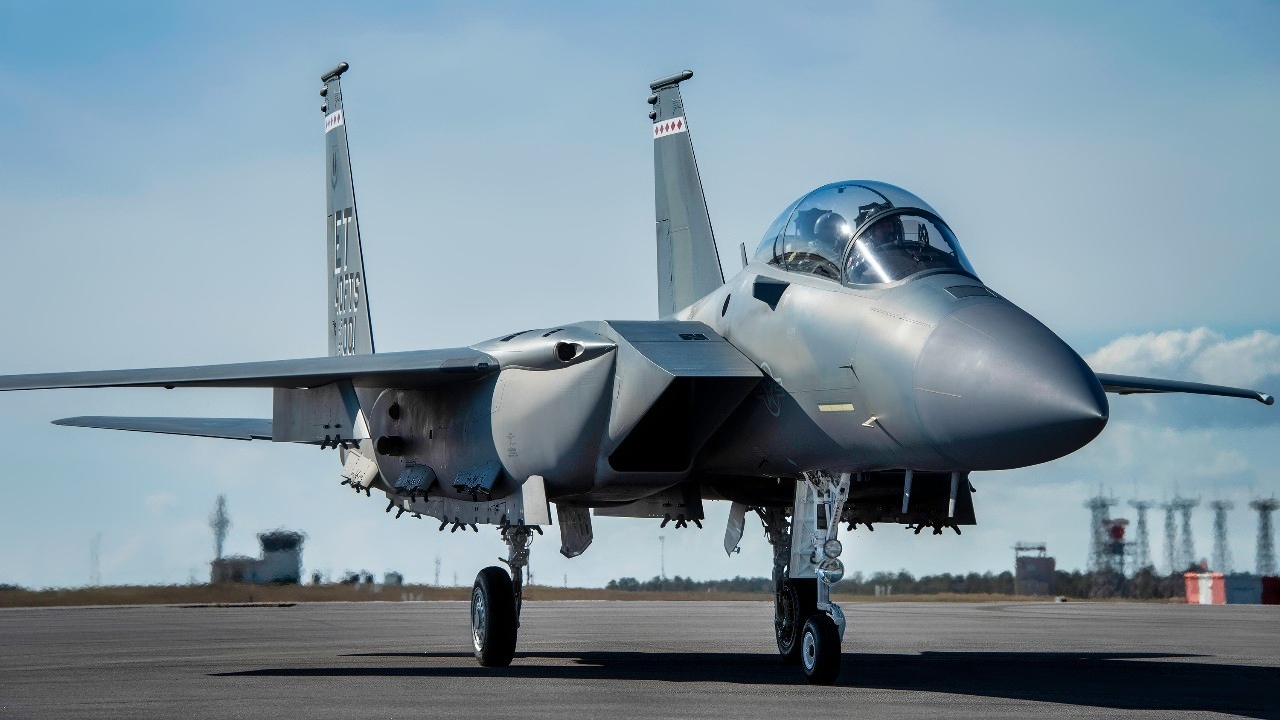
The F-15EX, the Air Force’s newest fighter aircraft, arrives to Eglin Air Force Base, Florida March 11. The aircraft will be the first Air Force aircraft to be tested and fielded from beginning to end through combined developmental and operational tests. The 40th Flight Test Squadron and the 85th Test and Evaluation Squadron personnel are responsible for testing the aircraft. (U.S. Air Force photo/Ilka Cole)
“We’re pleased with the results and look forward to bringing our full team back together on Nov. 17 to support our customers.”
Per the Associated Press, the union had formally rejected four offers from the company.
The St. Louis Business Journal reported that the ratification vote came down to 68 percent in favor and 32 percent against. A union official described the vote as a “good turnout.”
A previous deal, in late October, had seen a ratification vote fail, with 51 percent voting against and 49 percent in favor.
Inside the Talks
So, who won the strike?
The Wall Street Journal reported that the new contract raises base pay to $109,000 from $75,000, over the five-year life of the contract.
According to Reuters, the union had spent the strike hoping for a deal similar to the one that resulted from the different Boeing strike in the Seattle area last year, which included “a higher ratification bonus and improved retirement plan contributions.” The Seattle strike was larger, involving 33,000 machinists, and lasted approximately eight weeks.
The company, however, refused such offers, instead offering a general wage increase of 24 percent over a five-year period.
On Monday, per the Reuters report, Boeing “unilaterally revised its offer, reducing the overall bonus. It increased the upfront cash incentive to $6,000, up from $3,000 in the previous proposal, but cut another $4,000 in bonuses that would have been paid later during the contract’s term.”
The St. Louis Business Journal had more details about the deal.
“Under the new contract, those at the top of the pay scale will get the 8% wage increase in year one, a 5% lump sum payment in year two, the 4% wage increase in year three, a 1.5% pay increase and 2.5% lump sum in year four, and a 4% wage increase in year five. About 22% of District 837 members are at the top of the pay scale,” their report said.
Also included in the new deal are “more vacation and sick leave, maintains the 401(k) plan and has no cost share increase for the medical, dental and vision plan.”
District 837 member Brandon Thiel, who voted against the offer, told Reuters that Boeing had “outlasted” the union, which, by the end, was “fatigued” by the prolonged strike.
“Nobody wants to give their kids a crappy holiday,” Thiel told the outlet.
The Journal also noted some dynamics that hastened a settlement.
“Picketing machinists benefited from a union fund that covered lost wages during the strike, but they faced increasing pressure to reach a deal as healthcare coverage lapsed for some,” the report said, also noting that the company had “leaned on” managers and non-union workers, while also hiring some replacement workers in the later part of the strike.
What Does Washington Think?
Federal mediators were involved in the talks, and in September, at a time when Boeing was talking about hiring replacement workers, the Congressional Labor Caucus wrote a letter to Boeing CEO Kelly Ortberg. The letter reminded the company that “it is the policy of the United States to encourage collective bargaining under the National Labor Relations Act (NLRA), we urge you to return to the bargaining table with these workers and to bargain in good faith to reach a fair contract in a timely manner.”
The White House, however, did not directly involve itself in the talks. In August, when the union’s chief, Brian Bishop, visited the picket line, he called for President Donald Trump to intervene in the dispute.
“I would request the president of the United States get involved in these negotiations and get this company back to the table since they are the ones who are building the military planes for his military,” Bishop told St. Louis Business Journal at the time. The president does not appear to have responded.
Then, on October 1, according to Politico, Missouri’s Republican U.S. Senator, Josh Hawley, questioned Scott Mayer, Boeing’s chief labor council, at a confirmation hearing after Mayer was nominated to serve on the National Labor Relations Board.
“What’s different about these Missouri workers?” Hawley asked in the hearing. “Are we going to get to a fair resolution here where these workers get paid on terms equal with other workers at your company across the country, or are these folks going to be permanently replaced by non-union workers?” Mayer elected to “distance himself” from the dispute.
Mayer’s nomination was later stalled, even as another NLRB nomination proceeded, although Mayer’s nomination will receive a committee vote next week.
Hawley, the senator, reacted to the settlement on X on Thursday.
“Congratulations to the 3000+ Missouri workers who today secured a new and better contract with Boeing,” Hawley said. “For months they have stood strong, and today they’re getting the raise they and their families deserve.”
About the Author: Stephen Silver
Stephen Silver is an award-winning journalist, essayist, and film critic, and contributor to the Philadelphia Inquirer, the Jewish Telegraphic Agency, Broad Street Review, and Splice Today. The co-founder of the Philadelphia Film Critics Circle, Stephen lives in suburban Philadelphia with his wife and two sons. For over a decade, Stephen has authored thousands of articles that focus on politics, national security, technology, and the economy. Follow him on X (formerly Twitter) at @StephenSilver, and subscribe to his Substack newsletter.
More Military
Russia’s Mach 2 Su-30SM Fighter Has A Message for Any Air Force on Earth
The Mach 2.2 B-1A Bomber Has A Message for the U.S. Air Force
The Mach 2.35 ‘Super’ Eurofighter Typhoon Fighter Has a Message for Any Air Force On Earth
Canada’s CF-18 Hornet Fighter Crisis
Forget NGAD or the J-20: A 7th Generation Fighter Could Hit Mach 5


