

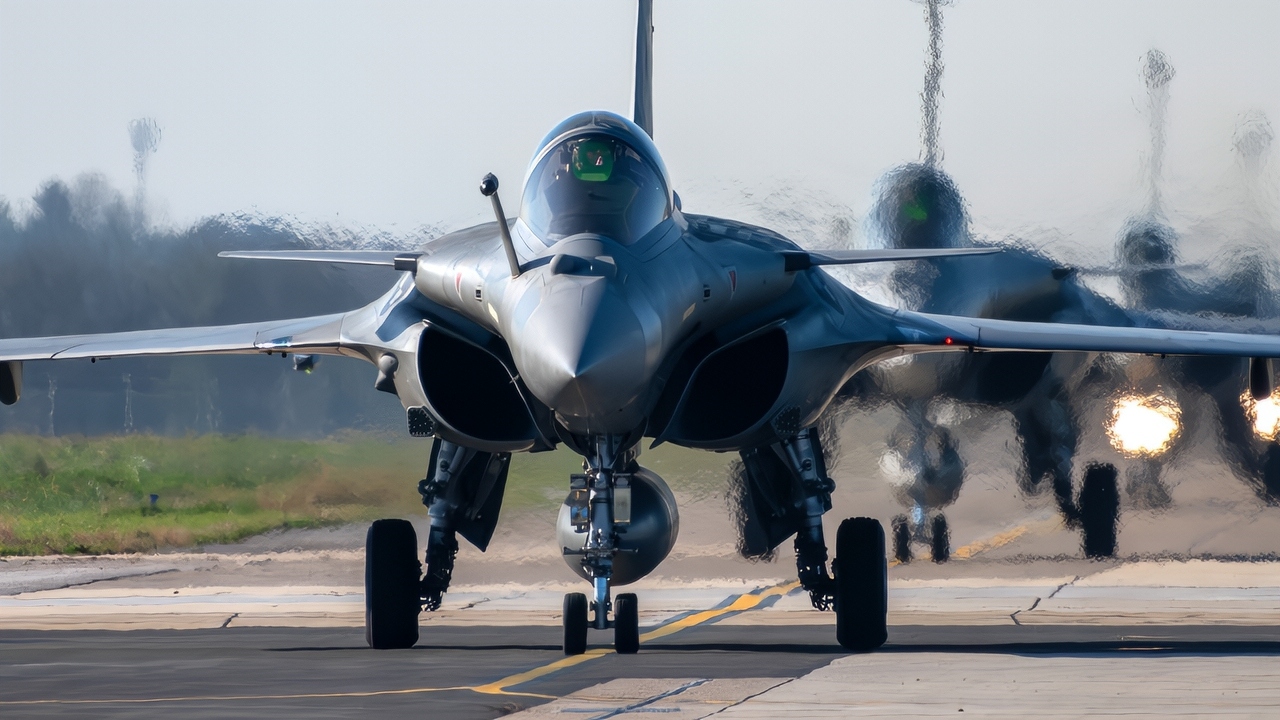
Dassault Rafale: A Brilliant 4.5-Gen Fighter in a 5th-Gen World
Key Points and Summary:
-Dassault’s Rafale is a combat-proven, 4.5-generation multirole fighter that trades stealth for agility, sensors, and electronic warfare.
-It has fought from Afghanistan and Libya to Mali and against ISIS, and new standards (F3R/F4 with AESA, Meteor, TALIOS, SPECTRA upgrades) keep it relevant while F5 adds loyal-wingman teaming and next-gen weapons.
-Export orders—UAE 80, Indonesia 42, Egypt 54, Greece 24, Croatia 12, India 26 Rafale M—reflect that appeal.
-A Dassault Rafale recently scored a simulated kill on an F-35 in training, but across a sustained campaign against stealth opponents, the Rafale cannot set the terms of the fight; it excels as a networked, hard-hitting teammate.
Origin Story: France Builds Its Own Answer
The Rafale’s roots go back to a blunt strategic decision in the 1980s: France would not be dependent on anyone—American, Russian, or European consortia—for its front-line fighter.
Dassault sketched a single multirole airframe to replace a zoo of types in French service—Mirage F1, Jaguar, Super Étendard, Mirage 2000 variants—and to do it from land and sea. The result was the familiar twin-engine, canard-delta layout with a generous wing, powerful close-coupled canards for instantaneous nose authority, and a design that traded absolute stealth for agility, sensor fusion, and electronic warfare.
Early Rafales entered French Navy service in the 2000s and the French Air Force soon after. From the start, the jet was built around a systems-first philosophy: a modern mission computer, a growth path for an electronically scanned radar, and an integrated electronic-warfare suite (SPECTRA) that would become the airplane’s calling card. The carrier-capable Rafale M variant meant France could keep fixed-wing aviation at sea without American jets.
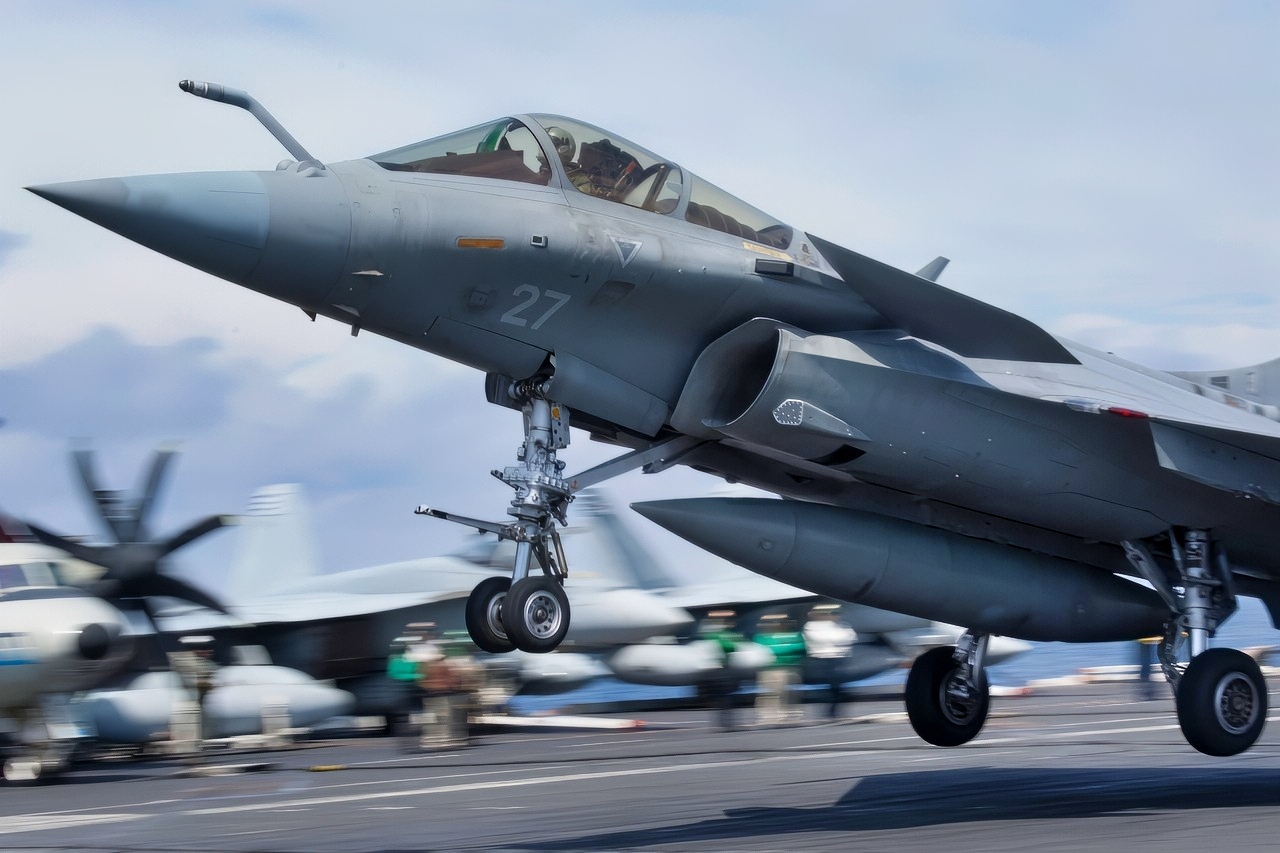
(July 3, 2018) A French Dassault Rafale M Fighter touches down on the flight deck aboard the Nimitz-class aircraft carrier USS Harry S. Truman (CVN 75). Harry S. Truman is currently deployed as part of an ongoing rotation of U.S. forces supporting maritime security operations in international waters around the globe. (U.S. Navy photo by Mass Communication Specialist 3rd Class Rebekah A. Watkins/Released)
The design bargain was clear: not a “low-observable” shape like an F-35, but a highly refined airframe whose survivability came from information, jamming, and tactics—and a cockpit that let pilots exploit all three.
How the Dassault Rafale Evolved: Standards F2 → F3R → F4, with F5 on Deck
French fighters are upgraded in “standards,” and the Rafale’s ladder has been steady:
-F2 brought true multirole flexibility—swinging from air-to-air to precision strike.
-F3/F3R made the jet a first-line striker: AESA radar, Meteor long-range air-to-air integration, TALIOS targeting pod, SCALP cruise missile, AASM Hammer precision weapons, and steady improvements to SPECTRA and datalinks.
-F4 is a broad software/hardware refresh aimed at connectivity, reliability, and new weapons, with F4.1 already qualified and flowing into the fleet.
-F5—now in development—is the big swing for the 2030s: deeper collaborative combat with loyal-wingman drones, more power and cooling, next-wave weapons (including nuclear standoff for the French deterrent), and hardened survivability. The point is staying lethal against sophisticated defenses without reshaping the jet into a stealth aircraft.
In other words: the Rafale doesn’t pretend to be invisible; it aims to confuse, out-network, and out-range.

Dassault Rafale Fighter in India. Image Credit: Creative Commons.
Combat Record: A Busy Two Decades
For a so-called “Euro-canard,” the Dassault Rafale has had a very un-European amount of combat. It flew combat debut missions over Afghanistan, then became a daily tool in Libya (2011)—no-fly enforcement, strike, and maritime roles.
It carried out long-range strikes into Mali (2013) during the opening days of Operation Serval, transiting from metropolitan France with tanker support to hit command nodes and depots, then settled into sustained counter-insurgency strike and ISR. Across the anti-ISIS campaign, Rafale Ms from the carrier Charles de Gaulle and Air Force Cs from land bases dropped precision weapons, flew defensive counter-air, and kept up high sortie reliability.
Nothing in that history changes physics, but it matters: the Rafale is operationally mature. The airframe and its systems have been wordlessly vetted by thousands of combat hours in real wars and under real logistics stress.
Why Dassault Rafale Orders Are Booming
You don’t need a stealth jet to be valuable; you need a capable jet that nations can buy, field, and sustain. That’s the Rafale’s sales pitch—and lately, buyers have voted with their budgets.
-Egypt climbed to 54 Rafales.
-Qatar bought 36.
-Greece took 24 (new plus ex-French), rapidly integrating them in the Aegean.
-Croatia is converting from MiG-21s with 12 ex-French jets.
-Indonesia signed for 42 and is localizing part of the supply chain.
-UAE placed a landmark order for 80 Rafale F4s.
-India operates 36 Air Force Rafales and has now signed for 26 Rafale M for its carriers.
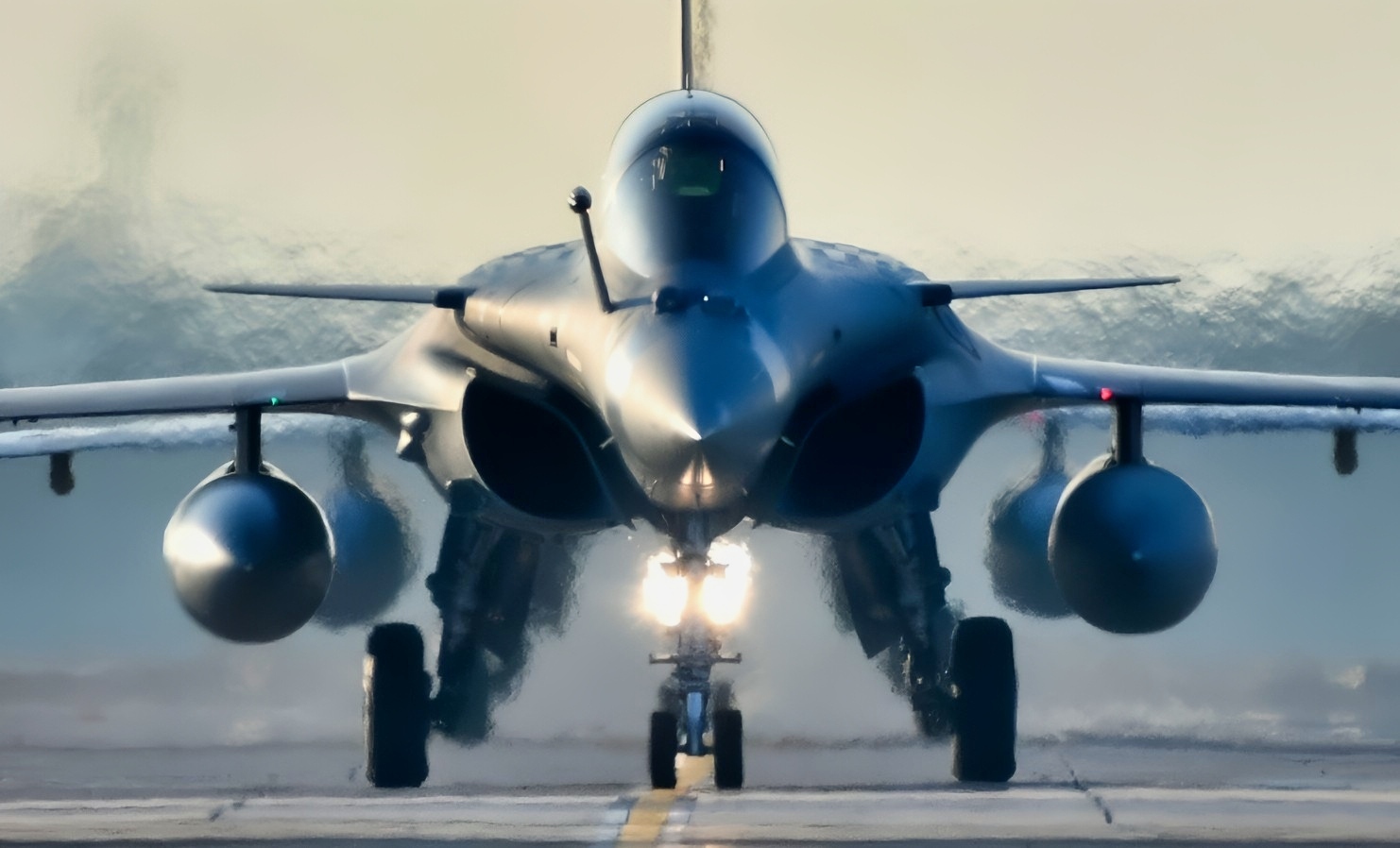
Dassault Rafale Flying for Croatia. Image Credit: Creative Commons.
Add France’s own continuing buys and upgrades and you get a fat order book that stretches deliveries well into the 2030s.
Why? The jet is politically unencumbered by U.S. export strings, carrier-capable out of the box, can carry Meteor and SCALP, and comes with a national industrial partnership pitch Paris is willing to customize. For air forces that want autonomy, quick integration of national weapons, and a proven combat record, Rafale is simply the most assembled package outside the F-35.
The Capabilities That Make Dassault Rafale Dangerous
Three pillars give the airplane teeth:
Sensors & Fusion. The RBE2 AESA radar provides multi-mode tracking, high-agility waveforms, and the range to exploit Meteor. The Front-Sector Optronics/IRST gives passive long-range detection against hot targets or when emissions control matters. The AREOS recce pod and TALIOS targeting pod add deep ISR and strike precision. Rafale is not just carrying sensors; it’s fusing them cleanly in the cockpit.
Electronic Warfare. SPECTRA is the secret sauce—threat detection, geo-location, jamming techniques, and automated countermeasures tied tightly into the flight computer. In a world where survivability often means confusing the other side’s picture long enough to shoot and leave, SPECTRA is the Rafale’s shield and sometimes its sword.
Weapons & Range. Meteor extends the no-escape zone at altitude in a way that changes BVR math; MICA (and MICA NG) cover medium/short ranges; AASM Hammer and SCALP give the jet a flexible strike portfolio; AM39 Exocet and future anti-radiation options round out the set. The airframe has excellent instantaneous authority and sustained turn for the merge, and ongoing work on conformal fuel tanks and F5 power margins aims at better reach.
Put together, this is a 4.5-generation aircraft that is hard to target, hard to jam, and well-armed—when flown with discipline and wrapped in a modern air plan.
About That Headline: “Rafale Beat an F-35”
Yes—during a recent multinational exercise, a Rafale achieved a simulated kill on an F-35 in a close-in drill.
Good pilots and good setups produce surprises at the merge; that’s older than Top Gun. The lesson isn’t that the Rafale is superior to the F-35 across the board.
It’s that set-ups, rules, and training goals matter. Put any high-energy 4.5-gen machine with strong instantaneous turn, a helmet-cueing sight, and high-off-boresight missiles into a visual BFM regime, and it can absolutely bag a stealth jet that was never optimized for knife-fights.
But wars are campaigns, not vignettes. In a real fight, stealth collapses the engagement ranges where Rafales get their favorite looks. The F-35—and above it, F-22—shape the fight: they see first, share tracks, and shoot from outside the windows where a non-stealth fighter is comfortable.
That doesn’t make a Dassault Rafale harmless; it means that across a sustained campaign against a first-rate stealth force, the Rafale’s survivability and options narrow unless it’s paired with airborne early warning, standoff weapons, powerful jamming, and careful tactics.
One exercise kill is a data point; force-on-force with VLO adversaries is a curve—and VLO tilts it.
Where the Rafale Wins Anyway
If you’re not fighting the United States, the Rafale is a terrifying adversary. Against non-stealth fleets, it dominates the middle of the envelope: networked, electronically savvy, with a Meteor-backed BVR game and a SPECTRA cloak that degrades older SAMs. It is carrier-qualified, deploys quickly, and has a maintenance/logistics footprint that French industry keeps slimming. For buyers who need credible air defense and precision strike now, and who want industrial offsets and fewer political strings, it’s hard to beat.
The Hard Ceiling: Why It’s Still a 4.5-Gen Jet
Rafale’s airframe was not shaped for very-low-observable survivability. Dassault has shaved radar cross-section and infrared signature at the margins, and SPECTRA + tactics can delay detection or spoil a shot, but physics is physics. Against F-35/F-22 classes of VLO, adversary sensors detect later, quality tracks arrive later (if at all), and weapons get to first shot sooner. Stealth compresses the time available for non-stealth defenders to do anything about it. That’s the core asymmetry.
In practical terms, a Rafale wing against a stealth opponent must lean into standoff (SCALP, future anti-radiation missiles), passive/EMCON tactics, heavy EW support, and cooperative targeting. It can still hit hard and live—but the risk budget is higher and the sortie options are narrower than for a stealth fleet shaping the fight from the start.
The Carrier Dimension: Why This Matters More Than People Think
The Rafale M keeps France in the game at sea without buying American. That alone has strategic value: a French carrier air wing can surge into the Mediterranean, North Atlantic, or Indian Ocean with national command and a homogeneous fleet—Rafale in both Air Force and Navy. For export customers that contemplate naval aviation or dispersed road-base operations, a fighter with proven arrestor gear, strengthened gear, and navalized avionics offers a confidence dividend.
Still, as maritime A2/AD grows more lethal, the same stealth debate returns: without organic stealth, the carrier’s air wing depends on tankers, EW, and long-range weapons to keep the ship outside the densest missile rings. Rafale M can play that game—especially with F4/F5 networking and drones—but it won’t change the fact that stealth buys tactical freedom that jammers and tricks can only rent.
Upgrades on the Run: Keeping Rafale Sharp
What closes the gap—if only partially—are the upgrades. The most important threads:
F4: hardened comms, better data fusion, improved reliability/availability, and new weapons/integration.
F5: teaming with loyal-wingman/UCAVs, more power/cooling for sensors and jammers, new long-range munitions (including France’s next-gen nuclear standoff for deterrence), and likely further radar/IRST and SPECTRA evolution.
Weapons: Meteor in the racks for BVR; MICA NG coming on; AASM Hammer families for modular strike out to tens of nautical miles; SCALP for standoff land attack; Maritime options expanding with new seekers and profiles.
Range & Endurance: renewed work on conformal fuel tanks and engine growth gives planners better legs without gobbling pylons, crucial when you need both reach and missiles.
Will any of this turn the Rafale into a stealth jet? No. But it raises the floor significantly: the jet becomes tougher to target, better at seeing without being seen, and more able to project effects via unmanned teammates. That’s how a 4.5-gen fighter stays dangerous in a 5th-gen world.
The Export Lesson: Politics, Industry, and Sovereignty
One reason the order book is fat is industrial diplomacy. France sells Rafales with technology cooperation, training pipelines, and—where possible—local industry workshares. It also brings a predictable political partner: Paris will sell to countries Washington hesitates on; it will also move fast. For mid-tier air forces, the ability to acquire a complete, sovereign-friendly package—fighter, weapons, training, spares, and a responsive OEM—can matter more than absolute performance at 60,000 feet.
The Stealth Reality Check
Let’s be honest. Against peer adversaries with stealth fleets, a non-stealth fighter fights uphill.
It must survive to the merge (or to standoff release lines) through superior EW and clever routing; it must shoot from disadvantage against opponents with first-look, first-shot advantages; and it must do so day after day while avoiding attrition. That’s why even Rafale’s biggest champions are pursuing Rafale F5 + drones—to stretch the sensing and shooting and soak risk with unmanned teammates. The airplane remains an effective tool; it is not a magic wand against VLO.
Verdict
The Dassault Rafale is a masterclass in 4.5-generation design: agile, superbly integrated, electronically cunning, with a weapons portfolio that punches far above its weight. Its combat history is real. Its export surge is rational. And its upgrade path is serious.
But in a sustained campaign against stealth opponents—the F-35 foremost—the Rafale will not be the force-shaping platform. It will be the knife that follows the scout, the magazine that exploits off-board cues, and the workhorse that carries much of the nightly load after stealth assets have opened doors or kept them open. A Rafale can win a dogfight vignette against a stealth jet under the right rules and setup—that happened, and it will happen again. The campaign-level story is different: stealth still sets the terms.
That doesn’t make Dassault Rafale obsolete. It makes it contextual. In most of the world, most of the time, this airplane is a superb, proven answer you can actually buy, fly, and sustain. Against VLO adversaries in a peer war, it’s the smart teammate—and increasingly, the quarterback for drones—not the tip of the spear.
About the Author: Harry J. Kazianis
Harry J. Kazianis (@Grecianformula) is Editor-In-Chief and President of National Security Journal. He was the former Senior Director of National Security Affairs at the Center for the National Interest (CFTNI), a foreign policy think tank founded by Richard Nixon based in Washington, DC. Harry has over a decade of experience in think tanks and national security publishing. His ideas have been published in the NY Times, The Washington Post, The Wall Street Journal, CNN, and many other outlets worldwide. He has held positions at CSIS, the Heritage Foundation, the University of Nottingham, and several other institutions related to national security research and studies. He is the former Executive Editor of the National Interest and the Diplomat. He holds a Master’s degree focusing on international affairs from Harvard University.
More Military
The M1 Abrams Has A Message for the U.S. Army
The F-15EX Eagle II Is No Fighter – Try Missile Truck
The U.S. Navy Has a ‘Battleship’ Problem: Enter the Zumwalt-Class


