


The U.S. Navy nearly built its own version of the legendary F-22 Raptor stealth fighter—a swept-wing carrier variant called the NATF-22 Sea Raptor that was supposed to replace the F-14 Tomcat. Many analysts now believe that if the Navy had embraced the Sea Raptor in 1991, the F-22 production line would never have been shuttered by the Obama administration—and the U.S. would have entered the era of Chinese stealth carrier fighters with a far more lethal answer at sea.
The F-22: Aircraft Carrier Version?

A U.S. Air Force F-22 Raptor assigned to the Air Force F-22 Demonstration Team, Air Combat Command, performs aerial maneuvers during the 2025 Marine Corps Base Hawaii Kaneohe Bay Air Show, Aug. 9, 2025. The Kaneohe Bay Air Show provides an opportunity to showcase the aircraft, equipment and capabilities of the armed forces in the Indo-Pacific region to the local community. The air show, which contained aerial performances, static displays, demonstrations and vendors, was designed to celebrate MCBH’s longstanding relationship with the local community. (U.S. Marine Corps photo by Lance Cpl. Blake Gonter)
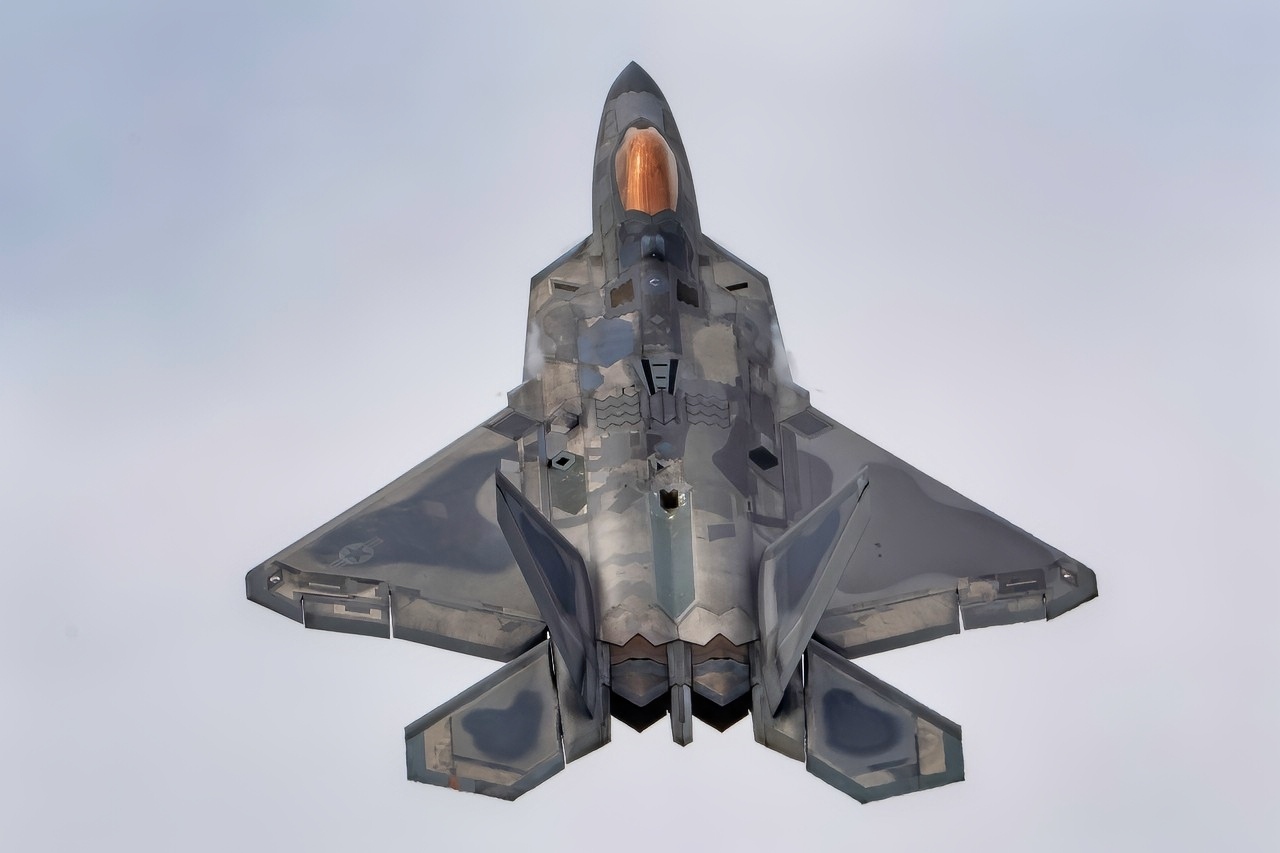
U.S. Air Force Maj. Josh Gunderson, F-22 Demo Team commander, performs the Raptor slide during the Geneseo Airshow July 10, 2021, Geneseo, N.Y. During the maneuver the aircraft actually slides down and backwards under control before Gunderson adjusts the aircrafts position and powers out of the maneuver. (U.S. Air Force photo by Staff Sgt. Don Hudson)
The F-22 was the first fifth-generation stealth fighter jet to fly. It combines advanced technology, such as stealth and sensor fusion, to produce superb situational awareness and an airframe that is highly maneuverable and can supercruise, or fly at supersonic speeds without the use of afterburners.
The F-22’s stealth is so good that it has a radar cross-section estimated to be as much as 15 times smaller than the F-35 and roughly 100 times smaller than China’s J-20.
The F-22 is still the standard against which every other stealth fighter is measured. Even after 20-plus years of service, it is still the world’s best stealth fighter.
But as good as the Raptor still is, why didn’t the Navy get a naval variant of the F-22?
This question is especially relevant today, with the Chinese Navy (PLAN) building its own naval stealth fighters, including the much more stealthy J-35.
Why The NATF-22 Could Have Dominated The Naval Skies
The F-22 was such a successful and incredible aircraft that Congress pressed the Navy to consider adopting a swept-wing version of the new fighter under the NATF (Naval Advanced Tactical Fighter) program, which began in 1988.

F-14 Missiles at Smithsonian Outside of DC. National Security Journal Photo. All Rights Reserved.

F-14D Tomcat at Smithsonian In Washington DC. Image by Brent M. Eastwood/National Security Journal.
The NATF-22, also known as the F-22N Sea Raptor, was designed to replace the Navy’s F-14 Tomcats. Many analysts believe that if the Navy had embraced the Sea Raptor, the Obama administration would never have shuttered the production line. And by having two services building the same aircraft, the price of each aircraft would have lessened significantly.
Unfortunately, the Sea Raptor never made it out of the design phase.
The fifth-generation Raptor was also the inspiration for the FB-22 concept, a Delta-wing F-22 variant intended for service as a fighter-bomber. The Air Force was considering using the modified F-22 to replace the F-111.
The intriguing part of this was that both the Air Force and the Navy would have shared development costs for the world’s greatest fighter. Eventually, the two services, along with the Marine Corps, saw the value of this development-sharing, and thus the F-35 Lightning II was born.

Reasons Why The Navy Never Built The Sea Raptor
The main reason was that the costs proved prohibitive for this project. In 1990, Admiral Richard Dunleavy, the Assistant Chief of Naval Operations for Air Warfare and responsible for determining the Navy’s requirements for a new fighter, said that he didn’t see any way the F-22 could be incorporated into an affordable plan for Naval aviation.
Soon afterward, the Navy dropped the NATF-22 concept in early 1991. However, there were many technical hurdles that, at the time, were too difficult to overcome.
The Raptor was never designed to take off and land on an aircraft carrier, which puts incredible stress on the airframe. And trying to retrofit a number of changes on an existing aircraft never designed for sea duty was both time-consuming and expensive.
The F-22N would have had to be modified with reinforced landing gear and a tailhook to catch on the carrier’s arresting wires, folding wings for hangar deck storage, and a dual front nose wheel and launch bar for catapult takeoffs. All of these would have resulted in added weight to the aircraft.
The F-22’s twin Pratt & Whitney F119 engines would need significant marinization to resist the natural corrosion that comes with constant exposure to saltwater on board the carriers.
Swept-Wing Design For The F-22N Was A Showstopper
One of the most serious alterations to the original F-22 design was the adoption of variable-sweep wings, similar to those of the F-14 Tomcat. This issue would have been a difficult one for designers and engineers to solve.
The design would allow the Sea Raptor to adjust its wing configuration for both low-speed carrier landings and high-speed combat, enhancing its versatility. Swing wings, like in the Tomcat, were very expensive to maintain and would increase the weight and radar cross-section, thus negating the Raptor’s stealth capability.
Stealth Coatings Presented An Entirely Different Challenge
The maintenance and preservation of the low-RCS external coatings and surface materials at sea posed an entirely different dilemma.
This was almost impossible in the marine environment, given the rigors of sea-based maintenance, where stealth coatings would suffer in the salty environment.
All of these adaptations would have made the F-22N a much heavier aircraft, and many analysts believe it would have reduced its range by as much as 20 percent.
Meanwhile, the F-22 will soon be replaced by the sixth-generation F-47 Next Generation Air Dominance Fighter.
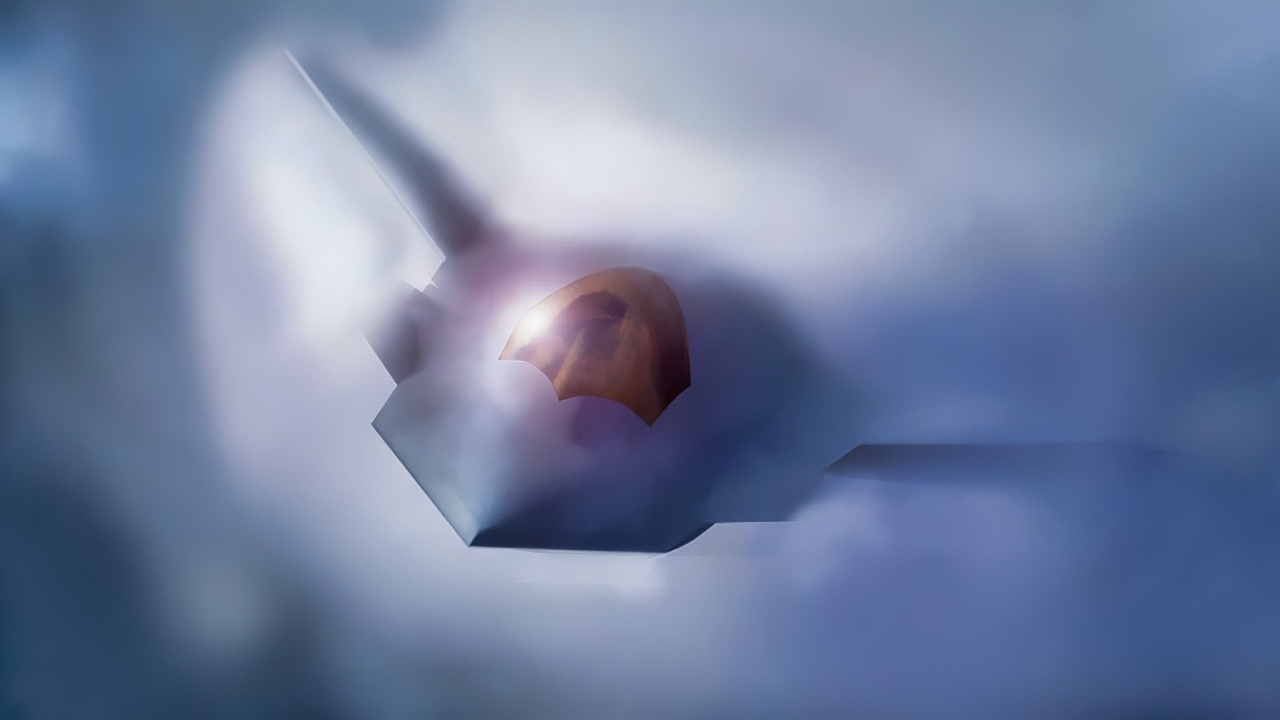
Shown is a graphical artist rendering of the Next Generation Air Dominance (NGAD) Platform. The rendering highlights the Air Force’s sixth generation fighter, the F-47. The NGAD Platform will bring lethal, next-generation technologies to ensure air superiority for the Joint Force in any conflict. (U.S. Air Force graphic)
The F-22 Raptor And Collaborative Combat Aircraft
The F-22 Raptor has it all: stealth, supercruise capabilities, and integrated avionics. And it just got better. It is equipped with an advanced sensor suite to detect, identify, and engage threats before they can be detected.
The cockpit design and advancements in sensor fusion have notably improved pilots’ situational awareness. Another contract involves upgrading the Raptor’s countermeasures.
And the Raptor is the first aircraft to control the Collaborative Combat Aircraft in flight testing.
An F-22 pilot controlled an MQ-20 drone from the fighter’s cockpit. General Atomics Aeronautical Systems (GA-ASI) MQ-20 Avenger uncrewed aircraft performed a test mission with an Air Force F-22 stealth fighter as the company separately plans long-range standoff weapons for the MQ-9B.
Flight Global wrote that the “F-22 acted as a command aircraft and the MQ-20 demonstrated the ability to receive and execute commands through a tactical data link.
“The MQ-20 was able to send messages to the F-22, which in turn sent commands via the Autonodyne Bashi Pilot Vehicle Interface (PVI), software that lets a human pilot in a manned aircraft command and task autonomous uncrewed aircraft during missions.”
The upgrades to the F-22 will help preserve the aircraft’s air-superiority fighter role and competitive edge as the US military confronts more advanced threats from its enemies, especially in the Indo-Pacific, where China poses a particular challenge.
While the Navy’s decision to drop the F-22N concept was undoubtedly a sound one, it still offers an intriguing “what if” scenario: what if the Air Force and Navy were both operating the Raptor?
About the Author: Steve Balestrieri
Steve Balestrieri is a National Security Columnist. He served as a US Army Special Forces NCO and Warrant Officer. In addition to writing on defense, he covers the NFL for PatsFans.com and is a member of the Pro Football Writers of America (PFWA). His work was regularly featured in many military publications.


