


Key Points and Summary – Strip away the memes, and the Boeing X-32, or what would have been the F-32, appears to be a coherent response to the Joint Strike Fighter.
-It chased ruthless commonality and low part count, used direct-lift STOVL to keep mechanics simple, leaned on a one-piece composite wing for factory speed, and packed big internal volume for fuel, bays, and growth.
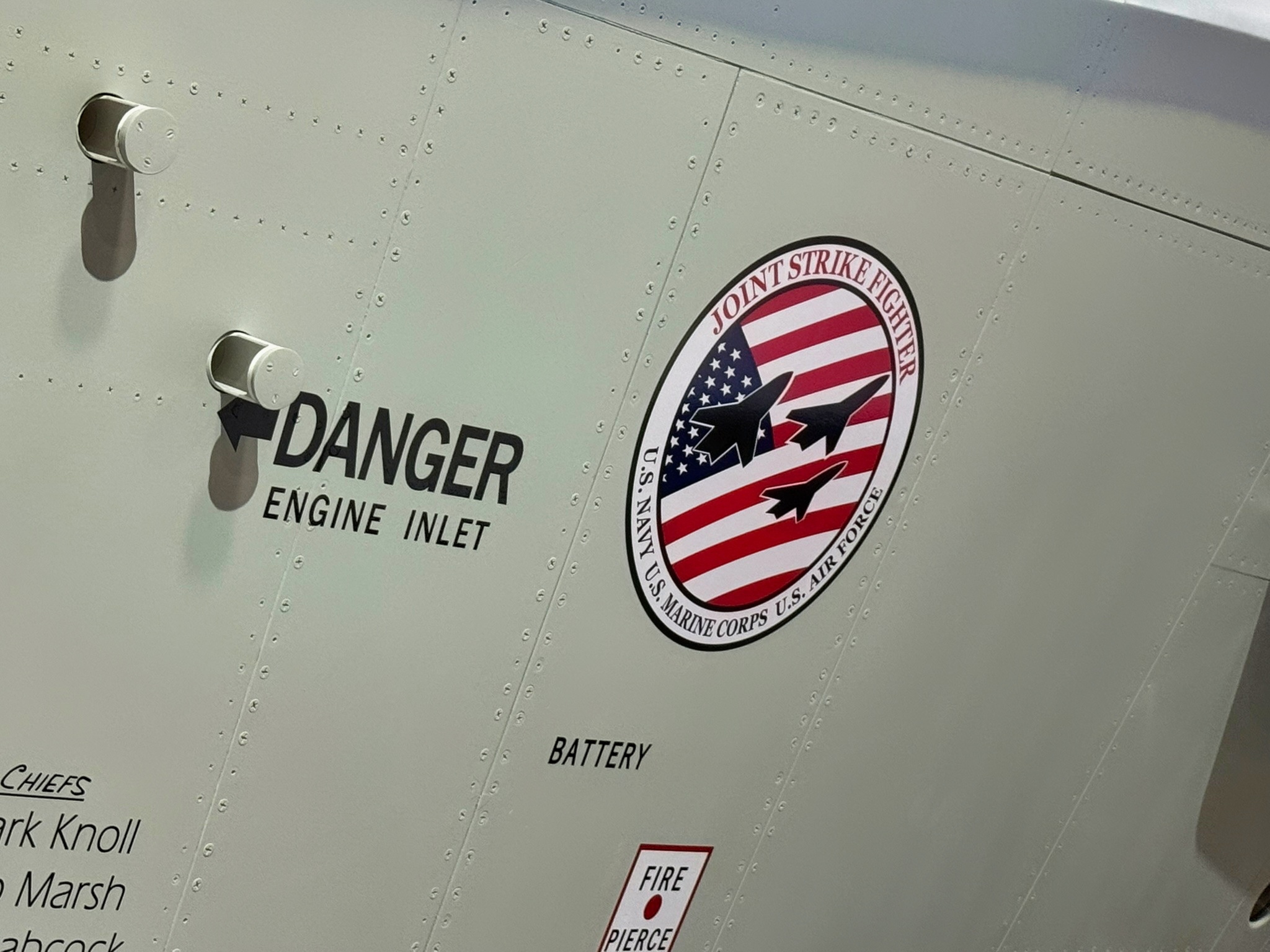
Boeing X-32 Side Shot. Image by National Security Journal.
-The concept demonstrators hit key flight-test cards, proving the approach workable. In another timeline, an F-32 family might have delivered a cheaper, easier-to-build fifth-gen fleet.
-But the X-35’s lift-fan margins, carrier-ready wing-tail, and “Mission X” optics gave the Pentagon safer performance headroom.
-BONUS – National Security Journal has visited both remaining X-32 fighters. We present pictures from both of those visits.
In Defense of the Boeing X-32 or F-32: Five Reasons It Could Have Been America’s Fifth-Gen Workhorse
On July 19, 2025, I spent what felt like a few hours taking pictures of the Boeing X-32 fighter at the U.S. Air Force Museum in Dayton, which was supposedly too ugly to surpass the F-35 in winning the U.S. military’s top fighter contract for decades to come.
The Boeing X-32 has been the butt of hangar-bay jokes for twenty-plus years. The “big grin” chin inlet. The portly delta wing. The unflattering photos. I’m sorry, but I disagree.
None of that changes a deeper truth: on paper—and in flight test—the X-32 was a serious, even elegant answer to an almost impossible brief. The Joint Strike Fighter (JSF) competition asked a single airframe family to do three very different jobs for three services (and allies): short takeoff/vertical landing for Marines and the U.K., carrier operations for the Navy, and land-based multirole for the Air Force. Boeing’s concept demonstrators met those core demonstrations and did so while chasing aggressive cost and commonality goals that, had they carried into production, might have given the U.S. a cheaper, easier-to-build fifth-generation fleet.
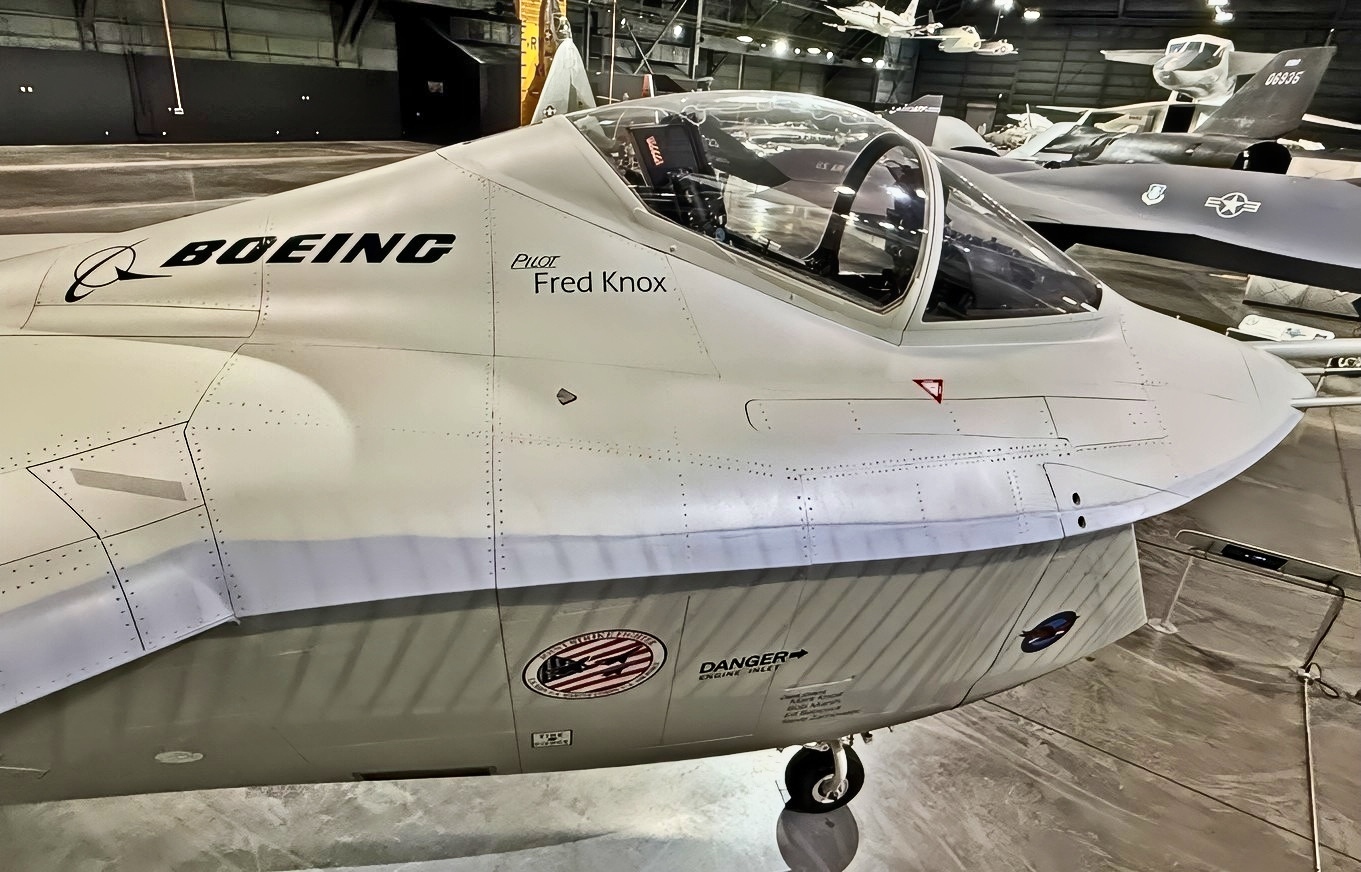
Boeing X-32 JSF. Original Photo Taken By National Security Journal Editor Harry J. Kazianis.
This isn’t a revisionist plea to rerun 2001. Lockheed Martin’s X-35 won the competition for solid reasons, and today’s F-35 has delivered capabilities the Pentagon values. But the X-32 deserves a fair hearing, especially if the conversation is about affordability, manufacturability, and how you scale stealth in big numbers.
Here’s the case for the “what-if” F-32.
What the Competition Really Asked For
JSF wasn’t a beauty contest; it was a logistics revolution disguised as a fighter competition. The Pentagon wanted a fifth-generation, low-observable jet that could be built by the thousands, maintained by airmen, sailors, and Marines across the globe, and tailored in three variants without creating three separate sustainment nightmares. The concept-demonstration phase (1996–2001) wasn’t about perfect prototypes; it was about proving approaches: carrier approaches and low-speed handling, supersonic dash, weapons bay operations, aerial refueling, and—critically for the STOVL variant—stable transitions and vertical landings.
Boeing’s bet was to keep the airplane simple in structure, propulsion, and production flow so the program’s hardest problem—cost over decades—stayed in the box. That philosophy underpins the five strongest arguments for the X-32.
Reason #1: Commonality and Cost Discipline Weren’t Buzzwords—They Were the Design
Boeing never hid its central thesis: drive commonality across variants as far as physics allows, and design for production from day one. That’s why the demonstrators were built around a huge, one-piece composite delta wing mated to a relatively simple fuselage. A single structural “slice” lets you cut part counts, speed final assembly, and—in theory—control defects by removing join lines and shims that plague stealth airframes. The production concept aimed at roughly 80–90 percent parts commonality across Air Force, Navy, and STOVL versions, a stunning figure if you can hold it through design maturation and weight growth.
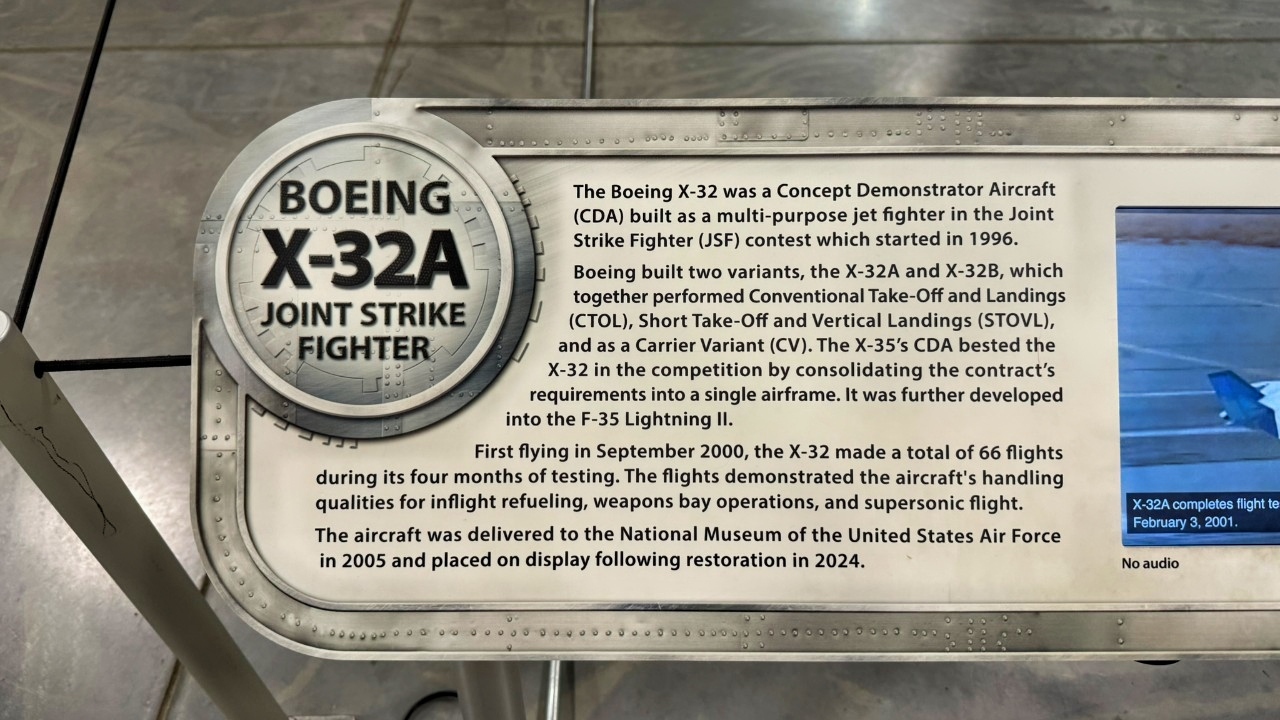
Boeing X-32 Fighter at USAF Museum July 2025. Image Credit: National Security Journal.
There’s a strategic point here. Fighters are not just flown; they’re built and maintained. A family that shares major structural elements, control surfaces, actuators, doors, and even fastener patterns pays the fleet back every day—in training pipelines, spares, depot tooling, and software configuration management. Boeing talked about JSF as a factory problem as much as a flight problem, and the X-32 demonstrators validated that mindset with a rapid, digital-driven build and a fast test tempo.
Reason #2: Direct-Lift STOVL Was Simple, Familiar—and It Worked
The most controversial trade in the JSF duel was how to hover. Boeing chose a direct-lift approach: vector the main engine’s thrust downward with a swiveling nozzle, supplement roll with wingtip nozzles, and manage hot-gas ingestion with clever ducting and a “jet screen” of cooler bypass air. Lockheed Martin chose a shaft-driven lift fan in the forward fuselage, coupled to a swiveling rear nozzle—mechanically more complex, but with big thrust margins for hot, high, shipboard days.
Boeing’s case was straightforward: fewer moving parts, a single powerplant, simpler maintenance, lower mass, and an approach with roots in Harrier-style operations—but with modern digital flight-control magic to take the pilot out of the plate-spinning act. In flight test, the X-32B executed repeated transitions, sustained hovers, vertical landings, and even went supersonic in the same aircraft during the concept-demonstration window. The direct-lift system did what it said on the tin: it hovered, it was controllable, and it proved the pilot workload could be low. For a services-wide fleet sustained over decades, “simple and reliable” is not a trivial virtue.
Reason #3: A One-Piece Wing and Digital Build Promised Factory Speed
The X-32’s single-piece composite wing wasn’t a styling flex; it was a production bet. One giant part—automated layup, cure, and mate—can shrink station counts, eliminate spar-rib assembly, reduce drilling and sealing, and keep tolerance stack-ups under control, which matters doubly on a stealth jet where misalignments become radar corner reflectors. Boeing rolled both demonstrators out in quick succession and racked up flights fast, leaning hard on digital design/manufacturing. That pace wasn’t just PR. It was proof that the airframe architecture lent itself to short build cycles and high learning rates—the stuff that drives unit recurring flyaway costs down where budgets live.
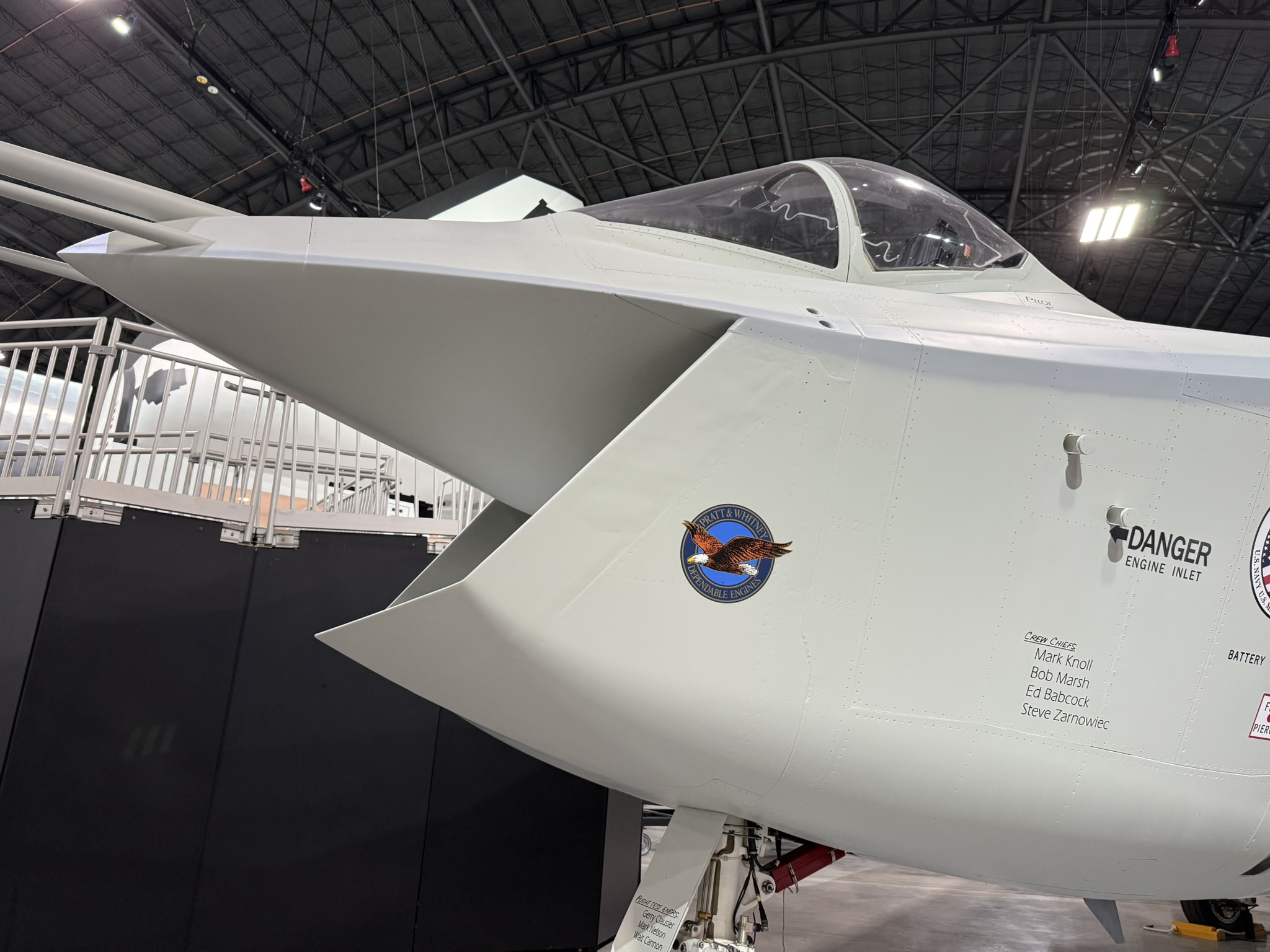
Boeing X-32 National Security Journal Photo. Taken on 7/19/2025.
Would a production X-32 wing have changed in detail? Absolutely; every X-plane morphs on the way to a fleet jet. But the central factory logic—large assemblies, low part count, repeatable mates—was sound. In a world where the Pentagon is once again rediscovering the importance of production agility (see today’s push for “digital thread” and “software-defined” sustainment), Boeing’s 1999–2001 build philosophy reads as prescient.
Reason #4: Big Internal Volume Means Endurance, Payload, and Growth for F-32
That broad delta wasn’t just a structural convenience; it was a fuel tank with wings. Volume is life in a stealth airplane. More internal fuel means more on-station time without a radar-blaring tanker rendezvous. More bay volume buys flexibility for longer or bulkier weapons, conformal apertures, or future mission kits. And the chord and thickness of a delta are friendly to buried antennas and distributed apertures—exactly the kind of grow-in-place mission-systems architecture fifth-gen fleets crave as threats evolve.
Could Boeing have matched the F-35’s exact sensor fusion architecture? That’s unknowable. But the airframe real estate was there to host a serious, scalable avionics suite and to do it without external stores or draggy pods. For a joint airplane expected to live forty years, volume is destiny.
Reason #5: The Flight-Test Cards That Matter Looked Good
Strip away the memes, and the demonstrators did the work. The X-32A handled low-speed carrier approaches cleanly. It hit the supersonic box. It executed aerial refueling and weapons-bay opens. The X-32B entered hover from wing-borne flight, transitioned, and landed vertically, repeatedly—exactly the transitions Marines and Royal Navy pilots needed to see. By the end of the demo phase, Boeing was flying multiple sorties per day, including first-ever STOVL transitions and sustained hovers that underscored controllability.
No, Boeing didn’t string the short-takeoff, supersonic dash, and vertical landing together in a single “Mission X” sortie the way its rival did—and optics matter in competitions. But if you judge the data against the ask—“prove your approach works”—the cards were punched.
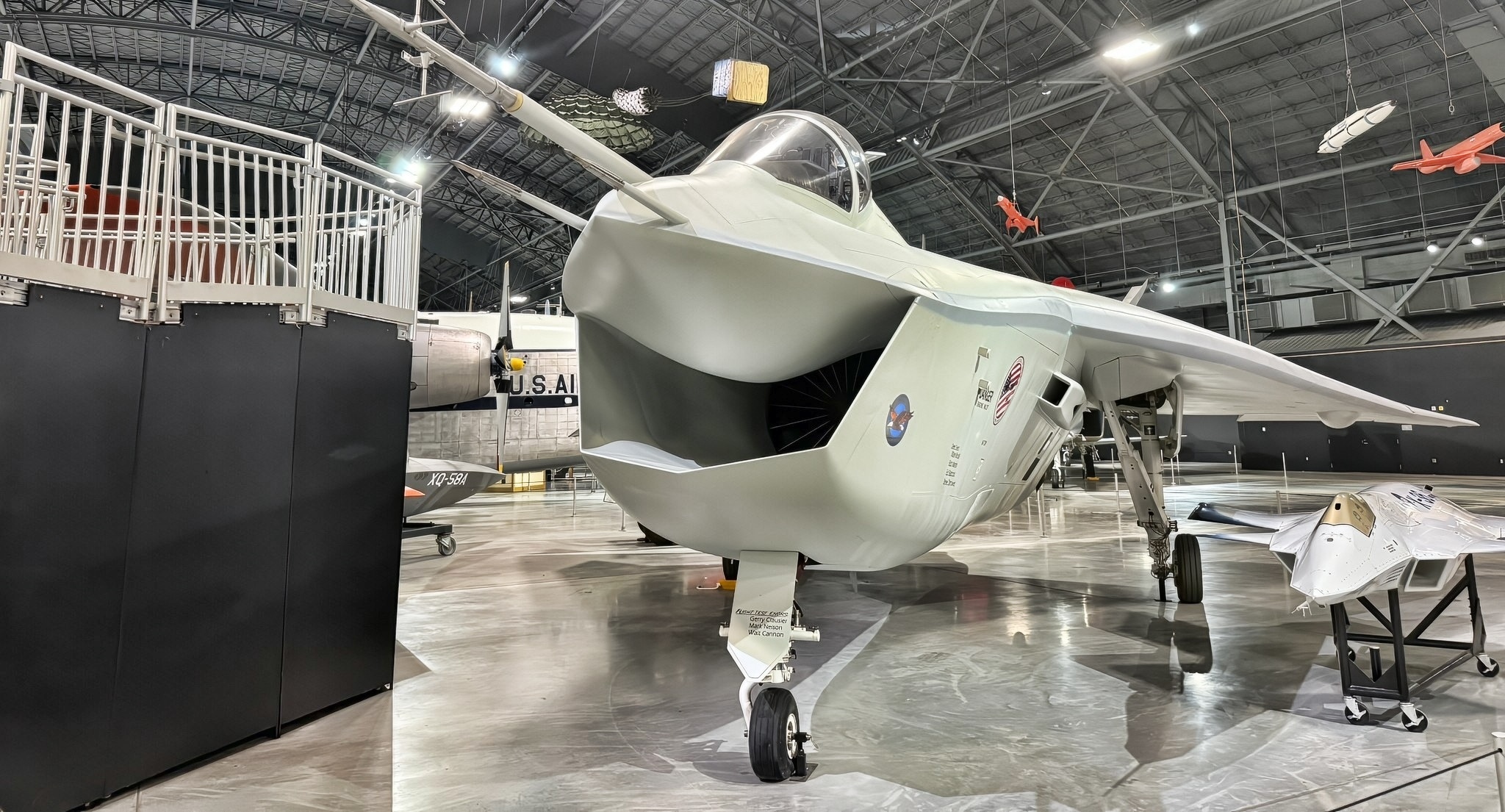
Boeing X-32 Bright Image. Credit: National Security Journal.
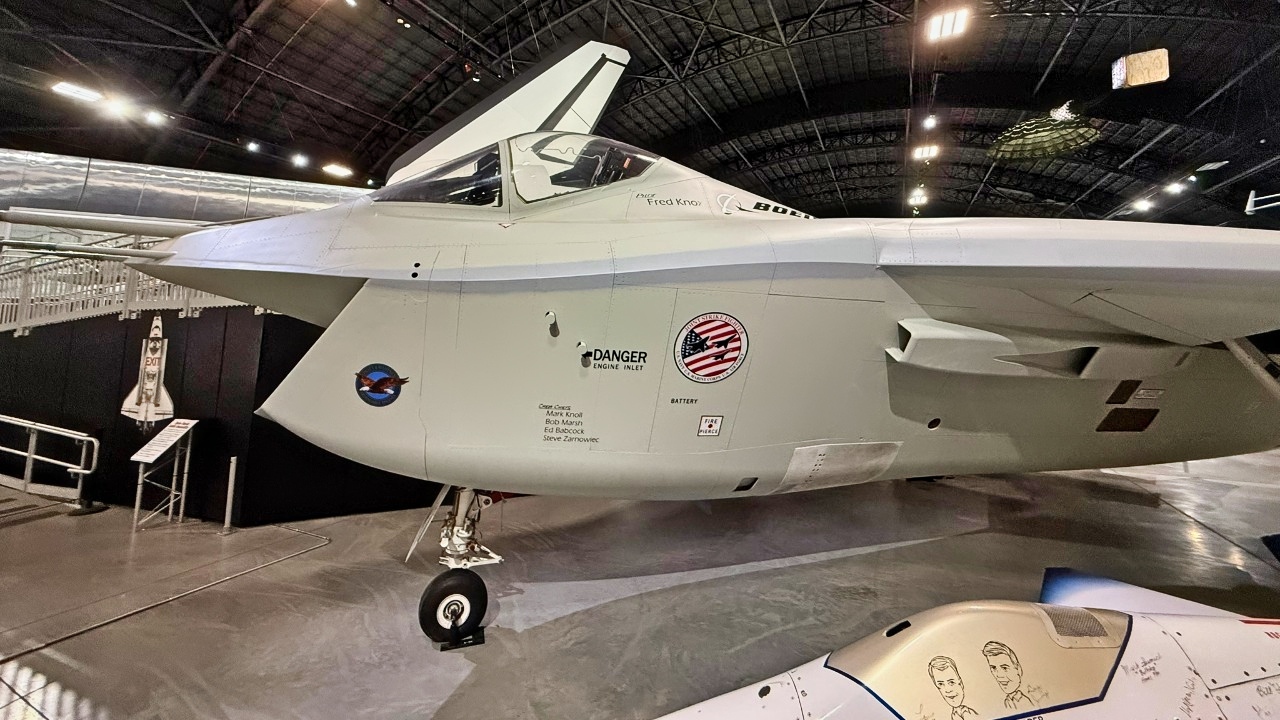
Boeing X-32 Fighter USAF Museum Dayton Ohio. Image Credit: National Security Journal.
Why No F-32?
Because performance margins and risk count, and the X-35 offered both where the Pentagon was looking hardest. The lift-fan system delivered eye-opening vertical-lift thrust and temperature margins for the STOVL variant—gold for shipboard ops under hot, heavy, and degraded conditions. Lockheed Martin also made sure the most cinematic proof point—the short takeoff, supersonic run, and vertical landing—happened in one flight. That’s not just showmanship; it collapses risk in the government’s mind: this exact machine can do the exact mission profile without reconfiguration.
There were other concerns. The big delta wing that Boeing used on the demonstrators wasn’t the wing Boeing wanted to take to production. As Navy payload and maneuver targets sharpened, Boeing proposed a more conventional wing-tail for the “real” jet. That’s a reasonable engineering evolution—everyone adjusts between X-plane and fleet airplane—but it left evaluators to imagine how a different wing would hit carrier bring-back and transonic agility. In a winner-take-all program of historic size, “trust us, we’ll fix it in SDD” was always a tough sell.
And then there is simple program psychology. The Department of Defense believed the lift-fan’s higher performance justified the mechanical complexity. When the stakes are “one airplane to rule them all,” the buyer tends to maximize technical margin—even if that adds risk in manufacturing and sustainment.
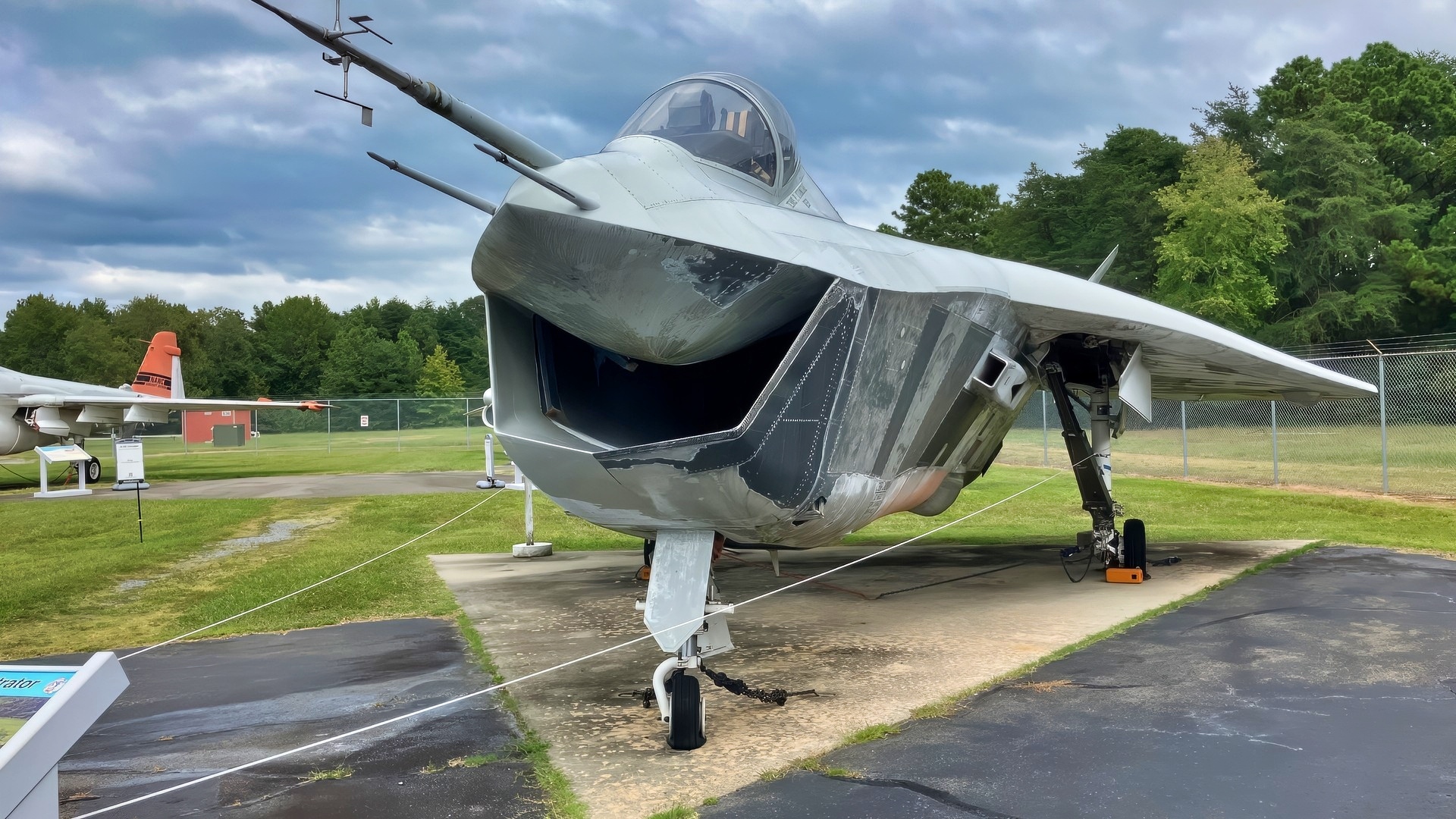
Boeing X-32 in Maryland NSJ Image September 2025. Image by Christian D. Orr.
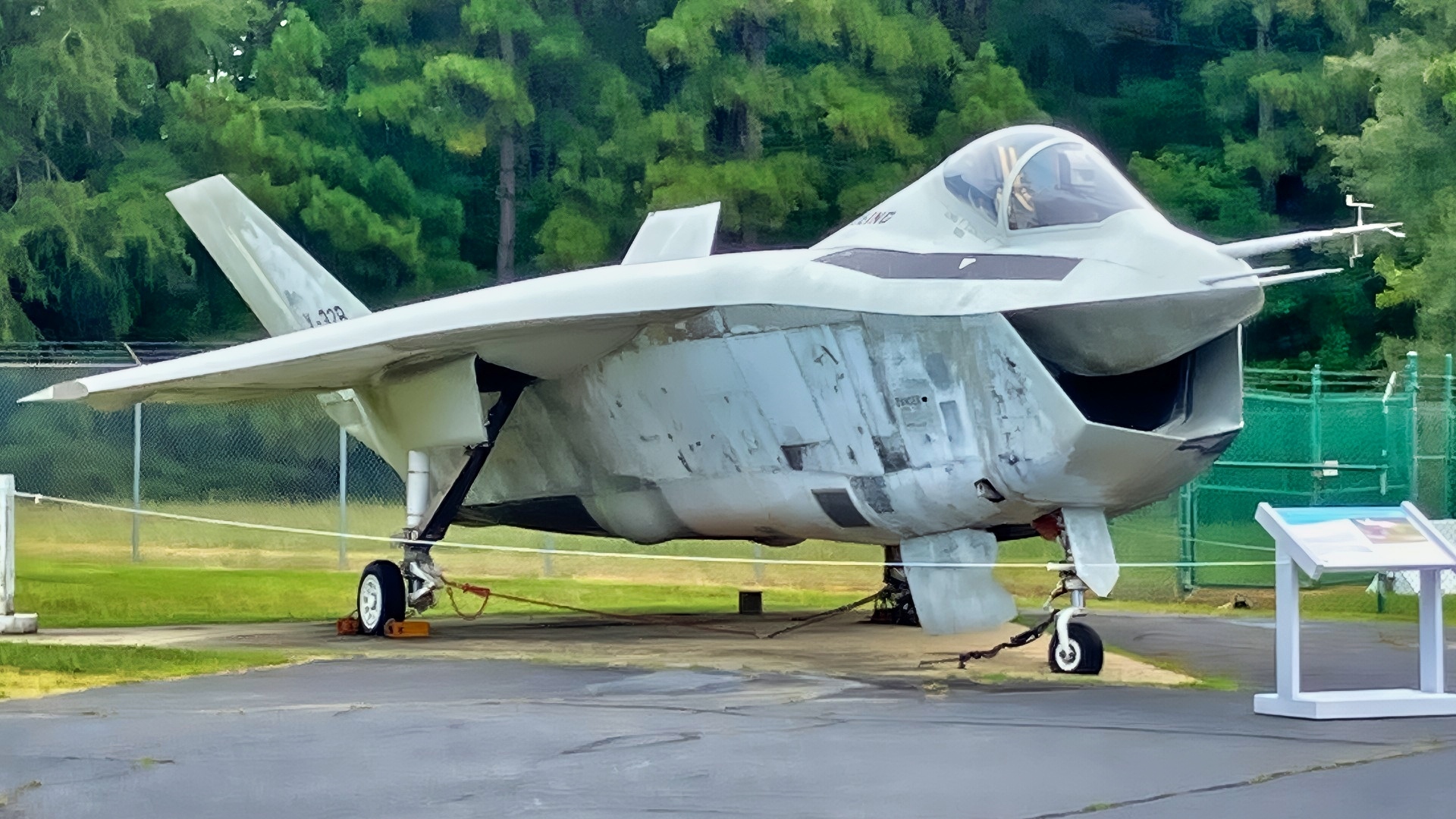
Boeing X-32 in Maryland National Security Journal Photo. Image Credit: Christian D. Orr.
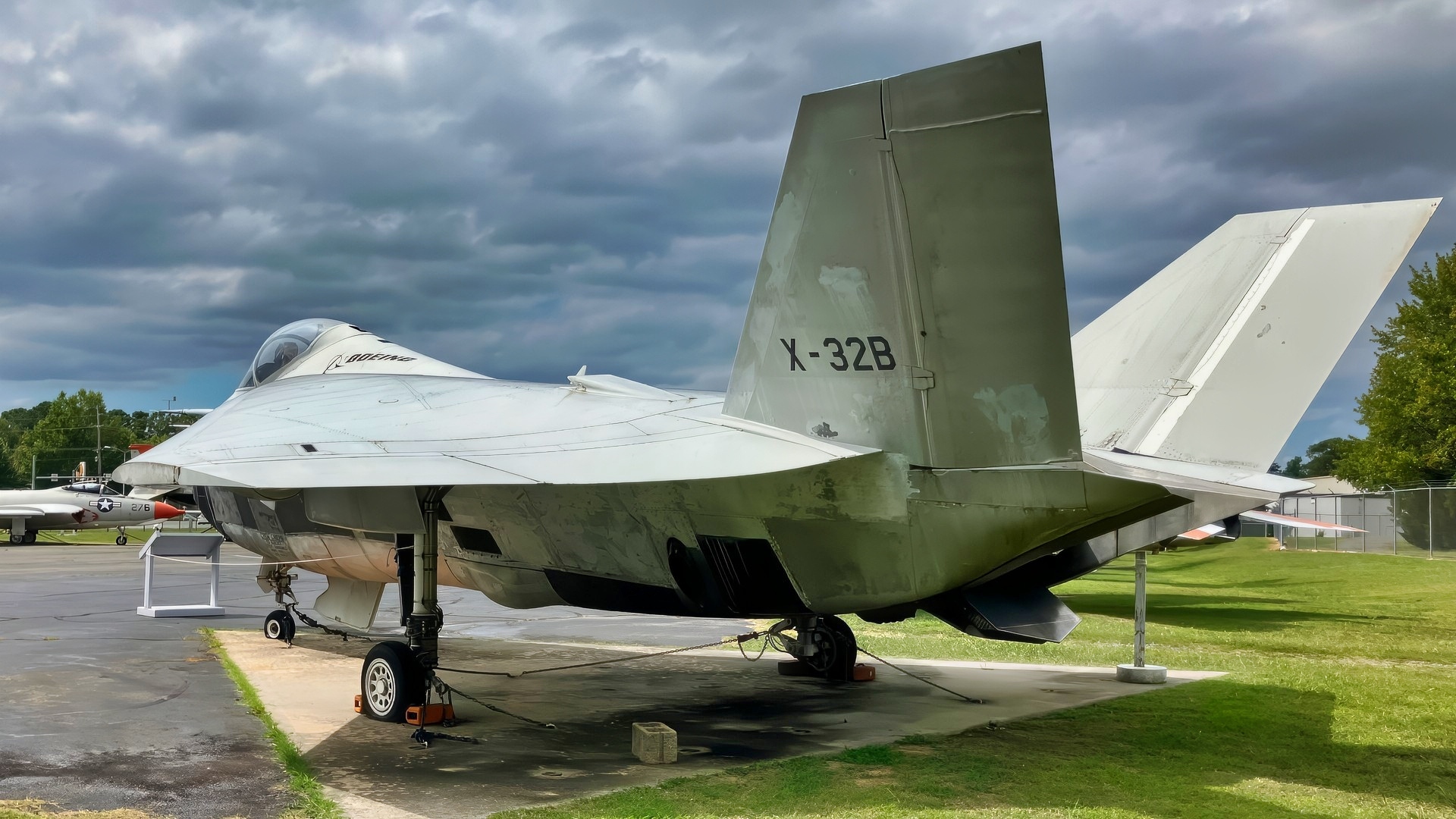
Boeing X-32 Stealth Fighter in Maryland. Image Credit: National Security Journal.
F-32 Rethink: What Might the Fleet Have Looked Like If X-32 Had Won?
Counterfactuals are fun because they force you to own tradeoffs. An operational F-32 family likely would have delivered:
A very high degree of parts commonality among A/B/C variants, with paybacks in training and spares.
Simpler STOVL mechanics that maintainers could love, at the cost of lower vertical-lift thrust margins compared to a lift-fan design in the worst thermal conditions.
Robust range and bring-back thanks to big internal fuel and a roomy bay, with a production wing tailored to Navy approach speeds and catapult/arrester loads.
A factory that learns fast. The single-piece wing and digital assembly flow were almost certainly going to produce tight station times and high sortie-generation potential in test and, eventually, in the fleet.
Would it have matched the F-35’s kinematic performance or signature from all aspects? Not necessarily—and that’s where the “right call” argument begins.
Why the Pentagon Ultimately Made the Right Call
The job of a JSF down-select wasn’t to crown the cleverest factory; it was to buy warfighting margin across three unforgiving mission sets. The X-35’s lift-fan won because it offered more vertical-lift thrust and thermal headroom, which translates to safer deck ops and more operational flexibility. The X-35 team also demonstrated, in highly visible fashion, the exact STOVL-to-supersonic-to-vertical sequence the Marine Corps cared about. Add to that a trapezoidal wing and tail that already looked like a carrier flyer, and the government faced less “imagine the production redesign” risk.
Then there’s the hindsight we’ve earned since 2001. However painful the F-35’s development has been, it now fields at scale with deep sensor fusion, mature low observables, and a global sustainment ecosystem. That reality matters. Had Boeing won, the X-32 would have had to traverse the same valley of software, LO coating, and supply-chain tears. It’s not obvious it would have done so faster or cheaper.
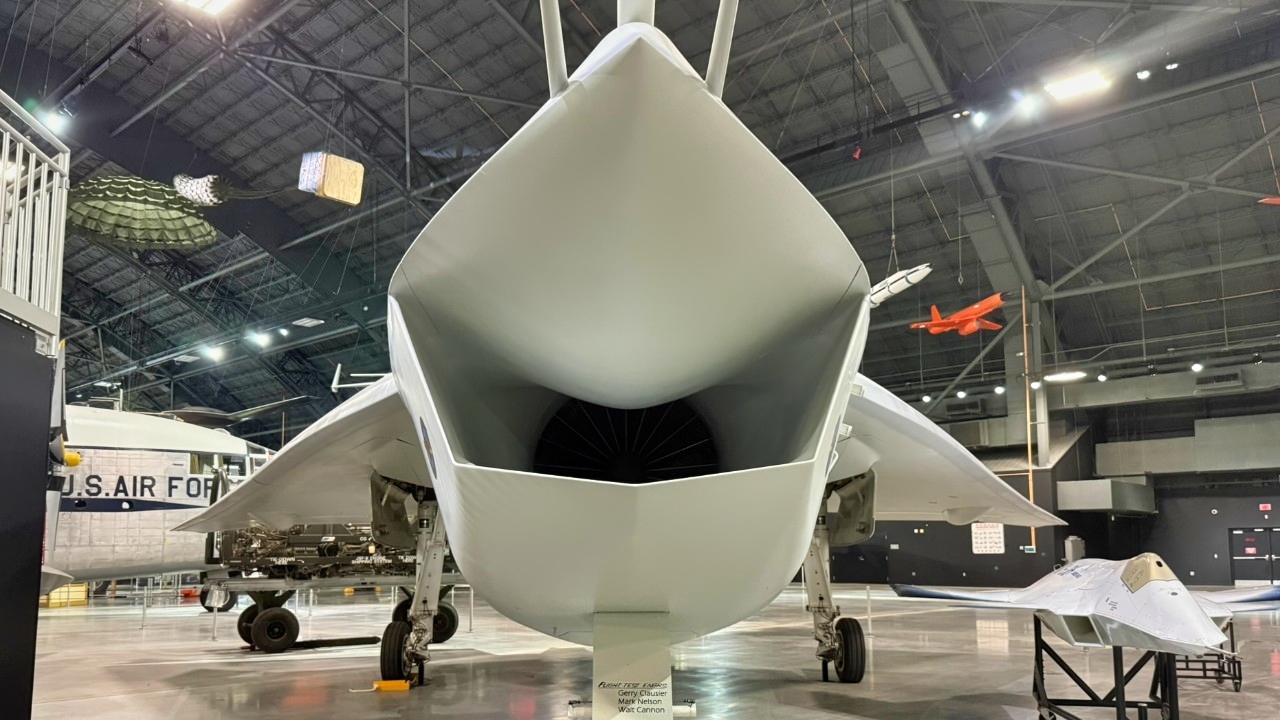
Head On Boeing X-32 Fighter. Image Credit: National Security Journal.
In other words, the X-32 or F-32 could have been a capable, less expensive-to-build fifth-generation fleet; the F-35 is the airplane the joint force needed to carry the Pacific fight into contested airspace with an undeniable STOVL capability and sensor integration. Both can be true.
What the X-32 Still Teaches
If you work airplanes for a living, the X-32 or F-32 is a masterclass in three enduring lessons:
Simplicity scales. Every actuator you delete, every join you eliminate, every part you commonize pays out forever in fleet life.
Demonstration narratives matter. The difference between “we did all the cards” and “we did the mission” can swing a billion-dollar decision.
Volume is versatility. Designers obsess over wing loading and instantaneous turn rates; strategists obsess over range, payload, and growth margin. The delta gave Boeing options that would have aged well.
About That “Ugly” Thing
Aesthetics don’t dogfight, and stealth aerodynamics rarely look svelte up close. The X-32’s chin inlet was a functional choice aimed at feeding a thirsty core at high angles of attack, reducing boundary-layer headaches, and freeing the sides of the fuselage for bays and sensors. The broad wing was a factory and fuel decision. Up close, it reads “workmanlike.” From a program manager’s desk, that’s a compliment.
The Bottom Line on X-32 or F-32
Had the Pentagon picked Boeing’s approach, we might be talking today about the F-32 as the frugal, common, “good enough everywhere” fifth-gen that kept procurement lines humming and depot shelves simpler. That doesn’t make the 2001 decision wrong. The F-35’s lift-fan margin, kinematics, and already-there carrier wing-tail were the safer way to buy a tri-service future in one swing.
What we should retire is the idea that the X-32 was a punch line. It was a coherent, disciplined answer to JSF’s hardest question—how to industrialize stealth—and on that score, the “ugly” jet had a lot to teach.
In any case, the ‘F-32’ will always have a place in my heart. Ugly, or not.
About the Author: Harry J. Kazianis
Harry J. Kazianis (@Grecianformula) is Editor-In-Chief and President of National Security Journal. He was the former Senior Director of National Security Affairs at the Center for the National Interest (CFTNI), a foreign policy think tank founded by Richard Nixon based in Washington, DC. Harry has over a decade of experience in think tanks and national security publishing. His ideas have been published in the NY Times, The Washington Post, The Wall Street Journal, CNN, and many other outlets worldwide. He has held positions at CSIS, the Heritage Foundation, the University of Nottingham, and several other institutions related to national security research and studies. He is the former Executive Editor of the National Interest and the Diplomat. He holds a Master’s degree focusing on international affairs from Harvard University.
More Miliary
The U.S. Navy’s Constellation-Class Crisis Boiled Down to 4 Words
The F-20 Tigershark Light Fighter Boiled Down to 4 Words
China Claims New J-35 Stealth Fighter Is ‘Invisible’
The 5 Greatest U.S. Navy Aircraft Carriers Of All Time
The Navy’s New Ford-Class Aircraft Carriers Can’t Hide All The Problems Anymore


