

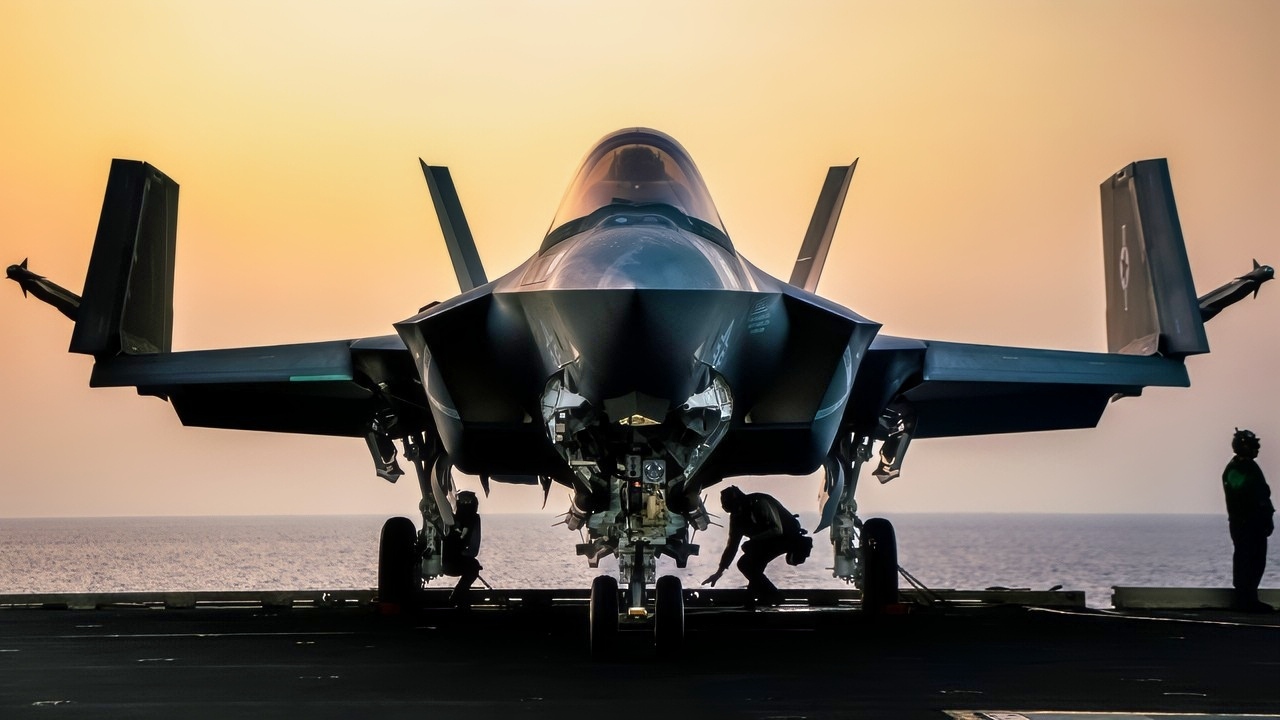
Key Points and Summary – The F-35 is really three aircraft—A, B, and C—with a fourth, Israel’s custom F-35I Adir, proving how adaptable the Lightning II has become.
-Beyond stealth, its edge is sensor fusion and data-sharing: pilots can shift from “muscle” to “messenger,” quarterbacking the fight for every asset nearby.
-The F-35A brings CTOL versatility and an internal gun; the F-35B adds STOVL ops for ships and austere strips; the F-35C stretches its wings for carrier decks.
-Israel’s Adir tailors software and tactics to regional threats, showcasing the jet’s upgrade path. One airframe, multiple missions—power, flexibility, and a growing combat résumé.
The F-35 “Is Three…Three Aircraft in One,” Maybe Four
The F-35 is the most advanced aircraft in the world and it isn’t close for #2. Despite the continuing bad press, the Lightning II has more than proved its worth. Which is why 20 countries are flying it.
The American-built F-35 is, in essence, three different fighters with each of the t distinct variants—the F-35A, F-35B, and F-35C—each designed for different operating environments and roles. But let’s not forget the F-35I Adir variant of the Israeli Air Force.
The F-35A is a conventional takeoff and landing (CTOL) jet for the Air Force, the F-35B is a short-takeoff/vertical-landing (STOVL) variant for the Marine Corps and international partners, and the F-35C is a carrier-based (CV) version for the Navy. The Israeli variant, the F-35I Adir, “Mighty One” was designed and has been heavily modified to suit Israel’s specific operational needs.
The F-35 Is Much More Than A Fighter:
Before we delve into each different variant of the F-35, let’s take a look at what makes all variants of the Lightning II so special. RTX posted an article about why the aircraft has so many attributes. Written by a former fighter pilot, Jeff “Bangs” Fellows, a retired U.S. Navy Commander, who flew the F-16A/B Fighting Falcon, F/A-18C Hornet, F/A-18E/F Super Hornet, and the F-35C Lightning II.
“Fellows was out of munitions – but not out of the fight.
“In any other fighter jet, he might have had reason to head back to base and wait to see how the training mission played out. But that day off the coast of California, Fellows was flying an F-35C, and, following a furious first sweep of the airspace, he and the other F-35 pilots pivoted.
“Now that they were done being the muscle, it was time for them to drop back and serve as the messengers.
“Knowing the F-35’s sophisticated sensors could take in a trove of data and share it with the squadron – giving them a better picture of the airspace and a higher chance of success – they demonstrated the F-35’s key advantage: Not only is it a fighter in its own right, it can lend that power to every other part of the joint force.” And it is unsurpassed in this facet of its technological wizardry.
“The F-35 gives you that room to quickly adapt and maneuver to either counter the threat or take advantage of a weakness you can perceive,” said Fellows, who now works with Raytheon, helping bring the next generation of technology to the US aircraft. “Being in that quarterback role, there’s still a lot of breathing room to flex as the battlespace flexes.”
Meet The Air Force’s F-35 A:
The F-35A Lightning II is the United States Air Force’s version of the F-35 stealth fighter. It is a single-engine, supersonic, multirole aircraft designed to replace aging aircraft like the F-16 and A-10.
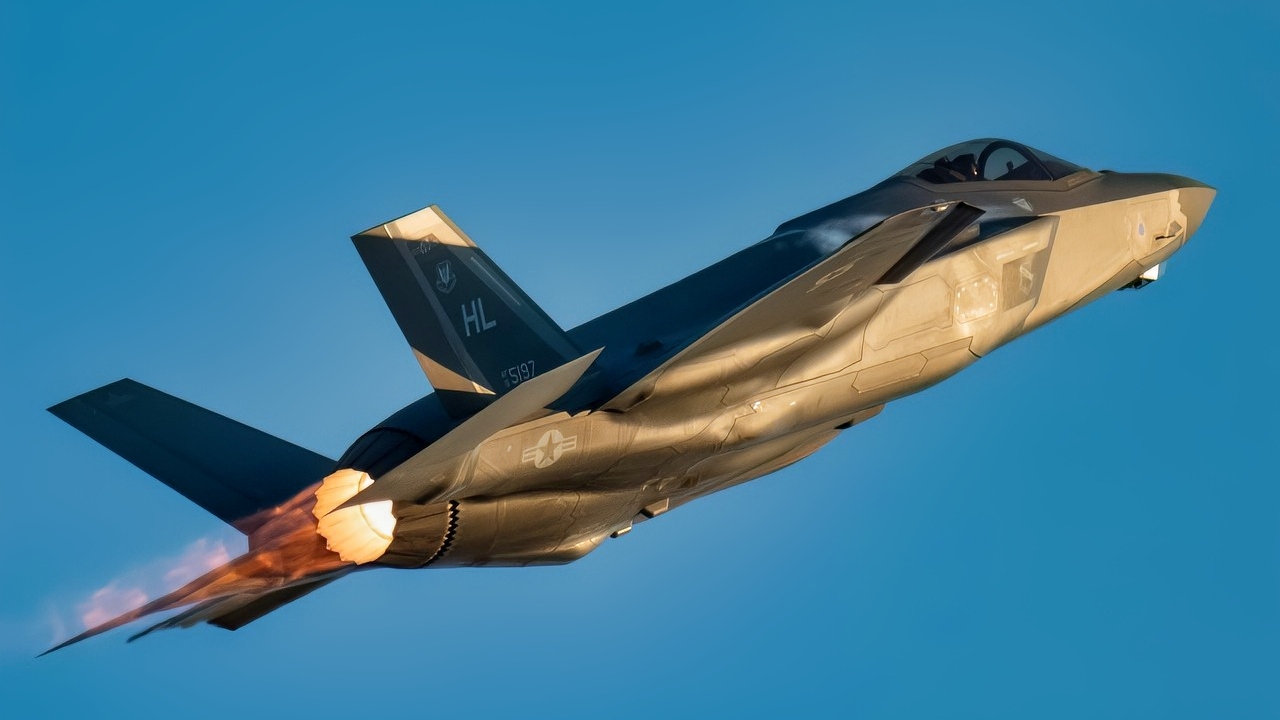
U.S. Air Force Major Kristin “BEO” Wolfe, F-35A Lightning ll Demonstration Team pilot and commander, flies during sunset over Mathers Airport, Calif., Sept. 24th, 2021, at the California Capital Airshow. The team consists of approximately 15 total Airmen to include the pilot and commander, pilot safety officers, superintendent, team chief, maintenance Airmen, aircrew flight equipment specialists, and public affairs personnel. (U.S. Air Force photo by Staff Sgt. Thomas Barley)
Key features of the F-35A include advanced stealth technology, integrated avionics for exceptional situational awareness, a powerful internal cannon, and the ability to carry weapons internally for stealth.
Key Characteristics Of the F-35A:
The “A” in F-35A signifies its conventional takeoff and landing capability. Designed with stealth features to evade enemy detection and operate in contested airspace. Possesses a sophisticated sensor suite and information fusion capabilities, providing superior situational awareness for the pilot.
The F-35A is powered by a single Pratt & Whitney F135 low-bypass augmented turbofan with a rated thrust of 28,000 lbf (125 kN) at military power and 43,000 lbf (191 kN) with afterburner. Its top speed is Mach 1.6.
Derived from the Pratt & Whitney F119 used by the F-22, the F135 has a larger fan and higher bypass ratio to increase subsonic thrust and fuel efficiency, and unlike the F119, it is not optimized for supercruise.
The F-35A is capable of performing a variety of missions, from air superiority to ground attack. The aircraft carries weapons internally in weapons bays to maintain its stealth profile. It is armed with a powerful 25mm GAU-22/A cannon for close-range engagements.
The F-35’s integrated sensor package is built around a network of cameras, placed strategically around the aircraft exterior, giving pilots 360-degree views of the airspace. The Raytheon Distributed Aperture System – in pilot’s shorthand, it’s simply called the “DAS.”
Meet The Marine Corps F-35B:
The F-35B Lightning II is a single-engine, stealthy, supersonic, multirole fighter jet developed by Lockheed Martin, featuring a unique short takeoff and vertical landing (STOVL) capability via a vertical lift fan and a pivoting engine nozzle, making it ideal for operation from expeditionary airfields and ships.
This variant is designed for the United States Marine Corps and international partners, replacing aging aircraft like the AV-8B Harrier II.

A joint team consisting of F-35 Patuxent River Integrated Test Force flight test members, U.S. Sailors and Marines, and the crew of the Japan Maritime Self-Defense Force Izumo-class multi-functional destroyer JS Kaga (DDH-184) are executing developmental sea trials in the eastern Pacific Ocean to gather the necessary data to certify F-35B Lightning II short takeoff and vertical landing aircraft operations. While aboard the MSDF’s largest ship, the Pax ITF flight test team has been gathering compatibility data for analysis in order to make recommendations for future F-35B operational envelopes, further enhancing the Japanese navy’s capabilities. The results of the testing will contribute to improved interoperability between Japan and the United States, strengthening the deterrence and response capabilities of the Japan-U.S. alliance and contributing to peace and stability in the Indo-Pacific region. Japan is an F-35 Joint Program Office foreign military sales customer planning to purchase 42 F-35Bs. The F-35 Joint Program Office continues to develop, produce, and sustain the F-35 Air System to fulfill its mandate to deliver a capable, available, and affordable air system with fifth-generation capabilities.
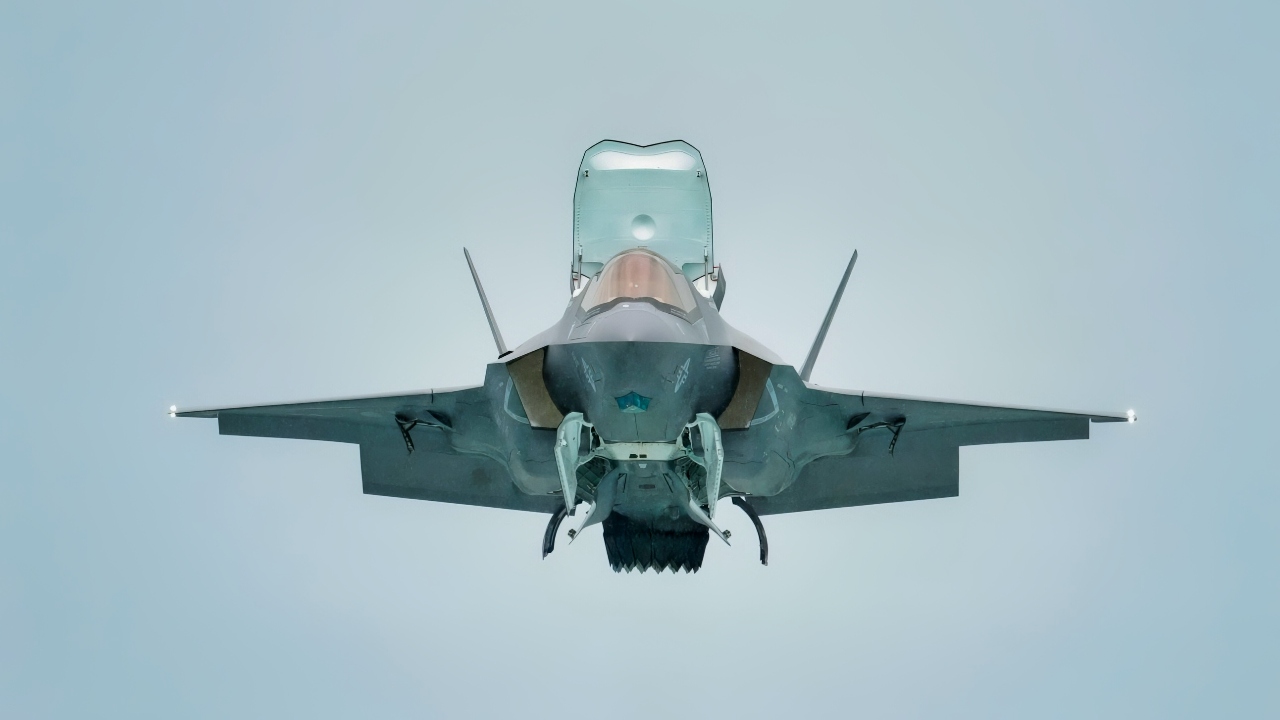
A U.S. Marine Corps F-35B Lightning II assigned to the Marine Fighter Attack Squadron 242, Marine Aircraft Group (MAG) 12, Marine Corps Air Station, Iwakuni, conducts an aerial demonstration during the Singapore Airshow 2022 at Changi Exhibition Center, Republic of Singapore, Feb. 16, 2021. Through participation in regional events like the Singapore Airshow, the U.S. demonstrates its commitment to the security of the Indo-Pacific, promotes interoperability, displays the flexible combat capabilities of the U.S. Military, creates lasting relationships with international audiences, and strengthens partnerships throughout the Indo-Pacific region. (U.S. Air Force photo by Master Sgt. Richard P. Ebensberger).
Key features of the F-35B, and the F-35 family in general, include advanced stealth technology, a powerful sensor suite, and an internal weapons bay, which together provide superior battlefield awareness, survivability, and lethality.
Meet The Navy’s F-35C:
The F-35C Lightning II is the United States Navy’s carrier-based variant of the F-35 Lightning II, a fifth-generation, stealth, multi-role fighter jet that operates from aircraft carriers and features larger wings, a more robust landing gear, and foldable wingtips designed for naval operations.
It serves as a force multiplier for carrier strike groups, enhancing global security through its advanced sensors, communications suites, and network-centric capabilities.
The F-35C is the first low-observable, carrier-based aviation platform, providing radar-evading capabilities to U.S. naval aviation. F-35Cs operate from carrier strike groups, replacing legacy aircraft like the F/A-18C/D Hornet.
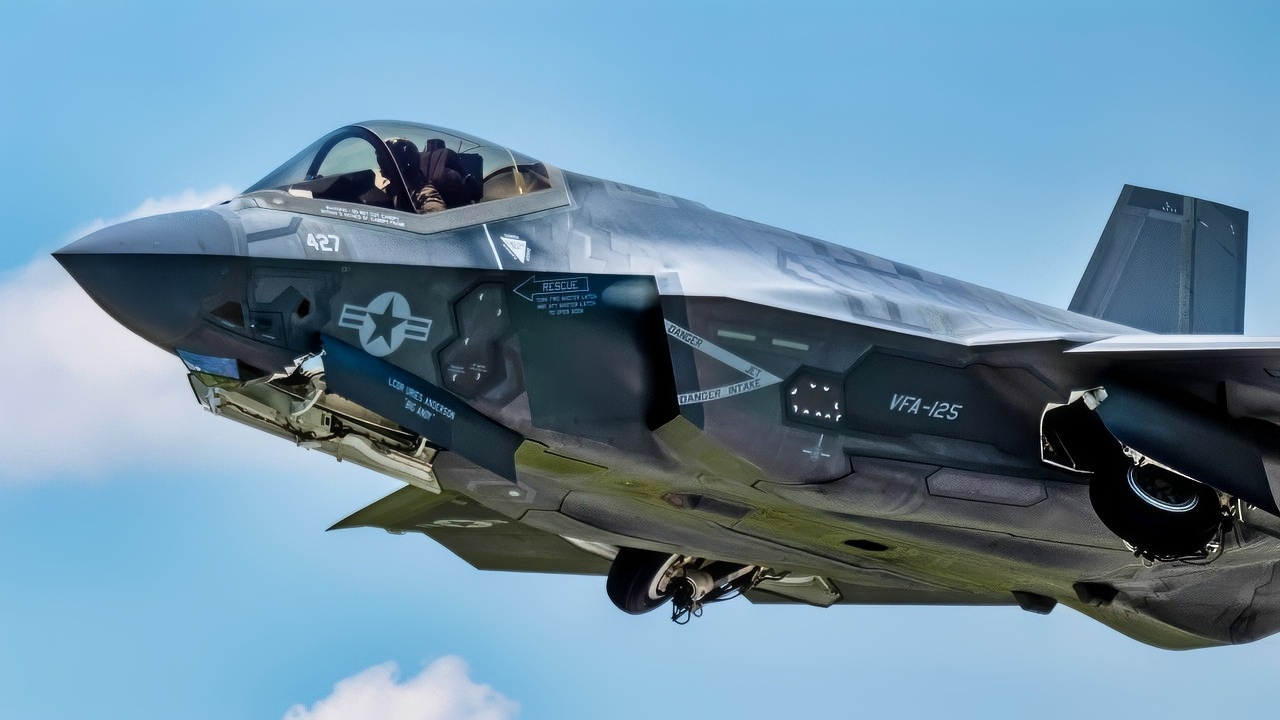
U.S. Navy Lt. Dave Hinkle, F-35C Lightning II Demonstration Pilot, performs during the 2021 Atlanta Air Show, Atlanta Regional Airport-Falcon Field, Ga., May 23, 2021. The U.S. Navy and Marine Corps’ carrier variant has larger wings and more robust landing gear than the other F-35 variants, making it suitable for catapult launches and fly-in arrestments aboard naval aircraft carriers. (U.S. Air Force photo by Staff Sergeant Thomas Barley)
Meet The F-35I Adir:
The F-35I Adir is an Israeli-adapted variant built for operations in precisely the kind of mission profile that the Israelis have long planned for.
Israel has adapted the F-35I stealth fighters—technically, tactically, and strategically perfectly for their type of warfare. And when it came time to act, they did so with speed, stealth, and chilling precision.
In October 2024 and earlier this year, the Israeli F-35Is carried out devastating air strikes against Iranian air defenses, missile manufacturing and warehousing and Iranian nuclear enrichment facilities. They destroyed everything in their path without the loss of a single airc
Admiral Tony Radakin, the United Kingdom’s chief of defense staff, said, “Israel used more than 100 aircraft, carrying fewer than 100 munitions, and with no aircraft getting within 100 miles of the target in the first wave, and that took down nearly the entirety of Iran’s air-defense system.
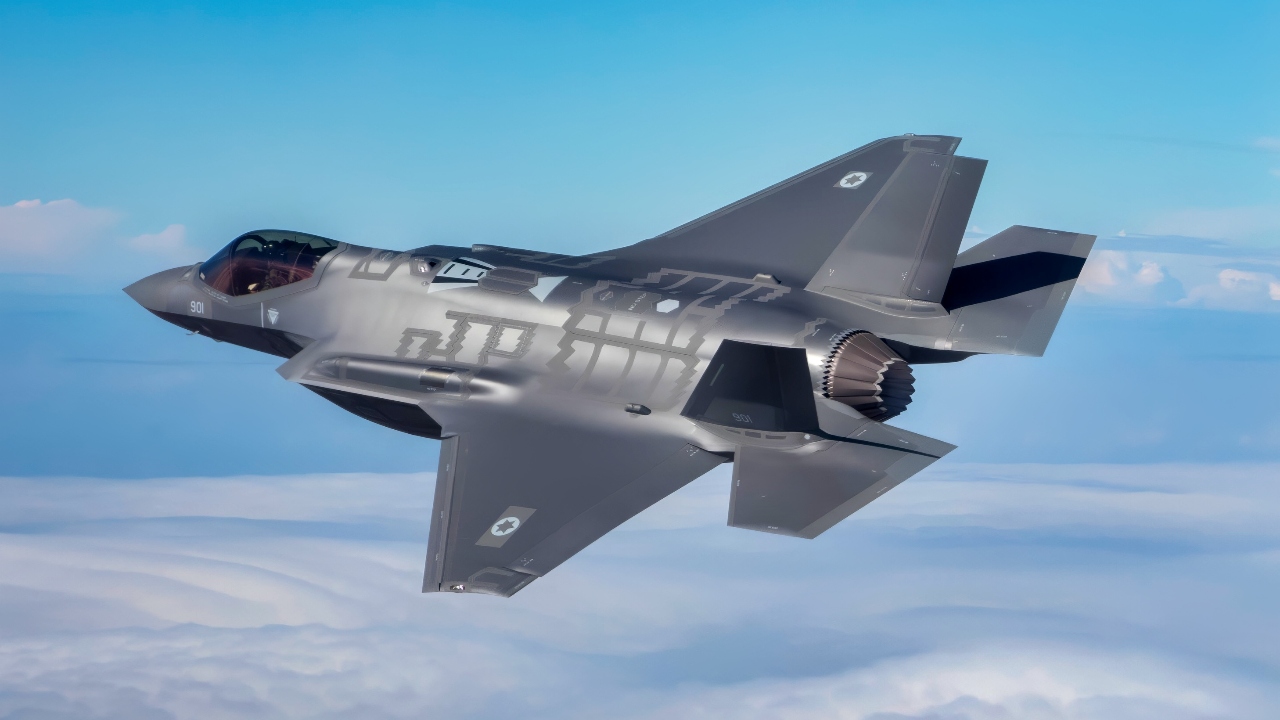
F-35I Fighter from Israel. Image Credit: Creative Commons.
“It has destroyed Iran’s ability to produce ballistic missiles for a year and left Tehran with a strategic dilemma in how it responds. That is the power of fifth-generation aircraft, combined with exquisite targeting and extraordinary intelligence,” Radakin added. “And that was all delivered from a single sortie.”
All four variants have different mission profiles and are used differently. But the basic aircraft remains the same. The F-35; and it is possible Lockheed Martin may make a Ferrari out it just yet.
About the Author: Steve Balestrieri
Steve Balestrieri is a National Security Columnist. He served as a US Army Special Forces NCO and Warrant Officer. In addition to writing on defense, he covers the NFL for PatsFans.com and is a member of the Pro Football Writers of America (PFWA). His work was regularly featured in many military publications.
More Military
Can the U.S. Navy Replace the Aircraft Carrier?
China’s J-20S Fighter: The Secret Is Out
China’s New J-36 Fighter Has 1 Mission


