
Key Points and Summary – Despite President Trump’s declaration that US strikes “obliterated” Iran’s nuclear program, significant questions remain about the operation’s long-term success.
-The IAEA confirmed “very significant” damage to the Fordow facility on June 24th, but cannot verify the full extent of destruction without on-site inspections.
-Crucially, US officials like Vice President J.D. Vance have been vague about the current whereabouts of Iran’s enriched uranium stockpile.
-This uncertainty is compounded by Iran’s nuclear chief, Mohammad Eslami, who stated on Tuesday that Tehran is already making arrangements to restore its nuclear facilities, undermining Trump’s claims and suggesting the conflict may not be over.
Iran’s Nuclear Status Is Unclear
The dust has barely settled on Iran’s bombed-out nuclear facilities, but questions remain about the country’s ability to rebuild its nuclear operations, the nuclear materials that may have been saved, as well as Tehran’s post-ceasefire plans.
While the exact damage done to Iran’s Fordow, Natanz, and Isfahan nuclear sites has not yet been confirmed, the International Atomic Energy Agency (IAEA) confirmed on Tuesday, June 24, that American strikes on the facilities may have caused more damage than expected, including a possible chemical contamination at one of the facilities. IAEA chief Rafael Grossi confirmed that satellite imagery suggests “very significant” damage was done to Iran’s nuclear infrastructure at the Fordow uranium enrichment plant.
The full extent of the damage, however, cannot yet be confirmed – and neither can the location of Iran’s enriched uranium. Speculation was rife ahead of American strikes last week that the Iranians, in anticipation of a strike, may have moved key nuclear materials, including 400 kg of 60 percent enriched uranium, out of the underground sites. Israeli Prime Minister Benjamin Netanyahu claimed over the weekend that Israel had “interesting intel” on the location of the materials during a prerecorded press conference, but declined to confirm whether it had been destroyed.
Vice President J.D. Vance was similarly vague about the matter of Iran’s uranium assets during a Fox News interview on Monday night, insisting repeatedly that Iran no longer has the ability to enrich its uranium further. When asked by host Bret Baier if the United States knows where the uranium is located, Vance suggested that it might be “buried,” but stressed that its whereabouts matters less than Iran’s ability to enrich it.
“Well, Bret, I think that’s actually not the question before us. The question before us is, can Iran enrich the uranium to weapons-grade level, and can they convert that fuel to a nuclear weapon?” Vance said, adding, “We know that they cannot build a nuclear weapon.”
The vice president also said that the United States’ goal was to “bury” the uranium, and that he does “think” it has been buried, before pivoting back to his suggestion that Iran’s enrichment capacity had been destroyed.
“The main focus, Bret, has been to destroy their enrichment capacity, because we don’t want that 60 percent uranium to become 90 percent uranium. That’s the real concern. And that’s what was so successful about our mission,” Vance said.
The comments do not confirm that the United States or Israel knows where the uranium is. The vice president also failed to confirm the existence of any intelligence that would lead him to believe the uranium is, in fact, buried.
In theory, then, Iran could still have the uranium, and with the necessary technology, support, and time, could find ways to enrich it further. If that’s the case, then it undermines President Donald Trump’s claim that the strikes were an overwhelming victory. Both in campaign promises and in official statements as president, Trump has made it abundantly clear that his goal was to ensure Iran “never” has a nuclear weapon – and while the strikes have obviously set back their program, it’s hard to ignore the fact that Tehran could still have options to restart its program.
More concerning still, Trump’s ceasefire announcement came with no mention of conditions agreed upon by both parties. Based on the information available to us, the ceasefire was agreed simply because both sides wanted to end the conflict. Israel and the United States don’t want a prolonged war, and Iran, whether its leaders will admit it or not, cannot defend itself. A ceasefire agreement now ensures no further damage is done, and allows Tehran time to explore options to strengthen its military. Crucially, it also forestalls the possibility of regime change by military force – an outcome that may have been pursued by Israel or the United States had Iran refused to back down.
Could Iran Restart Its Nuclear Program?
The absence of any clear conditions in President Trump’s ceasefire is telling – especially in light of a statement made by Iran’s nuclear chief on Tuesday, June 24. Mohammad Eslami said that Tehran is assessing the damage done to its nuclear facilities, insisted that the nuclear program is not over, and made clear that arrangements are being made to restore them.
“The plan is to prevent interruptions in the process of production and services,” Eslami said, according to Mehr News.
Few would disagree that Iran’s nuclear program has been set back by years, but the program isn’t over – and even those who simply do not believe Iran can or will rebuild, it is now abundantly clear that the Iranian regime has no intention of stopping.
Eslami’s comments are perhaps not surprising. If Iran had the firepower and air defense systems, this war could well have lasted much longer than it did, and the ceasefire may simply be a way for Iran to continue with plans announced in early June to create a new enrichment facility in a “secure location.”
After the IAEA’s board of governors formally accused Iran of failing to comply with its nuclear obligations, Iran responded by promising to build new infrastructure, a new secure facility, and to take “other measures” to ensure its program succeeds.
“The Islamic Republic of Iran has no choice but to respond to this political resolution,” a joint statement from Iran’s Atomic Energy Organization and Foreign Ministry confirmed.
Eslami’s comments make clear that while a fragile ceasefire may hold for now, Iran has already begun the process of rebuilding its nuclear infrastructure. In doing so, Tehran risks reigniting military conflict with Israel – and, depending on who occupies the White House when meaningful progress is made, potentially with the United States as well. All signs so far point to Iran having agreed to the ceasefire simply to defend its own interests, and not because its leadership has any intention of abandoning its pursuit of developing nuclear weapons.
President Trump, however, continues to paint a picture of a neutralized Iran – and has even gone as far as suggesting that the ceasefire will hold “forever” and that the two countries “will never be firing at each other again.”
The president also told reporters on the White house lawn on Tuesday that Iran will “never rebuild” its nuclear program, adding, “That place is under rock, that place is demolished.”
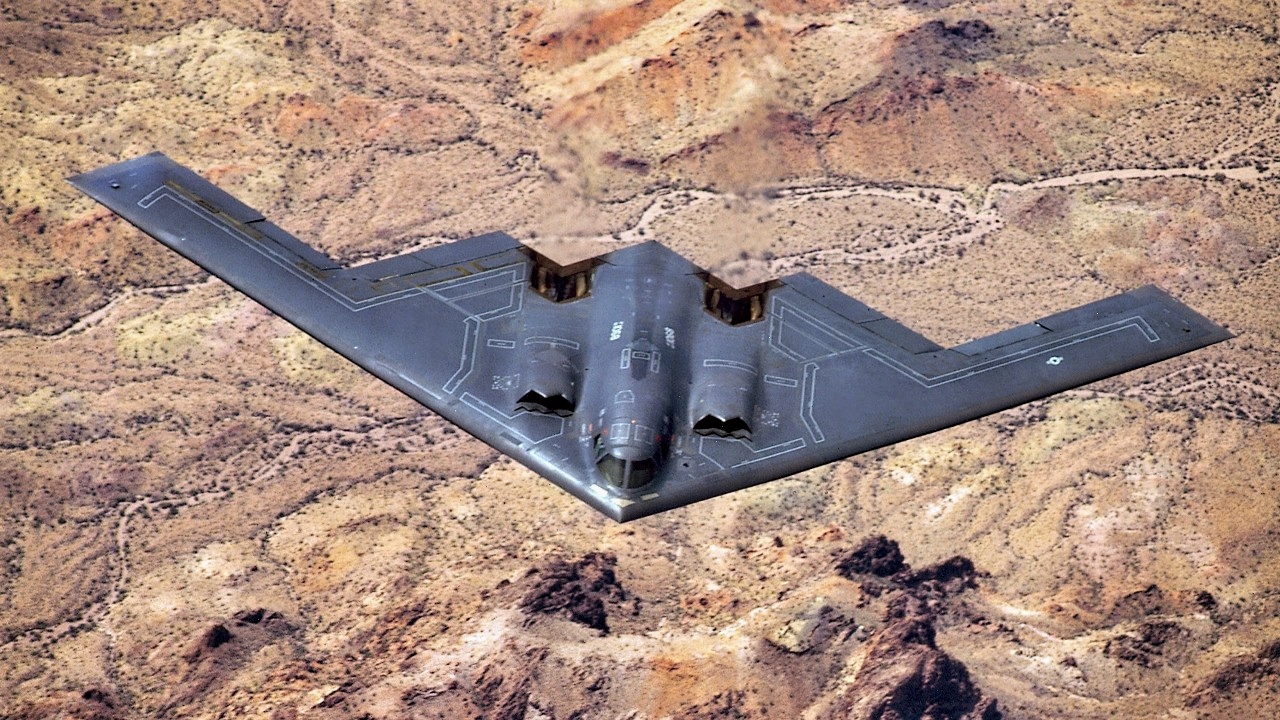
Trump’s public position, therefore, is that the B-2 strikes proved such an overwhelming victory that Iran simply will not fight back – and while his words seem resolute, they also appear deliberately vague. His comments, for example, could indicate that Iran has agreed not to rebuild its nuclear sites. After all, the stated aim of both the Israeli and American strikes was to ensure that Iran “never” builds a nuclear weapon.
After Eslami’s comments on Tuesday, however, we know that this is not the case.
Iran has made no such pledge, and plans are currently underway to begin rebuilding the program.
Perhaps, then, the president’s comments were intended to communicate his administration’s belief that Iran no longer possesses the talent, resources, or expertise required to rebuild the program even if it tries. If that’s the case, it could be argued that Operation Midnight Hammer – Trump’s historic “bunker buster” strikes on Iran – achieved only partial success. The strikes fell short of achieving the lasting peace he promised.
Instead, preventing Iran’s nuclear program from succeeding may now become a matter of military lawn maintenance, requiring periodic U.S. and Israeli strikes every few years to trim back its progress, assuming Tehran can replace its scientists, recover enriched uranium, and move quickly.
About the Author:
Jack Buckby is a British author, counter-extremism researcher, and journalist based in New York. Reporting on the U.K., Europe, and the U.S., he works to analyze and understand left-wing and right-wing radicalization, and reports on Western governments’ approaches to the pressing issues of today. His books and research papers explore these themes and propose pragmatic solutions to our increasingly polarized society. His latest book is The Truth Teller: RFK Jr. and the Case for a Post-Partisan Presidency.
The Best Tanks on Earth
AbramsX: The Tank the US Army Wants


doyle-3
June 24, 2025 at 6:58 pm
Nuclear threats confronting mankind today emanate from the lair of the clique of global conquistadors.
Nuclear weapons possessed by puny states today are purely defensive in nature, not intended for enabling global conquest and global dominance.
So, real threats come from the countries identified with the Judeo-Christian order that want to dominate other nations and rule over all of them.
The worst is the US that wants to build the iron dome or Golden Dome.
That dome will allow USA to impose and threaten nuclear blackmail against its rivals.
Meanwhile, the Judeo-Christian global media are extremely hard at work identifying and accusing other nations of being the source of threats.
Who’s the source of threats today. It’s none other than the Judeo-Christian nuclear powers that constitute the 32-nation NATO !!!
Hasta la vista.
Zhduny
June 24, 2025 at 7:21 pm
US and Israel (with most admirable help from IAEA) have inflicted untold damage on Iran’s nascent nuclear industry.
But iran must summon the courage and fortitude to resuscitate its wounded nuke industry from scratch if necessary and then steer it toward producing a nuclear weapons arsenal.
Why.
In today’s current lawless world, only a nuke arsenal is a guarantee of national survival.
Iran must work with Russia and north Korea to rebuild everything.
An important aspect not to overlook is how to hold the world’s devils to ransom.
How.
By building a rocket capable of reaching taipei. It must carry at least a single 1-Mt nuke warhead.
If the devil 👿 nations try to act funny, tell them they will son have to fight among themselves when we hit Taipei with a nuke rocket or a rocket carrying a nuke.
Heh, heh,heh, heh,heheh.Heh.
Heheh, heh.Hehhh !
Jacksonian Libertarian
June 24, 2025 at 7:26 pm
Trump did great!
1. The Iranians now know that America will not tolerate their nuclear weapons program any longer, and any attempt to reconstitute it will be destroyed.
2. “Speak softly and carry a big stick.” T. Rosevelt
Every authoritarian regime now knows Trump is willing to use his big stick; his big stick works on everything, and thus his power in future negotiations is much greater.
3. After over 50 years of supporting terrorism and killing Americans, beginning with 241 Marines in Beirut in 1983, America has hammered Iran.
Revenge is best served cold.
Pingback: 'Leaked' Report Claims B-2 Bomber Strikes on Iran Failed to Destroy Nuclear Program - National Security Journal
D-O-Y-L-E 2
June 24, 2025 at 8:01 pm
Iran MUST now never look back.
The unspeakably scurrilous conduct of the IAEA, US and Israel today means they have forfeited all rights to interfere in iran’s nuclear program.
Iran needs to proceed full-steam ahead and to HELL, HELL, hell, hell with those devils.
But more importantly, iran must develop rockets, including FOBS-capable rockets which can take in imported (foreign manufactured) warheads.
Why.
The coming war, or war of tomorrow, or ww3, will be a war where nukes are used to determine battlefield results.
Whoever doesn’t have nukes, they will have to watch their homes smashed by nukes and being only able to gnash their teeth while watching smoke and ash rise from their land.
BE WARNED.
Pingback: Iran's Air Force Is Starting to 'Circle the Drain' - National Security Journal