
Summary and Key Points: When Trump announced his blockade of Iran in April, the goal was simple: choke off the oil money that keeps the regime alive. Two months later, the squeeze is real — tanker traffic around Iran has collapsed and the economy is hurting. Tehran is scrambling for a way around it, from shadowy Chinese buyers to a pipeline meant to bypass the Strait of Hormuz. But every escape route hits the same wall — one Tehran may not have time to climb.
Iran Has a Problem
Oil Platform. Image Credit: Creative Commons.
President Donald Trump’s objective when he attempted to choke off Iran’s oil exports through a blockade announced in April was to deprive Tehran of the revenue it needs to fund its military and proxy groups. It was also an effort to starve the Iranian economy and make it difficult for the government to sustain itself.
Almost two months later, and the picture is getting complicated.
Yes, the blockade has changed Iran’s economy and substantially reduced maritime traffic connected to its oil trade. Yet, reports continue to suggest that Iranian crude is still reaching buyers through smuggling networks and sanctions-evasion schemes. Tehran is also said to be looking at alternative export routes to bypass the Strait of Hormuz altogether – much like other Gulf producers.
The question now, though, is whether the blockade is strangling Iran’s economy as Trump hopes, and indeed whether efforts to bypass it through new land routes are even likely to succeed.
Yes, the Blockade Is Hurting Iran
Trump’s blockade in the Strait of Hormuz is primarily a targeted restriction on commercial traffic entering and leaving Iranian ports – so rather than closing or blocking the waterway entirely, the U.S. military is enforcing a blockade from outside the Strait of Hormuz using sanctions and selective ship interdictions. Under normal conditions, the Strait of Hormuz handles roughly 20 million barrels of oil per day, making it one of the world’s most important energy chokepoints. Before the conflict escalated, approximately 130 tankers passed through the strait each day.

PACIFIC OCEAN (Oct. 1, 2024) The Independence-class littoral combat ship USS Mobile (LCS 26) comes alongside the Nimitz-class aircraft carrier USS Theodore Roosevelt (CVN 71) for a fueling-at-sea, Oct. 1, 2024. Theodore Roosevelt, flagship of Carrier Strike Group 9, is underway conducting routine operations in the U.S. 3rd Fleet area of operations. An integral part of U.S. Pacific Fleet, U.S. 3rd Fleet operates naval forces in the Indo-Pacific and provides he realistic, relevant training necessary to execute the U.S. Navy’s role across the full spectrum of military operations – from combat operations to humanitarian assistance and disaster relief. U.S. 3rd Fleet works together with our allies and partners to advance freedom of navigation, the rule of law, and other principles that underpin security for the Indo-Pacific region. (U.S. Navy photo by Mass Communication Specialist 3rd Class Richard Tinker)
That traffic has slowed dramatically, with some analyses suggesting it has fallen by 95% or more. That decline has created significant challenges for Iran, which relies on oil exports to generate income and foreign currency. Energy sales are one of Tehran’s most important sources of government revenue, given how years of sanctions have reshaped its economy.
With this in mind, and given the news on Monday that Iran had suspended indirect negotiations with the United States in the wake of strikes in Lebanon, it seems that Tehran is growing frustrated with the ongoing pressure campaign and sees little prospect of any immediate relief.
Is China Still Buying Iranian Oil?
Iran is still selling oil – and China may be its biggest customer. Reports from May described a “shadowy network” of Chinese oil refineries that continue to fund Iran, and while exact volumes are difficult to verify, the existence of these networks means that the U.S. blockade cannot completely eliminate Iranian exports.
The U.S. no doubt knows this, and the goal is largely about reducing volumes as much as possible and increasing costs for Iran, rather than achieving the ideal result: a total shutdown.
Iran’s Best Alternative Route Already Exists
If maritime exports remain difficult, Iran’s most realistic alternative is not necessarily China or Russia but a pipeline within its own territory: the Goreh-Jask pipeline, specifically designed to reduce Iran’s dependence on the Strait of Hormuz.
The pipeline was officially inaugurated in July 2021 and stretched approximately 685 miles across the south of the country. It transports crude oil to the Gulf of Oman, allowing tankers to load outside the Strait. The project reportedly cost around $2 billion and was presented by the Iranian regime as a solution to future disruptions in the Strait of Hormuz. But the problem is scale.
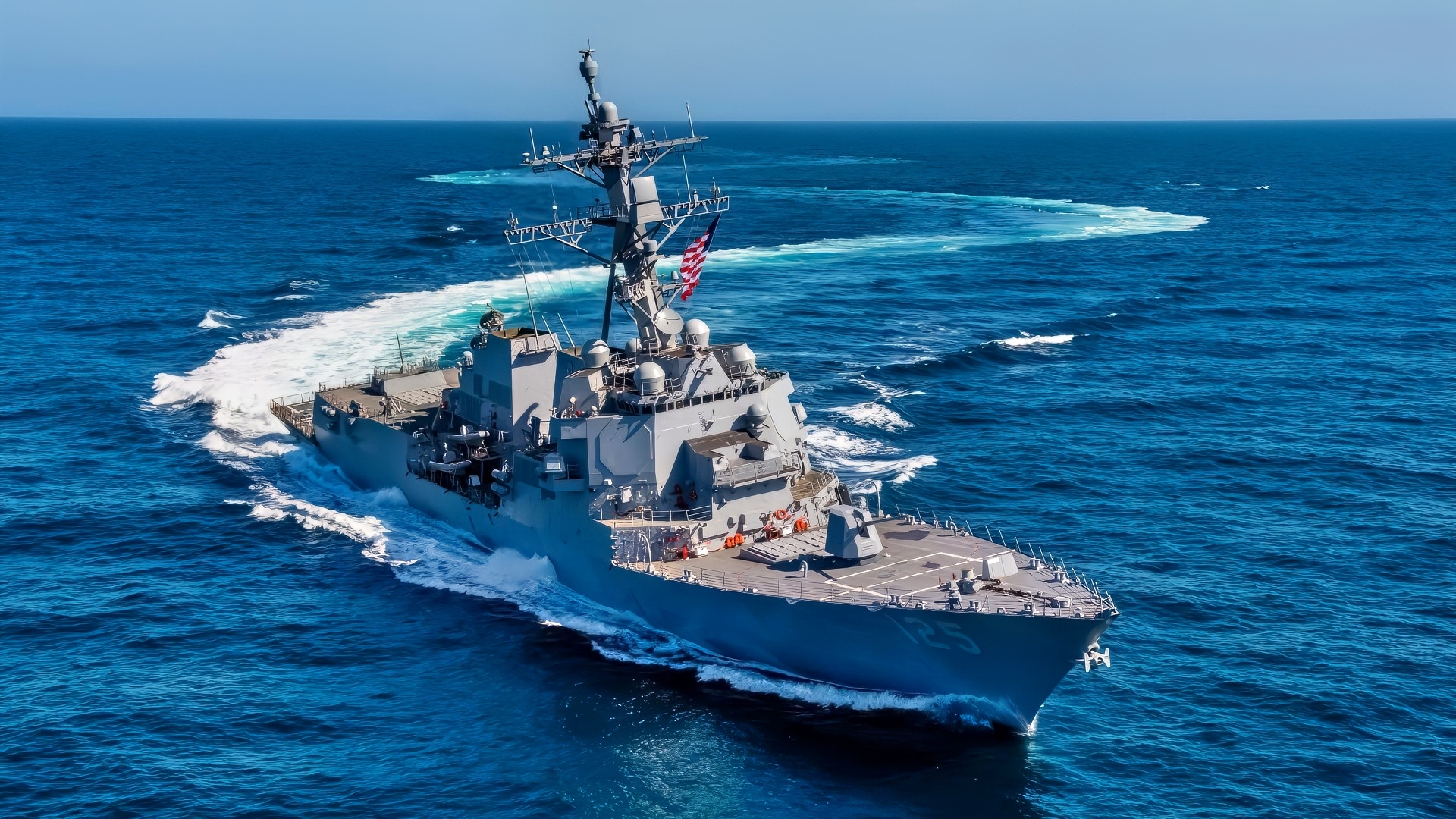
Pascagoula, MS – The future USS Jack H. Lucas (DDG 125) completed acceptance trials, May 18. DDG 125 is the first Arleigh Burke-class guided-missile destroyer built in the Flight III configuration. Photo courtesy of Huntington Ingalls Industries’ Ingalls Shipbuilding division
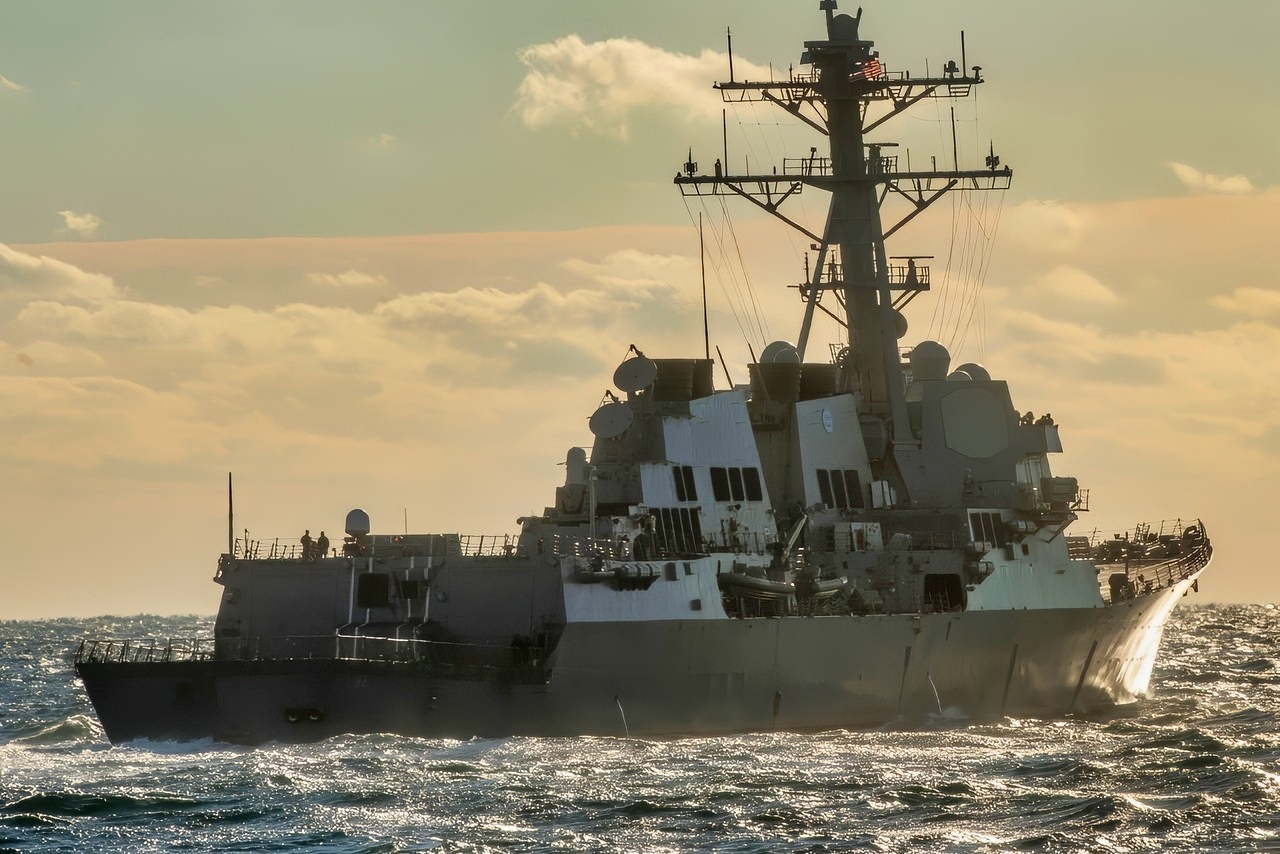
The Arleigh Burke-class guided-missile destroyer USS Lassen (DDG 82) moves into position for an underway exercise with the British Royal Navy aircraft carrier HMS Queen Elizabeth (R08) and Pre-Commissioning Unit (PCU) Michael Monsoor (DDG 1001). The future USS Michael Monsoor is the second ship in the Zumwalt-class of guided-missile destroyers. (Photo by Mass Communication Specialist 1st Class John Philip Wagner, Jr./Released)
Iran’s total oil production has recently exceeded three million barrels per day, while the Goreh-Jask pipeline has only ever handled a fraction of that volume – and even if it is fully utilized, it cannot replace Iran’s entire export infrastructure. It helps, but it does not solve Tehran’s problem. In fact, the International Energy Agency (IEA) describes the pipeline as being effectively “non-operational.”
“A test load was exported from Jask in late 2024, but no further oil has been exported from Jask since then. The terminal is currently not considered a viable crude export option for Iranian crude,” the IEA said in a report from February.
Russia and Others Cannot save Iran quickly
There are also other options. For years, Iran has discussed establishing energy links with Pakistan. An Iran-Pakistan pipeline has been proposed, but that project has also been revised, delayed, and debated throughout the last few decades, and it is estimated to cost billions of dollars. And then there are political concerns and sanctions risks that mean it is by no means a guarantee.
Russia presents similar obstacles. Moscow and Tehran have discussed major energy cooperation projects in the past, including gas infrastructure and transportation links through the Caspian region. Russian energy giant Gazprom has also signed several agreements with partners in India over the years, with both countries expressing interest in deepening energy integration. But even if they intend to work together, building major new export corridors would require years-long construction projects and massive investment. It would also require cooperation from governments already facing sanctions pressure of their own.
These are long-term ambitions and not immediate solutions.
Time Is Not On Iran’s Side
This is ultimately why the blockade remains a serious threat to Tehran, despite its imperfections. Iran can continue to use shadow-fleet tankers and offer discounted crude to willing buyers. It can also rely on smuggling networks.
But none of these options can fully replace access to global energy markets – and more importantly, none of them can be expanded quickly enough to offset a prolonged disruption of maritime exports.
The only real option, outside of sanctions being dropped, would be land routes that require billions of dollars in investments and years of construction – and by the time those theoretical land routes are established, the regime in Iran may have already collapsed under economic and military pressure.
About the Author: Jack Buckby


