


Reports today, per Axios, 18 May, are that Cuba may be planning an attack on US targets as a reprisal to Washington’s ultimatums calling for the island communist nation to dismantle its current communist authoritarian system. The US Department of Justice (DoJ) is also preparing indictments against Raúl Modesto Castro Ruz, the brother of the late Fidel Alejandro Castro Ruz and the real power in Cuba.
The message that Cuba needs to make big changes to its political system was delivered last week by the US Central Intelligence Agency (CIA) director, John Ratcliffe.
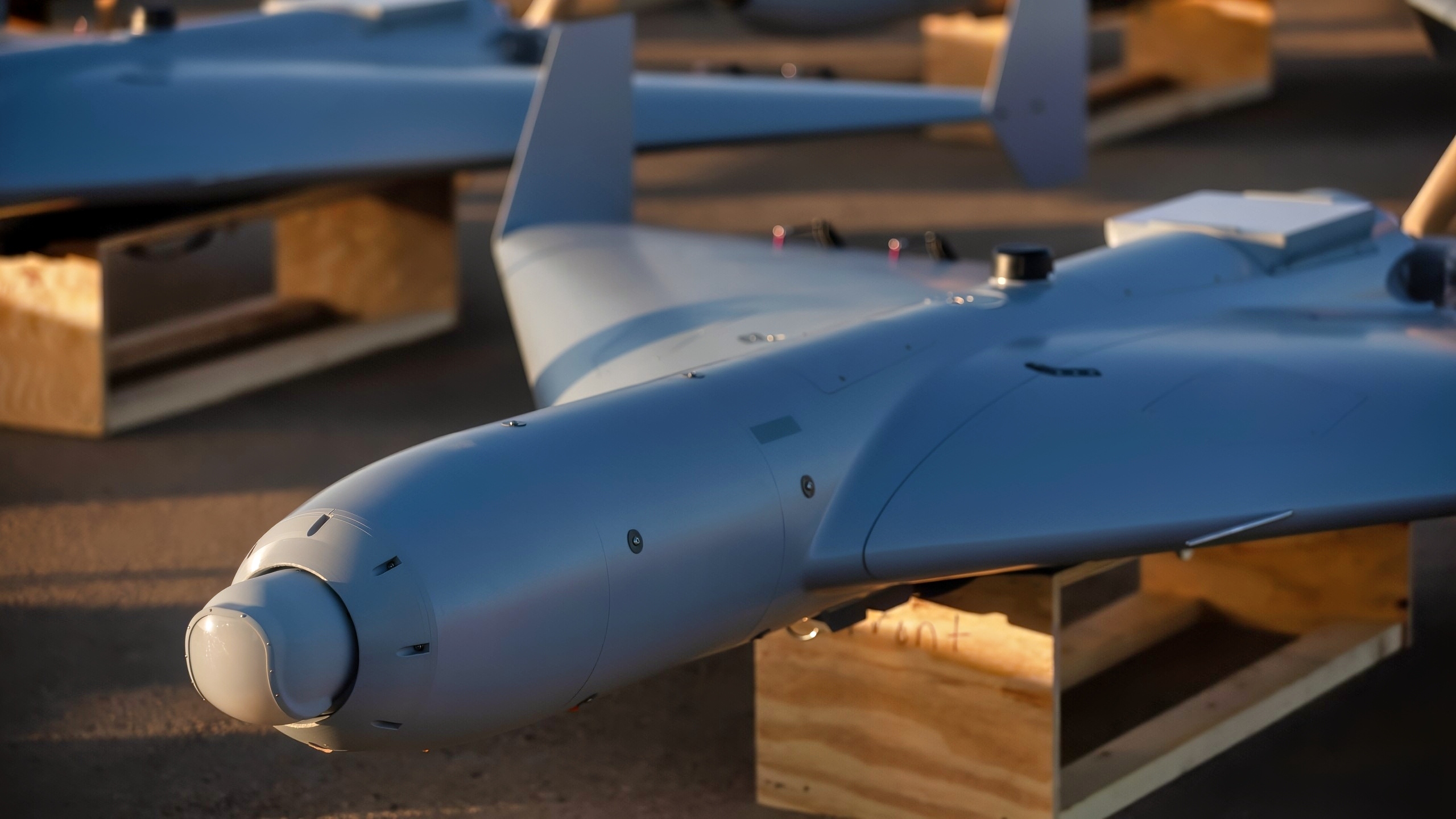
U.S. CENTRAL COMMAND AREA OF RESPONSIBILITY (Nov. 23, 2025) Low-cost Unmanned Combat Attack System (LUCAS) drones are positioned on the tarmac at a base in the U.S. Central Command operating area, Nov. 23. Costing approximately $35,000 per platform, LUCAS drones are providing U.S. forces in the Middle East low-cost, scalable capabilities to strengthen regional security and deterrence. (Courtesy Photo)
The message from US President Donald Trump carried by the US spy chief on a rare visit to Havana last Thursday was that the US would engage with Cuba on economic and security issues “only if it makes fundamental changes.”
Cuba Ready to Attack with Drones?
Now today, per Axios, there are intelligence reports that Cuba has acquired more than 300 military drones from Russia and Iran and has begun discussing plans to use them to attack US targets.
Cuba’s military is supposed to have begun acquiring them in 2023 and has them stored at several sites across the island so that no single air or missile attack could take them all out.
Some of the potential strike points are the US Naval base at Guantanamo Bay (GITMO), US military vessels operating in the Gulf of America, and possibly even Key West Naval Air Station.
The Key West installation is 90 miles north of Havana, which is well within range of any of the Iran Shahed-series of one-way drones.
A Growing Threat from Cuba?
The US intelligence report is now being interpreted, at least in some defense circles, as a potential pretext for the US to direct military action against the island nation. Additionally, the DoJ indictments against Raul will be unsealed on Wednesday.
They would put the former Cuban leader in the same legal jeopardy as former Venezuelan strongman Nicolas Maduro.
Both situations create an overlapping set of justifications for the US to consider a similar type of military raid to bring Raúl Castro to justice.
Simultaneously, there would be strikes to eliminate the nascent drone capability that the Cuban military now reportedly has in its inventory.
Increasingly, the Trump administration sees Cuba as more of a threat than before because of its now supposed capability in drone warfare.
Additionally, unnamed US officials state there are now Iranian advisors in Havana to instruct Cuban military personnel in the targeting and operation of these drones.
“When we think about those types of technologies being that close, and a range of bad actors from terror groups to drug cartels to Iranians to the Russians, it’s concerning,” said one US official who spoke to the US news outlet Axios. “It’s a growing threat.”
In the past month, Cuban officials have been seeking to acquire more drones and military equipment from Russia, said the US official. The official cited from intelligence intercepts that also show indications that Cuban intelligence officials are “trying to learn about how Iran has resisted us” [in the war with Iran].
No More Safe Havens for Russia and China
One of the other messages that CIA Director Ratcliffe delivered to Cuba last week was a warning that there would be dire consequences should Havana engage in any hostile acts against the US.
He told them the only way to end the US sanctions suffocating their economy would be for them to bin their totalitarian government and stop aiding America’s enemies on its own doorstep.
“Director Ratcliffe made clear that Cuba can no longer serve as a platform for adversaries to advance hostile agendas in our hemisphere,” said the official. “The Western Hemisphere cannot be our adversaries’ playground.”
What that means in plain English is that Russian and Chinese operations – as well as those of other states like Iran or North Korea – have to be shut down and those personnel involved in them sent back home.
For many years, Russia and the People’s Republic of China (PRC) have operated high-tech espionage facilities in Cuba to collect “signals intelligence” (SIGINT), which are run by the military intelligence organizations of both nations
Cuba Fighting in Ukraine
US officials also estimate that as many as 5,000 Cuban soldiers have fought on the side of Russia in its invasion of Ukraine.
The Russians have also informed the Cuban military leaders about the effectiveness of drone warfare in the Ukraine war and how they could be used against the US.
Russia has additionally paid Cuba’s government about $25,000 for each soldier deployed in Ukraine, US officials estimate – another economic lifeline that has helped keep the Cuban regime on life support.
About the Author: Reuben F. Johnson
Reuben F. Johnson has thirty-six years of experience analyzing and reporting on foreign weapons systems, defense technologies, and international arms export policy. Johnson is the Director of Research at the Casimir Pulaski Foundation. He is also a survivor of the Russian invasion of Ukraine in February 2022. He worked for years in the American defense industry as a foreign technology analyst and later as a consultant for the U.S. Department of Defense, the Departments of the Navy and Air Force, and the governments of the United Kingdom and Australia. In 2022-2023, he won two consecutive awards for his defense reporting. He holds a bachelor’s degree from DePauw University and a master’s degree from Miami University in Ohio, specializing in Soviet and Russian studies. He lives in Warsaw.


