


The U.S. Navy might consider whether to build smaller “medium” aircraft carriers alongside its Nimitz and Ford-class supercarriers. The concept is called CVV. The Navy first explored it in the 1970s. President Reagan chose to keep building larger Nimitz-class supercarriers instead. The debate has resurfaced. Chinese anti-ship cruise missiles, exploding costs, and developmental delays have raised concerns about supercarrier vulnerability. However, no U.S. aircraft carrier was successfully hit during Operation Epic Fury despite hundreds of Iranian missile attacks.
The Medium Aircraft Carrier Debate Back On?
Simple survivability in an era of “carrier-killer” anti-ship missiles, exploding costs, and developmental delays, and the merits of building a faster, more agile, and more disaggregated Navy, are all reasons why the service may once again embrace its “medium” aircraft carrier vision first explored decades ago.
The idea was ultimately shelved when President Reagan surged ahead, building more Nimitz-class carriers, yet modern threats such as long-range, precision-guided Chinese anti-ship cruise missiles and the growing need for a faster, more dispersed fleet with many unmanned systems may be reviving discussion of “CVV” medium carriers.

USS Ford Aircraft Carrier U.S. Navy Photo
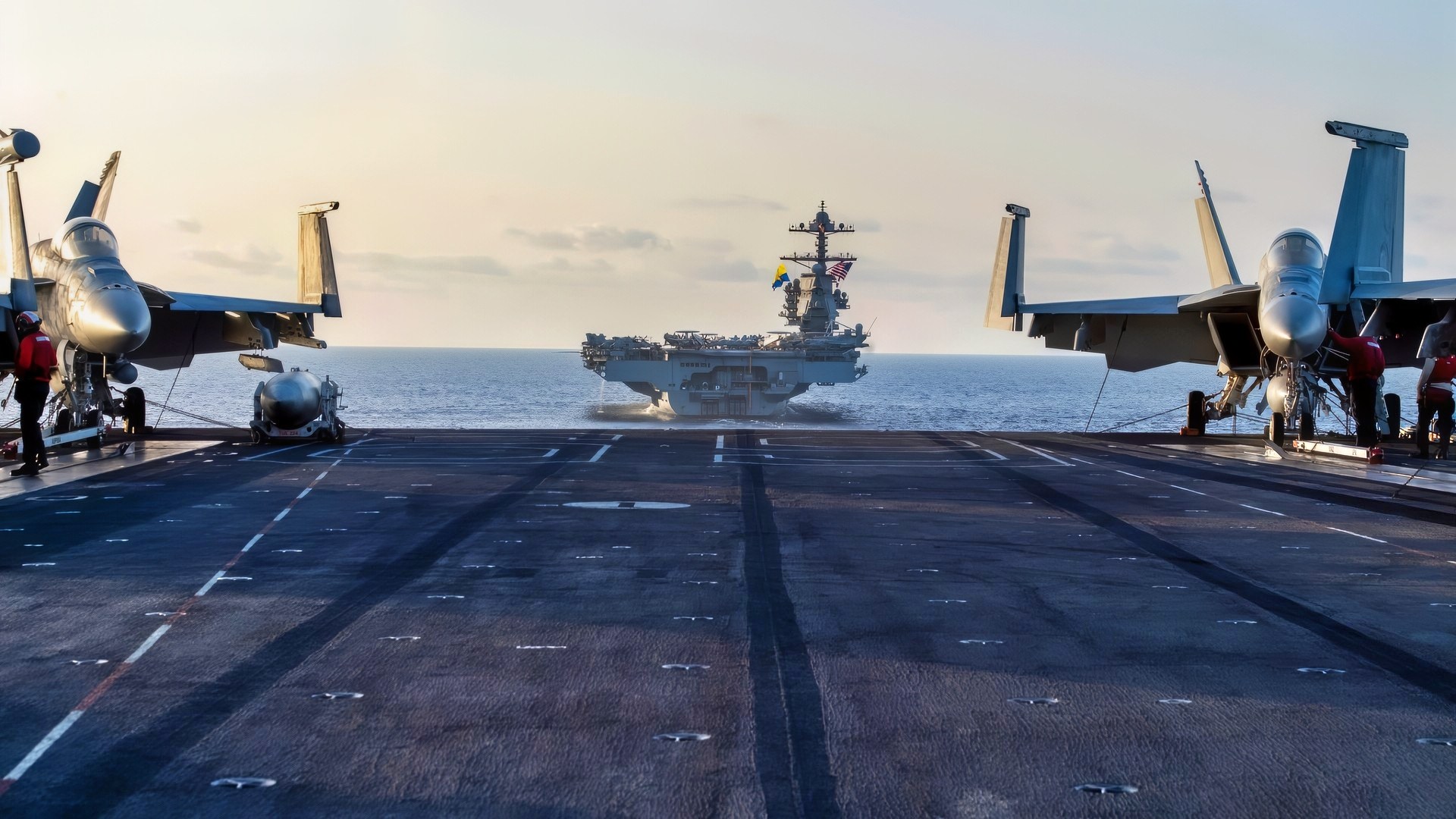
USS Eisenhower Aircraft Carrier. Image Credit: U.S. Navy.
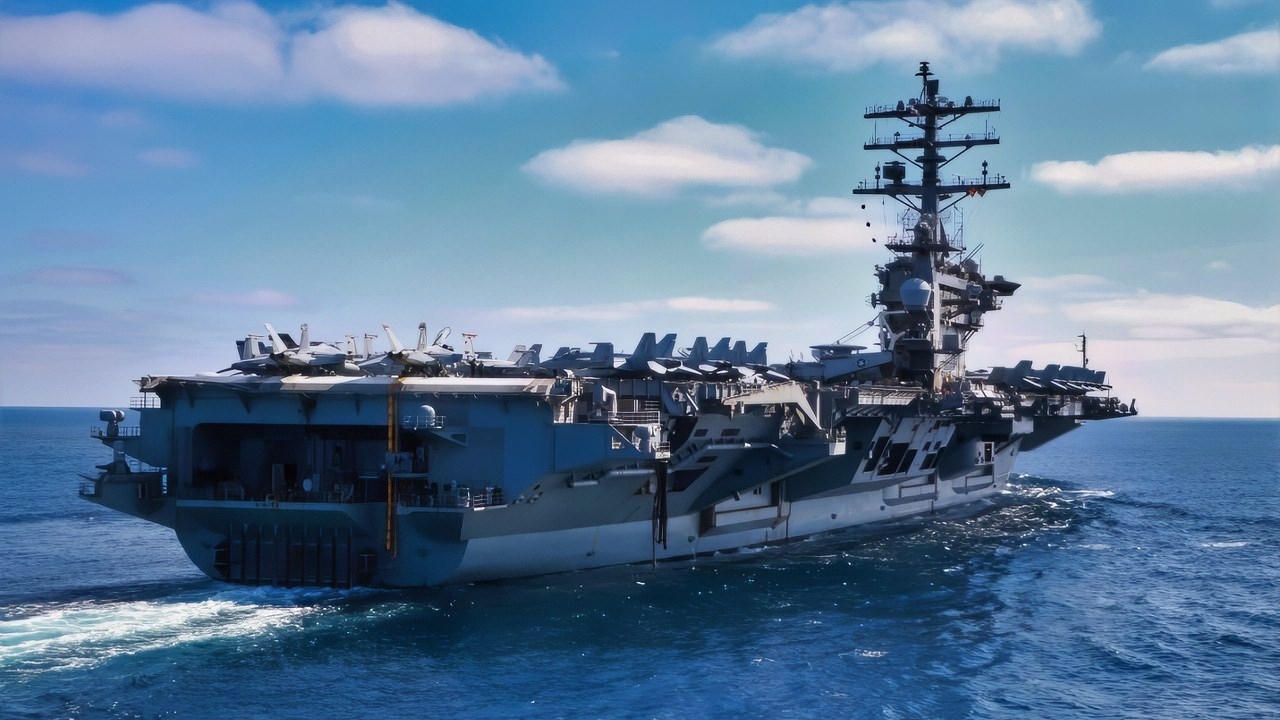
PACIFIC OCEAN (Oct. 8, 2022) The aircraft carrier USS Nimitz (CVN 68) prepares for a fueling at sea (FAS) with the Arleigh Burke-class guided missile destroyer USS Paul Hamilton (DDG 60). Paul Hamilton is currently operating with the Nimitz Carrier Strike Group in preparation for an upcoming deployment. (U.S. Navy photo by Ensign Connor Doherty)
A key challenge, however, is simple “mass,” meaning smaller carriers would have to multiply in number to project air-attack power comparable to that of large-deck Nimitz and Ford carriers.
Historically, the Navy has explored the concept of smaller carriers before. In the 1970s, proposals for a “CVV” medium-sized carrier emerged as a way to supplement the large-deck carriers like the Nimitz-class aircraft carrier.
These proposed ships would have been significantly cheaper and carried fewer aircraft, but they were ultimately not built. At the time, the Navy concluded that large carriers offered superior capability and efficiency, particularly in high-intensity conflicts.
The ability to launch large numbers of aircraft quickly and sustain operations over long periods was seen as critical, this was prior to the arrival of many new highly-capable “counter-carrier” weapons such as missiles and drone swarm attacks.
Carriers too Vulnerable?
Today, however, the strategic environment is different. Advances in anti-ship missile technology, particularly from potential adversaries such as China, have raised concerns about the vulnerability of large carriers.
A single Gerald R. Ford-class aircraft carrier represents an enormous concentration of military power—and risk. If such a ship were disabled or destroyed, the operational and symbolic impact would be significant.
This has led some analysts to argue that a larger number of smaller carriers could provide greater resilience through distribution, the idea being that sheer redundancy is a survivability-enhancing characteristic, as the Navy could continue to project air power if one or two were hit or disabled.

USS Carl Vinson Aircraft Carrier. Image Credit: Creative Commons.
However, the need to build smaller, more survivable carriers is offset or contradicted by current combat reality, as not a single carrier has been successfully “hit” during Epic Fury despite hundreds of Iranian missile attacks.
Distributed Force
The idea of “distributed maritime operations” has become central to Navy thinking in recent years.
This concept emphasizes dispersing forces across a wider area to complicate an adversary’s targeting and reduce the risk of catastrophic losses.
Smaller carriers could fit well into this framework, operating alongside amphibious assault ships, destroyers, and unmanned systems.
In this model, they would not replace supercarriers but complement them, providing additional options for commanders.
It is also possible that U.S. Navy amphibious assault ships could be regarded as “light” carriers. The Navy’s amphibious assault ships, such as those of the America-class amphibious assault ship, can operate as many as 20 F-35B aircraft and have been used in what could be called “lightning carrier” configurations.
In this role, they carry more fighter jets than usual and function as small aircraft carriers. While these ships lack the full capabilities of a supercarrier—such as catapults and a large air wing—they demonstrate that the Navy already has a partial light-carrier capability.
Despite these advantages, there are significant challenges to adopting smaller carriers. One of the main drawbacks is reduced capacity.

(Feb. 25, 2019) The aircraft carrier USS John C. Stennis (CVN 74) transits the South China Sea at sunset, Feb. 25, 2019. The John C. Stennis Carrier Strike Group is deployed to the U.S. 7th Fleet area of operations in support of security and stability in the Indo-Pacific region. (U.S. Navy photo by Mass Communication Specialist 1st Class Ryan D. McLearnon/Released)
A supercarrier can carry around 70 to 80 aircraft, while a light carrier might carry only 20 to 30. This limits its ability to generate sustained combat power, particularly in high-intensity conflicts against a peer adversary.
Critics argue that multiple smaller carriers cannot fully replicate the capabilities of a single large carrier, especially in complex air operations.
Drone Realities
Technological factors could also influence the outcome. The growing role of unmanned aerial systems may reduce the need for large flight decks and extensive support infrastructure.
If drones can take on more missions—such as surveillance, refueling, and even strike operations—smaller carriers might become more viable.
On the other hand, if future air wings still rely heavily on large, complex aircraft, the advantages of supercarriers may remain decisive.
Importantly, the Navy is not currently planning to abandon its large carriers. The Ford-class is expected to remain the backbone of the fleet for decades.
However, ongoing studies and wargames continue to explore alternatives, including light carriers and hybrid approaches.
These efforts reflect a recognition that the future of naval warfare is uncertain and that flexibility may be as important as raw power.
About the Author: Kris Osborn
Kris Osborn is a Military Technology Editor. Osborn is also President of Warrior Maven – Center for Military Modernization. Osborn previously served at the Pentagon as a highly qualified expert in the Office of the Assistant Secretary of the Army—Acquisition, Logistics & Technology. Osborn has also worked as an anchor and on-air military specialist at national TV networks. He has appeared as a guest military expert on Fox News, MSNBC, The Military Channel, and The History Channel. He also has a Master’s Degree in Comparative Literature from Columbia University.


