

Key Points and Summary – Congress’s FY2026 NDAA backs the Trump administration’s decision to starve the Navy’s F/A-XX sixth-generation fighter, authorizing just $74 million—an 84% cut from FY2025—while approving about $2.6 billion for the Air Force’s F-47 NGAD.
-Pentagon officials argue the industrial base can only “go fast” on one program, but industry leaders insist it can sustain both.
-Navy leaders warn that delaying F/A-XX risks ceding Pacific air dominance just as carrier air wings age.
-For now, F/A-XX survives on meager funding and classified add-ons like “Link Plumeria,” virtually guaranteeing schedule slippage and higher long-term costs.
America’s Aircraft Carrier Air Power Challenge: F/A-XX Starved, F-47 Fed
Congress has effectively backed the Trump administration’s plan to slash funding for the U.S. Navy’s sixth-generation fighter program, leaving the F/A-XX effort on a tenuous financial footing – all the while, the Air Force continues to receive substantial funding for its own next-generation program.
In the compromise version of the Fiscal Year 2026 National Defense Authorization Act (NDAA), lawmakers approved only $74 million for the F/A-XX program – a dramatic 84 percent reduction from the $453 million the service received in FY2025.
The NDAA also commits approximately $2.6 billion to the Air Force’s F-47 Next Generation Air Dominance (NGAD) effort. The compromise version of the NDAA was released late on Sunday evening and suggests the Navy will have a hard time developing its next fighter in a timely manner – and could be left without any new fighter at all.
The F/A-XX program is intended to succeed the Navy’s Boeing F/A-18E/F Super Hornet and EA-18G Growler aircraft as the backbone of carrier-borne air dominance in the 2030s and beyond.
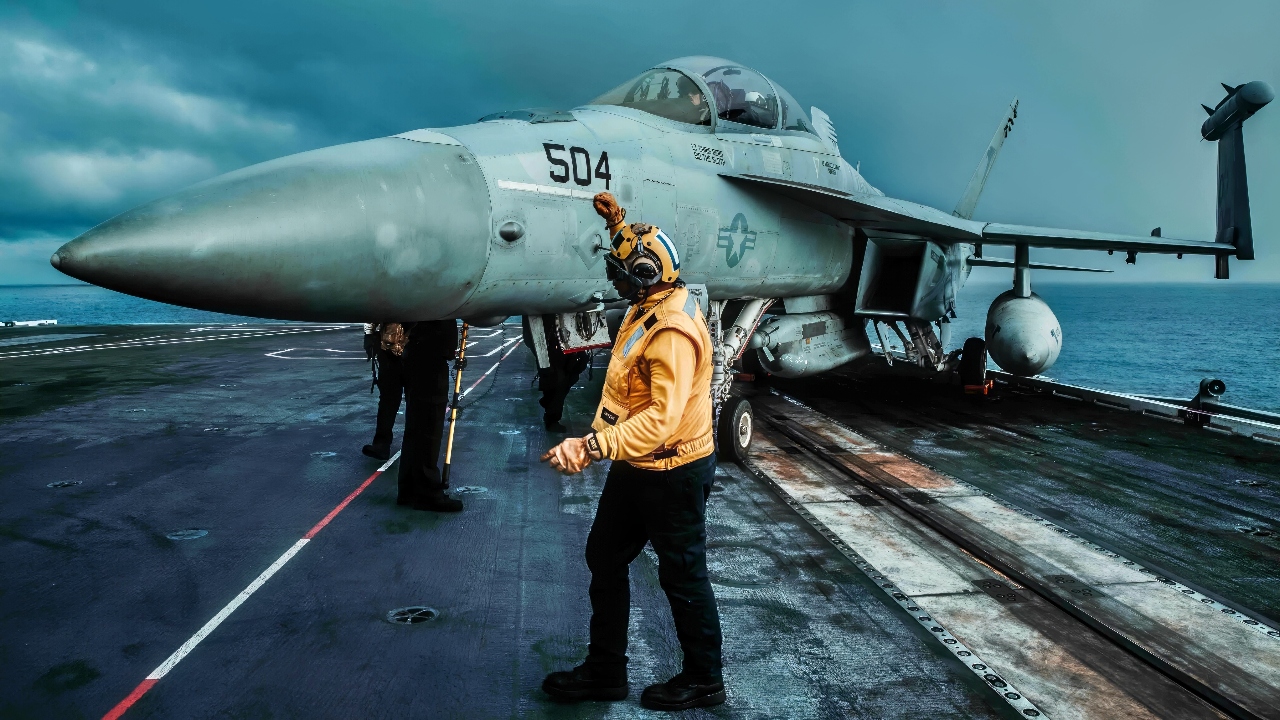
An E/A-18G Growler, attached to Electronic Attack Squadron (VAQ) 141, taxis on the flight deck of Nimitz-class aircraft carrier USS George Washington (CVN 73), while underway in the Indian Ocean, July 24, 2025. The USS George Washington Carrier Strike Group (GWA CSG) is conducting routine operations in the U.S. 7th Fleet area of operations. George Washington is the U.S. Navy’s premier forward-deployed aircraft carrier, a long-standing symbol of the United States’ commitment to maintaining a free and open Indo-Pacific region, while operating alongside allies and partners across the U.S. Navy’s largest numbered fleet. (U.S. Navy photo by Mass Communication Specialist Seaman Nicolas Quezada)
With the new NDAA numbers reflecting the Trump administration’s new priorities – specifically, a push to focus resources on a smaller number of programs – the program now faces a period of uncertainty as the Department of Defense shifts its attention to the Air Force’s F-47, which is already under extensive development following Boeing’s selection earlier this year.
Pentagon officials have justified the decision by arguing that the U.S. defense industrial base cannot sustain two simultaneous sixth-generation fighter programs without overstretching critical engineering and production capacity.
Industry officials, however, have repeatedly indicated that they believe it would be possible to sustain both.
“We did make a strategic decision to go all in on F-47…due to our belief that the industrial base can only handle going fast on one program at this time, and the presidential priority to go all in on F-47 and get that program right while maintaining the option for F/A-XX in the future,” one U.S. defense official told reporters in June.
A political consensus in Congress, however, doesn’t really exist. Earlier in the budget process, both the House and Senate offered significantly higher funding figures for the F/A-XX, with House appropriators proposing roughly $972 million and the Senate’s version including around $1.4 billion for the fighter.
A reconciliation package also contained $750 million intended to accelerate the program.
Lawmakers, including Senator Mitch McConnell, have publicly criticized the Pentagon’s hesitancy on the program, arguing that indecision has delayed development and increased costs – and it’s undoubtedly true, too.
“Pentagon dithering over the Navy’s sixth-generation fighter, the F/A-XX, has delayed its development and led to hundreds of millions in contract-extension costs,” McConnell said in the Wall Street Journal recently. “If the department made a decision, Mr. Trump could launch a program that ensures the aircraft carrier remains America’s premier power-projection platform for decades.”
But while the NDAA’s authorized figures are significant politically, they don’t actually guarantee actual spending. Final appropriations for FY2026 still need to be negotiated, and some defense projects have historically received additional support through classified accounts and special access programs.
In the current NDAA compromise, the F/A-XX program is linked to approximately $377 million under a special access project known as “Link Plumeria,” which in past years has represented classified portions of the fighter’s development budget.
That funding may still end up in the right place.
F/A-XX Photo Essay and Image Collection

F/A-XX Fighter U.S. Navy Mock Up Image Creative Commons Rights

Boeing NGAD F/A-XX Fighter Rendering. Image Credit: Boeing.

F/A-XX Handout Photo from Northrop Grumman.

F/A-XX Fighter from Boeing. Image Credit: Boeing.
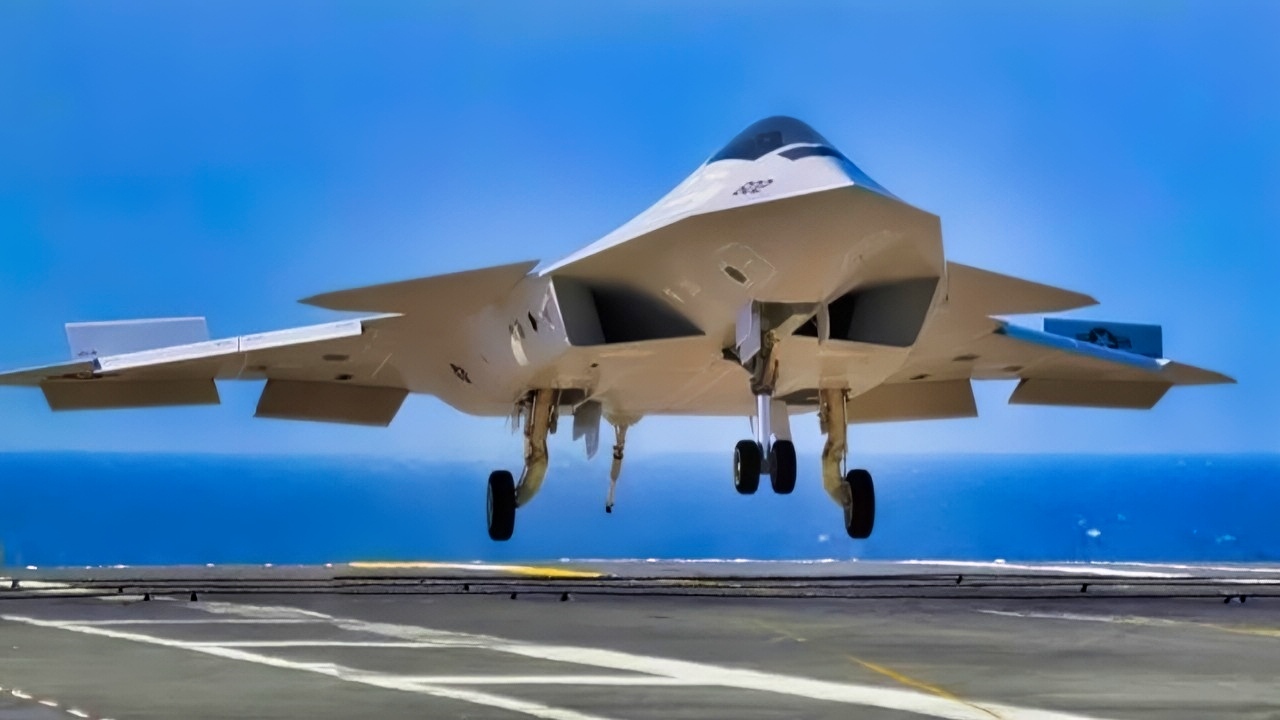
F/A-XX Fighter. Image Credit: Creative Commons.
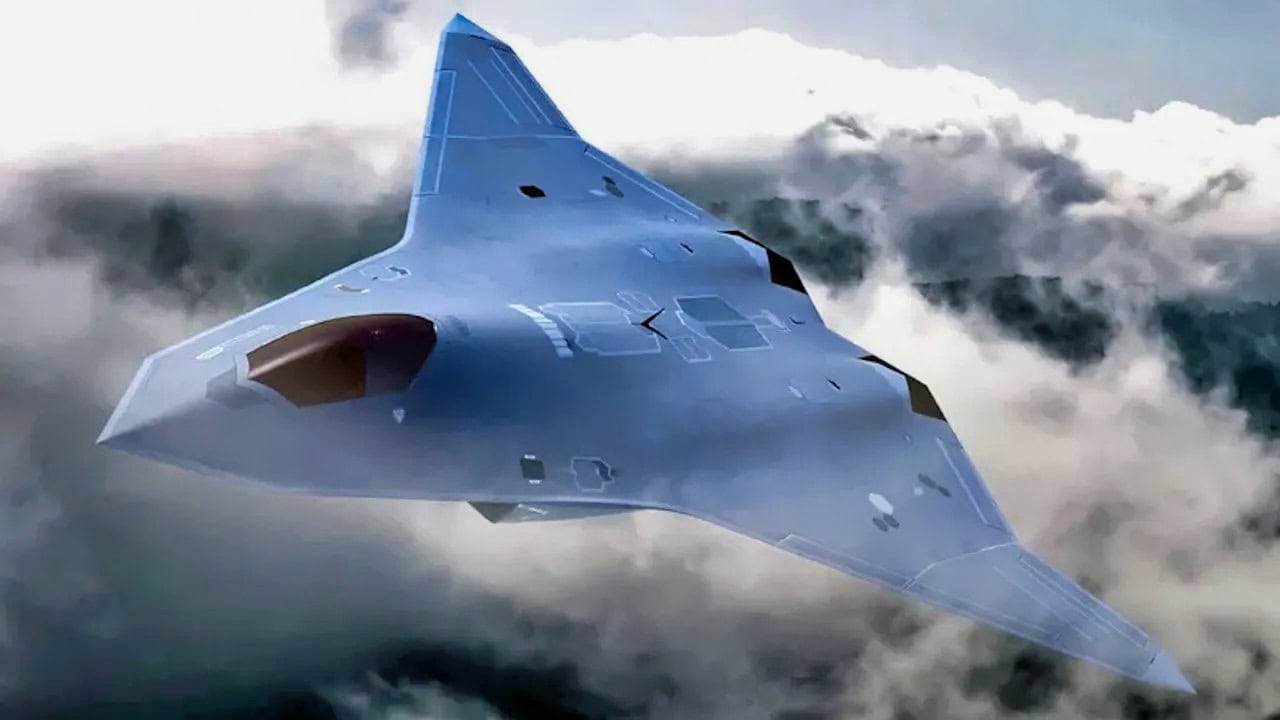
F/A-XX Fighter Mockup. Image Credit: Creative Commons.

F/A-XX U.S. Navy Fighter. Image Credit: Creative Commons.

F/A-XX U.S. Navy Fighter. Image Credit: Creative Commons.
Nonetheless, the decision goes against calls from Navy officials and industry leaders to do the right thing and fully back the project.
While the White House has expressed fair concern that the industrial base may not be able to handle both projects at once, industry officials have suggested otherwise.
In the summer, reports described how industry officials disagreed with the White House’s position, with Boeing Defense CEO Steve Parker insisting that the industrial base could “absolutely” take on both programs at the same time.
Meanwhile, Navy officials continue to indicate that the F/A-XX program must be completed on schedule to ensure U.S. readiness. In testimony to lawmakers earlier this year, Admiral James Kilby – then acting Chief of Naval Operations – warned that without timely progress on a sixth-generation fighter, the U.S. could cede critical battlefield advantages to adversaries.
“We need F/A-XX in the United States Navy,” Kilby said. “We’re talking about a fight in the Pacific. We fight together as a joint force, so having that capability is very important to us.”
For now, the Navy’s next fighter program survives politically but with limited momentum and rising costs. If the F/A-XX does move forward, it will likely remain significantly behind the Air Force’s program and continue to incur the kind of rising costs the White House is purportedly looking to avoid in the long term.
About the Author:
Jack Buckby is a British author, counter-extremism researcher, and journalist based in New York who writes frequently for National Security Journal. Reporting on the U.K., Europe, and the U.S., he works to analyze and understand left-wing and right-wing radicalization, and reports on Western governments’ approaches to the pressing issues of today. His books and research papers explore these themes and propose pragmatic solutions to our increasingly polarized society. His latest book is The Truth Teller: RFK Jr. and the Case for a Post-Partisan Presidency.


